
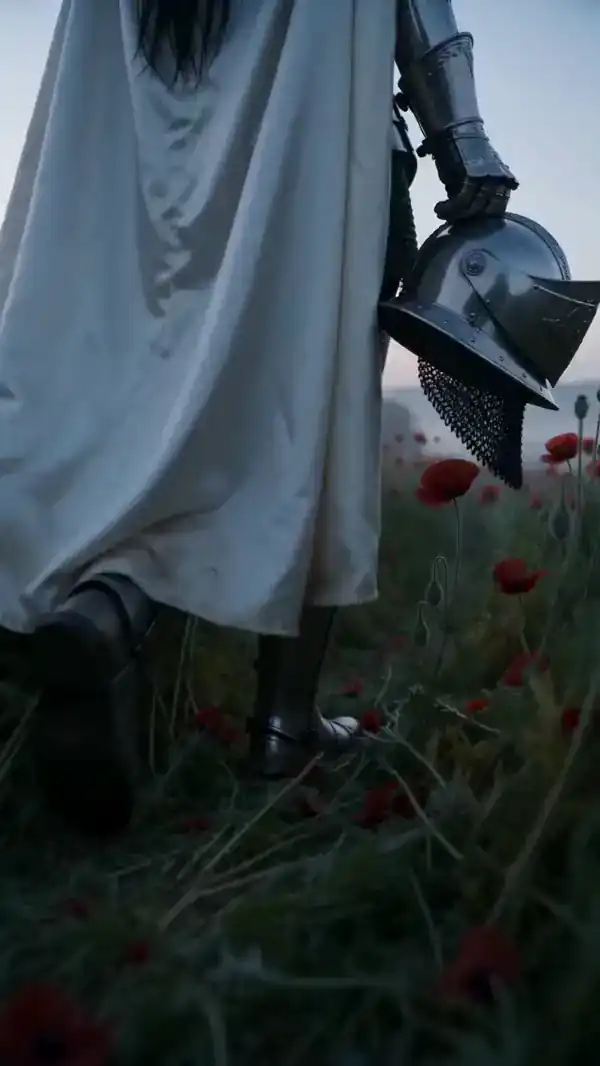
Some films stay with you because of their stories. Others stay with you because of how they look. The best ones do both, and the cinematography is the invisible hand that makes the images feel inevitable. This article looks at the recurring visual language in the films of two actors whose careers are a masterclass in cinematic style — Brad Pitt and Angelina Jolie — and then shows how modern AI video tools can help you analyze, learn from, and recreate that language in your own projects, ethically and with real craft.
Why study the cinematography of specific actors' films
At first glance, cinematography belongs to the director of photography, not to the actors. But actors with long, varied careers end up functioning as living archives of visual styles. Over decades, Brad Pitt has moved through gritty thrillers, naturalistic dramas, war epics, and stylized ensemble pieces. Angelina Jolie has worked across action thrillers, intimate dramas, and large-scale fantasy, and has directed films herself. The visual patterns that recur across those bodies of work tell you something about how different genres, directors, and photography styles solve the same fundamental problem: turning emotion into light, color, and movement.
For anyone interested in AI video generation, this is gold. When you want to recreate a cinematic look, you need reference points: what does tension look like in the frame? What does melancholy look like in the color grade? Studying well-known films gives you a shared visual vocabulary you can describe, prompt, and iterate on.
The signature elements of a cinematic look
Before diving into AI tools, it helps to name the technical elements that define a cinematic look. These are the levers you will pull in every prompt:
- Lighting: hard or soft, high-key or low-key, motivated or stylized.
- Color: palette, saturation, temperature, and contrast grading.
- Lens and framing: focal length, depth of field, camera height, composition.
- Camera movement: static, handheld, dolly, crane, steadicam.
- Texture: film grain, halation, gate weave, digital noise.
- Production design: wardrobe, sets, props, and their color relationships.
Every film style is a combination of these six levers. The reason certain scenes feel "cinematic" and others feel like phone footage is not magic; it is the deliberate, consistent use of these elements.
Chiaroscuro: the language of shadow
One of the most recognizable techniques in thriller and drama cinematography is low-key lighting, often called chiaroscuro after the painting tradition. Deep shadows, strong highlights, and a high contrast between the two create a sense of hidden truth and inner conflict. Characters emerge from darkness; faces are half-lit; backgrounds dissolve into black.
This technique does several jobs at once. It focuses attention on the face, it hides production limitations, and it creates a mood of unease. In AI video prompts, you can recreate it with terms like "low-key lighting," "hard shadows," "single-source key light," "deep falloff," "dark background," and "high contrast." The model will respond to these cues much better than to a vague instruction like "dark and moody."
Color palettes and film stocks
Color is the fastest way to communicate genre and emotion. A desaturated, teal-shadowed palette suggests tension and modern realism. Warm, golden tones suggest nostalgia or intimacy. A muted, earthy palette with visible grain evokes classic film stocks and period drama.
The physical film stock itself used to dictate the look: some stocks were famous for their contrast, others for their color rendition, others for their grain character. Modern AI models have internalized these looks, and you can invoke them in prompts by referencing the desired texture: "35mm film grain," "vintage color grade," "soft halation," "Kodak-style warmth," "pushed blacks."
The practical lesson is to be specific about color. Instead of "cinematic color," say what the palette actually is: cool and desaturated, warm and saturated, teal and orange, monochrome with a single accent.
Natural light realism in dramatic work
In the dramatic side of a career like Pitt's, a recurring choice is realism through natural light. Soft window light, golden-hour exteriors, and gentle practical sources create a tone that feels honest and immediate. The camera tends to stay at eye level or slightly below, movements are restrained, and the color grade stays close to what the eye would actually see.
This approach is harder to pull off than it looks. The goal is not "no style" but "style that hides itself." For AI video, the prompt needs to describe the light source explicitly: "soft window light from the left," "golden hour backlight," "overcast sky as a giant softbox," "practical lamp light in the background." The more precisely you name the light, the more natural the result.
Dramatic contrast in action and thriller work
On the action and thriller side, the visual language shifts: harder shadows, stronger color contrasts, more dynamic camera movement, and a more aggressive grade. Fight sequences and chases are lit to maximize shape and silhouette. The frame is often busier, the cuts faster, and the camera more active.
For AI generation, this means describing movement and energy explicitly: "handheld camera," "dynamic angle," "low-angle shot," "fast dolly," "backlit silhouette," "smoke in the air," "dust particles catching the light." These details are what separate a generic action shot from one that feels like it belongs in a studio film.
Camera work: slow, psychological, and intentional
A hallmark of the more psychological dramas in both actors' filmographies is the slow, deliberate camera. Long takes, subtle push-ins, gentle reframes that follow a character's breath, and static shots that let the scene breathe. The camera becomes a narrative instrument: it moves when the character's inner state changes, and it holds still when the moment demands stillness.
This is one of the hardest things to get from AI video models, which tend to default to flashy camera moves. The prompt needs to say the opposite: "static camera," "slow push-in," "subtle handheld," "locked-off shot," "no camera movement," "slow dolly in over 10 seconds." Explicitly requesting restraint is often more effective than asking for "cinematic camera work."
Extracting visual metadata for AI training
Here is where the analysis becomes practical. If you want to recreate a style systematically, you need to extract visual metadata from reference films: for each key scene, note the lighting setup, the palette, the lens characteristics, the camera movement, and the texture. This metadata becomes the backbone of your prompts.
A simple template for a scene analysis:
- Scene purpose: what emotion or story beat is being served?
- Lighting: key source, direction, hardness, ratio.
- Color: dominant palette, saturation, temperature, contrast.
- Lens: focal length, depth of field, distortion.
- Camera: height, movement, duration.
- Texture: grain level, halation, sharpness.
Do this for five or six scenes from a film you admire, and you will have a reference library that is far more useful than a folder of screenshots.
Recreating the look with AI video tools
Modern AI video tools — including the Runway Gen-4 line, the OpenAI Sora series, and Kling AI — can simulate complex lighting environments and lens behavior from text prompts. Recreating a reference look is now a structured process rather than a lucky accident.
The workflow looks like this:
- Choose the reference scene and extract its visual metadata.
- Write a prompt that names the light, the palette, the lens, and the movement explicitly.
- Generate a still image first, if the tool supports it, and iterate on the look.
- Use the approved still as the first frame for video generation.
- Generate short segments and check continuity before extending.
The still-to-video path is especially powerful: you lock the look in an image, then animate it, rather than hoping the video model guesses your intent.
Keeping characters and style consistent across scenes
The classic failure mode in AI video is drift: the character changes face, the lighting shifts, the palette wanders. The techniques that professionals use are reference images and keyframes.
Reference images anchor the character: generate a set of portraits and full-body shots that define the look, then feed them to the model as anchors. Keyframes fix specific points in the sequence — the starting frame, a gesture, the ending frame — so the model has to hit those targets.
For style consistency, keep a single "look reference" image that defines the palette and texture, and include it in every scene generation. This is the closest practical equivalent to a color script in traditional production.
An ethical note on style and originality
Recreating a cinematic style is not the same as copying a scene. Style — the combination of light, color, framing, and texture — is a craft language that artists learn from each other. But generating a shot-for-shot copy of a specific scene from a specific film, using the actual characters and dialogue, crosses into copyright territory and is not something to do.
Use the techniques described here to learn the language, then apply it to your own characters, your own stories, and your own footage. That is how every director of photography has worked for a century: study the masters, internalize the vocabulary, and make something new.
A practical workflow from reference to finished clip
Here is an end-to-end workflow you can follow this week:
- Pick one scene from a film you admire and analyze it with the template above.
- Write a prompt that captures the look in one or two sentences, naming light, color, lens, and texture.
- Generate stills and iterate until the look matches your intent.
- Create a character reference set: face, body, wardrobe.
- Generate the first shot from the approved still.
- Generate subsequent shots with the same look reference and character references.
- Edit the shots together with consistent color grading in your video editor.
The whole loop takes a few hours the first time, and much less once you have your reference library built.
Tools worth having in your kit
Beyond the video generators themselves, a few categories of tools make the workflow smoother:
- Image generators for creating and refining look references.
- Reference viewers or simple note apps for building your metadata library.
- Video editors with color grading tools for the final pass.
- Prompt organizers for storing and versioning your winning prompts.
You do not need expensive software for any of this; the craft lives in the analysis and the iteration, not in the tool.
Building your reference library
A reference library is the asset that compounds over time. Every scene you analyze, every prompt that works, and every failed attempt you learned from becomes part of a system that makes the next project faster.
The practical structure is simple:
- A folder per reference film or style, with screenshots and scene notes.
- A metadata file per scene: lighting, color, lens, movement, texture.
- A prompts folder with the winning prompts, tagged by style and use case.
- A character folder with approved reference sets, so you never rebuild a character from scratch.
The habit that makes the library work is writing the notes immediately after a successful generation. Future you will not remember why a prompt worked; the notes will. In a few weeks, you will have a personal style guide that no course can sell you, because it is built from your own taste and your own results.
FAQ
Is it legal to recreate a cinematic style? Yes, style in this sense is a language of technique, not a protected expression. Avoid copying specific scenes, characters, or dialogue.
Do I need to name the actors or films in my prompts? You can, but it is better practice to describe the actual techniques: light, color, lens, movement. That way you learn the craft instead of relying on a shortcut.
Which AI video tool is best for this? All the major tools can do it. Pick the one whose quality you trust and whose workflow you can afford; the analysis process matters more than the specific model.
How long does it take to get a good result? The first time, plan for a few hours of iteration. Once you have a reference library and tested prompts, a shot can take minutes.
What is the most common mistake? Vague prompts. "Make it look like a movie" fails because it does not name a single concrete element. Name the light, name the color, name the lens, and the model will show you what you asked for.
Conclusion
The cinematography of Brad Pitt and Angelina Jolie's most memorable films is not an accident; it is a disciplined combination of lighting, color, lens, camera movement, and texture, chosen to serve the story. The same discipline is what separates compelling AI-generated video from generic clips. Study the masters, extract the visual metadata, name the techniques in your prompts, anchor your characters with references, and iterate. The language of cinema is learnable, and the AI tools of 2025 are the most accessible way to practice it.
