
![A luxury [BRAND] brand advertisement featuring three stylish [ATHLETES /...](https://storage.brightvectorlabs.com/prompts/bright/photography/2004219626897465419-0.webp)


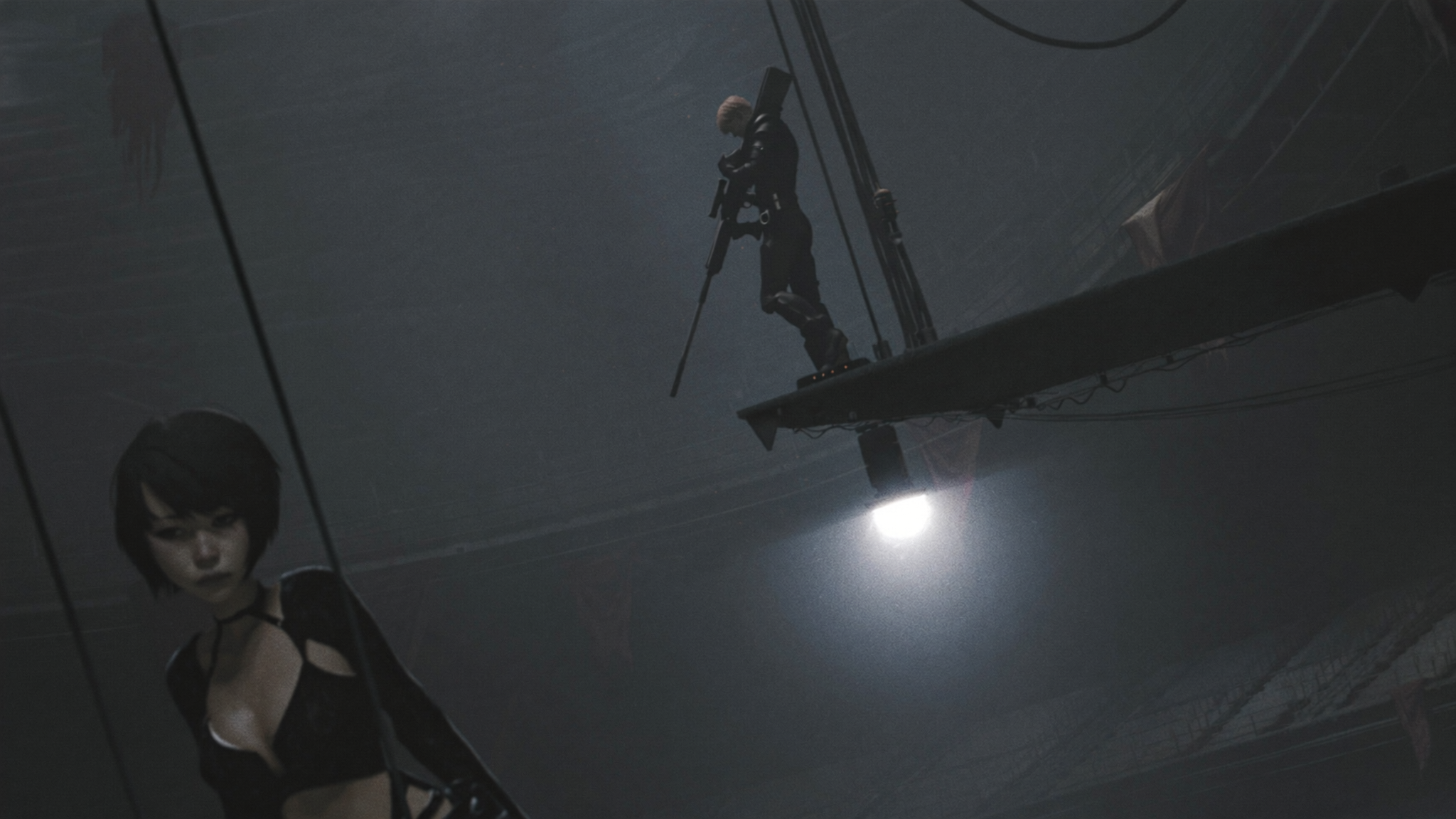
Hyper-realistic video used to be the exclusive territory of studios with million-dollar budgets, VFX teams, and months of render time. That wall has come down. Cloud-based AI platforms can now produce footage that is nearly indistinguishable from reality in minutes, from a text description alone. The barrier to entry has dropped so far that a solo creator with a good idea can compete with productions that once required an entire studio.
This guide explains how hyper-realistic video production works today: why the technology matured, what the model landscape looks like, how platforms keep characters and scenes consistent, and how to build a workflow that turns the capability into finished content.
Why Hyper-Realism Became the New Standard
The bar for video content has moved. Audiences have seen what AI can do, and their expectations have shifted accordingly. A generation that watches photorealistic AI clips daily no longer treats "looks almost real" as a wow factor; it treats "looks fake" as a failure.
Hyper-realism matters beyond spectacle. In advertising, a photorealistic product visualization sells better than a stylized one. In education and training, realistic simulations communicate more effectively. In entertainment, seamless visuals keep the audience in the story. And in e-commerce, realistic video of products in use drives conversion in ways that static images cannot match.
The technology crossed the threshold when models stopped merely generating pretty images and started understanding physics: how objects move, how light behaves, how faces express emotion. That understanding is what makes the output convincing across multiple seconds of footage.
The Model Landscape: Quality Tiers for Different Jobs
The market now has a clear structure, and choosing the right model is a matter of matching it to the job.
At the premium tier, the flagship series from OpenAI, Runway, and Kling set the standard for realism. They handle complex scenes, natural motion, and long sequences with fewer artifacts, and they offer the most control over camera and lighting. They are the right choice for hero shots, brand pieces, and anything that will represent a product or a company.
In the practical tier, platforms like PixVerse, Hailuo, Luma, and Pika deliver strong quality at lower cost and higher speed. They are ideal for social content, iteration, and volume work, and they keep improving quickly. For creators who need to test many directions in a day, these tools are the workhorses.
The smart approach is to work with both tiers in one pipeline: fast models to explore and validate, premium models to render the final approved shots.
The Architecture Behind the Scenes
What looks like magic on the surface is disciplined engineering underneath. Modern AI video platforms are built on a few architectural choices that directly affect the output quality.
A modular backend. Platforms that separate video generation, user management, content storage, and model routing into distinct modules can update and scale without breaking the whole system. For the user, this shows up as reliability: fewer failures, faster generations, and new models appearing without disrupting existing projects.
Reliable data and storage. Generated videos are metadata-heavy: every project has prompts, references, versions, and usage history. Platforms built on robust databases keep that information consistent, which matters when you need to reproduce a shot weeks later or audit what was generated.
Efficient GPU scheduling. Generation is compute-intensive, and smart platforms batch and queue jobs to use GPUs efficiently. The user-visible benefit is predictable wait times and the ability to run multiple generations in parallel without the system grinding to a halt.
Character Consistency: The Multi-Image Fusion Solution
The hardest problem in AI video has always been keeping a character consistent across scenes. Early models changed faces between cuts, broke wardrobe continuity, and shifted lighting arbitrarily. Hyper-realistic video amplifies the problem, because viewers are hyper-sensitive to inconsistencies in realistic footage.
The solution used by serious platforms is multi-image fusion. You upload several images of the character from different angles, and the model uses them as anchors for every subsequent generation. The face, the outfit, the palette, and the lighting are inherited from the references instead of reinvented.
For a production workflow, this means building a character kit once: a set of approved reference images plus a written character sheet. Every scene then starts from the same kit, and the result is a series of shots that belong to the same story. Consistency is what turns a collection of impressive clips into a production.
Audio and Video: The Synergy That Completes the Illusion
Hyper-realism is not only visual. A video with perfect images and hollow audio feels wrong immediately. The current generation of tools understands this and integrates sound: music generation, sound effects, and even dialogue with lip-synced characters.
The practical advice is to treat audio as a first-class production element, not an afterthought. Design the soundtrack while you design the visuals, because the pacing of the edit depends on the music, and the emotional impact depends on the sound design. Platforms that handle both in one flow save creators a significant amount of assembly time.
Building a Repeatable Production Workflow
Capability without process produces chaos. Here is a workflow that turns AI video platforms into a dependable production system:
- Define the project. Write the concept, the audience, the tone, and the shot list. Decide on the style and the level of realism required.
- Build the character kit. Generate or collect reference images, define the palette and lighting, and approve the kit before generating anything else.
- Explore with fast models. Test compositions, poses, and camera moves quickly. Reject early; keep only directions that work.
- Render with premium models. Produce the final shots with the same references and prompts, at the quality tier the project requires.
- Assemble and enhance. Edit the shots, add music, effects, and dialogue, and finish with color and sound polish.
- Deliver in all formats. Export versions for each platform and use case, and archive the project kit so future episodes start from a known state.
From Creator to Business: Distribution and the Creator Economy
Hyper-realistic video opens commercial doors. Product visualization for brands that cannot afford studio shoots, animated characters for streaming series, training simulations, marketing assets, and premium social content are all viable applications.
The creator economy rewards systems, not one-offs. Creators who build a consistent visual identity — the same character, the same style, the same quality bar — develop an audience that returns. Platforms with community marketplaces let creators distribute assets, templates, and even trained styles, turning production skills into ongoing revenue.
The key is to treat every project as part of a portfolio, not a standalone clip. Consistency across projects is what signals professionalism to clients and audiences alike.
Limitations and How to Work Around Them
Honesty about limitations makes the work better. AI video still struggles with fine details: hands, text, complex interactions between objects, and long temporal consistency. Fast models introduce more artifacts than premium ones, and very long sequences can drift.
The workarounds are practical. Keep shots short and legible; avoid asking the model to resolve details it will garble; render at the highest quality the budget allows for final shots; and use post-production cleanup for the artifacts that remain. A small amount of human finishing, applied where the model fails, is the difference between "AI-looking" and "professional." The field improves monthly, so re-test your own problem cases periodically instead of assuming yesterday's limits still apply.
From Use Cases to a Production System
Hyper-realistic video is not a single product; it is a capability that serves different markets. Four use cases show the range.
Advertising. Brands need product visuals that look real without the cost of studio shoots. AI generates product demos, lifestyle scenes, and campaign footage from reference images, and variations for different markets cost almost nothing extra.
E-commerce. Online stores convert better when customers see products in use. Realistic video of clothing, furniture, or gadgets in natural settings replaces expensive photography, and the same model renders multiple products with a consistent style.
Education and training. Simulations and demonstrations that are hard or dangerous to film can be generated safely and repeatedly. Realistic visuals improve comprehension, and localized versions are easy to produce.
Entertainment. Independent creators can produce animated characters, short films, and series without a production studio. Consistency tools make a single character viable across episodes, which was previously impossible on an indie budget.
Choosing a Platform: Decision Criteria
With new platforms appearing constantly, the selection criteria matter more than the hype. Evaluate candidates on six points:
- Output quality at the realism level you need, tested with your own prompts, not demo videos.
- Consistency features: reference handling, character kits, and multi-image fusion.
- Control: camera moves, keyframes, and style parameters.
- Cost structure and speed for your typical project size.
- Commercial terms: clear rights for the content you generate.
- Stability and roadmap: an active platform improves; an abandoned one is a liability.
Run the same test prompt on two or three platforms and compare honestly. The platform that handles your actual workload is the right one, regardless of its reputation. And revisit your choice quarterly: the model landscape shifts quickly, and a platform that was second-best in January can become the clear leader by spring.
The Next Phase: From Tool to Production System
The tools will keep improving, but the advantage will not come from the tools alone. It will come from production systems: reference libraries, prompt archives, quality checklists, and delivery pipelines that make every project faster than the last.
Creators and teams that build these systems now will compound their advantage. Every finished project adds to the library, and the library makes the next project cheaper and better. That is the real shift in hyper-realistic video production — from a tool you try to a system you operate.
FAQ
Do I need technical skills to produce hyper-realistic video? No. The skills that matter are creative: describing scenes precisely, building references, and judging quality. The platforms handle the heavy computation; you handle the direction.
How much does it cost? Costs vary by platform and tier. Exploration with fast models is inexpensive; premium rendering of long projects adds up. Budget per project and keep iteration disciplined to control costs.
Can I use AI video commercially? Yes, with platforms that offer clear commercial terms. Keep records of your prompts and references, and check the license for each asset you use.
How long does a video take to produce? A short clip can take minutes; a multi-scene project with a consistent character takes hours of iteration and assembly. Plan for the iterative nature of the work.
Will it replace traditional film production? It changes it. AI handles the visualization and generation; human judgment handles the story, the taste, and the finishing. The most successful productions combine both.
Is hyper-realistic AI video legal to use in ads? Yes, when you follow platform terms and avoid misleading content. Transparency matters: if a visual could deceive viewers, label it or keep it obviously stylized.
How do I keep quality high when producing at volume? Build the system: templates, brand kits, and quality gates. Volume production fails when every project starts from scratch; it succeeds when each project is a variation on a proven process.
What hardware do I need to get started? Very little. The heavy computation runs on the platform's servers, so a standard laptop is enough for generation and editing. You only need serious hardware if you train custom models locally, which most users never do.
How long until AI video reaches broadcast quality? For many use cases it already has. Test against your own benchmark footage and judge with your audience, not with industry nostalgia.
Hyper-realistic video production is no longer a distant promise. The models have matured, the platforms have industrialized the process, and the remaining differentiator is creative judgment. The creators and businesses that learn to direct these tools — with strong references, disciplined workflows, and an eye for quality — will define what the next generation of video looks like.
