
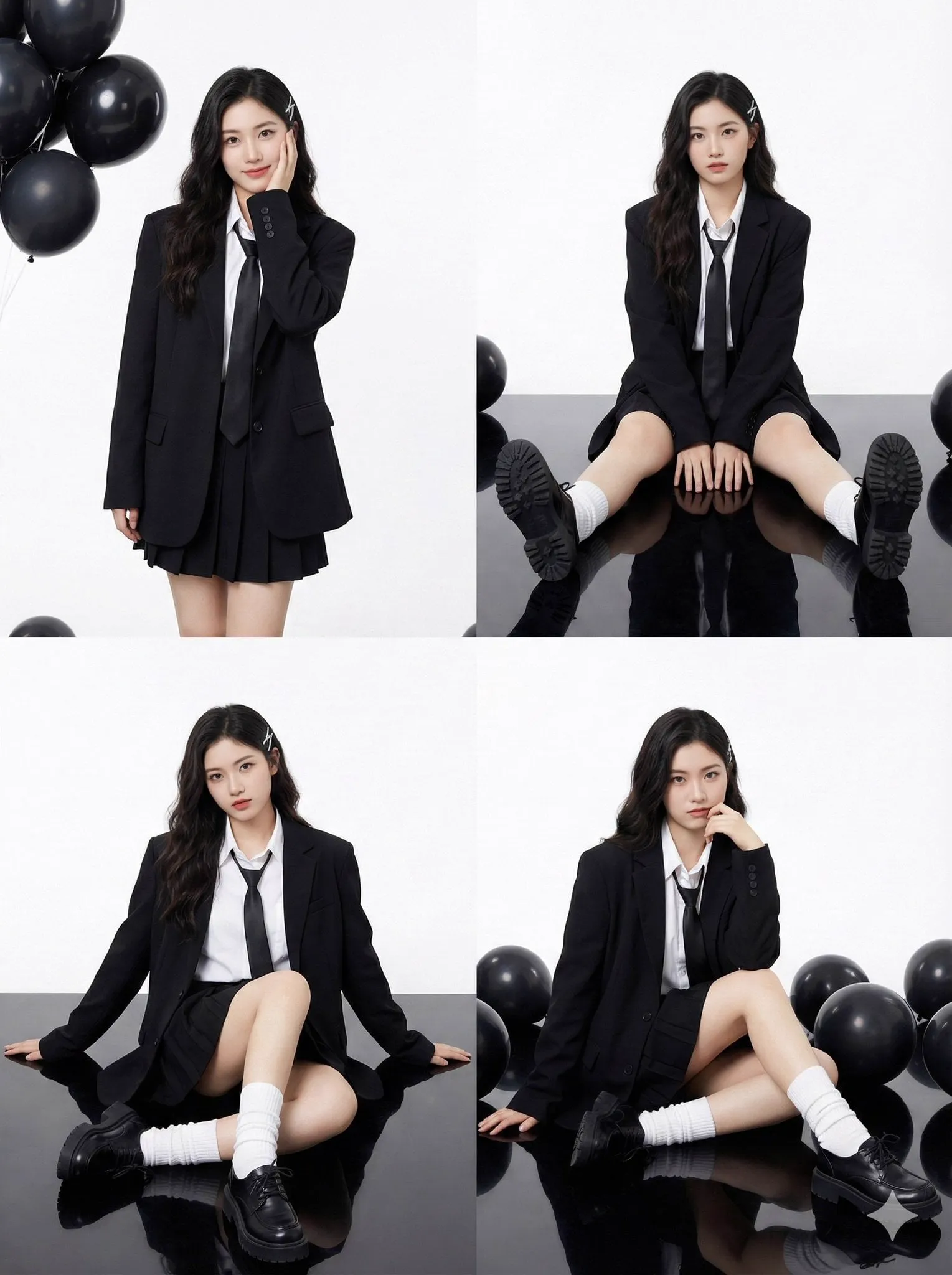
Every AI content creator has hit the same wall: the character you generated in scene one does not look like the character in scene five. The face shifts, the wardrobe changes, the lighting style drifts, and what should feel like a continuous story falls apart. This is the consistency problem, and it is the difference between AI content that looks assembled and AI content that looks directed.
Image and style fusion is the answer that has emerged across the field. Instead of relying on words to describe who a character is and how the world looks, you give the system visual anchors: reference images for identity and reference images for style. This guide explains how fusion works, how to build a style anchor, how to merge style with subject without losing either, and how to apply the result across scenes, series, brand assets, and avatars.
The Consistency Problem: Why Characters Drift
Text-to-image and text-to-video models are trained to predict plausible visuals, not to maintain a character database. When you type "a young woman in a red jacket," the model generates what those words statistically look like, and it forgets that specific face the moment the generation ends. The next scene starts from zero.
Drift is not a small annoyance; it is the main reason AI-generated stories look fake. Viewers may not articulate it, but they feel it: the hero changed nose, the lighting changed mood, the world stopped making sense. For anyone producing serialized content, brand material, or anything with a recurring character, consistency is the product.
Traditional fixes were expensive: generate dozens of variants and manually select matching ones, or composite faces in post-production. Fusion attacks the root cause by making identity and style explicit inputs that persist across the whole project.
What Image and Style Fusion Actually Means
Fusion is the process of combining multiple visual inputs into a single coherent generation. Two kinds of inputs matter:
- Identity inputs. Images that define the subject: a character, a mascot, a product, or an actor. These lock who or what is in the scene.
- Style inputs. Images that define the look: color palette, rendering style, texture, lighting logic, and mood. These lock how the scene feels.
The model learns from both, keeping the subject recognizable while applying the style uniformly. The same technique works whether the style is a hand-drawn illustration look, a stop-motion miniature aesthetic, a cel-shaded anime look, or a cinematic film grade.
The key insight is that style and identity are separable and can be anchored independently. You can change the environment without breaking the character, and you can change the character without breaking the style. That independence is what makes a production pipeline possible.
Building a Style Anchor from Reference Images
A style anchor is the single most reusable asset in an AI design project. It is a small set of images that captures the visual rules of your world. A good style anchor includes:
- One or two images that show the overall look: a scene with the desired color palette, lighting, and rendering style.
- A texture or material close-up if the style depends on surface detail, such as plastic, canvas, watercolor grain, or pixel grids.
- A character sheet in the target style, showing the same subject from multiple angles with consistent treatment.
When building the anchor, consistency matters more than beauty. The images must agree with each other; conflicting references produce muddy results. If you plan a "blocky miniature" world, every anchor image should show blocky geometry, plastic-like materials, and hard dramatic lighting. One realistic reference in the set will pull every generation toward realism.
A practical exercise: describe your style anchor in one sentence as a director would. "A miniature block-built world with hard sunlight, saturated primary colors, and plastic textures" is a usable brief. Then generate or collect images that match that sentence exactly, and discard anything that does not.
Merging Style and Subject Without Losing Either
The hardest part of fusion is balance. Push the style too hard and the subject becomes unrecognizable; push the identity too hard and the style fades into generic realism. A few rules keep the balance:
- Separate anchors, same project. Keep the identity reference and the style reference as distinct inputs, and load both into every generation.
- Adjust influence deliberately. Most tools let you control how strongly each reference is applied. Start with balanced settings, then tune one at a time.
- Evaluate on both axes. Before approving a frame, check two questions: Is the character still the same person? Is the style still the same world? A frame that passes one test and fails the other needs adjustment.
- Keep the test set stable. Use the same reference images and the same evaluation prompts across the project. If you change the anchor mid-project, everything after the change will look different.
When style and subject fight, the usual fix is to simplify the scene. Fewer objects, clearer lighting, and a single focal subject give the model less room to compromise. Complexity is the enemy of fusion.
Applying the Anchor Across Scenes and Shots
Once the anchor is locked, production becomes repetition with variation. The workflow for a multi-scene project:
- Load the identity and style anchors into the project template.
- Generate the first scene and approve it as the visual baseline.
- For each new scene, keep the anchors, change only the story elements: location, action, time of day.
- Compare every output to the baseline, not to your memory. Side-by-side checking catches drift early.
- When a scene needs a different mood, adjust lighting words within the style's logic, then verify the style anchor still holds.
A common mistake is generating all scenes first and checking consistency later. By the time you notice the drift, the project is half finished. Check after every scene, and fix issues while the change is cheap.
Real-World Use Cases
Fusion-based consistency is not a single trick; it unlocks several distinct kinds of work.
Animated Series and Webcomics
Series are the most demanding use case because the same characters appear across dozens of scenes. With fused anchors, you can produce an entire episode with one locked character design and one locked style. The workflow applies to short-form series for social platforms, webcomics with animated panels, and longer narrative experiments. The consistency that used to require a character design department is now a project setting.
Brand Mascots and Corporate Identity
Brands live and die by visual consistency. A mascot that changes appearance between ads destroys the asset's value. With fusion, a mascot design is anchored once and reused across campaigns, social posts, product pages, and presentations. The same applies to brand style: a fixed style anchor keeps every generated asset on-brand, even when different team members or tools produce them.
Game and Metaverse Avatars
Avatars are identity products. Players and users want their avatar to look the same across scenes, lighting conditions, and activities. Fusion workflows let studios and independent creators generate avatar variations, outfits, and expressions that all trace back to one design anchor, which is far more manageable than manual 3D variations.
Switching Models Without Breaking the Style
Tools change, models get updated, and platforms come and go. If your entire visual identity lives inside one model's weights, you are locked in. Fusion makes you portable.
Because the style anchor is external to the model, you can point it at a new tool and regenerate against the same references. The result will not be identical, but it will be recognizably the same world, because the anchor carries the visual rules. Two habits protect this portability:
- Keep your anchor files organized and versioned, like source code for your visual identity.
- Store the exact settings that produced approved frames, so you can reproduce them on any tool that supports similar controls.
The assets are yours; the models are rented. Build the pipeline so the assets win.
A Step-by-Step Production Workflow
Bringing it together, a complete workflow for a fusion-based project:
- Write the style brief. One sentence defining the world's look and rules.
- Build the style anchor. Collect or generate 3-6 images that match the brief exactly.
- Build the identity anchor. Create a character sheet from multiple angles in the target style.
- Test the anchors. Generate one probe scene, evaluate both identity and style, and adjust until both pass.
- Lock a project template with the anchors and settings preloaded.
- Produce scene by scene, checking each output against the baseline before moving on.
- Finish in one pass. Apply the same color grade, audio, and text treatment to every clip.
- Archive the anchors and settings. Future projects start from the archive instead of from zero.
This workflow works for a single video, a ten-episode series, or a brand asset library. The scale changes; the discipline does not.
Advanced Fusion: Layering Multiple Anchors
Once a single style anchor works, you can layer anchors to build richer worlds. The principle is the same as compositing in design: separate the elements that change from the elements that stay constant.
A common layered setup for a project:
- Identity anchor: the character's face and body.
- Wardrobe anchors: one per outfit, generated from the identity anchor so the face stays constant.
- Environment anchors: one per location, generated with the style anchor so the world stays coherent.
- Mood anchors: lighting and color variants of the same world, used for day, night, and dramatic scenes.
You generate the layers once, then combine them per scene. The character walks through different environments without changing identity, and the environments stay stylistically consistent even when the character is not in frame.
The tradeoff is discipline. Every layer must be generated from the same visual language, and each scene must reference the correct combination of anchors. It is more setup than a single-anchor workflow, but it is the difference between a short clip and a small production universe.
FAQ
How many reference images do I need for a style anchor?
Three to six well-chosen images are usually enough. The priority is agreement between the images, not quantity.
Can I fuse a style from a real artwork or film frame?
You can use any image you have the right to use as a style reference. For commercial work, verify rights before basing a brand identity on a specific artist's or film's look.
Why does my character look right but the style fades after a few scenes?
The style anchor is probably being dropped or weakened in later generations. Reload it explicitly for every scene and keep its influence consistent.
Does fusion work for products, not just characters?
Yes. A product can be anchored the same way: same object, same packaging, same materials, across different contexts and campaigns.
How long does it take to set up a fusion project?
The first project takes longest because you are building and testing the anchors. Afterward, a new project in the same world can start from the archived template in minutes.
Can I use a real actor or existing IP as the identity anchor?
Only if you have the rights. Anchoring a real person's likeness or a protected character for commercial use requires permission. For personal experiments, be mindful of platform terms.
What if my style anchor images are AI-generated?
That works well. The important thing is that the anchor images agree with each other and with your written style brief, regardless of whether they came from a camera or a generator.
Do I need the same tool for every step of the workflow?
No. The anchors are portable assets. You can generate with different tools as long as you keep the same anchor files and similar settings, then do the finishing in one editor for a unified look.
Image and style fusion turns consistency from a hope into a pipeline. The characters stop drifting because their identity is anchored. The world stops changing because its style is anchored. Tools will keep evolving, but the principle is durable: separate the who from the look, lock both with references, and check every frame against the baseline. Do that, and your AI content will finally feel like one continuous vision instead of a stack of lucky accidents.
