
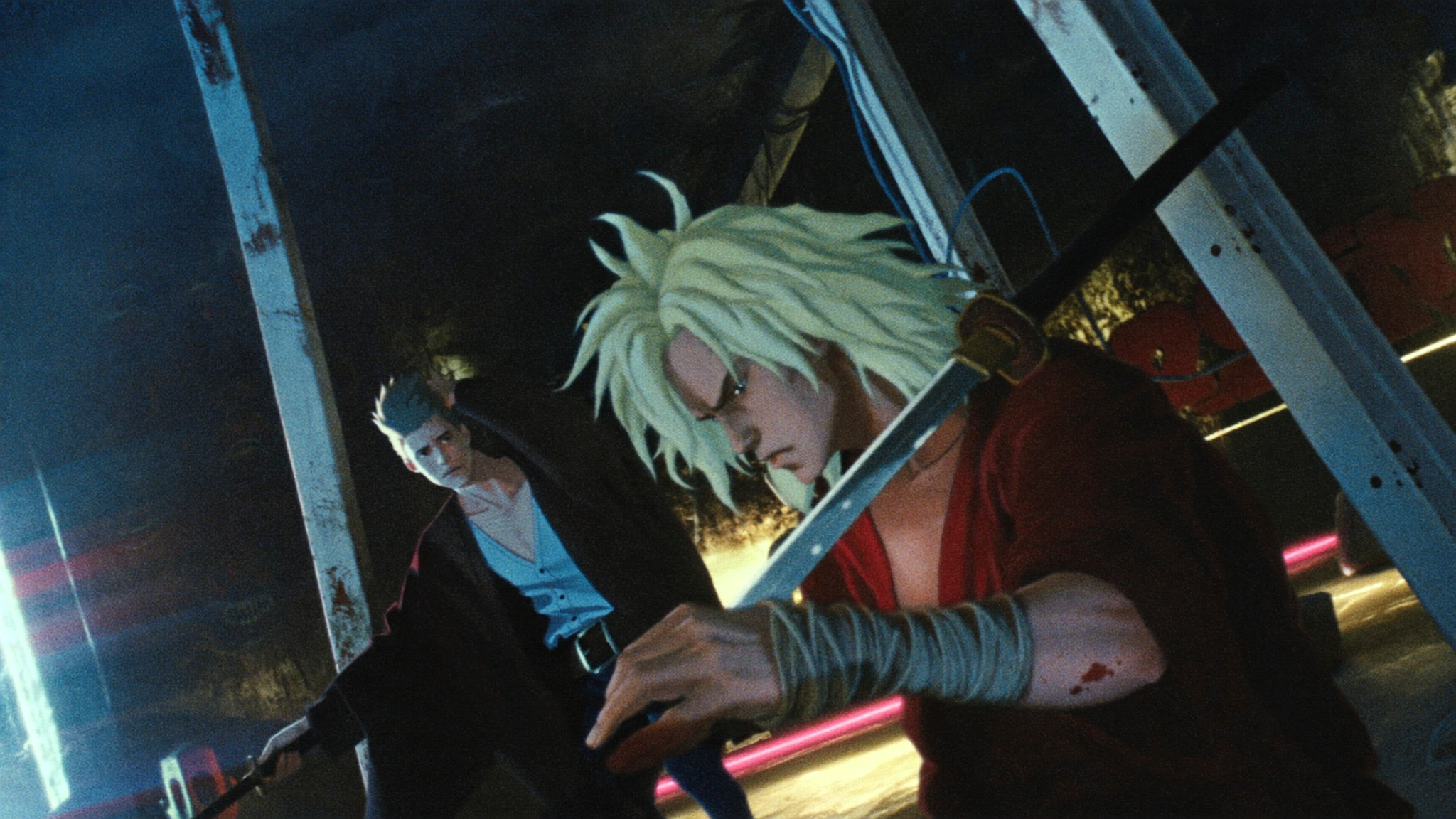
Most people start with a blank text box when they work with generative AI. They try to describe what they see in their head, write a prompt, generate, and then spend hours fixing the differences between the result and the original idea. There is a more reliable path: start from an image. When you have a visual reference, the prompt writes itself, because the image already contains the composition, the style, the lighting, and the mood you want.
Image-to-prompt conversion is the process of turning a visual reference into a precise, reusable text prompt. It is not a magic button that replaces creativity. It is a workflow that makes your creative decisions explicit, repeatable, and controllable. This guide explains how the technology works, how to use it in practice, and how to integrate it into an AI video or image production pipeline.
Why image-based prompting changes the game
Text prompts are lossy. Language is great at communicating ideas, but terrible at communicating exact visual details. Try to describe a specific shade of teal, a particular camera angle, or the exact curve of a character's jawline in words, and you will quickly hit the limits of vocabulary. Images carry that precision natively.
When you feed an image into a system that extracts prompts, you are essentially performing reverse engineering on a visual: the system analyzes the composition, identifies the subjects, estimates the style, and translates all of it into structured text. The result is a prompt that captures the essence of the reference without requiring you to become a professional art critic.
This matters most for AI video production, where consistency across frames is the difference between a professional result and a flickering mess. A character described only with words will drift between scenes; a character anchored to a reference image stays recognizable.
How image-to-prompt technology works
Visual analysis engines and semantic extraction
At the core of image-to-prompt conversion are visual analysis models. These systems use deep learning networks to represent visual data in a high-dimensional space, then match those representations to known prompt structures. In plain terms, the model looks at the image, identifies objects, scenes, lighting conditions, camera angles, and artistic styles, and produces a description that another generative model can understand.
Modern multimodal models go further: they can read text inside the image, recognize specific art styles, estimate depth and perspective, and even infer the emotional tone of a scene. The more capable the analysis engine, the richer the extracted prompt.
Consistency through character and location management
The hardest problem in image-based prompting is consistency. If you generate multiple scenes from a single reference, the character's face should stay the same, the location should stay recognizable, and the lighting should stay coherent. This is where prompt engineering meets image fusion techniques.
The standard approach is to extract a detailed character or location description from the reference image, then reuse that description in every scene prompt, combined with scene-specific instructions. More advanced workflows use the reference image directly as a conditioning input alongside the prompt, which keeps the visual anchor stable while the text drives the action.
Detail level and control mechanisms
The level of detail in an extracted prompt depends on your goal. For a quick mood board, a short prompt with style and lighting is enough. For a production shot, you want camera movement, lens type, subject positioning, background elements, and color grading all spelled out. The skill is knowing when to stop: every extra detail constrains the generation, which is good for precision but bad for creative exploration.
A practical workflow for image-to-prompt conversion
Step 1: Collect strong references
Start with references that are actually good. A blurry phone photo produces a weak prompt; a well-composed image with clear subject separation produces a strong one. Curate a small library of references for the styles, characters, and environments you use most often. For commercial work, keep track of the origin and licensing of every reference you use.
Step 2: Extract the prompt and clean it up
Run your reference through an image-to-prompt tool or a multimodal model. You will get a raw description full of useful details and some noise. Clean it up: remove irrelevant elements, organize the description into logical blocks (subject, environment, lighting, camera, style), and add the constraints that matter for your project.
Step 3: Test, compare, and iterate
Generate a test image or clip with the extracted prompt and compare it with the reference. What is missing? What is wrong? Update the prompt and repeat. This loop is where the real skill develops: over time you learn which prompt elements actually change the output and which are decorative.
Step 4: Build a reusable prompt library
Save the prompts that work. Organize them by style, subject, and use case, so you never have to reinvent a lighting setup or a character description. A well-maintained prompt library is one of the highest-leverage assets a generative artist can own.
Using image references in AI video production
In video workflows, image-based prompting shines in three places. The first is character development: upload a character design, extract the prompt, and reuse it across every shot so the character stays consistent. The second is style transfer: use a painting or a film still as a reference to set the visual tone of the entire project. The third is scene continuity: when a location appears in multiple shots, anchor it to the same reference instead of relying on new descriptions every time.
Multi-image fusion for maximum consistency
The most advanced technique is multi-image fusion: using several reference images at once to define a character from multiple angles, or to blend a character design with a specific environment. The extracted prompt then combines the information from all inputs, producing a much richer specification than any single image could provide. This approach solves the classic problem of characters that look right in a portrait but wrong in a full-body shot.
Storyboarding from visual references
Image-to-prompt also accelerates pre-production. Take a sequence of storyboard images, extract a prompt for each, and generate motion test clips to validate pacing and composition before committing to full production. This turns expensive trial and error into a cheap iterative loop, which is exactly what independent creators and small studios need.
Data safety and copyright considerations
When you upload images to any tool, you should know where they go and how they are used. For professional work, prefer tools with clear privacy policies and the option to keep your data out of training sets. On the copyright side, extracting a prompt from an image you do not own does not make the resulting output safe to use commercially. If the reference is a copyrighted artwork, the derivative generation may carry legal risk. Use references you created, licensed, or that are clearly in the public domain.
Automating the creative process
From visual references to full video stories
A mature workflow moves beyond single prompts to complete narrative generation. A sequence of reference images can become a shot list, and each shot list item can become a detailed prompt with camera movement and action instructions. The result is a storyboard-to-video pipeline where the creative decisions happen visually, and the AI handles the execution.
Efficiency through prompt reuse
The biggest efficiency gain comes from reuse. A character prompt, a lighting preset, and an environment description can be combined in dozens of ways to produce an entire series of videos. Instead of writing every prompt from scratch, you assemble them from building blocks. This is how creators scale from one-off experiments to consistent, publishable series.
Managing quality across iterations
Automation should not mean loss of control. Keep a version history for your prompts, track which combinations produced the best results, and document the changes that improved the output. Over a few projects, this documentation becomes a personal playbook that makes your creative process faster and more predictable.
Anatomy of a strong extracted prompt
The difference between an average and an excellent image-to-prompt workflow is structure. A well-formed prompt is not a long sentence; it is a set of blocks that the generator can parse reliably.
The building blocks
A strong prompt contains five blocks: subject (who or what is in the frame), environment (where the action happens), lighting (the quality and direction of light), camera (lens, angle, movement), and style (art direction, color palette, reference to a visual language). When you extract a prompt from an image, organize the output into these blocks instead of leaving it as a paragraph.
A worked example
Imagine a reference of a lone figure standing in a rainy neon street. A weak extraction reads: "a person standing on a street at night with rain and lights." A strong extraction reads: "Subject: a lone figure in a long coat, seen from behind. Environment: narrow city street at night, wet asphalt reflecting signs. Lighting: cool blue neon from above, warm orange glow from shopfronts. Camera: low angle, 35mm, slight dutch tilt, static. Style: cinematic noir, high contrast, muted palette." The second version gives the generator everything it needs to reproduce the mood instead of just the objects.
Knowing when to compress
Not every prompt needs all five blocks filled in. For exploration, compress to subject and style; for production, expand to camera and lighting. The skill is treating the prompt like a spec sheet: include the constraints that matter and leave the rest flexible. Test one variable at a time and you will learn which block actually drives your results. A structured prompt library also makes iteration cheaper: when a project changes the style, you update one block instead of rewriting the whole description. Over time, you will recognize the patterns in your own prompts and be able to predict which combinations produce which results, which is the real payoff of the discipline.
Frequently asked questions
What is image-to-prompt conversion?
It is the process of analyzing an image and generating a text prompt that describes its composition, style, subjects, and technical characteristics, so the prompt can be reused in generative AI tools.
Do I need a dedicated tool for this?
No. Many multimodal AI models can describe images in detail. Dedicated tools simply format the output into a more structured prompt. Start with whatever model you already have and upgrade if the workflow demands it.
Can image-to-prompt fix character inconsistency in AI video?
It helps significantly. By anchoring characters to a reference-derived prompt and using the reference as conditioning input, you reduce the drift that happens when characters are described only in text.
Is it legal to use any image as a reference?
Not automatically. Using copyrighted artwork as a reference can create legal risk for the generated output. Use your own images, licensed content, or public domain material for commercial projects.
How detailed should my extracted prompts be?
As detailed as the task requires. Mood boards can use short prompts; production shots need camera, lighting, subject, and style details. Test the minimal prompt that gives you control, then add details only when they improve the result.
What is the best way to organize my prompt library?
Organize by project or by building block type: characters, environments, lighting, styles. Use consistent naming and keep the reference image next to the prompt so you can always see what the prompt was supposed to capture.
Why do my extracted prompts produce different results than the reference image?
Extraction captures what the model noticed, not every detail of the image. Compare the output with the reference and add the missing elements explicitly, then test again. The loop of extract, compare, and refine is the core of the workflow.
Final thoughts
Image-to-prompt conversion does not replace creative vision, it amplifies it. By starting from a visual reference, you communicate with generative AI in a language it understands perfectly, and you make your creative decisions explicit and reusable. Build a small library of strong references, clean up your extracted prompts, test and iterate, and soon the process will feel less like wrestling with a text box and more like directing a film.
