
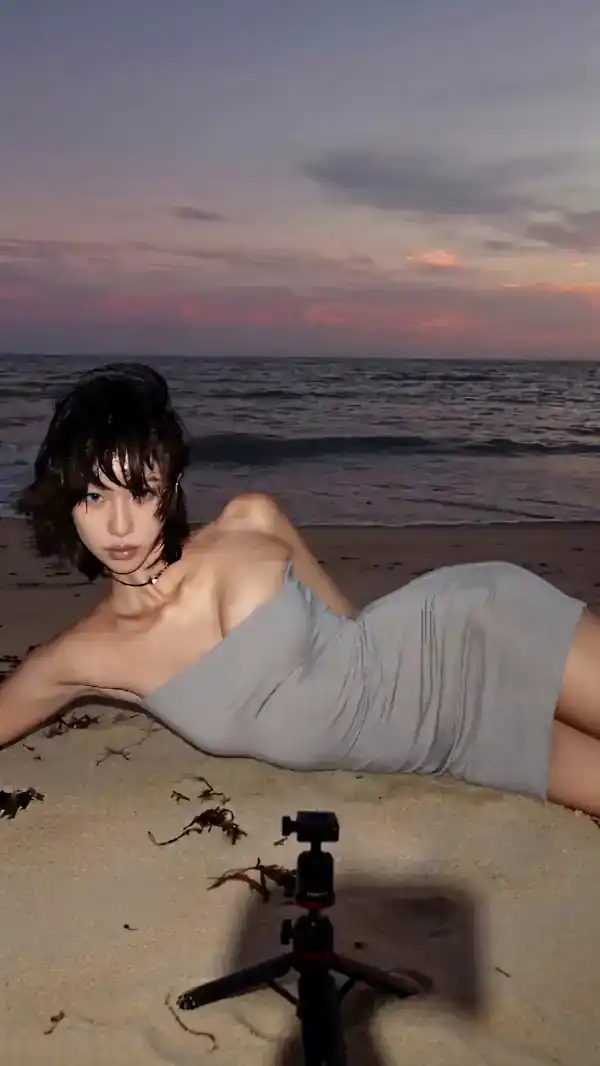
The most reliable trick in modern content production is deceptively simple: start with an image you love, then ask an AI model to bring it to life. One frame becomes two seconds of motion. A character concept becomes a scene. A product render becomes a lifestyle clip. Image-to-video generation has moved from research demo to daily tool, and it has changed the way creators think about animation, advertising, and storytelling.
This guide explains what image-to-video models actually do, how the major players differ, how to keep a character looking like the same person from shot to shot, and a workflow that turns a single still into a usable clip without burning your whole day.
Why Image-to-Video Changed the Creative Workflow
Text-to-video was the headline act, but image-to-video is the workhorse. There is a simple reason: control. When you generate from text alone, you are negotiating with the model about every detail, and the model will quietly change your character's face, your product's logo, or your scene's lighting from shot to shot. When you start from an image, you have already locked in the composition, the character, the colors, and the mood. The model's only job is to add motion that respects what you gave it.
That change in control matters enormously for real production. Brand work requires the logo to look identical in every frame. Narrative work requires the protagonist to be the same person from scene one to scene fifty. E-commerce requires the product to be recognizable. Image-to-video makes all of these achievable by people who are not VFX artists, which is why adoption exploded across agencies, indie studios, and solo creators.
It also changes iteration. With text-to-video, a bad result means rewriting the prompt and hoping. With image-to-video, a bad result usually means the starting image was wrong, so you fix the image, which you control completely, and re-run the motion pass. Iterating on a still image is faster, cheaper, and more predictable than iterating on a text prompt.
What Happens Inside an Image-to-Video Model
Under the hood, most image-to-video models share a similar architecture. They take your input image and a text prompt, then generate a sequence of frames that continues from the image while following the prompt's motion instructions.
The core technology is usually a diffusion model operating in latent space. The model compresses visual information into a compact representation, then progressively denoises a sequence of random noise frames toward a coherent video, conditioned on the starting image and the prompt. Early models treated the input image as a single conditioning signal and often drifted from it within a few seconds. Modern models use more sophisticated mechanisms: they encode the image into the same latent space as the video, so the first frame and every subsequent frame share a consistent representation, and they add motion modules that predict how features should move between frames.
A key concept is the keyframe. Many models let you supply not just a first frame but additional frames at specific points in the clip, telling the model where the motion should begin and end. This is how you achieve a specific action: your character starts on the left, ends on the right, and the model fills in the journey. Keyframe control is the difference between a generic camera push-in and a choreographed scene.
Another important concept is prompt adherence versus motion quality. These are often in tension. A model that strictly follows "the character waves" may produce stiff motion. A model that produces fluid, natural motion may reinterpret your instruction. The best current models balance the two, but you should know which one your tool favors and prompt accordingly.
The Model Landscape in Plain Terms
The image-to-video market has consolidated around a handful of strong models, each with a personality.
Flux is best known as an image generation family, and its video-oriented versions carry over the same strengths: strong prompt understanding, photorealistic output, and excellent detail fidelity. If your starting image is a photograph you want to animate with maximum realism, the Flux family is a strong default.
Kling, from China's Kuaishou, became famous for physical motion that looks natural: cloth that drapes, hair that moves, water that splashes believably. It also handles fast, energetic action well, which makes it a favorite for sports, dance, and fight scenes. Prompt adherence is a particular strength, meaning what you describe is usually what you get.
Sora, from OpenAI, is the narrative heavyweight. It produces long, coherent sequences and understands cause and effect in a scene, which makes it exceptional for storytelling where the motion needs to make sense in context. It is the model to reach for when the clip is not just movement but a moment with a beginning, middle, and end.
PixVerse built its reputation on control. Its recent versions emphasize cinematic parameters: lens choice, depth of field, camera movement. If your project is about looking like it was shot by a professional DP, PixVerse is the strongest contender.
Vidu, from China's Shengshu AI, is a multimodal workhorse. It accepts multiple reference images and blends them into a single coherent video, which is invaluable when you need a character or product to stay consistent while the scene changes around it.
MiniMax Hailuo and Luma Ray 2 round out the field with strong physics and natural motion at competitive cost. They are the models to test when you need good output per dollar on a large batch.
Matching Models to Creative Goals
Choosing a model is not about picking "the best," it is about matching strengths to the job.
For a talking-head or interview-style clip, prioritize facial realism and lip synchronization. Test Kling and the Flux family, and compare close-ups carefully.
For product and e-commerce video, prioritize fidelity to the product. The product is the star, and it must not morph. Models with strong image reference handling, like Vidu or PixVerse, tend to win here because they respect the input image.
For narrative and music-video work, prioritize coherence and emotion. Sora's understanding of scene logic shines when the clip needs to tell a mini-story in ten seconds.
For fast action, sports, or dance, prioritize physics and motion quality. Kling has consistently led this category, with MiniMax Hailuo close behind.
For corporate and explainer content, where you need predictable, on-brand output at scale, prioritize prompt adherence and speed of iteration. PixVerse's controls and Kling's reliability both work well.
The practical advice is to keep two or three models available rather than committing to one. The same starting image can produce radically different clips across models, and the right choice depends on the specific shot. A one-model strategy leaves results on the table.
Multi-Image Reference and Character Consistency
The biggest unsolved problem in AI video, character consistency, has a practical solution in multi-image reference. Instead of asking the model to invent a character from a text description, you give it several images of the character from different angles, poses, and lighting conditions, and the model fuses them into a unified understanding that carries through the video.
This works for real people, animated characters, and products alike. For a real person, provide three to five images with consistent identity and varied angles. For an animated character, include turnaround-style reference. For a product, include images from front, side, and three-quarter views, ideally on the same background.
The technique matters most in longer projects with multiple shots. If every shot in a series starts from a reference image of the same character, the character will remain recognizable across the whole series, which is what makes a multi-scene project feel like one production rather than a collection of random clips.
There are limits. Multi-image reference preserves identity but does not guarantee perfect costume or prop continuity. If a character's outfit must match exactly across shots, keep the reference images consistent in wardrobe, and be prepared to do light correction in post.
A Practical Image-to-Video Workflow
A repeatable workflow is worth more than any single model.
Start with the image. Generate or source the still, and spend time getting it right. The motion pass can only inherit what the still gives you, so fix composition, lighting, and detail before animating.
Write the motion prompt in two parts: what moves, and how it moves. "The character turns toward the camera and smiles while the background stays still" is a far better prompt than "the character moves." Specific verbs and clear subject-object relationships produce dramatically better adherence.
Test short. Generate a two-to-three-second test before committing to a longer clip. Check identity, physics, and prompt adherence. If the test fails, change the prompt or the starting image, not the clip length.
Scale up in stages. Once the short test passes, generate the full-length clip, then review frame by frame for drift. If the character's face changes halfway through, re-generate with a stronger reference setup or a different model.
Batch smart. For series work, keep a consistent starting-image style and a consistent prompt template, then vary only the specific action. This gives you a coherent series without re-solving the same creative problem each time.
Resolution and format planning belong in the workflow too. Decide the target resolution, aspect ratio, and frame rate before generating, not after. A clip generated at one aspect ratio crops badly when you need another, and re-generating a long clip to fix the frame is the most expensive mistake in the pipeline. Most platforms now accept vertical, square, and landscape formats, so the starting image and the model settings should match the final destination from the first pass.
Common Failure Modes and How to Work Around Them
Identity drift is the most common failure: the character changes face, wardrobe, or body type mid-clip. The fix is a stronger reference image, more reference angles, or a model known for consistency.
Physics violations are second: objects float, fabric clips through bodies, liquids behave like solids. Test your action on the model that handles physics best, usually Kling or MiniMax Hailuo, and adjust the prompt to describe natural behavior rather than a static concept.
Motion that is too subtle or too violent is third. Models tend to err toward gentle motion, which reads as boring, or toward over-animated motion, which reads as cartoonish. Describe the intensity explicitly and test the range.
Text rendering is fourth. Logos, signage, and subtitles in generated video often blur or corrupt. If text must be legible, generate it in post rather than asking the model to render it.
Flicker between shots is fifth. Two clips of the same scene generated separately will not match perfectly in lighting or texture. Plan for a color-grade pass in your editing software to unify the shots.
Frequently Asked Questions
How long can an image-to-video clip be? Most models generate a few seconds per clip, with the best current models reaching ten seconds or more. Longer videos are built by chaining clips, which is why consistency tools matter.
Can I use a real person's photo as the starting image? Yes, but be responsible about it. Use your own images or licensed material, and respect consent and platform policies.
What is the best model for a beginner? Start with whichever model is easiest to access and offers the controls you need. The Flux family and Kling are both forgiving for beginners because they handle prompts well.
Do I need a powerful computer? Cloud platforms handle the heavy compute. Locally, image-to-video generation is possible with consumer GPUs, but it is slow compared to cloud services.
How do I keep my video on brand? Lock your starting image first. Brand identity in AI video is decided by the still, the palette, and the composition you feed in, more than by the model.
Final Thoughts
Image-to-video is the rare AI capability that improved usability faster than it improved raw capability. The models got better at physics, coherence, and control, and the workflow got simpler at the same time. A creator with one strong still image and a clear idea of the motion can now produce clips that would have required a small animation team a few years ago.
The skill that separates good results from mediocre ones is not technical. It is the same skill that has always separated good directors from bad ones: knowing what you want before you generate, and being willing to iterate on the starting image until it is right. The model will handle the motion. You handle the vision.
