
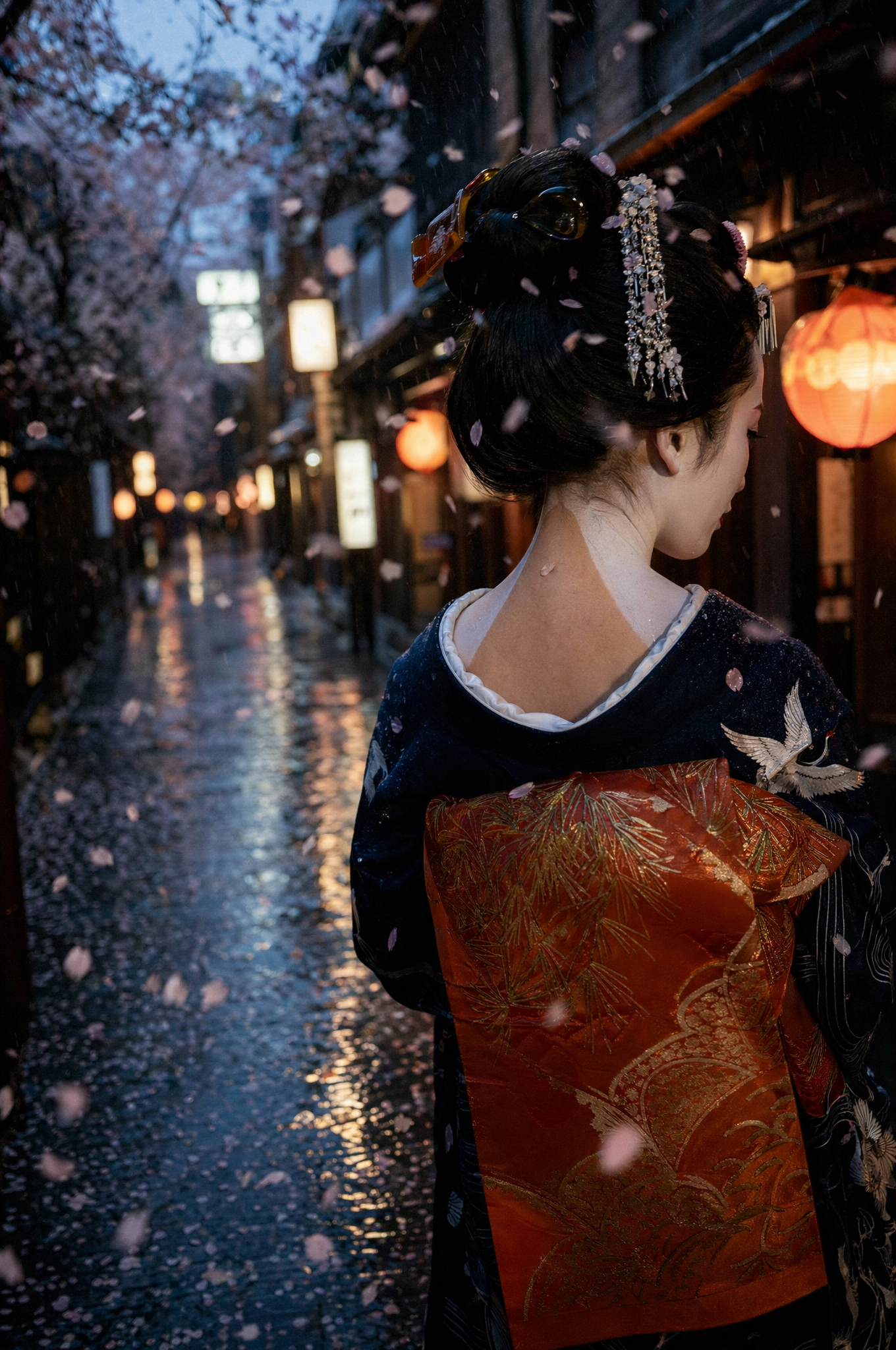

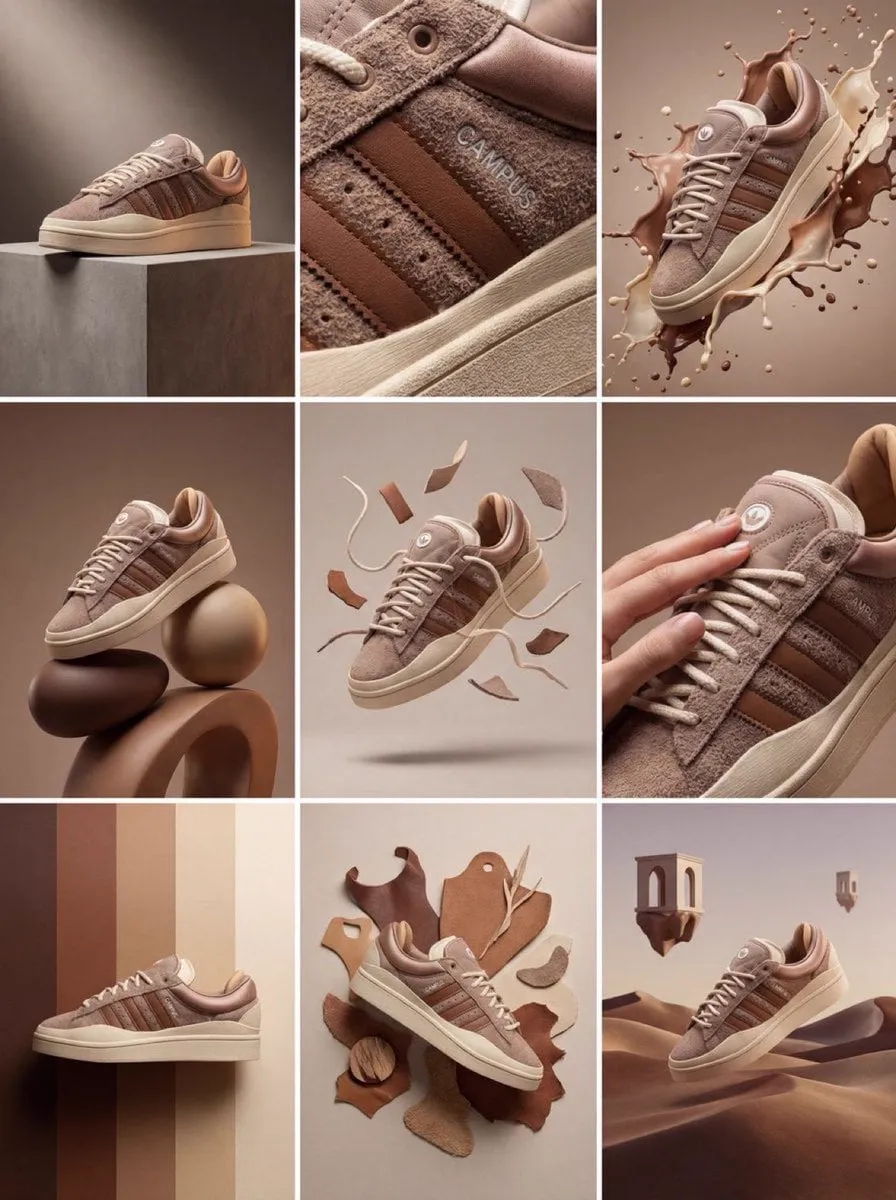
Still images have always carried a promise of motion. A photograph of a runner frozen mid-stride implies the next frame; a concept painting of a city implies a camera gliding through its streets. For most of the history of visual media, turning that implication into actual movement required expensive studios, careful rotoscoping, or painstaking manual animation. Image-to-video AI models have changed that equation. In a matter of minutes, a single static image can become a coherent, animated sequence with consistent lighting, physics, and style.
This guide explains what image-to-video generation is, how the models behind it work, what the current landscape looks like, and how to build a practical workflow around these tools without falling into the common traps.
Why Image-to-Video Generation Matters Right Now
The transition from still image to convincing animation used to be the domain of specialized studios and costly rendering pipelines. Generative AI has collapsed that barrier. What changed is not just speed, but control: creators can now take an image they already like, one that took hours of prompt tuning to achieve, and evolve it into motion while preserving its identity.
That matters for several practical reasons. First, consistency. When you generate video directly from text, every frame is invented from scratch, and characters drift, lighting shifts, and props morph between shots. Starting from an image anchors the entire sequence: the model knows what the subject looks like and has to keep it recognizable as it moves. Second, iteration. An art director can lock the look of a frame, approve it, and only then animate it, which fits the way creative teams actually work. Third, cost control. Because the visual foundation is already decided, fewer generations are wasted on exploration, and more budget goes to the shots that matter.
For brands, editors, and independent creators alike, image-to-video has moved from novelty to a routine production tool. The question is no longer whether to use it, but how to use it well.
How Image-to-Video Models Actually Work
Under the hood, modern image-to-video systems are built on diffusion architectures that treat time as an additional dimension. Instead of generating one frame and then the next, the model learns to denoise a full sequence of frames simultaneously, which forces it to reason about motion, occlusion, and lighting as a single coherent problem.
Early attempts at video generation suffered from visible artifacts: flickering textures, warping limbs, and subjects that changed appearance from frame to frame. The breakthrough came when models began operating on the whole clip rather than frame by frame. By training on large datasets of real footage, they learn physical priors, such as how fabric falls, how light reflects off moving surfaces, and how an object's silhouette changes during rotation.
Another important shift is the move toward spatial-temporal modeling. In practical terms, the newest models can keep a subject recognizable across many seconds, maintain a scene's layout, and even respect camera motion instructions. They also increasingly support conditioning beyond the image itself: text prompts describing the desired action, camera movement directives, and even reference images for style transfer.
The training data matters as much as the architecture. Models trained on diverse footage with strong scene labels handle unusual subjects better. Consistency management, the art of keeping a character's face, outfit, and environment stable across generations, has become one of the most important quality metrics, and it is where the best current models separate themselves from the rest.
The Current Model Landscape
No single model wins every job, which is why serious users think in terms of a model library rather than a favorite tool. The landscape splits into three rough groups.
Premium Cinematic Models
At the top end sit models that prioritize realism, long coherent scenes, and sophisticated storytelling. They are the ones used for hero shots, product films, and anything that needs to feel expensive. Their trade-offs are longer generation times and higher cost per output, which makes them unsuitable for bulk work but essential when quality is the whole point.
Specialist and Efficiency-Focused Models
A second tier focuses on doing one thing very well: fast turnaround, strong prompt adherence, or stylized output that does not aim for photorealism. These models are ideal for social clips, rapid concept exploration, and iteration-heavy workflows where you might generate ten variations before picking one.
Consistency-First Architectures
The third group is built around keeping characters and objects stable across multiple clips. These are the models you reach for when a project spans several shots featuring the same person or mascot. They often pair well with multi-image fusion, where several reference images, a face, an outfit, a location, a lighting setup, are combined into a single generation, dramatically reducing the risk of the character drifting between scenes.
Understanding which group fits your task is more valuable than memorizing benchmarks. A cinematic model applied to a throwaway social post wastes budget; an efficiency model applied to a hero shot wastes the opportunity.
Choosing the Right Model for Your Project
Start with the output, not the tool. Define what the final video must achieve, then work backwards to choose the model.
Ask four questions. First, what is the emotional register? Photorealistic product shots want a different model than stylized animated explainers. Second, how long does the sequence need to be? Long coherent scenes demand models with strong temporal consistency, while five-second loops open the door to faster options. Third, how much control does the shot require? If the camera must push in while the subject turns, you need a model that understands camera directives, not just motion prompts. Fourth, what is the iteration budget? If the client expects ten revisions, an expensive cinematic model may not be viable, and a mid-tier model with predictable behavior may be the smarter call.
It is also worth matching the model to the source image. A highly detailed, high-resolution reference image gives any model more to work with. A noisy, low-contrast image will produce mediocre motion no matter how capable the generator is. Garbage in, garbage out still applies; the difference is that the garbage now moves.
A Practical Workflow: From Still Image to Finished Clip
A repeatable workflow turns image-to-video from a gamble into a process.
Start with the still. Prepare a clean reference image at high resolution, with clear separation between subject and background and even lighting. If the image contains text or fine detail you need preserved, expect the model to struggle; simplify those areas in advance.
Write the motion prompt as a shot description. State what happens, in what order, and at what pace. Instead of "a person walks," try "a woman in a red coat walks from left to right across a rainy street, the camera follows her at eye level, cars pass in the background." Specific verbs and spatial relationships give the model far more signal than adjectives.
Generate a short test, not the final clip. Most platforms let you preview a low-resolution draft quickly. Evaluate it for three things: subject consistency, motion plausibility, and artifact level. If the face warps, adjust the reference or add a face-focused control. If the motion is stiff, rephrase the prompt with more action verbs.
Lock the seed and settings once a draft passes. Then generate the final version, ideally at a higher resolution, and inspect the full clip frame by frame for flicker or morphing.
Finally, treat post-production as part of the workflow. A small amount of color grading, stabilization, and sound design dramatically increases the perceived quality of a generated clip, and it is where human judgment still beats the model.
Integrating Image-to-Video into Production
The real leverage appears when image-to-video is wired into a production pipeline rather than used as a standalone toy.
Teams are increasingly building modular systems where a backend handles job orchestration, a queue manages GPU resources, and a database tracks every frame, prompt, and version. This architecture matters because multi-stage projects, image fusion followed by style transfer followed by animation, produce a lot of intermediate state. If the system cannot reliably track which version of a character belongs to which shot, the project collapses into chaos regardless of model quality.
Another integration point is the rise of AI director agents. These are systems that act like an assistant director: they break a script into shots, suggest compositions, and keep the narrative coherent across generations. They do not replace the human creative lead; they remove the mechanical overhead of keeping a hundred details consistent so the human can focus on taste.
For solo creators, integration can be as simple as a fixed folder structure and naming convention. Name every reference image and every prompt file the same way, keep a changelog of what worked, and reuse successful settings as presets. The tools change monthly; the discipline of organizing your process pays off forever.
Common Failure Modes and How to Fix Them
Most image-to-video disappointments come from a small set of recurring problems.
Face and character drift is the most common. Fix it by using a cleaner reference image, keeping the same character reference across all shots, and choosing a consistency-first model when the subject must persist across clips. Avoid switching models mid-project unless you are deliberately testing; every switch is an opportunity for the character to change.
Warping and morphing usually point to too much motion in a short clip. Reduce the amount of action, slow the camera, or shorten the sequence. Respect the model's comfortable envelope; pushing far beyond it produces glitches no prompt can fix.
Flicker and texture instability often result from high-frequency detail that the model cannot maintain. Simplify busy backgrounds, reduce fine text, and avoid repeating patterns like checkerboards or venetian blinds.
Unnatural physics, such as feet sliding or objects floating, is usually a prompt problem. Anchor the subject to the environment with phrases like "standing on the ground" or "holding the railing," and describe weight and contact explicitly.
Three Common Projects and How to Approach Them
The general advice becomes concrete when applied to real project types. Consider three recurring scenarios.
A product spot needs the hero shot to feel expensive. Use a premium cinematic model, provide a studio-lit reference image of the product, and write the motion prompt around a slow camera arc that reveals the product from multiple angles. Lock the first passing draft, then generate the final at maximum resolution. The budget concentrates on this one shot because it carries the campaign.
A character loop for social media needs the same character to appear week after week. Build a permanent character sheet, use a consistency-first model with multi-image fusion, and keep the same prompt template with only the action varying. The asset library you build becomes more valuable than any single clip, because it lets you produce new loops in minutes.
A concept teaser for internal approval needs speed over polish. Use an efficiency model, generate ten variations of the key idea in one batch, and present the strongest three. The purpose is decision-making, not delivery, so cost per variation matters more than fidelity.
Matching the approach to the project type is the difference between a tool that costs money and a tool that makes money. The same model that excels at hero shots is the wrong choice for teasers, and recognizing that distinction early saves both budget and time.
Frequently Asked Questions
Can image-to-video replace an entire animation pipeline? For many short-form and social use cases, yes. For broadcast-quality character animation with precise lip sync and complex rigging, no, not yet. The practical answer is that it replaces the most expensive parts of previsualization and can dramatically compress timelines, but skilled human oversight still produces the best results.
How many reference images do I need? One strong image is enough for a single clip. For multi-shot projects with the same character, provide a consistent reference set, ideally including a face close-up, a full-body shot, and a style sample, and reuse that same set across every shot.
Is image-to-video more expensive than text-to-video? Not necessarily. Because the visual foundation is fixed, you iterate less. Many teams find that total spend drops once they stop regenerating entire scenes from scratch.
What resolution and duration should I target? Match the deliverable. Social platforms favor vertical short clips; presentations favor 16:9. Generate at the highest resolution your budget allows, then downscale, since upscaling never recovers lost detail.
Do I need prompt engineering skills? Basic shot-description skills go a long way. Learn to describe action, camera, and spatial relationships explicitly, and you will outperform someone who only writes mood words, regardless of which model they use.
Can I use image-to-video for commercial client work? Yes, with the same care you would apply to any commissioned asset: use licensed reference material, confirm the platform's usage rights, and keep client approvals documented. Generated motion is a tool like any other; the professional obligations are unchanged.
What should I do when the model refuses to follow the reference image? Check that the reference is clean and unambiguous, simplify the motion request, and try a model with stronger reference adherence. If the platform offers separate controls for subject and style, calibrate them individually instead of relying on the prompt alone.
Key takeaways.
Image-to-video generation is a production tool, not a magic trick. The models have matured to the point where a single still image can become a coherent animated sequence with controllable motion, consistent characters, and cinematic quality. The competitive edge now comes from workflow: choosing the right model for the job, preparing strong reference images, writing precise shot descriptions, and keeping the process organized across a project. Master those habits, and the technology becomes a reliable part of your toolkit rather than a gamble.
