
Image to Video: How Diffusion Models Turn a Single Frame Into Motion
There is a moment that happens in every generative workflow, the instant a still image comes alive. A portrait blinks. A sky pours sideways into a storm. A character you just designed in a static frame starts walking toward the camera. That transition, from a frozen picture to a moving sequence, is currently one of the most exciting frontiers in AI content creation. Image-to-video tools have moved from a gimmick to something genuinely production-usable, and understanding how they work goes a long way toward using them well.
This article is not a product pitch. It is an examination of the technology, the models, and the practical strategies that define image-to-video in its current era. We will look at what actually happens inside these models, why consistency and control matter more than raw resolution, how you choose between competing approaches, and how creators at every scale can make image animation a reliable part of their workflow rather than a lucky accident.
What Image-to-Video Actually Does
Statistically speaking, image-to-video is a generation task where the input is a single image, or a small set of images, and the output is a coherent short video clip. But that simple description hides a hard problem. The model has to invent motion, physics, and timing that were never present in the still frame, while keeping the identity of the subject stable enough that it still looks like the same thing at the start, middle, and end of the clip.
That is the core tension of the whole field. A great still image carries a wealth of visual information about color, lighting, and form, but almost nothing about how those elements should move. So the model fills in the gaps, using its understanding of the world, learned from mountains of video, to propose what happens next. When it does this well, you get motion that feels inevitable, as if the camera had simply kept rolling. When it does it badly, the result is warping, doubling, and what creators affectionately call jelly physics.
The quality of that motion is defined by a few success factors. Temporal coherence is whether each frame is consistent with the ones before and after it, with no sudden identity swaps. Motion adherence is whether the movement follows the direction baked into the prompt or the reference. And visual integrity is whether the subject, the palette, and the scene stay plausible across the whole clip. Models are graded on these axes far more than on raw sharpness.
The Role of the Seed Image in Guiding Everything
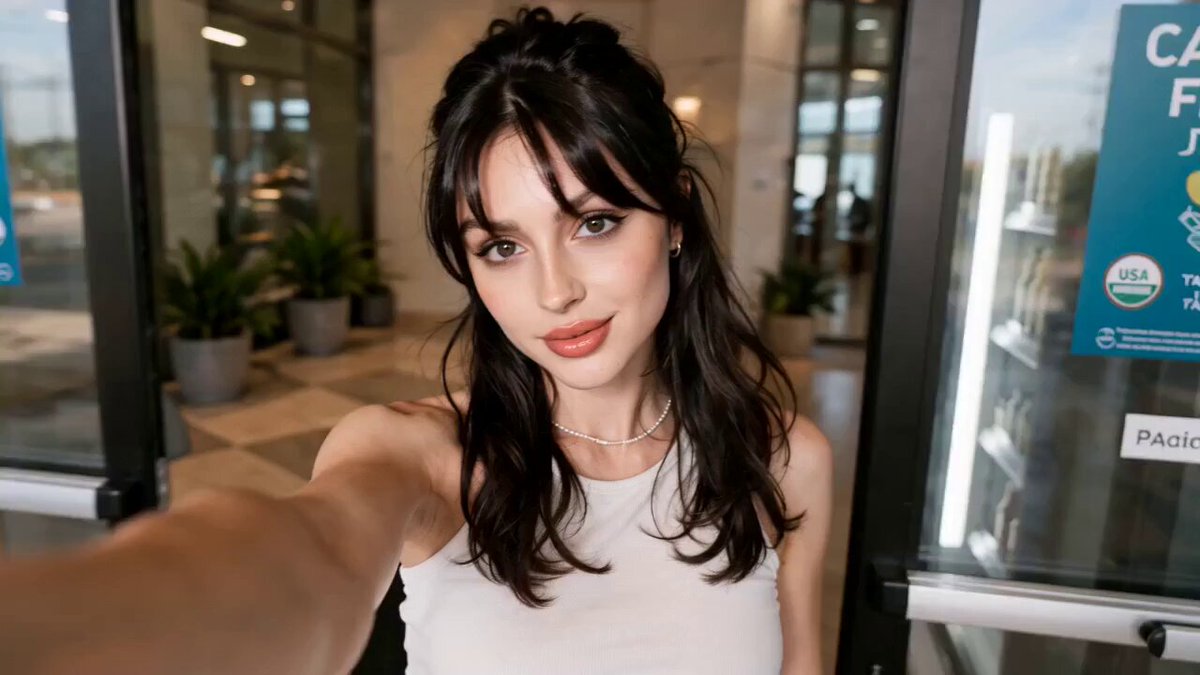
Think of the input image not as the video itself but as the anchor. It fixes the look, the composition, and the identity, and everything the model generates has to stay consistent with it. That anchor is why image-to-video is often more reliable and more controllable than pure text-to-video, which has to invent a whole scene from nothing.
The practical lesson is to spend real effort on the source image before you ask for motion. A clear, well-lit, well-composed image with the subject centered and an obvious directional composition will animate far more cleanly than a busy, cluttered, or ambiguous shot. If you know the subject should walk left, put them with space to their left and a directional cue in the frame. If you want a character to stay recognizable, give the model a face and a costume that are hard to lose. The image is doing half of the animation work, so make it earn its keep.
Composition also decides how much you can push. A scene with a single clear subject and a simple background gives the model freedom to move the subject and the camera. A dense group scene with many interacting characters is asking for a lot, and models will struggle to keep everyone consistent. When you want reliability, simplify the image and let the motion be the star.
Consistency Is the Real Product Killer
On paper, every new model promises higher resolution and longer clips. In practice, what separates a usable tool from a toy is consistency. A clip that is sharp but where the character's face melts halfway through is worthless for real production. A slightly softer clip where the subject remains recognizably the same from frame to frame is genuinely usable.
This is why the most valuable development in image-to-video has been multi-image and reference-based consistency. Give the model more than one anchor of a character, a reference sheet showing the same subject from multiple angles, and it has a much better chance of keeping that subject coherent when it moves. This single capability is what made the leap from one-off novelty clips to ongoing series and character-driven stories possible.
For creators, the workflow looks like this: build a small reference bank for any recurring subject, maybe three to six images showing consistent appearance and key features, and feed those references into the generation alongside any single starting frame. The model can then draw on that consistent identity to animate variations while staying recognizably the same character. This is the difference between random animated images and a coherent body of work.
Control, Prompting, and the Cinematic Levers
A modern image-to-video model is controllable in ways that early diffusion tools were not. You can steer camera movement, pan, tilt, zoom, orbit, the direction and subtlety of motion, and often the framing. This gives you the tools of a cinematographer rather than the freedom of a slot machine.
The prompt does the steering. Describing camera action in plain language, such as slow push-in as the subject turns toward the camera, or drone-like orbit around the character, yields dramatically different results than a neutral description. Movement verbs are the most powerful tokens in this space: glide, drift, push, orbit, circle, settle, rush. The more you treat the prompt like a shot list rather than a caption, the more cinematic the output becomes.
Holding a few keys in mind helps. Shorter motion requests, a gesture, a turn, a blink, are more reliable than elaborate multistep actions across a long clip. Simple directional motion is far more stable than complex interactions. And subtle usually wins, over-the-top movement invites warping while restrained motion tends to stay clean. Push the bounds after you have a reliable baseline, not before.
Choosing a Model Approach for Your Project
The market for image-to-video models is crowded, and it helps to understand the broad categories rather than chasing one name. High-fidelity cinematic models aim for photoreal results and rich motion quality, and they are the default choice for anything meant to feel like filmed footage. Fast, lightweight models trade some fidelity for speed and are ideal when you are iterating on storyboards, testing dozens of shots, or working in a high-volume social pipeline. Accessible and freemium tools lower the barrier further, inviting experimentation before you commit a budget.
Your choice should be driven by your goal, not by the newest hype. A brand campaign needs the quality tier. A draft animatic for a longer piece wants the fast tier so you can see motion options quickly. An educational explainer might be perfectly served by an accessible model. Matching model class to task stage saves both time and frustration.
Many teams use a mixed workflow. Generate fast, dirty motion studies to decide direction, then commit the winning shots to a higher-fidelity model for the final render. The fast pass costs almost nothing and prevents wasted high-quality generations on ideas that were never going to work. It is a small habit with outsized returns.
Where Image-to-Video Fits in a Real Production Team
Image-to-video is not replacing the whole pipeline; it is slotting into specific, high-value stages. Concept visualization is one of the strongest uses, animating still concept art early in a project to communicate a look, a mood, and a story beat before anything is committed. This is transformative for pitches and internal alignment because a moving representation communicates far more than a stack of stills.
Character design and development is another sweet spot. Animating a designed character lets you assess how they read in motion, how their costume behaves, and whether their design holds up beyond a static front view, all before expensive production. Product and marketing teams use the same trick to show a product from multiple angles in motion for ads and social.
And image-to-video is the engine of the modern storyboarding animatic. Instead of a board of static panels, you get motion-studied sequences that preserve narrative feel and timing. Teams keep their books, their style, and their identity, and use the tool to dramatize sequences. It is a workflow that aligns creative and technical people around the same moving picture.
Building a Small Shot Vocabulary
One of the fastest ways to improve your image-to-video results is to build a tiny vocabulary of reliable camera moves and learn what each does to a scene. The push-in draws the eye toward a subject and builds intimacy or tension. The pull-back widens context and reveals scale. A slow pan moves attention across a scene, and an orbit rotates the framing around a subject to give dimensionality. A top-down tilt establishes geography, while a low dolly emphasizes power or speed.
Commit one or two of these to memory at a time and deliberately apply them to simple scenes. Before long, you will naturally reach for a push-in for a tense moment or a pull-back for a reveal, precisely because you have practiced how each motion reads. This shot vocabulary is the shared language between you and the model, and the more fluently you speak it, the better the tool responds. It is also the same vocabulary that keeps your work aesthetically coherent, because you are choosing a move that serves the story rather than accepting whatever motion the model happened to invent.
For Small Teams and Small Budgets, the Revolution Is Access
The most culturally significant effect of this technology has been access. Historically, sophisticated video production required a studio, an agency, or a generous budget. Image-to-video collapses that barrier. A solo creator can design a character in one tool, animate a shot in another, and cut a finished sequence without hiring anyone, all in a single afternoon.
That access has real strategic consequences. Small businesses can prototype video advertisements without commissioning full production. Educators can generate illustrative content for lessons. Indie filmmakers can pre-visualize ambitious scenes they could not afford to shoot. And students can learn visual storytelling by doing, rather than by reading about a pipeline they cannot touch.
The creative bar is not lowered, though. Access to the tool does not remove the need for taste, restraint, and editing. Anyone can generate a couple of dozen moving images; the people who make something worth watching are the ones who know which shots to keep, how to sequence them, and when to let a subtle camera move do the work that a frantic one would ruin.
A Strategy for Adoption in Your Own Work
If you are new to image-to-video, resist the urge to jump straight to big cinematic ambitions. Start with fundamentals. Take a single clear image, a portrait or a simple scene, and practice simple movements, a turn, a glance, a gentle zoom. Learn how the seed image constrains the result and how the prompt steers it. Build a mental model of what fails and why before you reach for complex choreography.
Then develop a reference habit. Any subject you plan to use more than once, a character, a product, a location, deserves a small consistency bank. Feed those references in and watch your outputs become more grounded. Next, learn to read the axis of quality and choose the model tier that matches the production stage, fast for exploration, high fidelity for finals.
Finally, decide what this technology lets you make that you could not before, and build toward that. A series you always assumed required a team. A pitch you could now animate. A body of character work that stays consistent episode after episode. Image-to-video is a creative tool, and like any tool, it is defined less by its specs and more by the hands that use it. The models will keep improving, but the taste and workflow you develop now are what will set your work apart as the technology matures.
