
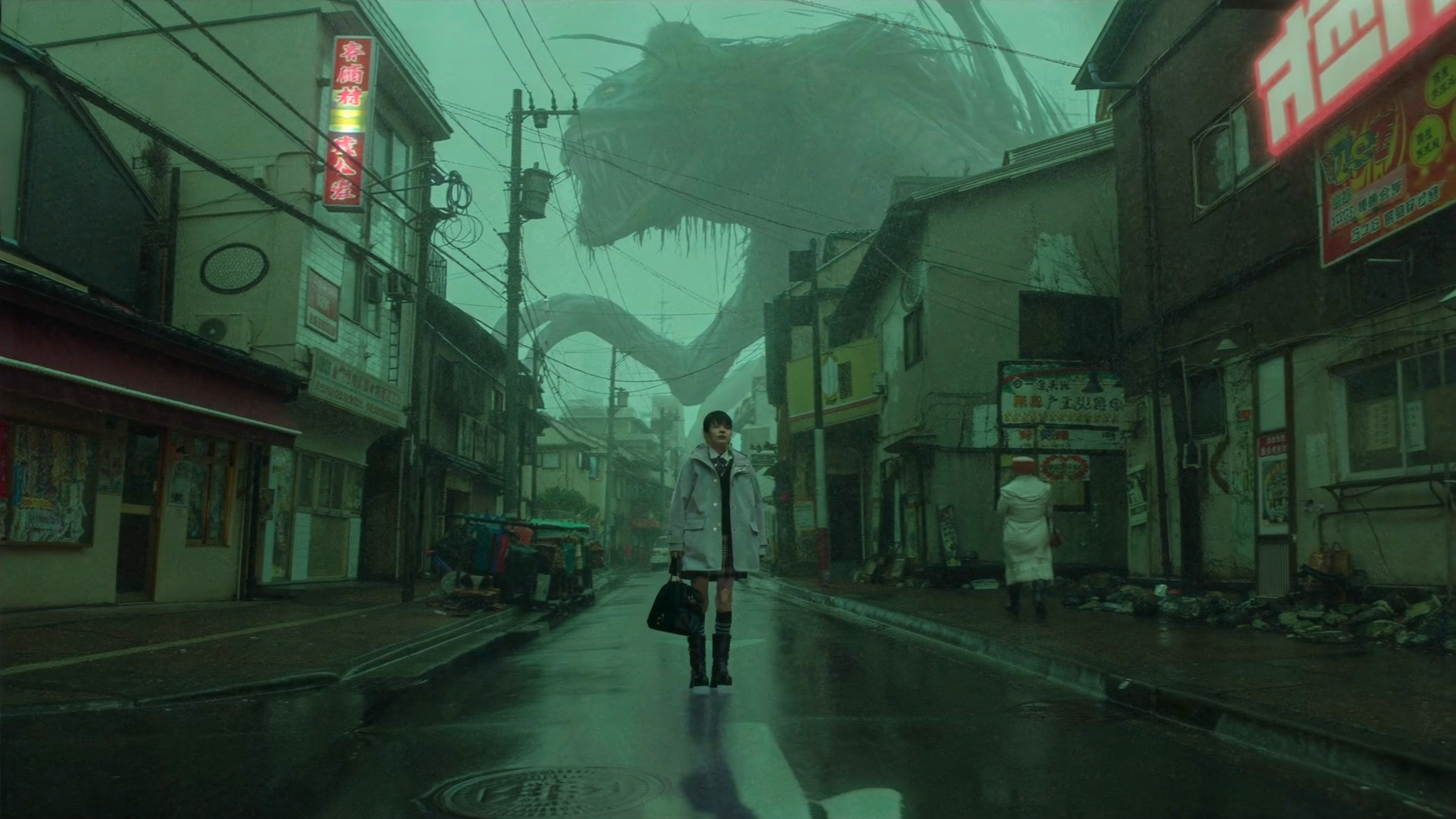
The AI Video Market Reached a Tipping Point
For the past few years, choosing an AI video generator felt like picking a company rather than a tool. You committed to one platform, learned its quirks, accepted its limitations, and built your workflow around it. That era is over. The current generation of text-to-video models has crossed a threshold where the real question is no longer "does it work?" but "which one works best for what I am trying to make?"
Two models define that question right now: Kling 3.2 and PixVerse V4.5. Both can produce footage that, only a few seasons ago, would have required a camera crew, a set, and a post-production budget. Both are used by independent creators, agencies, and studios for everything from short-form social clips to long-form narrative work. But they approach the same task from different directions, and that difference matters far more than benchmark scores.
This guide compares them on the dimensions that actually affect your daily work: how well they understand instructions, how consistently they keep a character or scene intact, how much control they give you over camera and mood, and how easily they slot into a real production pipeline. You will also find a practical decision framework and a workflow that uses both models where each one is strongest.
Why the Landscape Changed So Quickly
The first wave of AI video models was impressive in a technical sense but unreliable in practice. Clips were short, motion was jittery, and the models struggled to connect a written description to a believable moving image. The second wave, which includes both Kling 3.2 and PixVerse V4.5, benefits from two structural advances.
The first is better video-specific architectures. Instead of treating video as a sequence of unrelated frames, modern models learn how motion, physics, and lighting behave across time. That is why current outputs have smoother movement, more consistent physics, and fewer of the melting faces and warping backgrounds that used to appear every few seconds.
The second is training data and evaluation at scale. The teams behind these models now test against thousands of real-world prompts covering action, dialogue, atmosphere, and style. The result is a generation of tools that understands more of what you write, ignores less of it, and fails in more predictable ways. Predictable failure matters in production: if you know a model will struggle with hands or fast motion, you can plan around it instead of discovering it on the last render.
For creators, the practical effect is simple. Video that used to take days now takes hours, and video that used to be impossible for a small team is now feasible. The constraint has shifted from budget and equipment to judgment: knowing which model to reach for, and how to brief it.
What Kling 3.2 Does Best
Kling 3.2 is often described as the model that thinks before it renders. Its strengths come from deep semantic understanding: it parses the meaning of a prompt, holds onto the important details, and reflects them in the output rather than merely producing a generic moving image.
Instruction Following and Semantic Depth
Give Kling 3.2 a prompt with multiple interacting elements, such as "a woman in a red raincoat walks through a night market, neon signs reflecting in puddles, steam rising from a food stall," and it will reliably include most of those elements in the right relationship. It handles cause and effect well, which makes it strong for narrative scenes where the visual needs to match a story beat. This is not just about generating a pretty shot; it is about generating the shot that your script actually calls for.
Character Fidelity Across Shots
The other standout strength is character consistency. When you provide reference material and keep the character description stable across prompts, Kling 3.2 holds onto facial features, clothing, and posture much better than earlier versions. For series, episodes, or any project where the same hero appears in multiple scenes, this dramatically reduces the amount of corrective work in post.
Where Kling 3.2 Still Struggles
No model is perfect. Kling 3.2's focus on semantic accuracy can make its default output feel measured rather than flashy. If you want aggressive camera movements, punchy edits, or exaggerated visual style straight out of the box, you will often need to push it with explicit camera and style language. Fast, chaotic motion still produces occasional artifacts, and very long single takes can drift in subtle ways.
What PixVerse V4.5 Does Best
PixVerse V4.5 comes at the problem from the opposite direction. It is built like a director's toolkit: less concerned with being the smartest interpreter of text and more concerned with giving you control over the cinematic result.
Cinematic Control and Camera Language
PixVerse V4.5 understands camera instructions with unusual precision. Prompts that specify dolly-ins, crane shots, handheld wobble, or slow push-ins produce output that actually moves the way you asked. For editors and filmmakers, this is a huge time saver, because camera language is the difference between footage that feels generated and footage that feels shot.
Tool Integration for a Complete Shot
Where PixVerse V4.5 really separates itself is in how much of the final look you can control inside the model. Style references, motion presets, aspect ratio handling, and timing controls are more accessible and more predictable than on most competing tools. You can iterate on a look without leaving the generator, which matters when you are producing dozens of clips for a single campaign.
Where PixVerse V4.5 Still Struggles
The trade-off is that PixVerse V4.5 can be more literal than interpretive. Complex narrative prompts with layered meaning sometimes come out visually correct but emotionally flat. It also rewards precision: vague prompts produce generic output more quickly than they do on Kling 3.2, so you need to bring a clearer brief to the table.
Head-to-Head: The Practical Comparison
The best way to compare the two models is to look at the decisions you will actually make in production.
Instruction depth: Kling 3.2 wins for complex, multi-element prompts and narrative scenes. PixVerse V4.5 wins when the instructions are mostly about camera and movement.
Character consistency: Kling 3.2 holds identity more reliably across shots, especially when combined with reference images. PixVerse V4.5 is competitive but requires stricter prompt discipline.
Camera control: PixVerse V4.5 is the clear leader. If your project lives or dies on specific camera moves, it is the safer choice.
Style transfer: PixVerse V4.5 makes it easier to lock a visual style across many clips, which is ideal for branded content and series.
Speed of iteration: both are fast, but PixVerse V4.5 tends to produce usable output from a precise prompt in fewer attempts, while Kling 3.2 may need more tries to reach the same polish on flashy sequences.
Learning curve: Kling 3.2 is more forgiving of messy prompts. PixVerse V4.5 rewards planning and rewards it quickly.
Decision Criteria: Which Model for Which Project
You can build a simple decision tree around four questions.
First, what is the core of the project? If the video exists to tell a story, with characters, emotions, and narrative beats, start with Kling 3.2. If the video exists to showcase a product, a space, or a visual idea with strong motion, start with PixVerse V4.5.
Second, how much does camera movement matter? Product shots, architectural fly-throughs, and dynamic commercials benefit from PixVerse V4.5's precise camera language. Dialogue scenes, character arcs, and atmospheric storytelling benefit from Kling 3.2's semantic grounding.
Third, will the same character or setting appear in many clips? For series, episodic content, or any project with a recurring hero, Kling 3.2's consistency is a major advantage. For one-off clips where each shot is independent, that advantage matters less.
Fourth, how fast do you need to iterate? If you are producing a high volume of clips against a deadline and you know exactly what each one should look like, PixVerse V4.5 lets you move faster. If you are still discovering the look and need a model that responds well to exploration, Kling 3.2 is more forgiving.
None of this is a verdict that one model is better. It is a map of where each model earns its place.
Using Both Models in One Pipeline
The strongest workflow in 2026 treats these models as complementary, not competitive. A typical production pipeline can use each where it shines.
Start with a storyboard or a shot list. For each shot, mark two things: the narrative intent and the camera intent. Narrative-heavy shots, such as a character's reaction or an emotional close-up, go to Kling 3.2 with a detailed description of the moment. Camera-driven shots, such as a slow reveal of a location or a dynamic product pan, go to PixVerse V4.5 with explicit camera language.
Keep one shared reference set for characters, locations, and color grading. Use the same reference images and the same written descriptions across both models. This is the single most effective way to keep a multi-model project visually coherent, because it forces you to define the look once instead of rediscovering it in each tool.
Then assemble in your editor as usual. Reserve the AI generators for footage production, and keep editing, sound, and color in the tools you already use. This separation keeps the workflow predictable and makes it easy to swap a model later if something better arrives.
Practical Tips for Better Results with Either Model
Whatever you choose, a few habits reliably improve output quality.
Write prompts in layers. Start with the subject, add the environment, then add lighting and mood, then add camera and motion. Each layer gives the model more context without overwhelming it.
Be specific about the things that matter and silent about the things that do not. If the shirt color matters, specify it. If it does not, leave it alone; every extra constraint narrows the model's options.
Use reference images whenever the model supports them. A single strong reference for a character or a location beats three paragraphs of description.
Generate at the highest resolution your plan allows, and resize in post. Downscaling preserves quality; upscaling never adds detail that was not there.
Keep a prompt library. When a prompt works, save it, note what changed between attempts, and reuse the structure for future shots. Over a few weeks this becomes the most valuable asset in your workflow.
Budget for retries. Even the best prompts fail sometimes. Plan two or three attempts per shot, and treat the first pass as exploration rather than delivery.
FAQ
Is Kling 3.2 better than PixVerse V4.5 overall? No. They are better at different things. Kling 3.2 is stronger at narrative understanding and character consistency; PixVerse V4.5 is stronger at camera control and style iteration.
Can I use both models in one project? Yes, and for many projects that is the best approach. Keep shared references and consistent descriptions to preserve visual coherence.
Which model is better for beginners? Kling 3.2 is more forgiving of vague prompts, which makes it an easier starting point. PixVerse V4.5 rewards a clear brief, so it shines once you know exactly what you want.
How do I keep a character consistent across shots? Use the same reference images, keep the written description identical, and avoid changing lighting or camera language between attempts for the same character.
Which model is better for short-form social content? For volume production with precise visual ideas, PixVerse V4.5 tends to be faster. For story-driven short films, Kling 3.2 gives you more narrative control.
Bottom Line
Kling 3.2 and PixVerse V4.5 represent two philosophies that now coexist in the AI video space. One interprets your story and protects your characters; the other executes your camera and locks your style. Choosing between them is really a question about your own work: what you make, how you make it, and where you need the machine to be strongest.
If you produce narrative content, series, or anything with recurring characters, Kling 3.2 is the model to build around, with PixVerse V4.5 as the camera specialist in your pipeline. If you produce branded content, commercials, or high-volume social clips where the visual idea is king, PixVerse V4.5 should lead, with Kling 3.2 handling the shots that need emotional depth.
The models will keep improving, and the leaders will change. What will not change is the skill that matters most: knowing what each tool is for and using it where it earns its keep. That judgment, more than any single model, is what separates reliable production from endless experimentation.
