
Why the Base Model Choice Shapes Your Whole Pipeline
Choosing between AI video models feels like picking between two impressive demos, but the choice is actually a pipeline decision. The base model determines the visual language of your output, the prompt style you need to learn, the way you handle characters, the cost of iteration, and the kind of work you can credibly sell. Switch models halfway through a project and you may discover that the style, the physics, and even the file conventions do not carry over cleanly.
This guide compares two of the most talked-about engines for AI animation: Kling, the Chinese model known for crisp visuals and controllable motion, and Sora, the OpenAI system famous for its understanding of natural language and physical plausibility. Rather than declaring a winner, the goal is to give you a decision framework: what each model is actually good at, where it struggles, and which scenarios should push you toward one or the other.
Both models represent the state of the art in different directions. Kling is built for production pragmatism: fast, controllable, and reliable on the fundamentals. Sora is built for ambition: richer scene understanding, longer coherent sequences, and a closer relationship between what you write and what you see. The best work increasingly uses both, but you need to know which one anchors your pipeline before you can use the other wisely.
Architecture and Inference: What Drives the Output
The underlying architecture explains most of the difference in behavior. Sora-class systems are built around large-scale video diffusion trained on massive, diverse datasets, with an emphasis on modeling the physical world: how objects move, how light behaves, how interactions unfold over time. This is why Sora handles complex prompts with implicit instructions well. You can describe a scene loosely, and the model fills in plausible physics and detail, often with surprising creativity.
Kling, in its current generation, is engineered for inference efficiency and controllable generation. It produces sharp, high-detail frames with reliable prompt adherence, and it is designed to run fast enough for practical production loops. Where Sora feels like a collaborator that interprets your intent, Kling feels like a precision tool that executes your instructions.
The practical consequences are immediate. If your workflow depends on generating many versions quickly, Kling's speed is a real advantage. If your workflow depends on long, complex shots where physics and coherence matter more than iteration speed, Sora's modeling strength wins. Neither architecture is "better"; they are optimized for different jobs, and knowing which job you are doing is half the decision.
Prompt Adherence vs Creative Interpretation
Prompt adherence is the model's willingness to follow exactly what you wrote; creative interpretation is its willingness to infer, embellish, and surprise. The two are in tension, and the two models resolve that tension differently.
Kling leans hard toward adherence. If you specify a composition, a camera move, and a style, it tends to deliver those specifics with dependable precision. This makes it a workhorse for client work, brand guidelines, and any project where the brief is fixed and the output must match it. The trade-off is that it is less likely to surprise you with something brilliant you did not ask for.
Sora leans toward interpretation. It understands the spirit of a prompt, and it will happily invent details that make the scene more coherent and more interesting. This is a gift for concept exploration and for projects where the prompt is a direction rather than a contract. The trade-off is less determinism: if you need a very specific shot, you may need to iterate, rephrase, or use reference images to pull it into line.
The practical rule: use Kling when the shot is defined and the team needs reliability; use Sora when the shot is exploratory and the team needs ideas. When a project needs both, run the exploration on Sora and the locked-down execution on Kling.
Long-Term Coherence and Character Consistency
Character consistency is the make-or-break skill in AI animation, and both models handle it, but with different strengths.
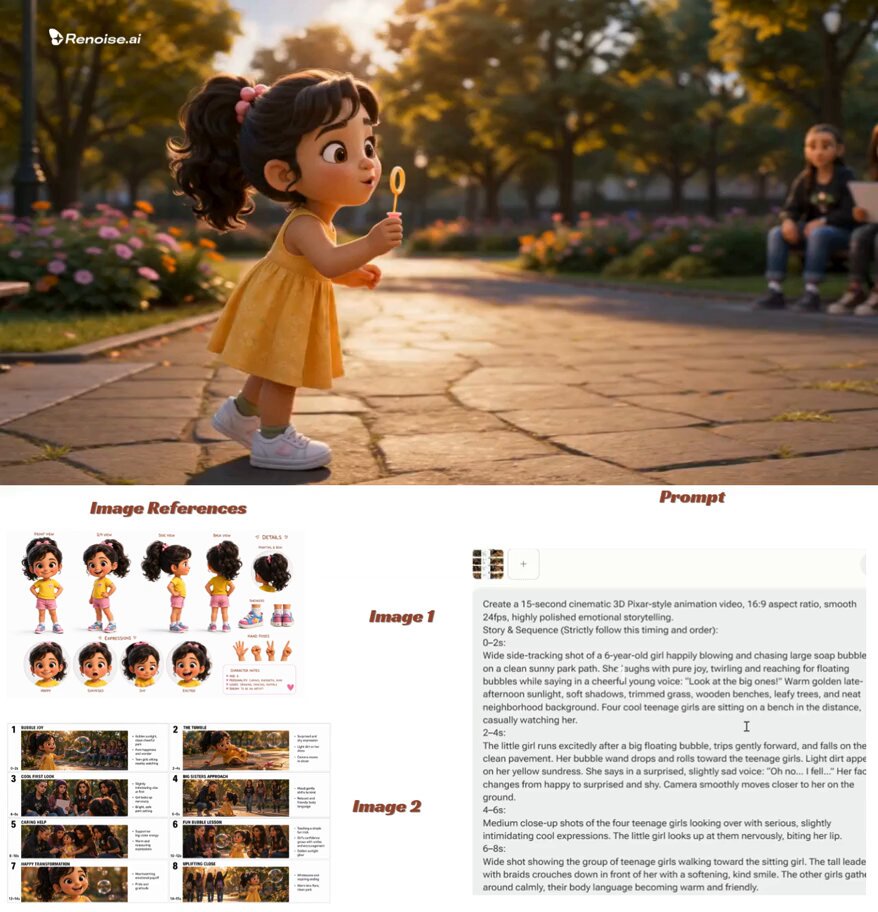
Kling's approach is reference-driven and practical. It handles image input well, including multi-reference workflows, which means you can feed it a character sheet and get consistent faces across shots. Its crisp rendering also means that when consistency holds, it holds cleanly, with detailed, stable character design. For stylized characters, cartoons, and brand mascots, this is often the most efficient path.
Sora's strength is long-term coherence within a scene. Because its architecture models sequences more holistically, it maintains object identity and spatial relationships across longer stretches of footage, which matters for shots where the camera moves a lot or where multiple objects interact over time. Its weakness is the same one every model has: carrying a specific character across separately generated shots still requires reference discipline.
Neither model removes the need for workflow. You still need a character sheet, consistent prompts, and a verification step between shots. What changes is the failure mode: with Kling, watch for drift in style and detail; with Sora, watch for over-interpretation that changes the design. The workflow that works is: anchor with references, generate, compare against the anchor, and regenerate anything that drifts.
Style and Motion: Where Each Model Excels
Style and motion are where creators feel the difference most viscerally.
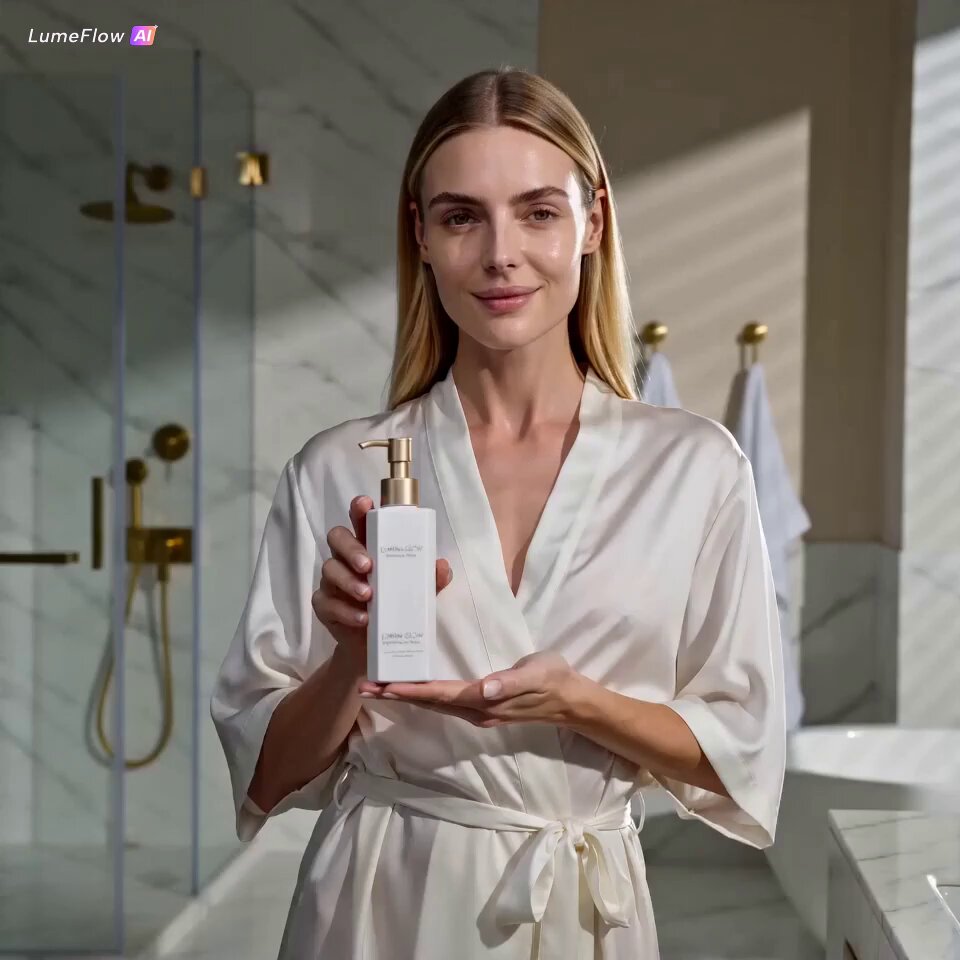
Kling excels at clean, sharp, well-defined motion. Its outputs have a crispness that reads well on social feeds, and its prompt adherence makes it easy to direct specific actions: a character walking, a product rotating, a camera tracking a subject. It is particularly strong for stylized and animated content, where defined lines and controlled movement matter more than photorealism. For motion graphics, character animation, and any content with a strong art direction, Kling is often the first choice.
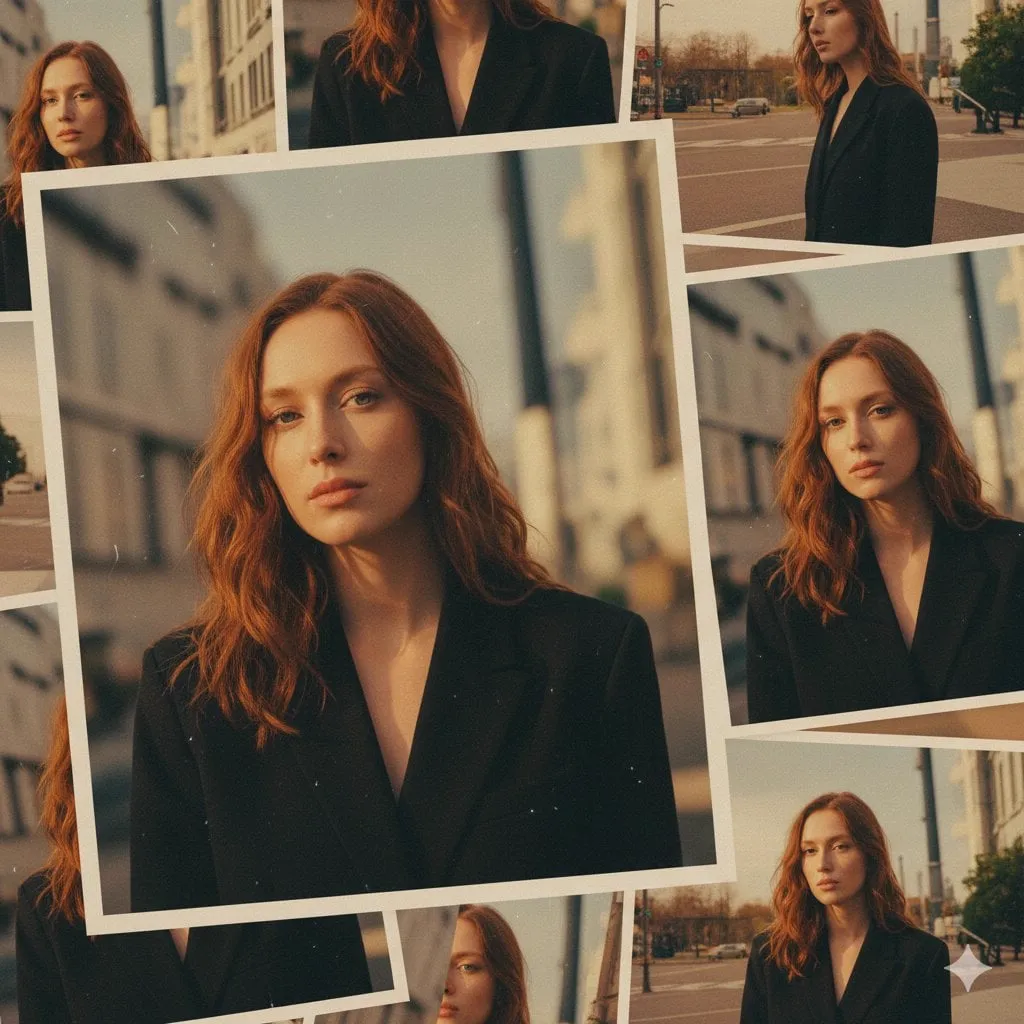
Sora excels at physical realism and cinematic sweep. Its understanding of the world produces natural interactions, believable lighting, and camera behavior that feels shot by a cinematographer. For photoreal footage, landscape shots, complex physics, and scenes where the environment is as important as the subject, Sora's output has a quality ceiling that is hard to match. It is the model to reach for when the brief is "make it feel real" rather than "make it look clean."
A useful shorthand: Kling for control and style, Sora for realism and atmosphere. Most production calendars contain both kinds of work, which is why so many teams end up using both engines side by side.
Workflow Fit: Iteration Speed and Integration
Beyond output quality, the models differ in how they fit into a daily workflow.
Kling is built for iteration. Its speed makes it viable for generating drafts, testing variations, and producing volume, which suits teams that need to explore many directions or publish frequently. It integrates smoothly into batch workflows, and its predictable behavior means you can standardize prompts and get consistent results across a series. If your bottleneck is throughput, Kling is the pragmatic choice.
Sora's generation is heavier, and the trade-off buys capability rather than speed. Its results are harder to batch because each prompt can unfold in unexpected directions, which means you spend more time reviewing and selecting. But for the shots that matter, the quality is worth the slower loop. If your bottleneck is quality on hero shots, Sora earns its place in the pipeline.
The hybrid pattern is increasingly common: use Kling for the bulk of the work, the drafts, the variations, the background shots, and reserve Sora for the opening shot, the complex action sequence, or the single frame that defines the piece. This gives you the speed of one model and the ceiling of the other, at a cost you control.
Practical Scenarios: Which Model to Reach For
Rather than abstract advice, here are concrete scenarios and the model each one points to.
Scenario one: a brand needs a series of stylized product animations with strict visual guidelines. Reach for Kling. Its prompt adherence and clean rendering keep the brand look intact, and its speed lets the team hit a high publishing cadence.
Scenario two: a filmmaker wants an exploratory dream sequence where the physics and atmosphere matter more than the literal brief. Reach for Sora. Its interpretation and realism will produce something closer to a mood than to a spec, which is exactly what this shot needs.
Scenario three: an indie animator needs a consistent character across an entire short film. Start with Kling's reference workflows for the character setup, and use Sora selectively for the hero moments. The character sheet is the shared contract between the two.
Scenario four: a creator is testing ten hook variations for a short-form channel. Use Kling for the fast drafts, identify the two strongest directions, then produce the final versions on the model that best suits each direction. Speed wins the exploration; quality wins the release.
Scenario five: an agency needs to deliver a pitch deck with concept stills and animatics for three different campaign directions. The answer is neither model alone; it is a workflow. Draft every direction on Kling for speed, so the team can react to real frames instead of storyboard sketches. Once the client picks a direction, build the final look on whichever engine matches the approved aesthetic, and use Sora only if the chosen concept depends on cinematic realism or complex motion. The agency's differentiator is not the engine; it is the ability to move from brief to visual evidence fast enough to shape the client's decision.
Combining Both: The Hybrid Animation Pipeline
The strongest pipelines do not choose between Kling and Sora; they sequence them. Here is a hybrid workflow that has worked well in practice.
Begin with Sora for exploration. Generate loose versions of the key moments to find the visual language, the motion quality, and the ideas you would not have imagined. Review these as inspiration, not as final footage.
Then lock the direction with Kling. Take the winning concept, define the style block, build the character references, and produce the structured shots with Kling's precision. This is where the bulk of the production happens, because this is where reliability matters.
Use Sora again for the hero shots. Identify the moments that define the piece, the opening, the climax, the hardest physics, and generate them on Sora for the quality ceiling. Integrate them into the Kling-built sequence, and grade the whole piece together so the two engines share a consistent look.
The result is a piece that has Kling's control and consistency where it needs to be predictable, and Sora's realism and ambition where it needs to be memorable. The models are competitors in the demo reel and collaborators in the production pipeline.
FAQ
Which model is better for beginners?
Kling is generally easier to start with because its prompt adherence is forgiving: you write what you want and you get closer to it. Sora rewards experience because its interpretation can be unpredictable, but it is also where many creators find their most distinctive results.
Do I need to own both models?
No. If your work is consistently one kind, stylized and controlled or realistic and exploratory, one model may serve you well. Add the second when a specific project demands the other's strength, then judge whether the hybrid pays for itself.
How do I keep characters consistent when switching models?
Build a character sheet: front, side, and full-body reference images plus a written style block. Use the same references and the same style text in both engines, and verify every shot against the sheet before you accept it.
Is Sora always better for realism?
Generally yes for physical plausibility and cinematic realism, but "better" depends on the subject. For stylized or graphic content, Kling's sharp rendering is often the more appropriate realism, the realism of the art form rather than the realism of the camera.
Can I use both models in one project without a jarring look?
Yes, if you unify after generation: a shared style block, matched color grading, and consistent character references. The viewer should not be able to tell which engine made which shot; if they can, the unification step failed.
