

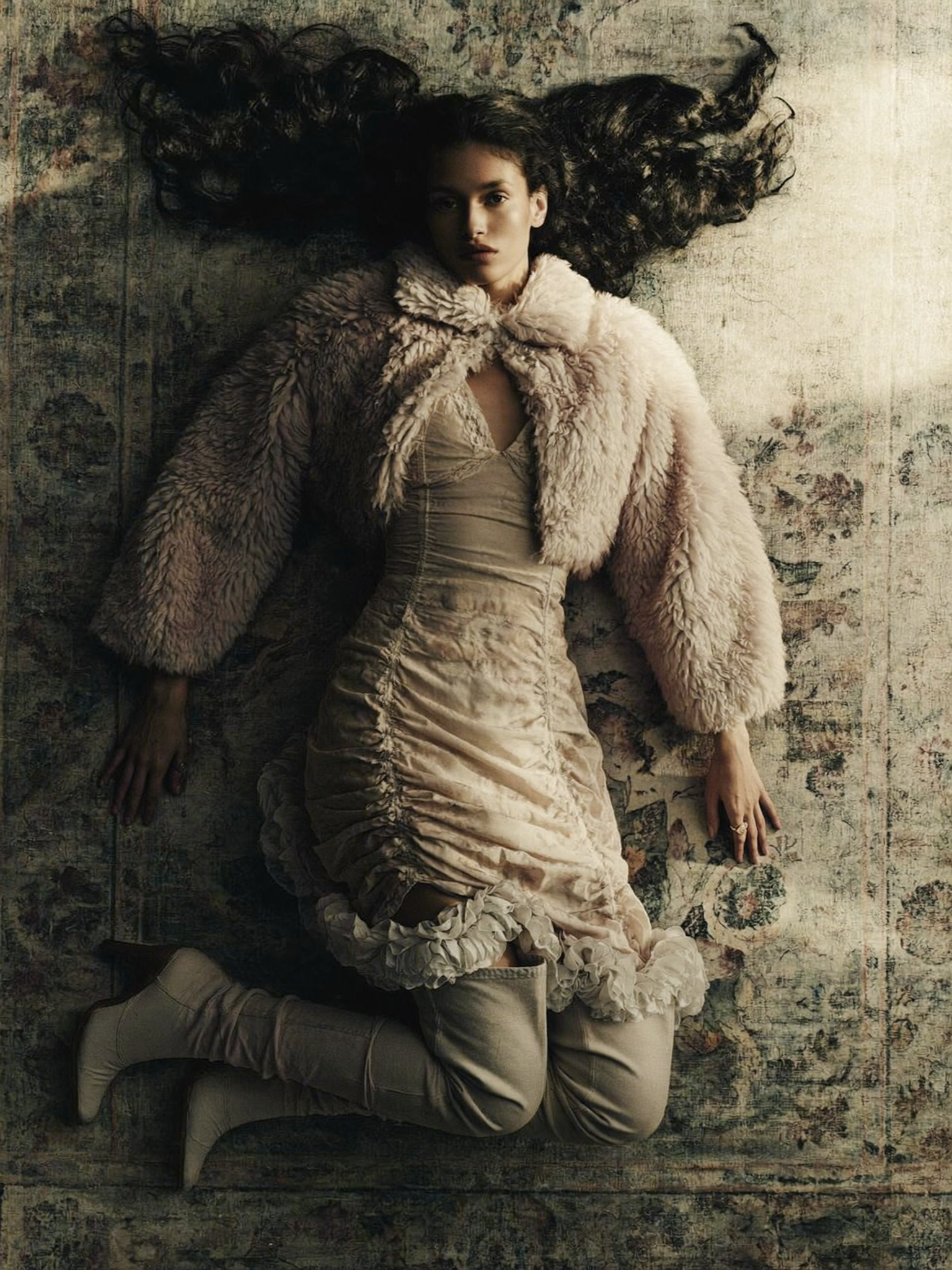
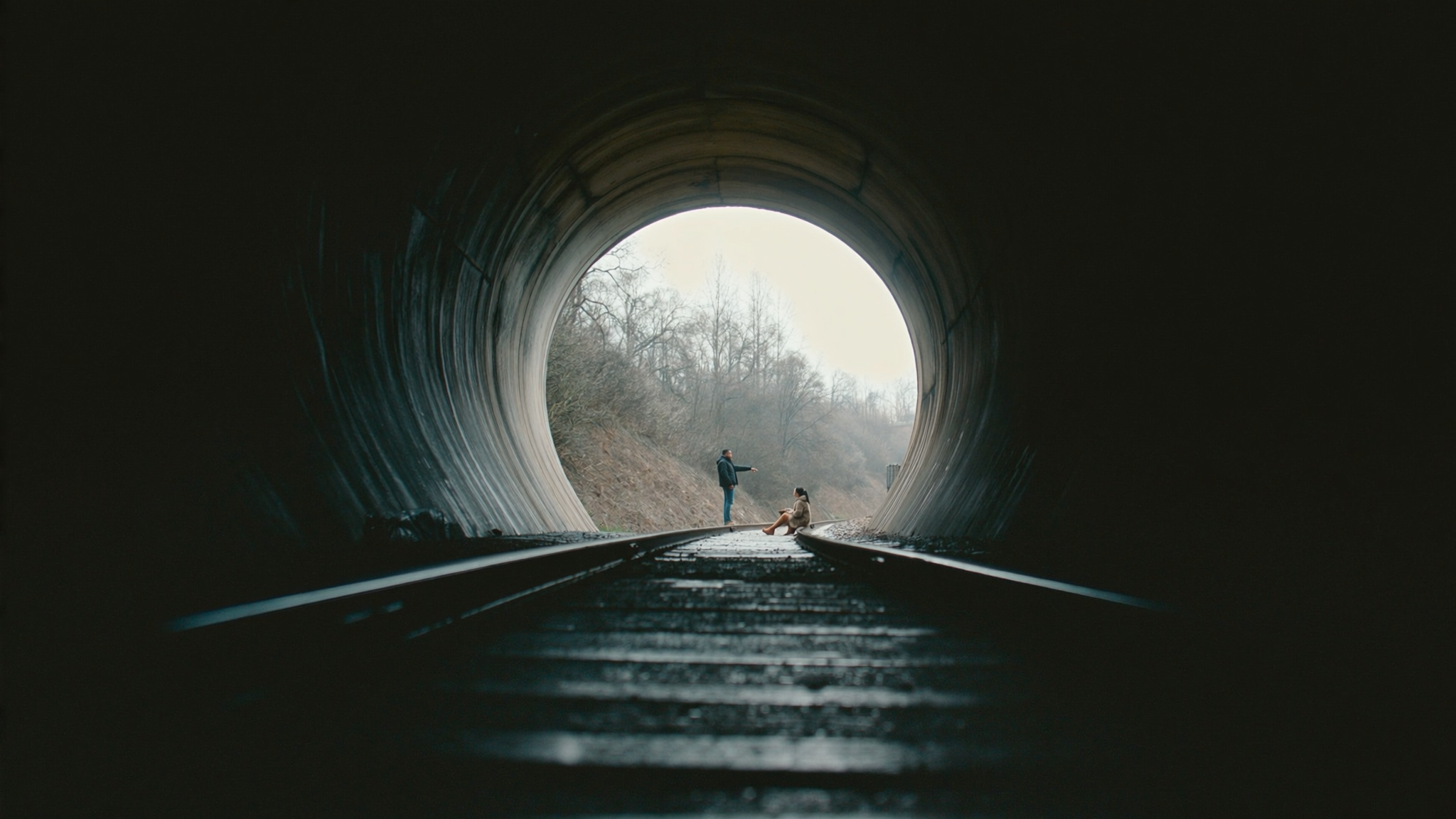
Generative video has moved from demo reels into real production work, and that means creators now face a genuinely hard choice: which engine should own your footage? For most of the past two years the answer came down to two names: Kling, built by Kuaishou and widely available through a range of platforms, and Sora, OpenAI's video model that dominated the conversation when it arrived. Both are impressive. Both are also different in ways that matter more than raw sample quality. This comparison breaks down where they diverge, what each one actually does well in day-to-day work, and how to decide which one belongs in your pipeline.
Two Engines, Two Philosophies
Kling and Sora approach the problem of generating video from opposite directions. Kling was designed as a practical production tool from the start. It shipped with strong motion control, camera movement parameters, and a focus on making usable clips quickly. It is the kind of model that fits into an existing workflow without forcing you to rethink how you work. Sora, on the other hand, was built to push the boundary of what a video model can understand. Its training emphasizes coherent scenes, consistent physics, and a sense of narrative continuity that other models struggle to produce. The result is that Sora often looks more "cinematic" in a single clip, while Kling tends to be more predictable and easier to direct.
That philosophical difference shows up in daily use. If you generate a hundred clips for a social media account, you need consistency and fast iteration. If you are making a short film with a strong visual concept, you may tolerate more randomness to get those rare, beautiful shots. Neither approach is wrong, but the right one depends on the kind of content you produce.
What Kling Does Well in Practice
Kling earns its reputation through control. The model gives you meaningful parameters for camera movement, subject motion, and scene dynamics, and it generally follows them. When you tell it to push in on a character, the camera actually pushes in. When you specify that a dress should flow in the wind, the fabric reads as fabric rather than as a strange liquid.
For creators who produce in volume, this predictability is worth more than occasional brilliance. You can lock a look, reuse settings, and iterate on individual frames without fighting the model. Kling also handles human figures well. Faces stay recognizable across a clip, hands are mostly stable, and the model copes with complex body movement better than most alternatives. That makes it a strong default for character-driven content: talking-head videos, dance clips, product demonstrations, and anything where a real person needs to appear natural.
Its image-to-video mode is equally practical. You can feed it a still and get a clip that respects the composition, lighting, and identity of the original image. This is the feature that turns a static brand asset into a short animation without a redesign.
What Sora Brings to the Table
Sora's strength is its ability to hold an entire scene in its head. Where many models generate motion that looks like frames stitched together, Sora produces sequences with a coherent sense of space. Objects stay put when the camera moves, reflections behave, shadows match their sources, and characters remain the same person from shot to shot. This temporal and physical consistency is the quality people call "coherent realism," and it is Sora's defining advantage.
It also handles long, complex prompts better than almost anything else. If you describe a rainy city street at dusk, with a specific person crossing in the foreground and a neon sign flickering in the background, Sora will usually give you exactly that composition, not a generic approximation. For narrative work, where a scene needs to establish place and mood in a single shot, this matters enormously.
The trade-off is that Sora can be harder to control at the micro level. You can set the scene, but steering precise motion details sometimes requires repeated attempts and careful prompt rewriting. It is a model that rewards patience and an eye for editing: generate several takes, pick the best one, and let the model do its cinematic thing.
Quality Under the Microscope
Directly comparing output quality is trickier than it sounds, because the models shine in different areas. In side-by-side tests, Sora tends to win on environmental realism: water, smoke, glass, reflections, and anything involving complex light behavior. Its physics feel grounded, and continuity across cuts is noticeably better than the average video model.
Kling wins on subject fidelity and action clarity. It produces more consistent faces and bodies, and its motion control means you can block a scene the way you would with a camera operator. If your shot depends on a specific action, like a person turning around and walking toward the lens, Kling delivers it more reliably on the first attempt.
For most creators, the practical question is not "which is more realistic" but "which fails less often in my specific use case." Test both on your own footage style, not on official demo clips. Demo clips are curated; your work will not be.
Prompt Adherence: Following Orders vs. Interpreting a Vision
Prompt adherence separates video models more sharply than almost any other metric. Sora interprets prompts as a creative brief. It captures the mood, the setting, and the essential elements, then exercises judgment about the details. That can be wonderful when your prompt is vague and you want to be surprised, and frustrating when you have a specific shot in mind.
Kling treats prompts more like instructions. It is less likely to reinterpret your request, which means you get closer to what you asked for, but you also get fewer happy accidents. For production work, this is usually the right trade. You can always add creative randomness later; you cannot easily subtract it from footage that does not match your storyboard.
The best practice is to write prompts differently for each engine. For Sora, describe the world, the light, the mood, and the key action, then leave room for interpretation. For Kling, be specific about camera movement, subject behavior, and timing, and expect the model to follow.
Speed, Cost, and Throughput
Workflow economics matter more than benchmark scores. Kling is generally faster per generation and has a more predictable cost structure, especially when you need many short clips. Its API and web interfaces are mature, and the platform handles large queues without the delays you sometimes see on more popular models.
Sora's availability has expanded, but demand still creates congestion at peak times. Generation quality is high, but you may wait longer and pay more per clip, which changes how you plan batch work. If you are producing daily content, that difference compounds quickly. A pipeline that works well at ten clips a day can become impractical at a hundred.
This is also where a multi-engine approach pays off. Many production teams keep both models available and route jobs by difficulty. Simple, high-volume clips go to the faster, cheaper engine; hero shots and complex scenes go to the model that delivers the most visual impact. You do not have to choose a single engine for everything.
Building a Test Plan Before You Commit
Before you standardize on either engine, run a structured test with your own material. Pick three representative jobs: one simple character clip, one complex environmental scene, and one action sequence with camera movement. Generate the same brief on both engines, at the same resolution, and compare the results side by side.
Judge on four criteria. First, prompt adherence: did the model deliver what you asked for? Second, subject consistency: did faces, clothing, and objects stay stable through the clip? Third, physical believability: did motion look natural? Fourth, iteration cost: how many attempts did each take before you had a usable take? Write the results down. The model that wins two out of three of your real jobs is the one that should sit at the center of your workflow, and the other stays as a specialty tool.
A Scoring System That Removes the Guesswork
Because the differences between the two engines show up in ways that are easy to argue about and hard to remember, build a simple scoring system and use it consistently. Define five criteria that matter to your actual work: prompt adherence, subject consistency, scene coherence, motion quality, and average attempts per usable take. Give each criterion a weight based on your priorities. If your content is character-led, weight subject consistency heavily; if it is atmosphere-led, weight scene coherence.
Score a fixed batch of test prompts on both engines, using a scale of one to five for each criterion, and multiply by the weights. The total tells you which engine should carry most of your work. Keep the same test prompts and rerun the scoring whenever either model updates, because the gap between them changes with every release. This converts a noisy aesthetic debate into a number you can trust, and it gives you a defensible answer the next time someone asks which engine you use and why.
The scoring system also protects you from recency bias. Everyone remembers the last spectacular clip they generated, and forgets the nine failed attempts that produced it. A written score, updated on a schedule, keeps the averages honest. For teams, it also creates a shared vocabulary: instead of debating "which one feels better," you can compare "prompt adherence was 3.2 on Kling and 2.8 on Sora for our briefs." That is the difference between an opinion and a decision.
Frequently Asked Questions
Can I use Kling and Sora together in one project?
Yes, and many teams do. Use Kling for character and action shots that need tight control, and Sora for establishing shots and atmospheric scenes where cinematic coherence matters. As long as you keep color grading and framing consistent in post, the mixed footage cuts together cleanly.
Which model is better for beginners?
Kling is the friendlier starting point because its controls are explicit and its behavior is predictable. You can learn motion control and prompt writing on a model that responds consistently, then move to Sora once you understand what you are asking for.
Do these models replace a traditional editor?
No. They replace parts of the shooting process, not the editorial judgment that turns clips into a story. Someone still needs to choose takes, set pacing, and shape the narrative. The models change what is possible to capture, not how storytelling works.
How important is the rest of the pipeline?
Extremely. The same prompt can produce dramatically different results depending on resolution, aspect ratio, seed settings, and post-processing. Most of the gap between demo quality and your results comes from the pipeline around the model, not the model itself.
What should I do if both models feel inconsistent?
Treat inconsistency as a pipeline problem. Lock your prompt template, standardize settings, keep a log of what worked, and build a small library of proven prompts for recurring shot types. Consistency in generative video is engineered, not discovered.
Do resolution and aspect ratio change which engine wins?
Yes, more than most people expect. A model that handles cinematic 16:9 beautifully can feel shaky in vertical 9:16, where composition priorities change and faces occupy more of the frame. Test both engines in the exact formats you publish in, and score them separately per format. Many teams end up with different default engines for horizontal and vertical work, which is a perfectly rational outcome once the numbers show it.
How often should I re-evaluate my choice?
Every time a major version of either model ships, and at least once a quarter even when nothing obvious changes. Video models improve in bursts, and the engine that was clearly second best six months ago may be the obvious leader now. A fixed scoring routine costs an afternoon and prevents you from locking in a stale decision for years.
Final Recommendation
If your work is volume-driven, character-focused, or depends on precise motion control, start with Kling and treat Sora as an occasional upgrade for hero shots. If your work is narrative-driven, atmospheric, or built around complex scenes, start with Sora and use Kling for the shots that need to be dependable. In both cases, keep a secondary engine in your toolkit, because the right answer for a specific shot changes more often than the benchmark debates suggest.
The bigger opportunity is not picking the "best" model. It is building a workflow where the choice is routine: a clear brief, a routing rule, and a post pipeline that makes any engine's output look like yours. Do that, and the model behind any individual clip stops being a risk and becomes just another tool in the kit.
