
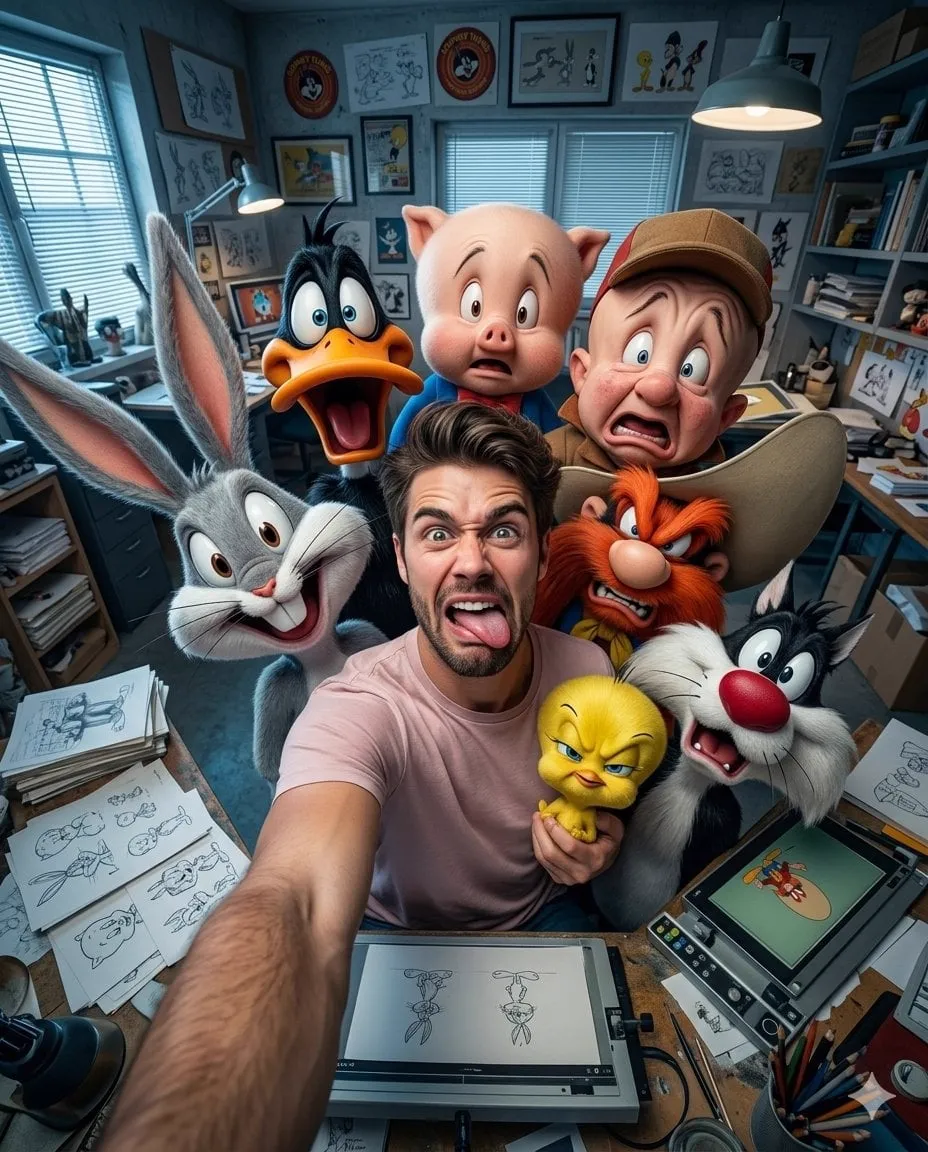
Ask any professional who works with AI video what frustrates them most, and the answer is almost always the same: the character changed. The face is slightly different, the outfit shifted, the hair altered, the style drifted. It happens between generations of the same prompt, between scenes of the same story, and between episodes of the same series. This problem, character consistency, is the biggest obstacle between AI video as a toy and AI video as a production tool. Lego Pixel technology is an approach that tackles it directly by treating a character as a set of structured building blocks that can be locked down and reused. This article explains the technique, the workflow, and the practical steps for producing AI video where the same character stays recognizably the same.
The Problem: Why Characters Drift
Generative models are probabilistic. Given the same prompt, they produce different images every time: the seed changes, the sampling wanders, the details shift. For a single image, that is fine, even desirable. For a story with a character who must appear in ten scenes, it is a disaster.
The drift is not random noise; it is structural. Models do not have a persistent concept of a specific character unless that character is anchored in some way. Without an anchor, every generation reinterprets the description, and the reinterpretation is never identical. The face that was round in scene one becomes oval in scene three. The jacket that was red becomes burgundy. The hero who was confident becomes a stranger.
Audiences notice. Even casual viewers pick up on inconsistent faces and costumes, and once they notice, the illusion collapses. For serial content, for brand campaigns, for any production where a character returns again and again, consistency is not a nicety; it is the requirement that makes the work viable.
The solution is not to hope for better models, though models are improving. The solution is to change the workflow so that the character is defined once, stored explicitly, and reused mechanically. That is the core idea behind Lego Pixel technology.
What Is a Lego Pixel Template?
A Lego Pixel template is a compact, structured definition of a character's visual identity. Instead of describing the character in a prompt every time, you create a template that captures the features that must stay stable: the outline, the proportions, the color palette, the key textures, the distinctive details.
The metaphor is deliberate. Lego bricks are simple, standardized pieces that combine into complex structures. A character template works the same way: a small set of well-defined components, combined and recombined across scenes, while the core identity stays locked.
The template is not an image, or rather, it is not only an image. It is a set of reference data: the character sheet, the color swatches, the feature descriptors, the style anchors. Modern AI platforms store this as reference images and control parameters that guide every generation involving that character.
The power of the template is reuse. Create it once, carefully, and every subsequent scene, episode, or campaign draws on the same definition. The character's identity becomes a controlled asset, like a brand's logo, rather than a roll of the dice.
Multi-Image Fusion: Assembling the Character Into Scenes
A template defines the character in isolation; fusion places the character into scenes. Multi-image fusion is the technique that combines a character reference with a new environment, a new pose, or a new context, while preserving the character's identity.
Early image generation struggled with this. Putting a known character into a new background often resulted in the character being reshaped by the background, or the background being painted over the character. Fusion techniques solve this by treating the character and the environment as separate layers: the character is extracted from its reference, the environment is generated or supplied, and the two are composited with attention to lighting, shadows, and perspective.
The result is a character that can walk through any scene the creator imagines, without losing a single feature. This is what makes serial AI content practical: the same hero can visit a forest, a city, a spaceship, and a kitchen, and the audience always knows who they are looking at.
Style Transfer and the Visual Shell
Character consistency is not only about the character; it is about the world the character lives in. Two scenes can feature the same face and still feel disconnected if the visual style changes between them. Style transfer is the technique that keeps the world coherent.
Style transfer applies a reference style, a palette, a texture treatment, an artistic direction, to every element of a scene. Combined with character templates, it creates a unified visual shell: the character stays stable, and the environment matches the same artistic language.
This matters most for branded content. A brand that produces a series of videos wants every frame to look like it belongs to the same family. Style transfer enforces that, turning individual generations into members of a consistent visual universe.
The granularity is controllable. Some workflows need the style applied aggressively, turning everything into a stylized illustration. Others need it applied subtly, preserving realism while unifying color and light. The technique supports both, because the strength of the style transfer can be tuned per scene and even per element.
Cinematic Control: Directing the Generated Material
Character consistency solves the identity problem, but a production also needs direction: camera angles, framing, pacing, emotional beats. Modern AI platforms increasingly include a director layer that brings cinematic control to generated material.
This director capability translates a script into production choices: which scenes to generate, which shots to use, how to sequence them, what mood to set. It coordinates the character templates, the style anchors, and the scene descriptions into a coherent whole.
For solo creators, this is transformative. A person with an idea and a script can produce a short film's worth of consistent, directed footage, without a crew, without a set, without a camera. The director layer is the bridge between the raw power of generative models and the structure of actual storytelling.
The key is that direction and consistency reinforce each other. A directed production defines the character's role in each scene, which tells the system what the character should be doing, while the template tells the system what the character looks like. Together, they produce footage that is both coherent in identity and purposeful in storytelling.
Model Selection: Specialists vs. Generalists
Generative video platforms offer many models, and the choice matters for consistency. Some models are generalists, good at many things. Others are specialists, exceptional at a specific kind of output. Character work often favors specialists.
Models trained specifically for character consistency, or platforms that expose strong reference-image controls, will hold a character's identity better than general-purpose models with weak conditioning. The trade-off is flexibility: a specialist may produce less variety in style or motion.
The practical strategy is to test. Build the same character template, generate the same scene with three candidate models, and compare identity retention, quality, and cost. Keep the model that holds the character best for the projects where consistency is critical, and keep the generalist for everything else.
The model library also changes over time. New models arrive regularly, and a model that was the best choice last quarter may not be this quarter. A quarterly model review, focused on the specific tasks you do most, keeps the toolkit sharp.
Building the Production Workflow
Consistency is a workflow achievement, not a model feature. The practical workflow has five stages: define, template, generate, verify, refine.
Define the character completely before any generation: face, body, clothing, palette, signature details, and the range of expressions and poses the story needs. This definition is the contract for everything that follows.
Template the character in the platform: create the reference images, set the control parameters, and save the template as a reusable asset. Invest time here; a weak template produces weak consistency forever.
Generate the scenes, using the template for every shot that includes the character. Batch the work where possible, generating multiple variations of each scene to choose from.
Verify every output against the template. Check the face, the outfit, the colors, the overall style. This is the stage where drift is caught, and catching it here is cheap; catching it after publishing is expensive.
Refine the template and the workflow based on what verification finds. If a specific feature drifts repeatedly, strengthen it in the template. If a scene type causes problems, adjust the generation parameters. The workflow improves with every cycle.
Testing and Metrics for Consistency
How do you know your consistency is good enough? You need metrics, not vibes. A simple scoring approach works well.
For each scene, compare the generated character against the reference: facial similarity, outfit match, color accuracy, overall style match. Rate each dimension on a simple scale, and track the scores across the project. If the scores drop in a particular type of scene, investigate and fix.
Facial similarity is the most important dimension for most projects. Tools and models that measure face embeddings can quantify how close a generated face is to the reference. A high similarity score across scenes is strong evidence that the audience will perceive the character as the same person.
These metrics also guide model and parameter choices. Test candidate models, score their consistency, and let the numbers decide. What feels similar to the eye is good; what scores consistently high across a hundred generations is reliable.
Applying Consistency to Branded and Serial Content
The payoff of character consistency is clearest in serial and branded content. A brand character that appears in a campaign, a mascot, a presenter, a spokesperson, needs to be the same every time. A web series with a recurring protagonist needs the audience to recognize the hero instantly in every episode.
Serial content compounds the benefit. Each new episode reuses the templates built for the first, so production gets faster and consistency gets easier over time. The library of assets grows, and every new project starts from a stronger foundation.
For brands, the template becomes part of the brand system, like the logo and the color palette. It is documented, versioned, and controlled. The character is not generated fresh each time; it is reproduced from the official definition.
Common Pitfalls and How to Avoid Them
Several mistakes repeat across projects. The first is a weak reference: a blurry, inconsistent, or incomplete character sheet produces drift no matter what. Build the reference carefully, from multiple angles and poses.
The second is over-reliance on text. Prompting alone cannot hold a character steady; the prompt describes, but it does not anchor. Always pair the description with reference images and control parameters.
The third is skipping verification. Generation is fast, so it is tempting to publish whatever comes out. But drift compounds, and an early inconsistency can make later scenes look wrong. Verify every output, and do it before the project gets deep.
The fourth is changing the template mid-project. Once scenes are generated against a template, changing it creates a visible break. If the template must change, regenerate the affected scenes, do not mix old and new.
Finally, do not chase perfection. Consistency is a threshold, not an absolute. The audience needs to recognize the character, not verify its identity with a magnifying glass. Set a quality bar that matches the project's purpose, and move on.
FAQ
Why do AI characters change between scenes? Generative models reinterpret prompts on every generation unless the character is anchored with reference images and controls. Without an anchor, small details drift, and the drift compounds across scenes.
What is a character template? A template is a structured definition of a character's visual identity: reference images, color palette, feature descriptors, and control parameters. It is stored and reused so every generation draws on the same definition.
Do I need a specialist model for consistency? Not necessarily, but specialists often hold identity better than generalists. Test candidate models with the same template and compare identity retention before committing.
How do I measure consistency? Compare generated characters against the reference on facial similarity, outfit, color, and style. Track scores across scenes and use them to guide template and model choices.
Can Lego Pixel techniques work for real people? Yes, with care. A real person's reference images can anchor generation, but the ethical and legal considerations of using a real person's likeness should be handled carefully and with consent.
How long does the workflow take? The template-building stage is the slow part, especially for a new character. Once templates exist, scene generation is fast, and serial production gets faster with each episode.
Final Thoughts
Character consistency is the difference between AI video that impresses for a second and AI video that tells a story. Lego Pixel technology approaches the problem the way a builder approaches a construction: define the pieces, standardize them, and assemble them with discipline. The template is the character's contract, fusion places it in the world, style transfer keeps the world coherent, and verification keeps everything honest. None of this removes the need for taste and storytelling; it removes the chaos that made AI video feel unreliable. For creators building serial content, for brands protecting their visual identity, and for anyone who wants the characters they generate to be recognizable the next time they appear, the workflow in this guide is the practical path from one-off experiments to dependable production.
