

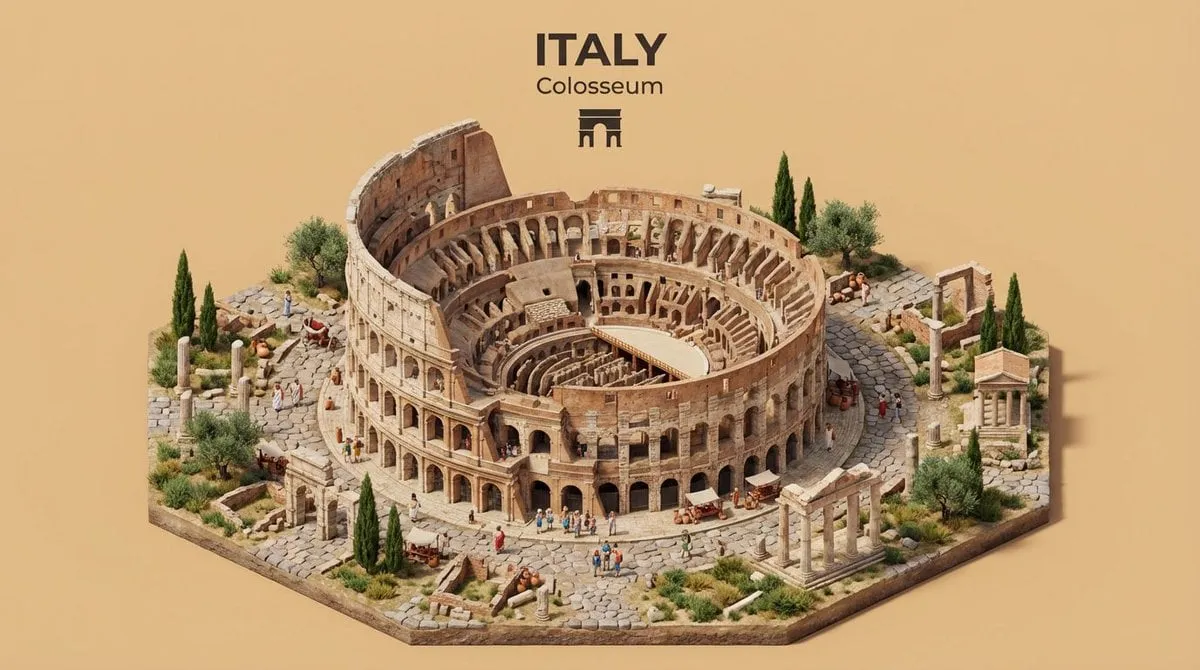
Pixel art has always been a discipline of constraints: a limited palette, a blocky grid, and the challenge of expressing a subject with the fewest possible elements. Generative AI is now applying that discipline to image processing in a systematic way. Lego pixel fusion, as the technique is called, decomposes an image into modular blocks and reconstructs it with strict structural coherence, which makes it useful far beyond nostalgic aesthetics. This guide explains how the technique works, why it matters in 2025, and how to use it for consistent, artifact-free generation across projects.
What Lego Pixel Fusion Is and Why It Matters
Lego pixel fusion is an approach to image processing that treats an image not as a single pixel array but as a collection of manageable visual entities. Each entity encodes a piece of the subject: the shape of a face, the color of a jacket, the lighting of a room. The system then reconstructs the image from these entities, like building with blocks.
Why does this matter now? Generative models have become extremely good at producing individual images, but they still struggle with consistency: the same subject looks different in every generation. Fusion techniques address that by separating what stays stable from what can vary. The stable part, the identity, is encoded as structured entities; the variable part, the scene, is regenerated freely.
The result is a new level of control. You can keep a character identical across a series of images, apply a consistent art style to an entire catalog, or transform a realistic photo into a blocky stylized version without losing the subject's identity.
Decomposition and Modular Reconstruction
The fusion process starts with decomposition. A reference image, or a set of keyframes, is broken into a matrix of entities. Instead of working with the whole pixel array, the system extracts feature vectors that encode the shape, texture, and lighting of key regions.
Think of it as separating an image into layers that can be manipulated independently: the silhouette layer, the color layer, the texture layer, and the lighting layer. Each layer can be adjusted without disturbing the others. Change the color of the jacket without changing the face; change the lighting without changing the proportions.
Reconstruction is the reverse process. The entities are reassembled into a full image, respecting the constraints of each layer and the relationships between them. The key advantage is that reconstruction is modular: if one entity is wrong, you can replace it without regenerating the whole image.
This modularity is what makes the technique practical. In a normal generation pipeline, fixing a small flaw means regenerating everything. In a fusion pipeline, you fix the flaw and keep the rest.
Multi-Image Fusion and Keyframe Control
The heart of the technique is multi-image fusion: combining several reference images into unified keyframes that resist spatial and temporal deformation. Each reference contributes its strongest information, and the system resolves conflicts between them.
For a character, one image might provide the face, another the hairstyle, and a third the outfit. The fusion creates a single representation that holds all three, and every new generation uses that unified keyframe. The character stays the same whether the scene is a sunny street or a dark room.
Keyframe control extends the same idea across time. For video, you define the first and last frames of a shot; the system generates the motion between them while holding the identity constant. The combination of multi-image fusion and keyframe control is what enables long sequences with a stable cast, which was previously the hardest problem in AI video.
Reducing Artifacts and Optimizing Output
One of the most valuable effects of fusion techniques is the reduction of artifacts. Style drift, flickering, and inconsistent motion are all symptoms of a model guessing what the subject should look like. When the subject is locked by reference entities, the model has nothing to guess.
The practical benefits are measurable: fewer rejected generations, less time spent on cleanup, and lower overall cost. A workflow that wastes fewer attempts on failures produces more finished work per hour, which matters for creators publishing on a schedule.
Optimization also means knowing when to stop. Because fusion produces stable output, you can set a firm attempt limit per shot and trust that the third or fourth generation is close to final. The discipline of stopping early is what keeps a fusion pipeline fast.
Keeping Style Consistent Across Models
Different models have different strengths, and a real production often mixes them: a photorealistic model for hero shots, a stylized model for transitions, a fast model for drafts. The problem is that each model interprets the same subject differently, so style drifts between shots.
Fusion techniques bridge the gap. If every model receives the same fused reference entities, the output converges toward the same identity even when the engines differ. The reference acts as a shared contract between models.
This makes multi-model workflows practical for the first time. You can draft quickly with a lightweight engine, refine with a premium engine, and restyle for different platforms, all while the subject remains recognizable.
Training Custom Models and Monetizing Consistency
The same reference-driven approach powers custom model training. When you train a model on a curated set of images, you are teaching it the stable entities of a subject: the face of a character, the look of a product, the style of a brand.
Consistency is what makes trained models valuable. A model that reliably reproduces the same character or style is a product; a model that drifts is a toy. For creators who sell models or generate content for clients, consistency is the difference between a one-time experiment and a recurring revenue stream.
The market logic is straightforward: specialize in a niche, train a model that holds its identity, and validate it across many scenarios before publishing. The reference set is the asset; treat it with care.
Attribute-Based Reconstruction and Dynamic Scaling
Beyond basic fusion, newer implementations work at the attribute level. Instead of storing an image, the system stores attributes: the shape of the jaw, the curve of a vehicle body, the distribution of colors. Reconstruction generates the pixels from the attributes on demand.
Attribute-based reconstruction has a powerful side effect: dynamic scaling. Because the system works with attributes rather than fixed pixels, it can rebuild the image at different resolutions, different levels of block detail, or different aspect ratios without quality loss. The same entity can produce a small icon, a large poster, or a video frame.
This flexibility is what makes the technique suitable for content systems that publish across platforms. One source of truth, many output formats.
A Practical Workflow
- Collect references. Gather five to ten images that cover the subject's variation: angles, expressions, lighting, outfits.
- Define the stable entities. Decide which attributes must never change: face, colors, proportions.
- Run fusion. Generate unified keyframes from the references.
- Validate early. Generate two or three test scenes before committing to a full project.
- Generate with a tiered model strategy. Use fast models for drafts, premium models for hero shots.
- Enforce keyframes for video. Define first and last frames for every shot that must match its neighbors.
- Review as a sequence, not as single images. Consistency problems only appear in context.
- Export once per platform, from the same source of truth.
Case Study: Rebuilding a Character for a Multi-Platform Campaign
Let us trace a concrete project: a brand mascot that must appear in an Instagram post, a YouTube thumbnail, a short video ad, and a banner for a website, all in a consistent blocky style.
Step one, reference set. The designer gathers six references of the mascot: front view, three-quarter view, full body, close-up of the face, and two action poses. Each covers a different zone of the character's visual space.
Step two, fusion and keyframes. The system fuses the six images into unified keyframes: one for the face, one for the body, one for the full figure. The designer validates by generating two test scenes: the mascot waving and the mascot holding a product. Both keep the face, colors, and proportions stable.
Step three, per-platform generation. Each output is generated from the same fused keyframes. The Instagram post is a square crop with a simple background. The YouTube thumbnail is a 16:9 composition with more negative space for text. The video ad reuses the keyframes as first and last frames, with the mascot performing a short action between them. The banner is generated at a wide aspect ratio with the mascot positioned for a text overlay.
Step four, dynamic scaling. Instead of regenerating each size, the designer uses attribute-based reconstruction to rebuild the same entities at different resolutions and aspect ratios. The icon, the poster, and the video frame all come from the same source of truth, so the style is identical across every surface.
Step five, review. The designer lays all four outputs side by side. The mascot is recognizable in every format, the blocky style holds at every resolution, and no artifacts appear at the smaller sizes. The campaign ships in one day instead of a week of per-format fiddling.
The case shows the practical payoff of fusion: one identity, many outputs, zero drift.
Comparing Fusion Pipelines with Traditional Generation
It is worth being precise about what changes when you switch from traditional generation to a fusion pipeline.
- Identity: traditional generation re-describes the subject in every prompt and hopes the model remembers; fusion locks the subject in reference entities and never re-describes it.
- Fixing errors: traditional pipelines regenerate the whole image when one detail fails; fusion replaces the failing entity and keeps the rest.
- Consistency across models: traditional pipelines drift whenever the engine changes; fusion hands every engine the same contract.
- Output variety: traditional pipelines produce variety by accident, including unwanted variety in the subject; fusion produces variety in the scene while the subject stays stable.
- Cost: traditional pipelines waste generations on failed identity attempts; fusion front-loads the cost into curation and validation, which is cheaper in the long run.
- Teamwork: traditional pipelines depend on one person's prompt memory; fusion makes identity a shared asset that anyone on the team can reuse.
The comparison explains why fusion matters beyond aesthetics. It is a production system that changes how consistently, how fast, and how cheaply a team can ship generated content.
FAQ
Do I need technical skills to use fusion techniques?
No. The platforms handle the mechanics; your job is curating references and reviewing output. Understanding the concepts helps you get better results, but the tools do the heavy lifting.
How many reference images are enough?
Five to ten well-chosen images usually suffice. Coverage matters more than quantity: different angles, lighting, and expressions beat a hundred near-identical photos.
Can fusion styles be mixed with photorealism?
Yes. The technique is style-agnostic. The same modular pipeline can produce photorealistic, stylized, or blocky output depending on the entities you define and the model you use.
What is the biggest mistake beginners make?
Inconsistent references. If the reference images disagree with each other, the fusion produces a blurry average. Curate aggressively before you start.
Can fusion pipelines handle text and logos in the output?
Text is a known weakness of generative models, and fusion is not a magic fix. Keep text out of the generated image and add it in post-production, where you control the font and spacing. The fusion's job is the subject, not the typography.
How do I update a character when the design changes mid-project?
Rebuild the affected entities, not the whole pipeline. Replace the reference images for the changed attribute, re-run fusion, and regenerate the shots that show the change. The rest of the project stays untouched.
Conclusion
Lego pixel fusion represents a shift in how we think about AI image processing: from generating pixels to managing entities. Decomposition, modular reconstruction, multi-image fusion, and keyframe control add up to one practical outcome: consistency you can rely on. For creators, that means fewer wasted generations, cleaner series, and the ability to reuse a subject across models, platforms, and projects. The technique is not about nostalgia for blocky graphics; it is about building images the way you would build anything else: from stable parts, assembled with intent.
