
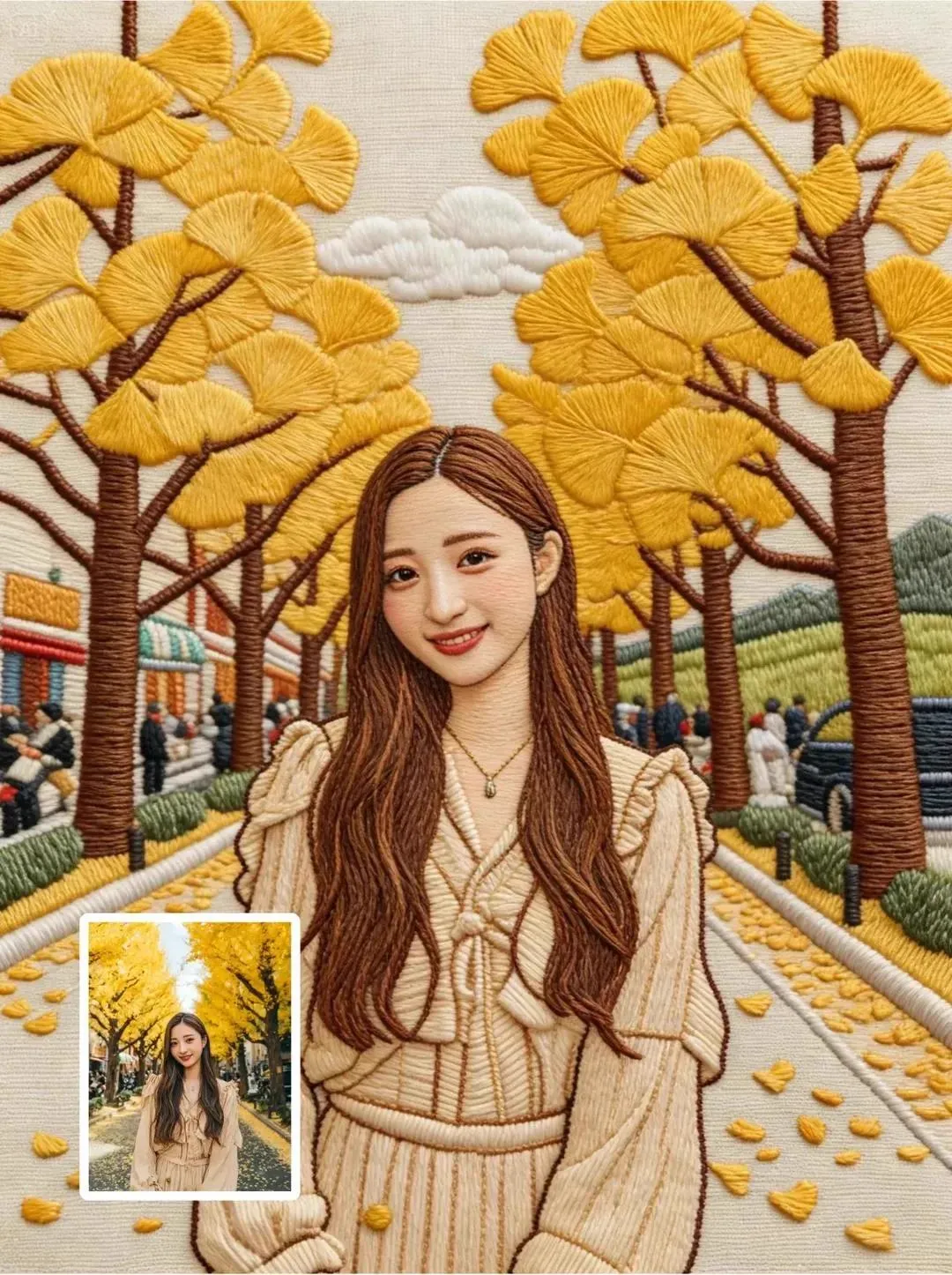

Lego Pixel Fusion: The Block-Based Approach to AI Style Transfer
For years, style transfer in AI meant taking the texture or color palette of one image and painting it onto another. You could make a photo look like an oil painting or shift the color grading to match a reference. It was useful, but it was also shallow. The style was a surface layer, and it rarely survived contact with real creative work. If you tried to carry that style across a series of images, the results drifted. Characters changed, materials changed, and the style you thought you had locked down slowly dissolved.
Lego Pixel Fusion represents a different idea. Instead of treating style as a texture that you paste onto an image, it treats style as a set of modular building blocks that can be defined, stored, and recombined. Each block is a discrete unit of visual identity: a material, a color range, a lighting behavior, a texture rule. You assemble the blocks like Lego pieces, and that assembly is what the generative model uses to produce the image. The result is style transfer that is precise enough to repeat across an entire project.
From Texture Mapping to Modular Style
Traditional style transfer operates on the surface. It looks at the statistics of one image, such as its colors and local patterns, and tries to reproduce them in another image. The problem is that this approach has no understanding of what the style actually is. A painting style is not just a color histogram. It is a way of handling light, a way of treating edges, a way of organizing composition. Surface-level transfer misses all of that.
The modular approach starts from the opposite direction. It defines style as a specification. You decide that a project should have a certain material look, a certain lighting model, a certain palette, and a certain texture behavior. Each of those decisions becomes a block with explicit parameters. The blocks are stored in a library, which means they can be reused, versioned, and shared. When you generate a new image, you select the blocks you want and the model composes them into the final style.
This shift from implicit to explicit style has a practical consequence: repeatability. A style defined as blocks can be reproduced exactly, because the specification does not depend on the chance of a particular generation. That is the difference between hoping your style will hold and knowing it will.
Formalizing Style Components Into Modular Blocks
What does a style block actually look like? In practice, a block is a structured description of one visual dimension, stored in a way that a generative model can consume.
Material blocks describe surface behavior: whether something looks like brushed metal, matte plastic, wet stone, or soft fabric. Each material block encodes not just the name but the visual properties that define it, such as roughness, reflectivity, and how it responds to light.
Color blocks define the palette with more precision than a list of hex codes. They include the relationships between colors: which tones dominate, which are accents, how contrast is distributed, and how colors shift in shadow and highlight.
Lighting blocks capture the mood and geometry of light: soft studio diffusion, hard directional sun, neon glow, golden hour warmth. Lighting is often the single biggest factor in whether an image feels professional or flat, and making it an explicit block gives you control over that feeling.
Texture and detail blocks describe the granular behavior of surfaces: grain, noise, edge sharpness, and the level of detail at different scales. These blocks determine whether an image feels clean and stylized or dense and realistic.
The key insight is that each block is modular. You can swap a material block without touching the color block, or change the lighting while keeping everything else the same. This is what makes the approach compositional, and composition is what makes complex styles manageable.
Integrating Fusion With Generative Models
Defining blocks is only half the work. The other half is getting a generative model to use them. Different models expose different integration points, and the strength of a fusion workflow depends on matching the integration to the model.
Some models accept detailed prompt language, and the blocks can be translated into precise prompt fragments that describe each visual dimension. This works with almost any modern text-to-image or text-to-video model, and it is the fastest path to testing a style.
Other models support reference images, and the blocks can be used to construct reference material that anchors the style. If a material block defines a specific look, you can generate or gather a reference image that embodies it and pass that image to the model as guidance.
The most advanced integration happens in the latent space, where the style blocks are injected directly into the model's internal representation. This is where the concept of fusion gets its name: the blocks are fused into the generative process itself, rather than described from the outside. Latent-space injection gives the strongest consistency, but it requires more technical setup and works best with models that expose the right controls.
In practice, most creators will use a combination. Prompt-level blocks for speed, reference-level blocks for anchoring, and latent-level fusion for the shots where consistency is critical.
Quantifying Consistency: Metrics That Matter
If a style system cannot be measured, it cannot be managed. The modular approach makes measurement possible, because you can define what consistency means in explicit terms.
Structural similarity is one useful signal. By comparing key regions of the image, such as the bounding box around a character, you can quantify how much the visual structure changes between generations. Low variation means the character is holding its identity. High variation means the style is drifting.
Color adherence is another signal. If your color block defines a specific palette, you can measure how closely each generated image matches that palette. This catches problems that are invisible to the eye in a single image but obvious across a series.
Texture adherence works the same way. If your texture block defines a specific grain or surface behavior, you can measure whether the generated output respects it. Taken together, these metrics turn style consistency from a subjective feeling into a number you can track, and they let you catch drift before it ruins a project.
The Technical Backbone: What a Fusion System Needs
Building a real fusion system requires more than a clever prompt. The infrastructure has to support the entire lifecycle: defining blocks, storing them, composing them, and feeding them to models at scale.
The backend is usually modular, with separate services for block management, generation, and asset storage. A well-structured backend treats each concern as an independent component, which makes the system easier to extend as new models appear.
Style blocks need durable storage. A database is the natural home, with the ability to version blocks, tag them, and search them. Some systems store blocks as structured records, while others store them as embeddings, numerical representations that capture the semantic content of a style. Embeddings are powerful because they allow the system to find similar styles automatically and to compose blocks in a continuous space rather than a fixed list.
Generation at scale requires orchestration. When a user submits a job, the system has to decide which model to use, which GPU to allocate, and how to queue the work so that demand does not overwhelm capacity. A task queue handles this by accepting jobs, scheduling them, and retrying failures. For teams that run their own infrastructure, GPU resource management is the difference between a demo and a service.
Artistic Control: Style Hooks and Narrative Consistency
The most interesting applications of fusion are not single images but complete visual stories. This is where style control meets narrative control.
Style hooks are the points in a generation where the style blocks are applied. By placing hooks at the right moments, you can keep the style locked while the content of the scene changes. A character can move from a forest to a city, but the material block, the color block, and the lighting block keep the world visually coherent.
Multi-image fusion extends this to characters. Instead of describing a character in text, you feed multiple reference images that capture different angles and expressions, and the system fuses the style blocks with those references. The result is a character who looks like the same person in every shot, which is one of the hardest problems in AI video and one of the most valuable capabilities for storytelling.
Automated cinematography uses the fused aesthetic to guide camera and composition choices. If the style block defines a moody, low-key look, the system can bias its camera suggestions toward framing and movement that suit that mood. The style does not just affect the surface of the image. It guides the entire visual direction of the piece.
Building Your Own Style Profile
For a working creator, the practical version of this idea is a personal style profile. You start by collecting the visual decisions that define your work: the materials you like, the palette you keep returning to, the lighting you use most often. You formalize those decisions into blocks, which takes effort at first but pays off every time you generate afterward.
Once your profile exists, generating new work becomes a matter of selecting the blocks you need and letting the model compose them. You can experiment with variations by swapping a single block, and you can share blocks with collaborators so that a team produces visually consistent work.
The profile also becomes a kind of asset. Styles are hard to describe and easy to lose. A block library makes your visual identity durable, portable, and reproducible, which is exactly what you want when you are building a body of work over months and years.
Use Cases That Make the Most of Fusion
Character-driven series benefit the most, because character consistency is the difference between a story and a slideshow. Brand content benefits too: a consistent brand look across dozens of assets is exactly what modular style delivers. Game development uses fusion to keep concept art and in-game assets aligned, and product design uses it to explore variations of a material or color without rebuilding the scene each time.
Even solo creators benefit from smaller versions of the same idea. A style profile for your channel means every thumbnail, every short, and every illustration shares a visual language, and that consistency builds recognition with your audience.
Common Pitfalls and How to Avoid Them
The modular approach is powerful, but it fails in predictable ways when the details are neglected. The first pitfall is over-specification. Defining too many blocks with too much precision leaves the model no room to compose, and the output becomes stiff and lifeless. A style needs constraints, but it also needs space for the model to make its own coherent choices. Start with the five or six blocks that define your identity and leave the rest loose.
The second pitfall is block drift. When you edit a block for one project, the change silently affects every other project that uses it. Version your blocks and always reference a specific version in your project settings, so a tweak for one client never contaminates another's look.
The third pitfall is ignoring the metric layer. Without measurements, style drift is invisible until a whole series is ruined. Check the consistency metrics on every batch, not just the first one, and set alert thresholds so you catch problems while they are still cheap to fix.
The final pitfall is assuming one model handles everything. A style block that works perfectly in one generative model may behave differently in another. Document which blocks are tuned for which models, and revalidate whenever you change your generation stack.
FAQ
What is Lego Pixel Fusion?
It is an approach to AI style transfer that treats style as modular building blocks, such as materials, colors, lighting, and textures, which can be defined, stored, and recombined across generations.
How is it different from regular style transfer?
Regular style transfer maps textures or palettes onto a surface. Fusion formalizes style into discrete components that can be reused exactly, which gives you repeatable consistency instead of approximate drift.
Do I need to be technical to use it?
No. The concept can be used at the prompt level, where your blocks are simply well-structured descriptions of each visual dimension. The technical integration is optional and only needed for the strongest consistency.
Which tools support this approach?
Modern image and video models that accept detailed prompts or reference images can be used with fusion concepts. The specific capabilities vary by model, so test with your own style blocks.
How do I measure whether my style is consistent?
Track structural similarity in key regions, color adherence to your defined palette, and texture adherence to your defined surface behavior. These numbers catch drift that is invisible in a single image.
Can I share my style blocks with a team?
Yes. Because blocks are structured and stored in a library, they can be versioned and shared, which helps teams produce visually consistent work across many projects.
