
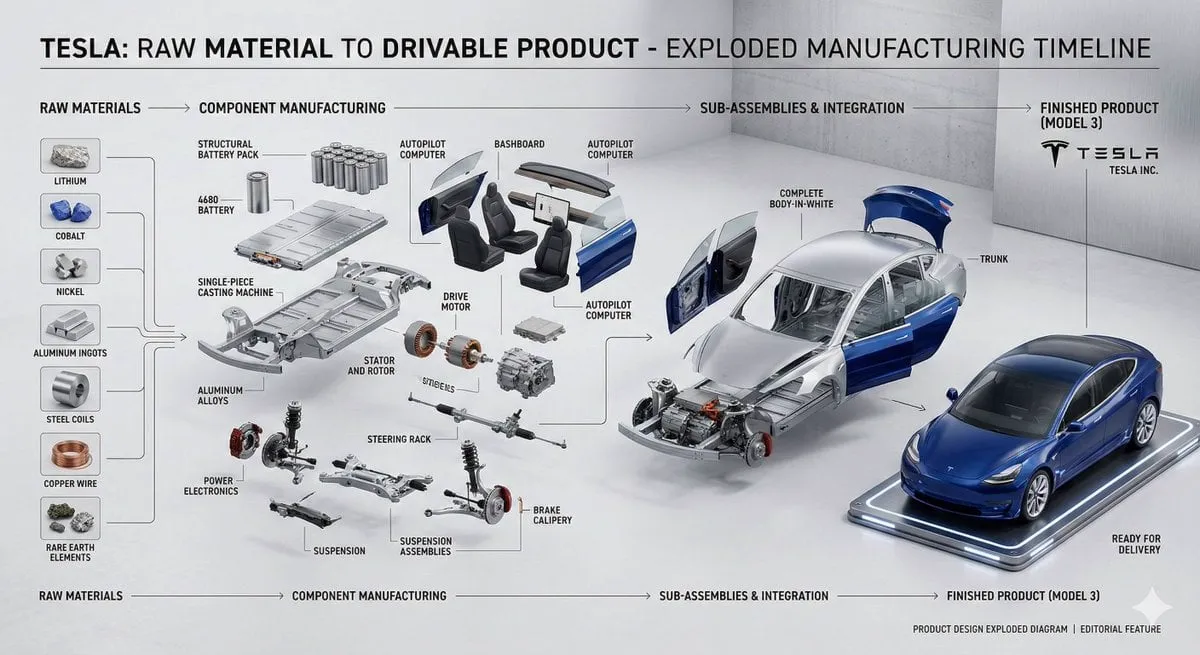


Some of the most striking AI-generated visuals of the past year share a surprising secret: they were not created by making the image more realistic, but by breaking it down into something simpler. The technique, often called Lego Pixel processing, treats an image the way a child treats a box of building blocks. Instead of rendering every hair and pore, the system decomposes the frame into meaningful visual units, then rebuilds it with an unmistakable block-based structure. The result is a distinctive look that is simultaneously playful, precise, and highly controllable.
This article explains what Lego Pixel processing actually does, why it has become so useful for character consistency and style control, and how creators can integrate it into a modern video production workflow.
What Is Lego Pixel Processing?
At first glance, Lego Pixel processing looks like heavy pixelation, the kind of blurry mosaic effect used to obscure faces in documentaries. The difference is fundamental. Classic pixelation simply averages blocks of color, destroying information. Lego Pixel processing is a form of controlled decomposition: the system analyzes the image, identifies semantically meaningful regions, and rebuilds each region as a block-based unit that still carries recognizable meaning.
Think about a portrait. A naive mosaic turns the face into a uniform grid of squares. Lego Pixel processing, by contrast, recognizes that the eyes, the hairline, and the background are different structures. It assigns different block sizes and shapes to each region, keeping the face readable while giving the whole frame a cohesive block-built aesthetic. It is less like blurring the image and more like translating it into a new visual language.
This distinction matters for creators. Because the technique preserves semantic structure, the result stays legible and emotionally expressive. The face still reads as a face, the emotion still reads in the eyes, but the entire frame carries a bold, art-directed identity.
How Controlled Pixelation Works
Decomposition into Meaningful Units
The first stage of the process is analysis. The algorithm examines the image and segments it into regions with similar visual properties: texture, color, edges, and depth. Each region is then converted into a block unit whose size matches its importance. A subject's face might receive fine-grained blocks, while a sky or wall receives large, simple blocks. This adaptive granularity is what separates the technique from a one-size-fits-all mosaic.
Recomposition and Style Transfer
Once the image has been decomposed, it can be recomposed in a wide range of styles. The block units can follow a strict grid, a brick-like offset pattern, or an organic arrangement that follows the contours of the subject. Colors can be flattened into a limited palette or kept photographic. Because the underlying structure is already stored as discrete units, the style is applied to the structure rather than to individual pixels, which makes the process fast and remarkably consistent across multiple frames.
This is where the technique connects to video. When the same decomposition rules are applied to every frame of a sequence, the style stays stable from shot to shot. Objects do not randomly change size, color, or position. That frame-to-frame stability is exactly what most AI video workflows struggle to achieve.
Why Character and Style Consistency Matter
Consistency is the single most repeated frustration in AI video generation. Create a character in one shot and ask for the same character in a new scene, and you are gambling that the model remembers the face, the outfit, and the mood. In practice, the character drifts. The eyes change shape, the jacket changes color, the lighting changes mood.
Lego Pixel processing attacks this problem from a different angle. Instead of demanding that a language model describe the character accurately every time, the workflow locks the character into a visual structure. A reference image is decomposed into block units, and those units become the identity of the character across every scene. New scenes are generated against that reference structure, so the block-built version of the character stays consistent even when the language or the scene changes.
The same logic applies to style. A brand's color palette, a film's lighting scheme, or an illustrator's signature texture can be encoded as a block structure once and reused across an entire campaign. The technique effectively separates identity from description, which makes it a powerful companion for multi-scene and multi-language projects.
Lego Pixel vs Traditional AI Image Processing
Traditional AI image processing, including most style transfer and inpainting tools, operates on the continuous pixel domain. It applies a learned transformation to the whole frame, which is powerful but hard to control at the regional level. If you want the background restyled but the subject untouched, continuous methods often bleed changes across the entire image.
Lego Pixel processing offers a different trade-off. Because the frame is decomposed into discrete units first, edits can be scoped to specific regions. You can change the block size of the background without touching the subject, or replace one region's texture while preserving everything else. This regional control is a genuine advantage for art directors who need surgical precision rather than global transformation.
The trade-off is stylistic. Continuous methods can imitate any texture, including photorealistic ones. Block-based processing is a stylistic filter: it always leaves the image with the signature block-built look. That is not a weakness when the look is the point, but it means the technique is a creative choice, not a universal tool.
Creative Applications in Video Production
Cinematic Stylization and Title Sequences
The technique shines in title sequences, music videos, and experimental shorts where a strong visual identity matters more than realism. A block-built cityscape, a pixelated action sequence, or a portrait that slowly assembles from blocks all create memorable opening moments with very little production overhead.
Commercial Content and Brand Campaigns
Brands increasingly use stylized motion to stand out in crowded feeds. A block-based commercial reads as modern, bold, and instantly recognizable. Because the style is deterministic once the decomposition rules are set, an entire campaign of product shots can share the same visual language without a team of artists hand-matching every frame.
Personal Projects and Community Workflows
For individual creators, the appeal is accessibility. The technique does not require a powerful render farm or years of compositing experience. It works well with existing AI generation pipelines: generate a base image, apply controlled decomposition, then animate the result. The learning curve is short, and the output is consistent enough to share as a series.
How to Try It in Your Own Workflow
Start with a clear goal. Decide whether you want the block aesthetic for its own sake or as a consistency tool for a character or brand.
Step one, prepare a reference. Choose a high-quality image with a clear subject and simple background. The decomposition performs best when regions are distinct.
Step two, test decomposition settings. Adjust block granularity, palette, and layout until the subject stays readable. Fine granularity for faces, coarse granularity for backgrounds is a reliable starting point.
Step three, lock the style for the project. Once the settings look right, treat them as fixed. Every frame and every scene should use the same configuration so the style stays consistent.
Step four, combine with AI generation. Use the block-processed reference as a visual anchor for video generation. Describe new scenes in text, but keep the reference structure as the identity source.
Step five, iterate in small batches. Generate a few candidate frames, check consistency, refine the description, and repeat. Small iterations beat long re-renders every time.
Common Mistakes When Adopting Lego Pixel Processing
The technique is forgiving, but a few habits reliably produce disappointing results.
Treating it as a universal filter. The block aesthetic is a creative decision, not a default. Applying it to every shot of a project can flatten the visual language and exhaust the audience. The strongest work uses the technique selectively: a stylized intro, a transition sequence, or a recurring motif that contrasts with realistic footage elsewhere in the piece.
Ignoring source image quality. Decomposition cannot invent detail that was never there. A blurry reference, a low-resolution still, or an image with heavy compression noise produces block units that look messy rather than intentional. Start with the sharpest, cleanest image you can produce, ideally with a simple background and strong subject separation.
Changing settings mid-project. Consistency is the entire value proposition. If block size, palette, or layout change between frames, the technique stops looking like a style and starts looking like an error. Decide the configuration once, document it, and lock it for every scene that should share the visual identity.
Skipping the reference stage. The fastest way to lose character consistency is to describe a character in text and hope the model holds on to the description. A block-processed reference image gives the pipeline something concrete to anchor to. The minutes spent preparing references save hours of regenerating and correcting.
Over-decomposing busy scenes. Highly detailed backgrounds, crowds, and complex textures do not always read well as blocks. When a region is too busy, the blocks blur together and the semantic meaning is lost. Simplify the scene, increase block granularity in the important region, or remove the busy element entirely.
Worked Example: From Still Portrait to Consistent Character
To see the technique in action, imagine a short film about a courier moving through a neon city.
The first step is a single hero portrait of the courier, shot or generated in the style you want. Run it through decomposition with fine granularity for the face, medium granularity for the jacket, and coarse granularity for the background. The result becomes the character reference.
Next, write scene descriptions in plain language: the courier at a street market, the courier on a rooftop at dusk, the courier caught in the rain. In each generation, pass the block-processed portrait as the visual anchor. Because the reference structure is fixed, the block-built face, jacket, and silhouette remain recognizable across every scene, even as the environment changes.
Finally, assemble the scenes and verify. Check the character against the reference in each shot, confirm the palette matches the original, and adjust only the descriptions that drifted. The whole workflow is fast enough to iterate in an afternoon, which is precisely why the technique suits small teams and independent creators.
Frequently Asked Questions
Is Lego Pixel processing just pixelation?
No. Standard pixelation destroys regional meaning; Lego Pixel processing preserves it by decomposing the image into semantically meaningful units with adaptive block sizes.
Does the technique work for photorealistic content?
The output is always stylized to some degree. If photorealism is non-negotiable, the technique is better used for selective sequences such as titles and transitions rather than whole films.
Can it help with character consistency in AI video?
Yes, it is one of the most reliable approaches. Encoding a character as a block structure gives the generation pipeline a stable visual reference that survives scene and language changes.
Is it expensive to render?
Relative to conventional VFX, no. The decomposition is lightweight, and the deterministic nature of the style keeps rendering costs predictable, even across long sequences.
Which AI video models work best with this technique?
Models that accept reference images as input are the natural fit, since the block-processed still becomes the anchor for generation. Models with strong prompt adherence also help, because the text layer only has to describe the scene rather than the character's identity.
Can I use the technique for still images only?
Yes, and it is worth doing. Block-processed stills work beautifully for posters, social graphics, and series art. Many creators start with stills to develop the style, then carry the same reference into motion work.
Final Thoughts
Lego Pixel processing is a reminder that striking visuals do not have to come from more complexity. By decomposing images into meaningful building blocks, creators gain a tool that is stylistically bold, technically controllable, and unusually good at solving the consistency problem that haunts AI video production. Whether you are crafting a title sequence, a branded campaign, or a personal series, the technique rewards experimentation. Build the blocks, lock the style, and let every frame carry the same unmistakable identity.
