
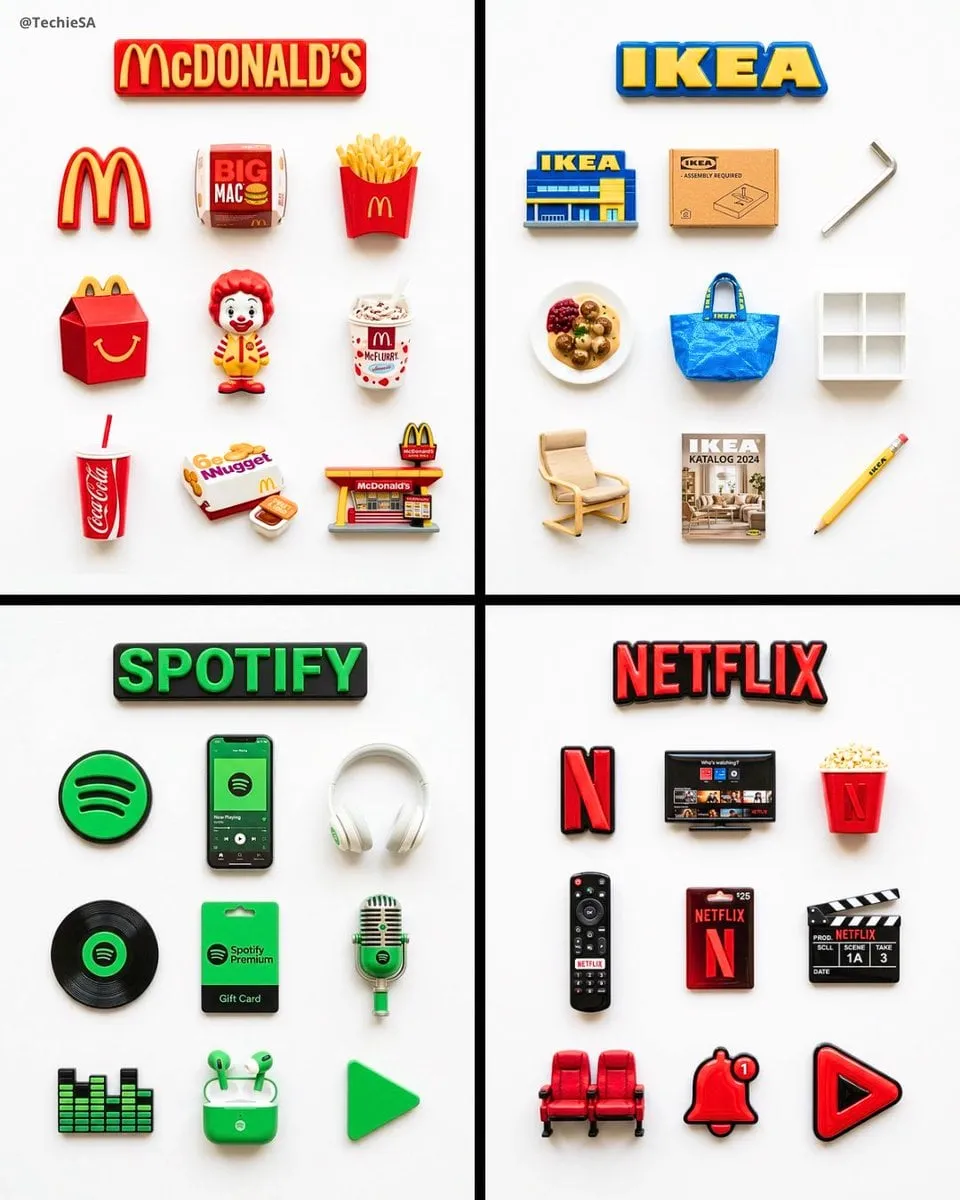
Anyone who has spent time with generative AI video knows the frustration. You generate a beautiful shot of a character, then generate the next shot, and the character no longer looks like the same person. The eyes change, the hair changes, the jacket changes color. It is called style drift, character dissociation, or frame flicker, and it is the single biggest obstacle between AI-generated clips and professional-looking video.
The good news is that this problem is solvable with a set of techniques that are increasingly built into modern AI tools. One useful way to think about them is the concept of Lego pixel processing: treating visual consistency not as one big magical setting, but as a modular system of small, reliable building blocks. This article explains what that means in practice, how multi-image fusion works, how to use reference images and keyframing, and how to build a workflow that produces consistent results every time.
Why AI generations drift between frames
To fix consistency, you need to understand why it breaks. Diffusion models generate each frame from a combination of the text prompt and, in video models, the previous frames. The text prompt is a compressed description, and different interpretations of the same words can produce different visual details. When you write "a young woman in a red jacket," the model must decide the exact shade of red, the cut of the jacket, the woman's face, her hair, and a thousand other details. Those decisions are influenced by randomness.
In a single clip, video models maintain some continuity because each frame is conditioned on the last one. But when you generate a new shot with a fresh prompt, that conditioning chain is broken. The model starts over, and the details drift. Multiply that across ten shots and you get a video where nothing matches.
Character drift is especially visible because humans are finely tuned to recognize faces. Even small changes in eye shape or skin tone read as "different person." That is why consistent character generation requires more than a good prompt: it requires structural techniques that pin down identity across generations.
What Lego pixel processing actually means
The Lego analogy comes from the idea of modularity. A Lego build is consistent because every brick is a standard, reusable component. Applied to AI generation, Lego pixel processing means you stop treating each generation as a one-off miracle and instead assemble results from a small set of reusable, verifiable building blocks.
In practical terms, those blocks are: a fixed prompt vocabulary, a set of reference images, consistent keyframes, and a defined color and style palette. Each block is small and testable on its own. When a generation fails, you know which block caused the failure and you swap it out, just like replacing a brick.
This approach changes how you work. Instead of writing ten different prompts from scratch, you write one prompt template and vary only the slots that need to change per shot. Instead of hoping the model remembers your character, you feed it the character's reference image every time. Instead of describing the style in words, you pin it with examples. The result is boring in the best possible way: reliable, repeatable output.
Multi-image fusion: the core consistency technique
Multi-image fusion is the technique that makes character consistency practical. Instead of relying on a single text prompt, you provide one or more reference images that the model uses as visual anchors. The model fuses information from those images with your text instructions, which dramatically reduces drift.
In a typical workflow, you first generate or upload a hero image of your character: a clean, well-lit portrait with a neutral background. That image defines the face, hair, clothing, and overall identity. Then, for every subsequent shot, you pass that hero image to the model along with a new prompt that describes the scene and action.
The results are not perfect, but they are a massive improvement over text-only generation. The same face appears in shot after shot, and the character can be placed in new environments, wearing different clothes, or performing different actions while still being recognizably the same person.
Multi-image fusion is equally useful for products. A brand can lock a product render as the reference, then place that product in lifestyle scenes, close-ups, and action shots without the logo, shape, or colors drifting. For commercial work, this is often more valuable than character consistency, because product fidelity directly affects trust and conversion.
Reference images and the anatomy of style consistency
Reference images do more than pin down characters; they can pin down an entire visual style. Modern diffusion models can take stylistic cues from a reference: the lighting, the color grade, the texture, the rendering approach. This is how you keep ten shots looking like they came from the same production.
Build a style reference set for each project. It should include:
A hero character image if the video has recurring characters. A product image if you are promoting something specific. A style or mood image showing the intended look, such as cinematic, clay render, anime, photorealistic, or pixel art. A color palette reference if your brand has strict colors.
Feed these references into every generation for the project. Consistency comes from repetition: the more often the model sees the same anchors, the more consistently it interprets new prompts.
One warning: references constrain the model, so choose them carefully. If your style image is too specific, every shot will look like a copy of it. The goal is to constrain identity and mood while leaving room for the scene to vary. Test a few variations early and lock the references that give you freedom plus stability.
Controlled keyframing for scene-to-scene continuity
Keyframing is the technique of defining the important frames in a sequence and letting the model fill in between them. In traditional animation, keyframes are drawn by artists and in-between frames are generated automatically. In AI video, keyframing lets you control the critical moments of a shot rather than leaving the entire sequence to chance.
Controlled keyframing works like this: you define the start frame and the end frame of a shot, or a series of intermediate frames, and the model generates the motion between them. Because you control the endpoints, you can guarantee that the shot starts and ends where you need it to. This is invaluable for editing, where you need specific frames to match cuts.
Keyframing also helps consistency across shots. If shot one ends on a wide establishing view of a location and shot two starts on the same location from a different angle, using the same keyframe image for both shots keeps the environment consistent. The viewer gets the impression of a continuous space even though the shots were generated separately.
When a platform offers both multi-image fusion and keyframing, combine them: use references to lock character and style, and use keyframes to lock composition and continuity.
Building a consistent reference library
Long-term consistency requires organization. The most common reason projects fall apart halfway through is that the references used in shot five are not the same as the ones used in shot one. A small reference library prevents this.
Create a folder for each project with subfolders for characters, products, environments, and style. Name files clearly: "hero-character-front.jpg," "product-angle-1.jpg," "color-palette-v2.png." When you start a generation session, load the references first, then write prompts that reference them.
Keep a prompt log alongside the images. Note which prompt produced which result, including the exact wording and the model used. This turns your work into a searchable knowledge base. Six months later, when you need a similar shot, you do not start from zero; you pull the winning prompt and adapt it.
A reference library also enables team collaboration. If two people work on the same campaign, the library is the shared source of truth that keeps their outputs compatible.
Choosing models that play well together
Not all AI models are equally good at consistency. Some are better at photorealism, others at stylized looks; some handle reference images well, others barely use them. Part of building a reliable workflow is knowing which model to use for which stage.
For still images that will serve as references, choose a model with strong fidelity and control, such as the Flux family, which excels at detailed, photorealistic output and text rendering. For animating those images, pick an image-to-video model with good motion stability, such as Kling or similar tools that handle longer sequences with fewer artifacts.
Budget models have their place too. When you are testing many variations quickly, a cheaper, faster model is fine; you only need a rough sense of the composition. Reserve premium models for final assets. This staging approach keeps both quality and cost under control.
The key is to treat the model choice as part of the pipeline, not an afterthought. Document which models you used for each shot. If you find a combination that produces consistently good results, standardize on it.
A practical workflow from prompt to final render
Here is a complete workflow that puts all of these techniques together.
First, define the project brief: the story, the shot list, the aspect ratio, and the duration. Write one line per shot describing the scene and action.
Second, lock the references. Generate or upload the hero character, product, style, and palette images. Approve them before generating anything else. This is the most important step; do not skip it.
Third, generate keyframes. For each shot in the list, create a still image using the references and a prompt built from your template. Review the stills as a set. They should look like frames from the same production. Fix any that drift before moving on.
Fourth, animate. Feed approved stills into the image-to-video model with simple motion prompts. Generate one shot at a time and check each result for distortion and flicker.
Fifth, assemble. Import the clips into an editor, trim the messy beginnings and ends, add transitions, text, and sound. Align the pacing with the music.
Finally, export and review at full quality. Watch the complete video on a real screen before publishing.
Troubleshooting common consistency failures
Even with a good workflow, problems happen. Here is how to diagnose the most common ones.
If a character's face changes between shots, the reference is probably not being applied strongly enough. Re-upload the reference, reduce the distance between the prompt and the reference, or use a model with better reference support.
If colors drift across the video, check your color palette reference and your editing. Sometimes the simplest fix is a color grade pass at the end that unifies the footage.
If the environment changes between shots meant to be the same place, use keyframing with a shared environment image, or reuse the exact same environment descriptor in every prompt.
If motion looks wobbly or morphs incorrectly, simplify the motion prompt. "Slow push-in" is more reliable than "dramatic dolly zoom with rotation and particle effects." Also check whether the model handles the clip length; shorter clips are usually more stable.
If text in the image, such as a logo, renders incorrectly, generate text elements separately in an editor instead of expecting the model to spell perfectly. Even strong text-rendering models fail on long phrases.
FAQ
What is Lego pixel processing? It is an approach to AI generation that treats consistency as a modular system of small, reusable components, references, keyframes, and prompt templates, rather than one big setting.
Why do AI characters change appearance between shots? Because each generation starts from the text prompt plus randomness, and without visual anchors, the model re-decides facial and clothing details every time.
What is multi-image fusion? A technique where one or more reference images are fed to the model alongside the text prompt, anchoring identity, style, and composition across generations.
Do I need reference images for every project? Not strictly, but they dramatically improve consistency. They are essential for recurring characters, products, and brand colors.
How do I fix style drift in an already generated video? You cannot easily fix individual frames, so the practical answer is to regenerate the inconsistent shots with proper references. Prevention through references and keyframes is much cheaper than repair.
Style consistency is the difference between AI clips that look like experiments and AI videos that look like productions. The techniques described here, modular building blocks, multi-image fusion, reference libraries, and controlled keyframing, are not exotic; they are the standard toolset of anyone producing serious work with generative AI. Start small: lock one character reference, generate three consistent shots, and animate them. Once you feel how much stability the building blocks provide, expand the system to full campaigns. Consistency is a workflow problem, and like any workflow problem, it yields to structure.
