

From Stochastic Generation to Predictable Construction
The promise of generative AI has always been speed and imagination. But anyone who has spent time with diffusion models knows the trade-off: a single prompt can produce endless variations, and keeping a character’s hairstyle, eye color, or even their jacket texture consistent across shots feels nearly impossible. This is the classic problem of style drift and character inconsistency.
Enter lego pixel processing. It is a methodology that treats an AI-generated image not as one monolithic canvas of pixels, but as a collection of small, addressable building blocks — think Lego bricks. Each block, or primitive, represents an isolated visual feature: the shape of a face, the rendering style of a material, the color grading of a scene. By breaking the image down into these discrete units, creators gain the same kind of control that an animator has over their character rigs. You can adjust one piece without collapsing the whole picture.
This modular philosophy is especially valuable for video. Sequences require temporal coherence, and the random latent noise that makes single images charming becomes a liability when you have 20 frames and a narrative to protect. Instead of hoping the model remembers your characters, you give it a set of primitives that are locked from the start and reused across every render.
Why Consistency Is the Next Creative Frontier
The conversations around AI generation are shifting from "can we make it?" to "can we make it the same every time?" Brands, filmmakers, and even social media creators all depend on recognizable characters. If a protagonist looks different in every other scene, the illusion breaks and the audience stops suspending disbelief.
Modular processing responds to this by separating the image into different classes of primitives. The most important split is between subject primitives and style primitives. Subject primitives define the identity of a character or object — facial structure, body proportions, key accessories. Style primitives define the rendering language — brush strokes, lighting schematics, texture details. Traditional prompt engineering mixes these together. Lego pixel processing keeps them in separate blocks that can be updated independently.
This separation unlocks a surprising amount of creative flexibility. You can take a character built with one model and re-render it with an entirely different generator — maybe a faster model for action scenes or a more painterly model for flashbacks — without losing the character's face. The system applies the style primitives on top of the frozen subject primitives. The result is a scene that looks different in mood but identical in identity.
Building the Master Blueprint from Multiple References
One of the most powerful techniques in this workflow is multi-image fusion. Rather than starting with a single reference image, you upload several: character concept art, environment sketches, texture swatches. The processing layer analyzes all of them and extracts the shared persistent features. These become the master blueprint for the entire project.
The master blueprint exists as structured metadata. It records which primitives are tied to the character, which are bound to the environment, and how they interact. This metadata is what separates a cohesive series from a pile of unrelated generations. When you request a follow-up shot, the generator doesn't just look at text and hope; it looks at the blueprint and assembles the image from the defined blocks. This significantly reduces the variability inherent in standard latent space interpolation.
For practical purposes, this means you can use models that suit each specific task. A high-fidelity model is perfect for hero shots, while a lightweight model can handle background transitions. The blueprint stays constant across all of them, acting as a translation layer that maps the unique strengths of each model into the same visual language. If you are looking to build a reliable pipeline, consider combining models like GPT Image 2 for detailed stills with Seedance 2.0 for steady video generation. Both work within the same modular framework, so your primitives carry over cleanly.
Keeping Characters Unmistakable
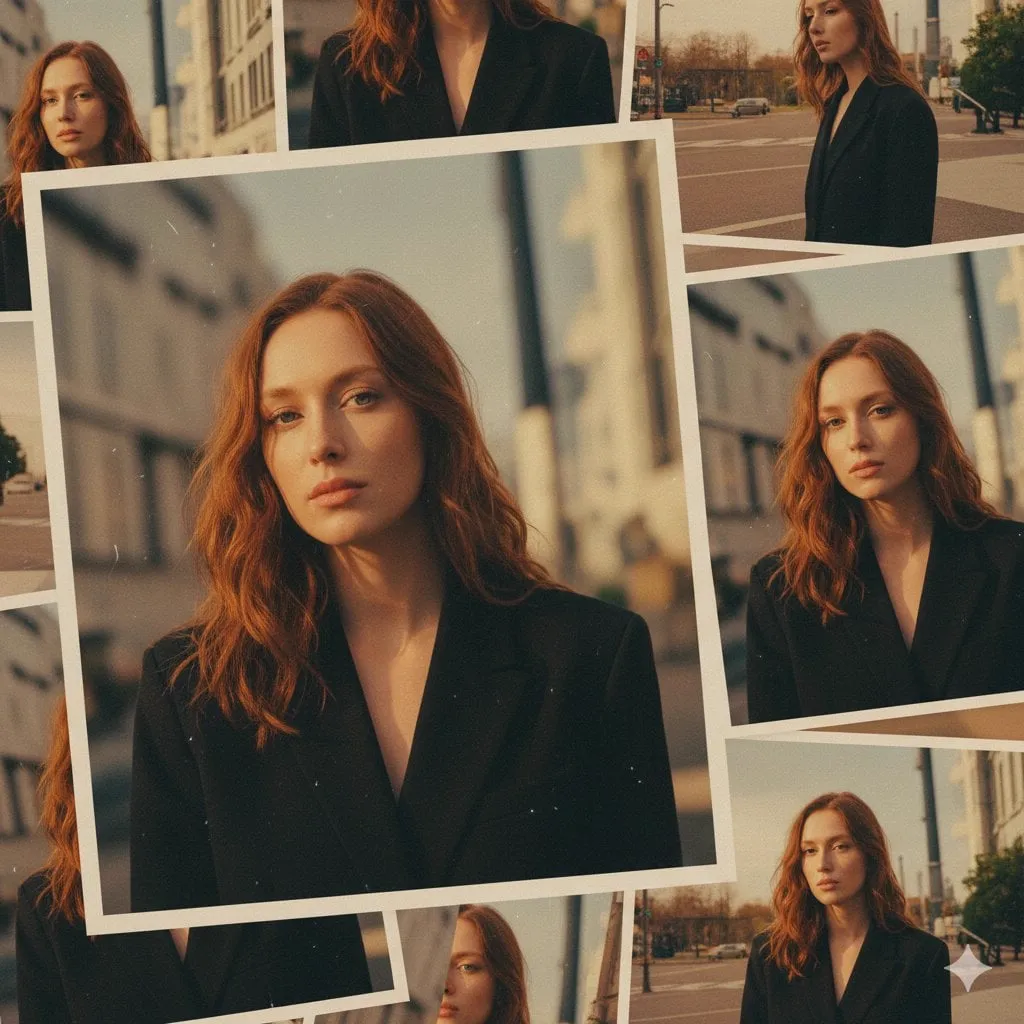
The most visible benefit of a primitive-based workflow is character persistence. In a traditional AI video pipeline, a hero might start with blue eyes in the opening scene, golden eyes in the middle, and completely different facial geometry by the end. The cause is the random noise that drives a new render each time. With pixel processing, the identity primitives are treated as constraints during the sampling process. They act as anchors that hold the core features in place while everything else is free to change.
Serialized content creators will appreciate this more than anyone. Viewers build emotional connections with characters, and even subtle visual shifts feel wrong. Maintaining a consistent avatar across an entire season is no longer a matter of painstaking manual correction. You lock the identity primitives once and reference them in every prompt and every renderer.
The same logic applies to extra characters. Multi-image fusion allows you to maintain several sets of primitives simultaneously. Each character gets their own block structure, and the system ensures that their interactions do not cause features to bleed into one another. This is crucial for group scenes, where standard models often merge or swap facial features between characters.
Interested in seeing how consistent avatar generation works for social profiles? Domer's AI profile picture generator applies similar logic on a smaller scale, keeping your likeness recognizable while pushing creative variation.
Environments as Primitives
Characters get the spotlight, but environments need consistency too. A cyberpunk market, a haunted forest, or a neon-lit garage are all characters in their own right. Their structural layout, lighting, and material rendering must stay stable for the story to work.
Modular processing extends to environmental primitives. You can define the shape of key buildings, the color of the fog, and the way neon light reflects off wet asphalt. These E-Prims are loaded every time the setting appears, even if you switch to a different generation model for a particular shot. This is especially useful when using image-to-video workflows. Take a single detailed matte painting, extract the environment primitives, then use those blocks to drive dynamic camera moves in follow-up shots. The background stays recognizably the same place.
The same approach helps with object permanence. If a character carries a distinctive weapon or wears a piece of jewelry, that object can be tagged and preserved. It won't morph into something else halfway through a scene because its underlying primitive is locked and enforced.
A Practical Workflow for Modular AI Art
If you are ready to try lego pixel processing, you do not need to commit to a heavy production pipeline. A simple workflow can be applied to almost any project.
Start with a reference set. Gather at least three images that clearly express the character or setting you want. Include front-facing shots, different lighting conditions, and close-ups of important details. The more robust your reference set, the more stable your primitives will be.
Generate or upload your images. Use an image generation tool to fill in gaps or create additional angles. Tools like Domer's AI image generator can produce varied views of the same subject, giving you more material for the extraction stage.
Extract and isolate primitives. The processing layer identifies the visual features that repeat across all references. It separates them into subject, style, and environmental blocks. You can then manually adjust any layer if it feels too loose.
Render with the blueprint active. When generating videos, load the saved primitive metadata alongside your prompt. This ensures that every frame honors the same constraints.
Mix models freely. One of the best parts of modular processing is that you are not locked to a single vendor. Domer's AI video generator supports a variety of models, and the primitive system absorbs the differences. This allows you to use the best tool for each scene while maintaining the overall look.
The New Standard for AI Artistry
The future of generative art is not about generating more pixels. It is about generating the right pixels, in the right order, with the right constraints. Lego pixel processing provides exactly that. By treating images as modular structures instead of chaotic tensors, creators finally get the control they need to produce long-form, narrative-driven work.
Whether you are building a personal brand with an unforgettable avatar, crafting a short film with multiple characters, or simply tired of reshuffling prompts until the style stops drifting, this methodology gives you a clear path. The old era of AI art was about getting lucky three times in a row. The new era is about building, stacking, and locking your visual bricks until every shot is pixel perfect.
