
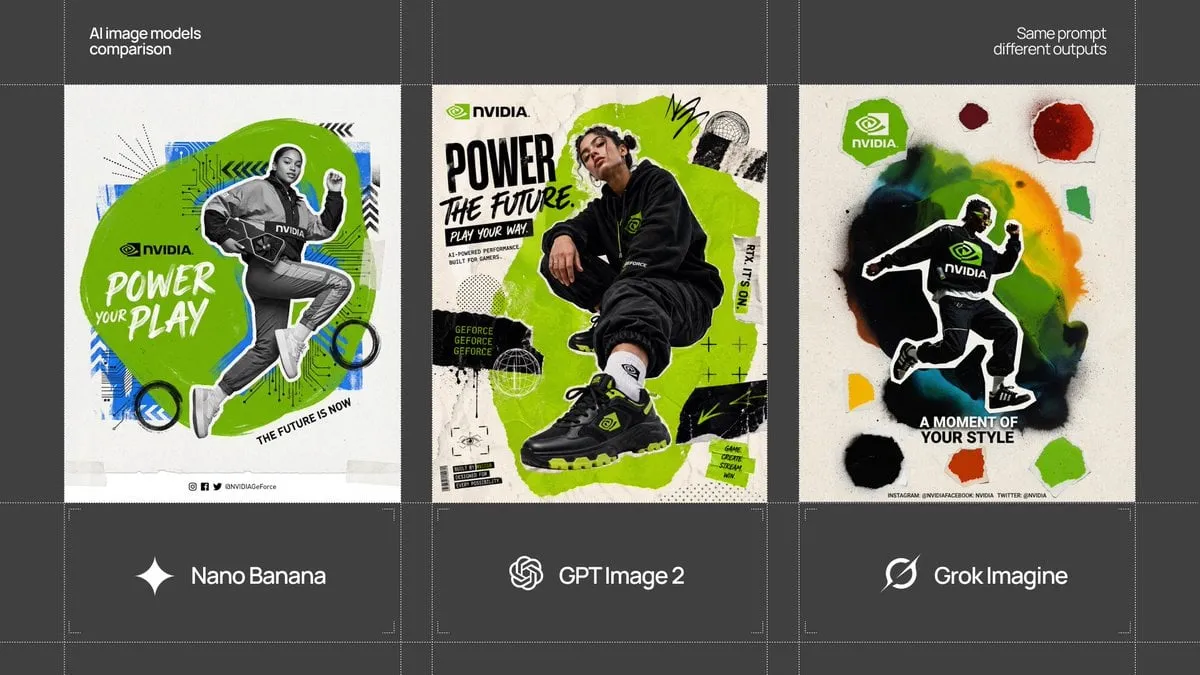
Give Your Art a New Identity
Every artist knows the moment when a piece of work starts to feel like more than an image. It has a face, a mood, a recognizable voice. Reaching that moment used to require years of manual practice, but artificial intelligence has changed the timeline. With techniques like Lego Pixel style transfer and image fusion, you can take an existing artwork, a character, or a half-finished idea, and give it a completely new visual identity in a matter of hours.
This guide is for artists, designers, illustrators, and content creators who want to understand these techniques, not just as features inside a tool, but as a creative workflow. We will cover what style transfer actually does, how image fusion maintains consistency, how to orchestrate different AI models, and how to build a repeatable process that turns experimentation into a signature style.
What Style Transfer Really Means for Artists
Style transfer is the process of taking the subject of one image and presenting it in the artistic style of another. A photograph of a friend becomes an oil painting. A character sketch becomes a pixel art portrait. A product shot becomes an anime frame. The underlying goal is separation: separating what is being depicted from how it is depicted.
Early approaches to style transfer, like the neural style transfer methods proposed in the mid-2010s, worked by separating content and style representations inside a neural network and recombining them. They were groundbreaking but fragile: results often looked painterly in a generic way, with textures bleeding across the image and details degrading.
Modern diffusion models have changed the game. Instead of a single global restyle, they allow selective control: restyle the background but keep the character's face, apply a watercolor treatment to one object while preserving photorealism elsewhere. This granularity is what makes style transfer genuinely useful for professional work rather than a fun filter.
For the artist, the practical meaning is simple: your existing body of work is no longer frozen. Every past piece is a candidate for reinterpretation, and every new piece can be explored in dozens of visual directions before you commit to one.
Lego Pixel: Building Images Block by Block
The idea of Lego Pixel builds on the metaphor of construction bricks. Instead of treating an image as a single indivisible canvas, the system decomposes it into visual blocks: the character, the clothing, the lighting, the background, individual props. Each block can be manipulated, restyled, or replaced independently.
Why does this matter? Because the biggest frustration with AI image generation is the lack of surgical control. You love the character but hate the background. You love the lighting but the face looks wrong. In a one-shot generation, fixing one element means regenerating everything and hoping the rest survives. With a block-based approach, you adjust only what needs adjusting, and the rest of the image stays intact.
Think of it as version control for artwork. Each block is a component that can be refined in isolation and then reassembled. This is especially powerful for series work: once you have a validated character block, you can drop it into new scenes, new styles, and new stories without losing its identity.
Image Fusion: The Secret to Consistency
Image fusion is the process of combining multiple images into a single coherent output. It sounds simple, but it solves one of the hardest problems in AI art: consistency across multiple pieces.
Suppose you have designed a character and want to show them in ten different scenes. If you describe the character purely in text for each scene, the model will produce ten similar but not identical versions. The face drifts, the outfit shifts, the proportions wobble. The fix is to use the character's reference image as an input to every scene generation, fusing the character with each new background, pose, or style.
Modern tools accept multiple reference images simultaneously. You can provide a character reference, a style reference, and a scene reference, and the model fuses them into one image. This makes it possible to combine the subject matter of one image, the lighting of a second, and the perspective of a third.
The practical rules for good fusion are simple. Keep references consistent: if the character's outfit differs between two reference images, the model will produce a confused hybrid. Prioritize references: decide which element is the anchor, typically the character or subject, and treat the others as adjustments. Avoid overload: too many references dilute the output, so start with two and add a third only when needed.
Orchestrating Multiple Models for One Vision
No single AI model does everything well. Some excel at photorealism, others at stylized illustration, others at motion and video. A mature workflow treats models as specialists and assigns each step of the pipeline to the strongest tool.
A typical orchestration looks like this. Use a high-quality image model to design the character and establish the visual identity. Use a style-focused model to explore artistic directions, testing the same subject across different aesthetics. Use a video model to animate the final concept when motion is needed. Use a simple editing tool for final cleanup, cropping, and color balance.
The key is that each model operates on the same references, so the output remains consistent even as the tool changes. Your character reference image travels through the pipeline as the anchor. This modular approach also has a budget benefit: you can experiment cheaply with basic tools and spend more only on the final production pass.
Building a Character Sheet That Survives Any Style
One of the most valuable artifacts you can create is a character sheet: a set of reference images showing the same character from different angles, in different poses, with different expressions. In traditional animation, character sheets exist so every artist draws the same person. In AI workflows, they serve the same purpose for the models.
To build one, generate several images of your character using a consistent base description, varying the pose, angle, and expression while keeping the identity fixed. Pick the strongest images and treat them as your canonical references. Whenever you generate a new scene, feed the character sheet into the prompt or reference slots rather than describing the character from scratch.
This habit transforms your workflow. Instead of re-explaining the character every time, you hand the model the proof of who the character is. The result is a body of work that feels like one artist made it, even though every image was generated by AI.
The Creative Workflow from Concept to Series
Let's walk through a complete workflow that applies everything above, from a rough idea to a finished series.
Step 1: Define the identity
Write a concise description of the subject: who they are, what they wear, their mood, their world. Keep it short and specific. This description becomes the seed of every generation.
Step 2: Establish the style
Generate the same subject in several styles: realistic, cartoon, pixel art, watercolor, cyberpunk. Compare the results and choose the direction that fits your goal. Save the winning style description.
Step 3: Build the character sheet
Generate reference images of the subject in different poses and angles with the chosen style. Select three to five canonical images. These are your reusable blocks.
Step 4: Create the scenes
For each scene, combine the character reference with a scene description or scene reference. Use image fusion to merge the elements. Adjust individual blocks when something is off instead of regenerating everything.
Step 5: Refine the series
Review the scenes as a set. Check consistency of character, lighting, and mood across the series. Make targeted corrections. This is where the block-based approach pays off: one fix, not a full redo.
Step 6: Animate or publish
If the project calls for motion, feed the final images into a video tool for animation. Otherwise, prepare the images for publication: resize, format, add text or watermarks as needed.
Choosing Models by Project Stage
Model selection should follow the job, not the hype. For exploration and concept testing, use fast, accessible tools; you will discard most early attempts anyway. For hero images and final renders, use higher-quality models that handle detail, lighting, and prompt adherence well. For style experimentation, favor tools known for strong stylistic control. For motion, choose video models that preserve character consistency from a reference image.
Keep a small list of tools you know well rather than chasing every new release. Mastery of a few models beats superficial familiarity with many. When a new tool genuinely outperforms your current stack, test it against your canonical references and make the switch only if it survives that test.
Avoiding the Common Pitfalls
The most common failures in AI art workflows are consistency drift, reference clutter, and prompt bloat. Consistency drift happens when you stop using the character sheet and rely on text descriptions. Reference clutter happens when you feed too many conflicting images to the fusion step. Prompt bloat happens when you try to control every detail in a single paragraph instead of building the image in stages.
A second set of pitfalls is more subtle. Over-reliance on one model creates a recognizable sameness; keep experimenting with new tools. Ignoring cleanup leaves artifacts that betray the AI origin; a few minutes of manual polish dramatically improves perceived quality. And neglecting your archive means you cannot reuse your best characters and styles later; store your reference sheets where you can find them.
Frequently Asked Questions
What is the difference between style transfer and image fusion?
Style transfer changes how a subject is rendered, applying the aesthetic of one image to the content of another. Image fusion combines multiple images into one coherent output, merging subject, style, lighting, and perspective. In practice, fusion is often the mechanism that delivers controlled style transfer: you fuse a character reference with a style reference.
Do I need to be a skilled illustrator to use these techniques?
No. The techniques remove much of the manual rendering work, but they reward visual judgment. You still need to choose references, evaluate results, and make creative decisions. Illustration skills help, but a strong eye and a clear concept take you surprisingly far.
How many reference images should I use?
Start with two: one for the subject, one for the style. Add a third only when you need to anchor a specific detail, such as lighting or a prop. More references are not better; conflicting references produce muddy hybrids.
Why does my character keep changing between images?
Because the model has no anchor. If you describe the character in text for every generation, the model interprets the description freshly each time. The fix is to feed the same reference image into every generation and to regenerate only the elements that need to change.
Can I use these workflows commercially?
Generally yes, but check the terms of each tool and model you use. Some models have restrictions on commercial use or on training derivative models. Keep records of the tools used for each project so you can verify compliance later.
How do I develop my own signature style?
Build a library of references you love and reuse them consistently. Over time, your choices, your character designs, your color instincts, become recognizable. The techniques provide the tools; consistency provides the identity.
From Technique to Signature
Style transfer and image fusion are often presented as technical features, but their real value is creative. They give artists something rare: the ability to explore many identities for their work without losing the thread of who the work is. A character can be a watercolor poet in one series and a pixel art hero in another, and still be unmistakably the same character.
That is the gift of the Lego Pixel approach. It treats your art as a set of building blocks rather than a series of isolated gambles. Every piece you make contributes blocks to your library, and every new project assembles them into something fresh. Over time, the library itself becomes your signature, the visual vocabulary that makes your work recognizable.
Start today with a single character. Build the sheet. Explore three styles. Create three scenes. The technique is within reach, and the identity you give your art will compound with every project that follows.
