
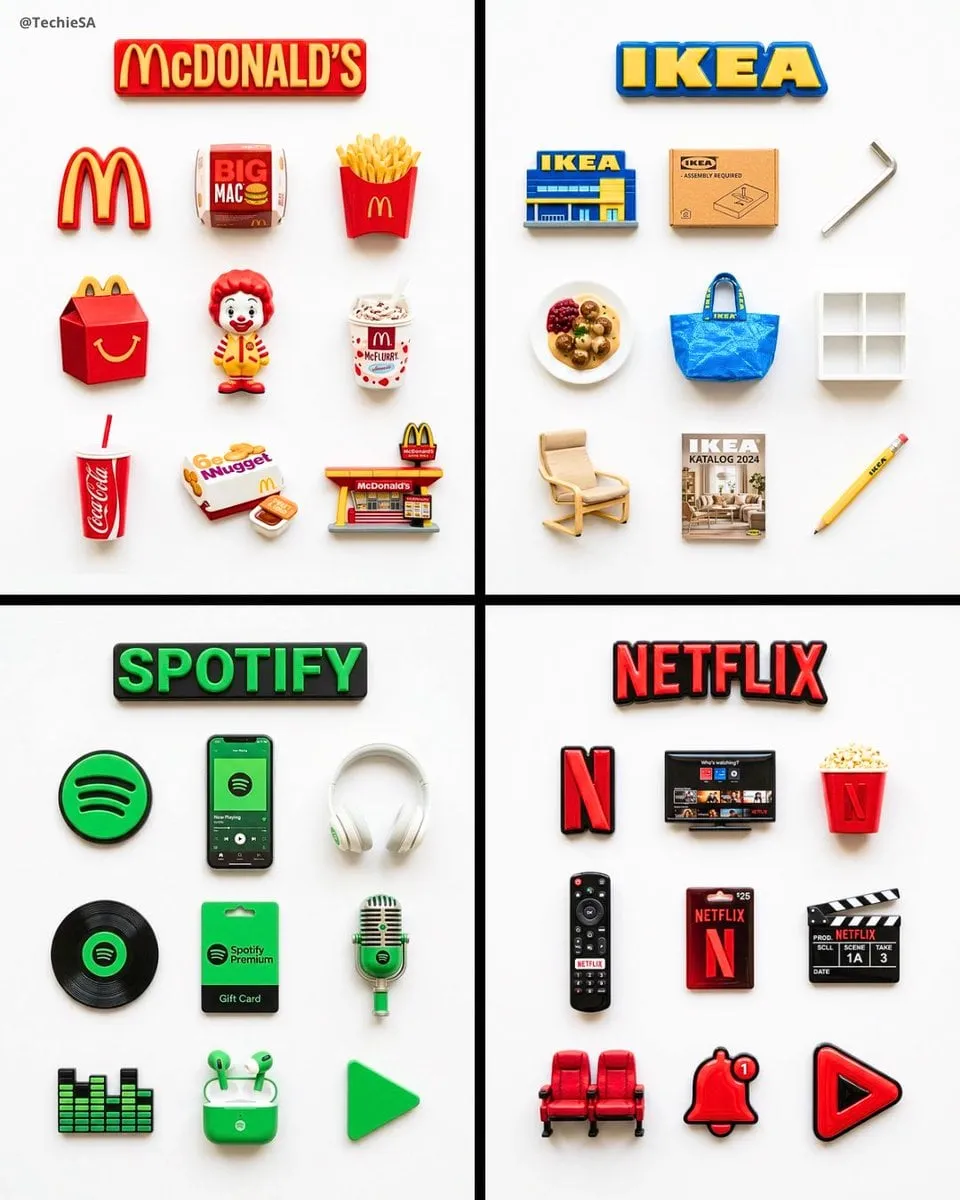
Why Brick-Style Visuals Took Over the Feed
Scroll through any short-video platform in 2025 and you will eventually hit it: a scene where the world collapses into clean, chunky blocks — characters made of studded plastic, buildings rebuilt as stacking bricks, explosions rendered in pixelated geometry. The Lego pixel effect is one of the most recognizable visual trends in AI-generated content, and for good reason. It is nostalgic, it is distinctive, and it instantly separates a video from the endless stream of photorealistic AI clips competing for the same attention.
But here is the thing most viewers never think about: this effect is not a simple filter. Behind the playful look is a genuinely complex image-processing pipeline. Getting a still image to look like bricks is one thing; getting an entire video to move like a brick-built world — without flicker, without shapes melting between frames, without the character's face changing mid-scene — is a serious engineering problem.
This article breaks down how the Lego pixel effect actually works, why it is hard to do well in motion, and how creators can use modern AI tools to produce consistent, high-quality brick-style videos for ads, storytelling, education, and beyond.
The Current State of AI Video Effects
The AI video industry has matured remarkably fast. Modern models handle realistic motion, complex prompts, and long scene continuity at a level that was science fiction a few years ago. Alongside the push for photorealism, though, there is a parallel trend toward stylized and playful aesthetics. Audiences are fatigued by generic AI imagery, and distinctive styles — claymation, watercolor, paper cutout, voxel, and yes, Lego-style blocks — have become reliable engagement drivers.
The Lego pixel aesthetic sits at an interesting intersection. It reads as retro and handmade, which gives it warmth, but it is also deeply geometric, which makes it feel satisfyingly precise. That combination is why it works so well for product videos (a product reconstructed from bricks is inherently charming), for storytelling (the style immediately signals a playful, non-serious tone), and for data and educational content (complex ideas become approachable when rendered as toys).
How the Lego Pixel Effect Actually Works
At its core, the effect is a spatial restructuring of the image. The algorithm treats the image not as a flat picture but as a 3D-like volume of blocks, then rebuilds it according to brick geometry. Understanding the pipeline helps you use the effect deliberately instead of just applying a preset and hoping.
Geometry and Color Quantization
The first stage is quantization. The input image — a photo, a video frame, or a rendered scene — is divided into a grid of virtual blocks. Each block's size determines the "brick density" of the result: large blocks give a chunky, abstract look; small blocks preserve more detail from the original. The algorithm then reduces the color space, mapping each block to a limited palette of brick colors. This is why the effect reads so cleanly: the quantized colors mimic the limited plastic tones of real building bricks.
The viewer's brain fills in the rest. Because bricks are a familiar object, our perception accepts the simplified geometry and reads the scene as a real brick-built world, not as a degraded image. That perceptual shortcut is the secret of the effect's charm — and also the reason it is so easy to get subtly wrong. If the block size, color palette, or depth simulation is off, the result tips from charming into ugly.
The Hard Part: Consistency in Motion
Applying the effect to a still image is easy. Applying it to a video is where advanced tools show their value. If each frame is processed independently, the result is block jittering: blocks shimmer, colors flicker, and the brick structure visibly destabilizes between frames. The effect destroys the viewing experience instead of enhancing it.
The fix requires temporal consistency. The algorithm must track the scene across frames — the same block must stay the same block, the same brick color must persist, and the geometry must deform smoothly as objects move. This is a much harder problem than per-frame processing, and it is why cheap filter apps produce flickering messes while professional tools produce stable, cinematic results. When you evaluate a tool for this effect, the question is not "does it look like bricks?" but "does it stay stable while things move?"
Resource Management and Task Optimization
Complex effects like this are computationally expensive. Rendering a high-resolution brick-style video requires significant processing power, especially for long clips. Practical workflows manage this in two ways: they render at sensible resolutions and lengths, and they use task queues so multiple scenes or variants can be processed without babysitting. If you plan a series of brick-style videos, batch the renders and review them together — it is dramatically more efficient than generating one at a time.
Practical Applications Across Video Production
Product and Marketing Videos
The brick effect is a natural fit for product marketing. A watch, a sneaker, a car, a gadget — rebuilt from blocks, the product becomes instantly memorable. The technique works especially well for the reveal structure: start with the blocky abstract shape, then transition to a polished real-world shot at the payoff moment. The contrast between the toy-like build-up and the final product shot creates a satisfying narrative beat that viewers love to rewatch.
For ads, the effect also solves a practical problem: it makes stock-style product footage feel original. Two competing brands can show the same category of product, but the brick version will always be the one that stands out in the feed.
Storytelling and Short Films
For narrative content, brick-style visuals open a distinctive world-building path. Because the style is inherently stylized, it frees the story from the "uncanny valley" expectations of photorealism. You can show impossible things — a city rebuilding itself, a character assembling from blocks, an explosion resolving into tidy geometry — and the audience accepts it as part of the world's rules.
The key for storytelling is consistency: the same character must look the same from scene to scene. This is where reference-driven generation matters. Keep a consistent set of character references and style seeds, and reuse them across every scene. The brick style does not erase the character-consistency problem; it just changes its visual signature.
Educational Content and Data Visualization
There is a reason children's educational shows love building-block imagery: it makes complex ideas feel tangible. The same logic applies to adult content. Explainer videos about architecture, engineering, chemistry, or urban planning can render their subjects as brick constructions to make abstract structures graspable. Data visualizations rendered in blocks turn dry numbers into something with weight and texture. For educational creators, the effect is a reliable way to make learning content visually distinctive rather than another talking-head slideshow.
Technical Detail: Getting the Best Results
Prompt Optimization for the Brick Style
If you are using AI generation rather than post-processing, the prompt is your primary control. Strong brick-style prompts describe the aesthetic in concrete terms: "built entirely from interlocking plastic building bricks," "visible studs on each block," "matte plastic texture," "limited bright color palette," "clean studio lighting." Describe the camera and motion as well, because the model needs to know not just what the world looks like but how it moves.
Avoid ambiguous phrases like "Lego style" alone — some models understand it, but many produce a generic blocky mess. Spell out the visual grammar and you get dramatically more consistent results.
Choosing the Right Video Models
Not all video models handle stylized effects equally well. Some excel at photorealism but produce mushy, unstable results when asked for geometric stylization. Others have strong stylization capabilities. When you find a model that handles the brick aesthetic well, treat it as your go-to for this kind of content and note the settings that worked. Keep a small playbook of proven prompts and settings for the effect — you will reuse it constantly.
Blending With Post-Processing Pipelines
Many creators combine approaches: generate a base video, then apply the brick effect in post with specialized image-processing tools that handle temporal consistency properly. This hybrid workflow gives you more control over exactly where the effect applies — maybe the world is brick-built but the main character stays real, which can be a striking creative choice. Whatever pipeline you choose, the principle is the same: verify stability on a few representative frames before committing to a full render.
A Practical Workflow
Here is a repeatable process for producing brick-style video content.
- Define the concept. What is the scene, and what role does the brick aesthetic play? (Hook, reveal, full world, or accent?)
- Write the prompt with the visual grammar above: block size feel, palette, texture, camera, motion.
- Prepare references. If characters or products appear, gather reference images that match the intended style.
- Test on a single frame or short clip. Verify that the style reads correctly before generating the full scene.
- Check temporal stability. Look for flicker, color shifts, and shape instability. Adjust block size or model if needed.
- Generate in batches. Queue all scenes, then review as a whole.
- Add sound. Brick worlds have a satisfying tactile quality — subtle sound design for block interactions adds a lot of charm.
- Publish and measure. Track which formats and subjects perform best, and refine your playbook.
Common Mistakes and How to Avoid Them
- Using a simple filter for video. Per-frame filters flicker. Use tools with temporal consistency or generate the style directly with AI models.
- Ignoring block size. The same scene can look charming or chaotic depending on brick density. Match block size to subject detail.
- Overusing the effect. It is distinctive because it is rare. If every video uses it, the distinctiveness disappears. Deploy it deliberately.
- Skipping character references. The style does not excuse inconsistency; viewers still notice when the character changes between scenes.
- Rendering at maximum quality for everything. The effect is expensive; batch, prioritize, and use sensible resolution for the platform.
Frequently Asked Questions
Is the Lego pixel effect just a filter?
No. Filters apply a static transformation per frame, which causes flicker and instability in video. Quality implementations use temporal tracking and often direct AI generation to maintain consistency across frames.
Can I use it for commercial content?
Yes, with one caveat: the aesthetic of interlocking brick construction is associated with well-known toy brands, and literal reproductions of protected designs can raise trademark questions. Creating original block-based visuals in the general style is fine; copying specific branded elements is not. When in doubt, keep the design original.
Which platforms does it work best on?
It works well on any short-form platform, but it shines where visual distinctiveness drives engagement. Reels, Shorts, and TikTok feeds reward thumb-stopping visuals, and the brick aesthetic reliably delivers them.
Do I need expensive hardware?
Not necessarily. Cloud-based AI video platforms handle the heavy rendering, so the bottleneck is your budget and render time rather than your computer. Start with short clips and scale up.
How do I keep the style consistent across a series?
Maintain a saved set of style references: block size, palette, lighting, and proven prompts. Reuse them for every episode. Consistency of style is what turns individual videos into a recognizable series.
Final Thoughts
The Lego pixel effect is more than a passing trend. It represents the broader shift in AI video away from "make it photorealistic" and toward "make it distinctive." Audiences have seen enough generic AI footage to develop a tolerance for it — and a hunger for looks that are clearly intentional. Brick-style visuals deliver that intentionality in a package that is warm, nostalgic, and instantly recognizable.
The creators who get the most from the effect will treat it as a craft rather than a gimmick: understanding the geometry and color science behind it, controlling temporal consistency, matching the style to the story, and deploying it with restraint. Done well, it is a reliable way to stop the scroll. Done carelessly, it is just another effect. The difference is in the pipeline — and now you know what to look for.
