
Why Lego Pixel Style Works So Well for AI Video
The Lego pixel aesthetic — blocky, low-resolution, cheerful, instantly recognizable — has become one of the most popular styles in AI-generated video, and for good reason. It sits in a sweet spot that few other styles reach: it is simple enough for generative models to reproduce reliably, yet distinctive enough that a single frame is recognizable at a glance. That combination makes it ideal for content creators who need speed, consistency, and brand identity.
But there is a catch. The style itself is easy; the hard part is keeping the same character across a whole video. Anyone who has generated a few clips knows the frustration of a hero who changes face, outfit, and proportions between scenes. This guide walks through a complete workflow for Lego pixel videos with characters that actually stay consistent — from building a reference pack, to choosing the right model, to controlling keyframes and preventing style drift.
What Character Consistency Means in Practice
Character consistency is not about producing identical pixels. It means that a viewer can recognize the character as the same person across different scenes, angles, lighting conditions, and actions. In practice that breaks down into three layers:
- Visual identity: face, hair, outfit, colors, proportions, signature accessories.
- Behavior: posture, gestures, way of moving.
- World fit: the character belongs to the same style universe in every scene.
For a Lego pixel character, visual identity is both easier and harder than for realistic video. Easier, because the blocky style reduces detail to a few strong features — a head shape, a color scheme, a distinctive accessory. Harder, because those features are so few that small changes are very noticeable. A realistic character can drift slightly and still read as the same person; a pixel character that loses its signature accessory becomes a different character entirely.
Build a Character Reference Pack First
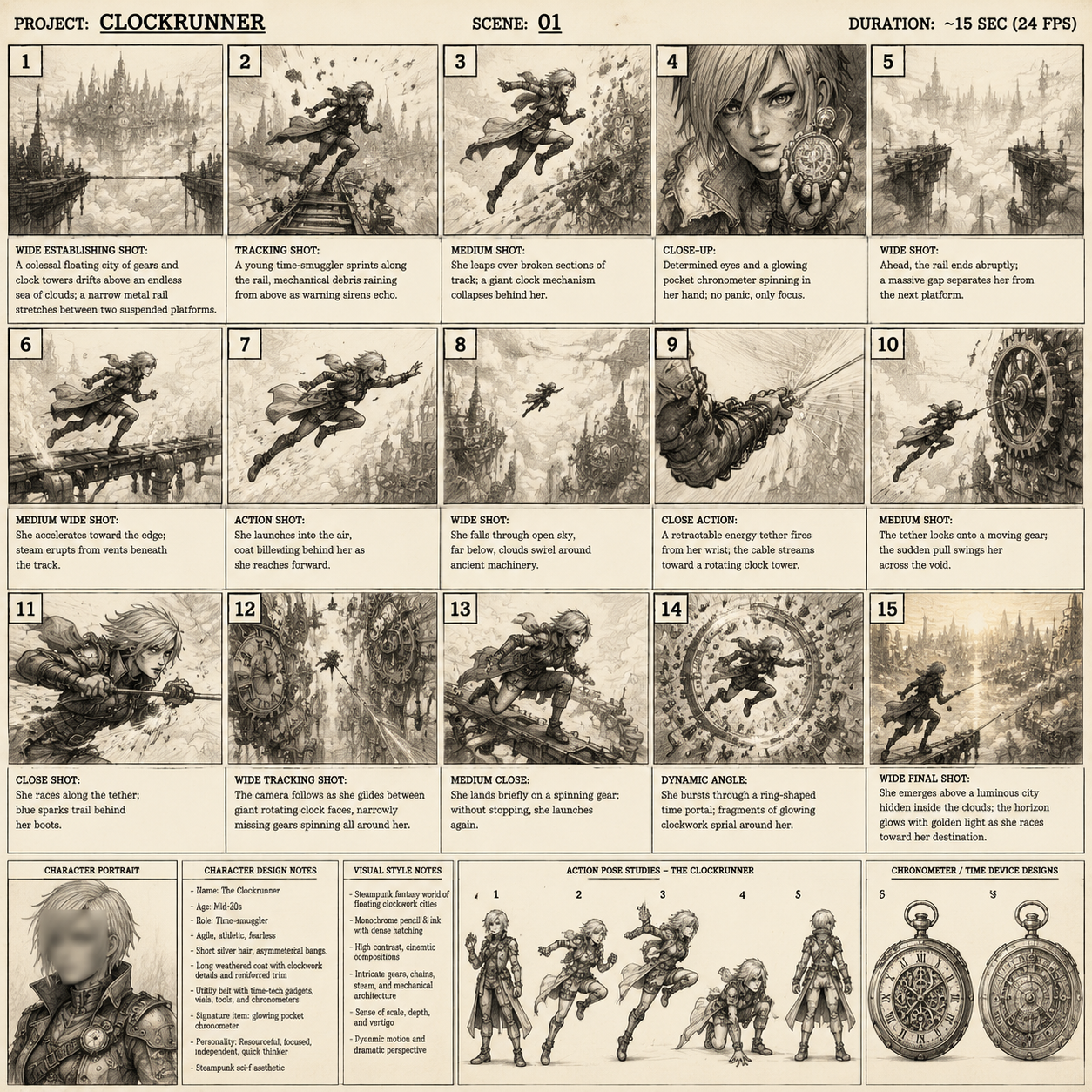
The single most effective step for consistency happens before you generate a single frame: build a reference pack for your character. This is a small set of images that define who the character is, and most serious AI video tools support feeding these references into generation.
Start with the character's core attributes written down: name, role, hair and skin colors, clothing with specific colors and details, any distinctive accessories — a backpack, a hat, a glowing badge. Then generate or collect images of the character that cover:
- Front, side, and three-quarter views
- Different emotional states: neutral, happy, focused, surprised
- Different lighting: bright, moody, neon, daylight
- A few action poses relevant to your story
Why multiple images instead of one? A single reference tells the model what the character looks like from one angle in one mood. A small set lets the model extract the stable core attributes — the things that stay the same — instead of copying a single pose. That extraction step is the foundation of what is often called multi-image fusion, and it is the difference between a character that holds up across scenes and one that collapses into a different person every time.
Choosing the Right Model for the Style
Not every generation engine is equally good at pixel art, and choosing the wrong one means fighting the model for every frame. When you evaluate tools for a Lego pixel project, look for three things:
- Stylistic control: can the model consistently produce low-resolution, blocky, toy-like aesthetics, or does it drift toward realism no matter what you prompt?
- Reference support: does the tool accept character reference images, and does it actually use them across scenes?
- Motion quality: pixel characters move in a particular way — slightly stiff, toy-like, charmingly mechanical. A model that animates everything like live-action footage will fight the style.
The good news is that most creators do not need a single perfect model. A common pattern is to use one engine for the characters (because it handles reference images well) and another for backgrounds or environments (because it is strong at architecture and atmosphere). The key is to test both before committing, and to keep the character engine fixed for the whole project — switching character engines mid-project is a fast route to inconsistency.
A useful test before committing to an engine: generate the same character in three different scenes — a bright outdoor scene, a dark interior, and a crowded group shot. Compare how well the identity holds across all three. That single test reveals more about a tool's suitability for your project than any spec sheet. Also check how the engine handles the small details that define pixel characters: the blocky proportions, the limited color palette, the toy-like material feel. An engine that keeps adding realistic textures or smooth gradients will fight the style on every frame.
Keyframes and Timeline Synchronization
Once you have a reference pack and a model, the next level of control comes from keyframes. In practice, a keyframe is a frame you define explicitly — either by generating a specific image or by choosing a moment in the timeline — and the model interpolates the motion around it.
For a Lego pixel video, a practical keyframe strategy looks like this:
- Opening keyframe: establish the character in the scene, in the signature pose, with the signature lighting.
- Action keyframes: define the important beats — the character picks up an object, turns, reacts.
- Closing keyframe: resolve the scene, ideally echoing the opening so the sequence feels whole.
Think of keyframes as the shots you would draw if you were storyboarding by hand. The model fills in the motion between them, but the identity is locked at the keyframes. If you keep the same reference pack and the same character description attached to every keyframe, the in-between frames inherit that identity.
Timeline synchronization matters for longer videos too. If you are assembling a multi-scene story, decide in advance how long each scene runs, what the emotional beat is, and which keyframes carry the character's identity. A little planning at the front saves hours of fixing broken transitions later.
Where Consistent Pixel Characters Pay Off
Educational and Training Videos
Lego pixel characters are a natural fit for education and training videos, because the style is friendly, non-threatening, and reads clearly even on small screens. Kids' content, explainer videos, language lessons, and safety training all benefit from a recurring mascot that learners recognize across episodes.
The consistency payoff is concrete: when a mascot looks the same in episode one and episode ten, it becomes a brand asset. Learners build a relationship with the character, not just with the content. That is why the reference pack matters so much for series — the pack you build for episode one is the same pack you reuse for every subsequent episode. Update it only when the story demands a deliberate change, like a new outfit for a special episode, and regenerate the full pack so every future scene stays aligned.
There is also a practical teaching benefit: a stable mascot gives learners an anchor. When the same character explains a new concept in each lesson, the format becomes predictable, and predictability reduces cognitive load. Viewers spend their attention on the material instead of on re-orienting to a new visual every time. For channels that publish on a schedule, that reliability directly translates into retention.
Branding and Marketing Uses
For brands, the Lego pixel style offers something rare: a distinctive visual identity that is affordable to produce at scale. A pixel mascot can appear in product teasers, social media posts, explainer videos, and even motion graphics for events — always recognizable, always on-brand.
The key discipline is the same as for education: lock the character once, then reuse it everywhere. Define the official color palette, the signature poses, and the style rules in a short document, and treat the reference pack as the single source of truth. When a new campaign needs a variation — a winter outfit, a special prop — generate the update from the reference pack, not from scratch. This keeps the brand coherent while allowing the character to evolve.
The style has another advantage for marketing: it travels well across formats. A pixel character works equally well as a static thumbnail, a short loop, a vertical story, or a longer narrative video. One character system can feed an entire content calendar without the production team starting from zero each time.
Rapid Prototyping and Storytelling Flexibility
One of the quiet advantages of pixel style is speed. Because the aesthetic is forgiving, you can prototype ideas quickly: generate a rough scene, check whether the story beat works, and iterate without expensive production. That changes how you develop content.
Start with a one-line story. Generate a single hero frame. If the frame communicates the idea, expand it into a three-scene sequence. If not, change the concept before you invest in a full video. This rapid loop is where the workflow pays for itself — you test five ideas for the cost that a traditional pipeline would spend on one.
The prototype does not need to be polished. A rough frame that shows the character, the environment, and the key action is enough to judge whether the idea has legs. The discipline is to judge the idea, not the render: a weak concept with beautiful pixels is still a weak concept. Keep the prototype stage cheap on purpose, and save the high-quality renders for the ideas that survive the test.
Storytelling flexibility also comes from the modularity of the reference system. Need a sidekick? Build a second reference pack from the first, reusing the style elements. Need the character to travel to a different world? Keep the character pack, change the environment model and the background prompts. The character stays the same; the universe can change.
Preventing Style Drift
Style drift is the slow, creeping change in how the character looks over the course of a project. It happens for many reasons: different models, looser prompts, tired hands, or simply entropy. Left unchecked, drift destroys the consistency you worked for.
Practical countermeasures:
- One source of truth: keep a single reference pack and a single character description, and reuse them verbatim.
- Fixed engine: keep the character model constant; change environments, not engines.
- Periodic checks: every few scenes, generate the character in the signature pose and compare it with the original reference. If it drifts, regenerate from the reference rather than pushing forward.
- Deliberate change only: when the story requires a change, make it a conscious update of the reference pack, not an accidental mutation.
Think of it as version control for a character. The reference pack is the main branch; every scene is a commit. If something breaks, you can always rebase from the known-good version.
Common Problems and Fixes
My character changes face between scenes.
Strengthen the reference pack with more angles and expressions, attach the reference to every keyframe, and use the exact same character description in every prompt.
The pixel style keeps turning realistic.
Check the model — some engines are biased toward realism. Add explicit style keywords (low resolution, blocky, toy aesthetic, voxel look) and test a different engine if the drift persists.
Motion looks too smooth or too stiff.
Pixel animation has its own feel. Adjust the motion prompts and the keyframe density: more keyframes for controlled moments, fewer for chaotic action.
Backgrounds look great but the character looks pasted in.
Unify lighting and color grading between the character and the environment, and generate the environment in the same engine or with matching style keywords.
The video is inconsistent between episodes.
Reuse the exact reference pack and description across episodes, and keep a change log for any deliberate character updates.
My character looks fine alone but breaks in group scenes.
Group scenes are the hardest test for consistency. Give each character its own reference pack, describe the spatial relationships explicitly, and keep the crowd small in early tests. Verify every character individually before combining them.
How do I match the style across different background models?
Generate the background and the character separately, then compare them side by side. Adjust the style keywords and lighting until they sit in the same visual world, and apply the same color grading in post.
Frequently Asked Questions
Do I need expensive tools for pixel character consistency?
No. The workflow — reference pack, fixed description, keyframes, single engine — works with any tool that supports reference images. The discipline matters more than the budget.
How many reference images do I need?
A practical minimum is six to twelve: a few angles, a few emotions, a few lighting setups. More coverage means more stable extraction of the core identity.
Can I use a real LEGO figure as a reference?
Use reference images you have the rights to and that fit the style you want. Many creators generate their own pixel-art character first, then use that as the reference.
What if the story needs the character to change over time?
Make it deliberate: update the reference pack consciously, and let the change be part of the narrative rather than an accident.
How long does it take to set up?
The first character takes the longest — an hour or two of reference building and testing. After that, every scene reuses the same setup, so per-video effort drops sharply.
