
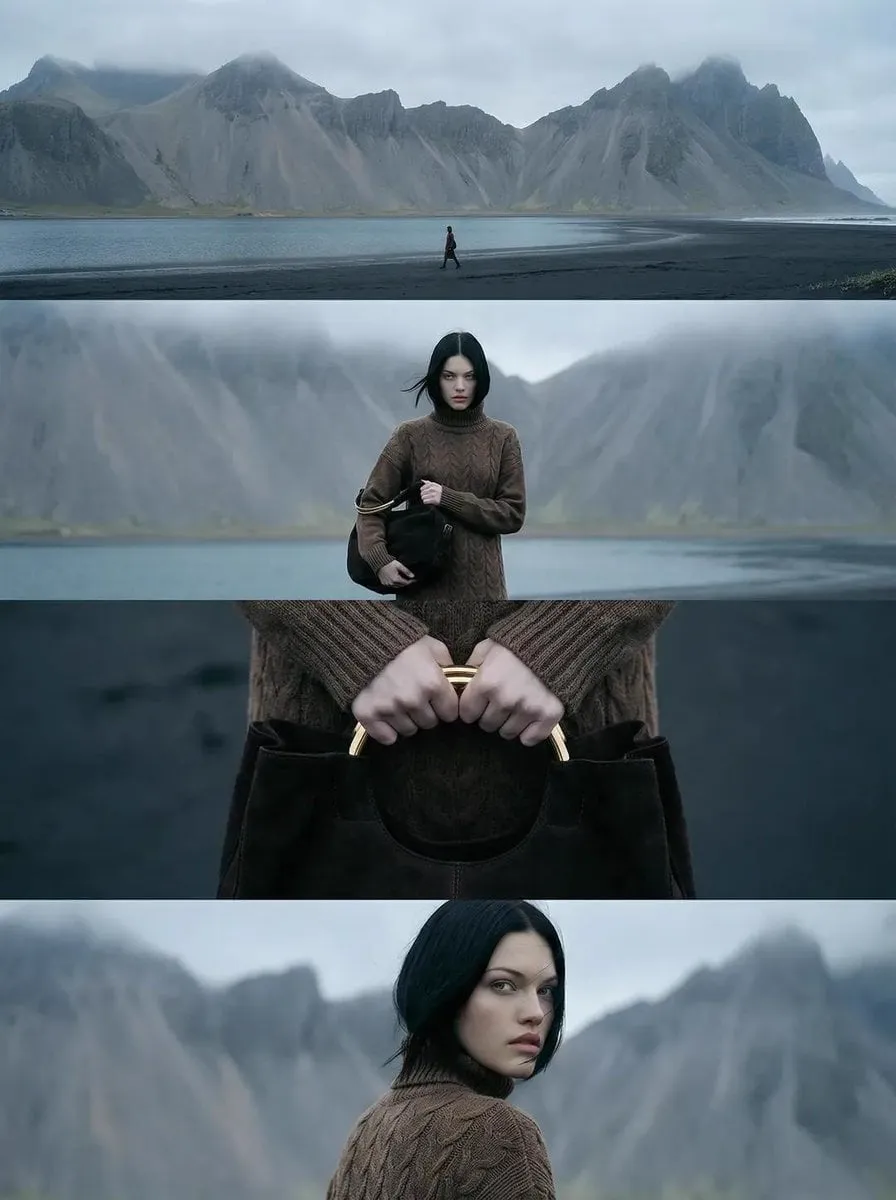
Short-form video gets all the attention, but the content that builds real audiences is often long-form: documentaries, deep tutorials, brand films, and narrative series. Long-form is harder to produce because every minute multiplies the work, and every extra minute creates more chances for inconsistency, pacing problems, and mistakes. AI editing tools have become genuinely useful for this kind of work, not because they replace editors, but because they remove the grunt work and let a small team hold a big project together. This guide covers how to build an AI-assisted long-form workflow from idea to finished film.
Why Long-Form Is Worth the Effort
Long-form video pays back in different currency than short-form. A tutorial that teaches a complete skill, a documentary that follows a story to its end, or a case study with real depth earns a different kind of trust than a sixty-second clip. Viewers who stay for twenty minutes are telling the platform, and you, that your content matters to them. That intent translates into stronger subscriptions, better conversion for products, and content that stays relevant for years instead of days.
The economics have also shifted. Production costs used to scale linearly with length, which made long-form a rich player's game. AI tools flatten that curve. Scripting, storyboarding, visual generation, transcription, and cleanup that once took a team now take one person and a few tools. The result is that independent creators can now make the kind of content that used to require a production company.
The catch is complexity. A twenty-minute film contains hundreds of decisions: which take to use, how to pace the reveal, whether the character still looks right in scene twelve, whether the audio is consistent across the whole piece. AI does not remove those decisions, but it can track them, and that tracking is where the real value lives.
Planning a Long Project Before Generating Anything
Long-form punishes improvisation. The most important work happens before the first prompt or the first shot, and it happens on paper.
Start with a one-page outline. Write the arc in plain language: what the viewer knows at the start, what changes, and what they know at the end. If the piece does not have a clear arc, no amount of production polish will save it. The outline is also the document that keeps you honest when you are eight hours into a project and tempted to add a tangent.
Break the outline into scenes, then into shots. Each scene should have a purpose, and each shot should carry one piece of information. For a twenty-minute film, a realistic plan is ten to sixteen scenes and forty to sixty shots. Write each shot as a short description with the visual, the action, and the duration. This shot list becomes the reference for every generation and every edit.
Set the consistency rules before you start. Decide what the main character looks like, what the color palette is, what the sound design will be. Write these decisions down. Every AI prompt and every edit should refer back to the same spec, because consistency in long-form is the difference between a film and a collection of clips.
Keeping Characters and Scenes Consistent
The hardest technical problem in AI long-form is continuity. A character who changes face between scenes, a room whose layout shifts, or lighting that jumps around destroys the illusion instantly. Viewers notice inconsistency even when they cannot name it.
The reliable fix is a fixed reference system. Generate a character sheet first: the same character from several angles, in the lighting you plan to use, with the wardrobe you plan to show. Use that sheet as the image input for every shot involving the character. When a tool supports multi-image fusion, feed two or three frames together so the model blends the identity rather than guessing from text.
Repeat the exact same description across prompts. Copy the subject block from your consistency spec into every generation. Only the action, environment, and camera instructions should change. Small wording differences become visible identity drift by the time you have forty shots.
Review in batches, not one at a time. Before assembling, put the frames for each scene side by side. Check that the hero, the set, and the light all match the spec. Fix weak shots by regenerating against the reference, not by patching them in post. For video-to-video tools, you can also restyle a slightly off shot to match the rest of the film, which is often cheaper than regenerating from scratch.
The Editing Workflow That Scales
Editing a long project is where the process either holds together or falls apart. The workflow below keeps the whole thing manageable.
Transcribe everything first. Whether you are working from recorded interviews or AI-generated narration, get a transcript and use it as the spine of the edit. Transcript-based editing lets you find the right soundbite, rearrange the narrative, and see the structure of the film at a glance. Most modern editing tools have this built in.
Assemble the story in the timeline before you polish. Lay down the narration or interview track first, then place the visual for each beat. Do not polish shots that are not in the cut yet; you will likely cut half of them anyway. The rough cut is a map, not a deliverable.
Use AI for the repetitive cleanup. Automatic transcription, subtitle generation, background noise removal, and color matching across clips are all solved problems that save hours. Captions especially: for any content that will be watched on phones, good captions are essential, and AI captions with human review beat typing them by hand.
Sound design should be planned, not improvised. Music beds, ambience, and effects need room to breathe. Lay a rough music track early to feel the pacing, then refine. In long-form, audio is at least half of the perceived quality, and audiences forgive more visual imperfection than audio sloppiness.
Choosing Tools for Long-Form Work
Long-form has different tool needs than short-form. The priorities are consistency, control, and integration with your editing suite rather than raw wow factor.
For narrative and character-driven footage, prioritize models with strong character consistency and multi-frame support. The Sora series and Runway models are popular for physically coherent motion and cinematic output; Kling models are valued for prompt adherence and stable characters. For still-heavy sequences, the Flux family gives strong image quality that animates well through image-to-video.
A practical rule is to use the best model for the hero shots and cheaper or faster models for everything else. Long projects generate a lot of frames; spending premium budget on every transition is wasteful. Define which shots matter most, spend there, and iterate on the rest with budget models.
Your editing software is the center of the workflow. Everything else should export to the timeline cleanly. The tools that feel like friction, requiring manual exports and re-imports, will quietly kill the project. Choose tools that integrate, or build a simple pipeline around your editor.
Common Failure Modes and How to Avoid Them
Long-form projects fail in predictable ways, and most failures are visible early. Scope creep is the classic killer: a twenty-minute film turns into an eighty-minute epic because every tangent felt necessary. The one-page outline is the defense. When a new idea does not fit the outline, it goes in the sequel, not the cut.
Inconsistency sneaks in through convenience. A shot is good but the character looks slightly different, and you convince yourself no one will notice. By the end of a forty-shot project, there are eight shots like that, and everyone notices. The batch review step exists to catch exactly this. Enforce it.
Pacing collapse is subtler. Long projects often sag in the middle because the plan was scenes, not beats. Check the rough cut for rhythm: is there a payoff every couple of minutes, or is the audience waiting through long explanations? Cut the explanations, show the payoff, and trust the audience to keep up.
Finally, perfectionism kills more projects than anything. A film that ships at ninety percent of the vision is worth infinitely more than one that never ships. Set a definition of done, review against your consistency spec, and publish.
Sound Design for Long-Form Projects
Long-form lives and dies on its audio, and it is the part most first-time AI productions neglect. A twenty-minute film with a thin, inconsistent soundtrack feels unfinished no matter how good the frames are.
Design the audio in layers. The voice layer carries the story: narration, interviews, or dialogue, clean, leveled, and consistent across the whole piece. The ambience layer puts every scene in a place: room tone indoors, traffic and wind outside, a crowd in public scenes. The music layer shapes the emotion and paces the film. The effects layer accents the action, a door closing, a glass setting down, an engine turning over. Each layer has a job, and they should never fight each other.
AI tools are strong in most of these layers. Voice synthesis covers narration in a consistent voice. Sound generation produces bespoke ambience and effects instead of forcing you to search stock libraries. Music generation can produce beds that never repeat and match the mood of each section. The craft is in the mix: balancing levels, carving space with EQ so the voice sits clear, and making sure the loudness is steady from scene to scene.
One practical rule keeps the mix honest: check your audio at phone volume, because that is how most of your audience will hear it. A mix that sounds rich in a studio often collapses into mud on a phone speaker. If the voice is still clear, the ambience still present, and the music still supportive at low volume, the mix is done.
Color and grading deserve the same discipline as sound, because visual consistency is what ties a long project together. Lock a grade early, a cool night look for exterior scenes, a warm interior tone for conversations, and apply it to every clip before it enters the edit. When generated footage arrives with slightly different color temperatures, correct it against the locked grade instead of accepting whatever came out. A viewer rarely notices a great grade, but everyone notices when the same scene shifts from blue to orange between cuts. Consistency in color, like consistency in sound, is felt even when it is not named.
FAQ
Is AI long-form editing suitable for complete beginners?
Yes, with a learning curve. The tools are accessible, but long-form requires planning, editing, and sound skills that take practice. Start with a five-minute project to learn the loop before committing to a longer film.
How long does an AI-assisted long-form project take?
A five to ten minute piece can take a focused week for one person. A twenty-minute documentary-style project can take three to six weeks depending on the number of shots and the amount of real footage. Most of the time goes to iteration and review, not generation.
Can AI generate an entire documentary from scratch?
Technically, yes, but quality depends heavily on your direction. The model generates clips; you provide the research, the narrative, the facts, and the judgment. For factual content, you must verify everything the narration claims, because generative tools can confidently include inaccuracies.
What if my long-form content includes real interviews?
Use AI for cleanup, captions, and structure, but keep the human voices authentic. Automatic transcription and noise removal speed up the edit enormously, and AI can help you find the strongest moments. The story still comes from the people in it.
How do I know my consistency is good enough?
Run the batch review: place frames from different scenes side by side and compare against the spec. If you cannot tell which scene a frame belongs to by looking at the character and lighting alone, your consistency is solid.
Long-form video is the highest-leverage content format most creators ignore, and AI has lowered the barrier enough that a single person can carry a project that used to need a team. The workflow is simple to state and hard to skip: plan on paper, lock your consistency, edit the story first, and review in batches. Do that, and the length stops being a burden and becomes the advantage.
