
Introduction
AI video generation is moving so fast that a model released six months ago can already feel dated. Luma 4.2 arrived with strong claims about realism and motion coherence, and it has quickly become a reference point for creators. But choosing a video model is not about picking the newest name; it is about matching a tool to the type of content you produce. This guide compares Luma 4.2 with the other serious options in 2026, including Runway, Sora, Kling, Hailuo, Pika, and Vidu, across the dimensions that actually matter.
The AI Video Landscape in 2026
The market has settled into three broad tiers. At the top sit the flagship models that push quality and control: Runway Gen-4, OpenAI Sora, and Luma 4.2. In the middle are strong all-rounders like Kling and Hunyuan that deliver impressive results with regional strengths. At the value end are fast, affordable models like Hailuo, Pika, and Vidu that trade some polish for speed and price.
Within each tier, the differences are about priorities. Some models are built for single, beautiful shots. Others are built for long-form consistency. Some handle physics with astonishing accuracy. Others excel at stylized or animated looks. Understanding your priority is the first step to choosing well.
How to Compare Video Models: The Right Criteria
People often compare models by watching a few impressive demo clips. That is a mistake. Demos are cherry-picked. Instead, evaluate every candidate on the same six dimensions.
Rendering quality and realism: how convincing are materials, skin, textures, and lighting at full resolution? Motion coherence: does the subject stay structurally stable through the whole clip, or does it warp and melt? Camera control: can you specify dolly, orbit, pan, tilt, and push-ins reliably? Prompt fidelity: does the output follow your instructions, or does it ignore half of them? Consistency: if you generate multiple clips of the same character, do they look like the same character? Cost and speed: what does a usable clip actually cost, and how long does it take?
Luma 4.2: What It Does Well
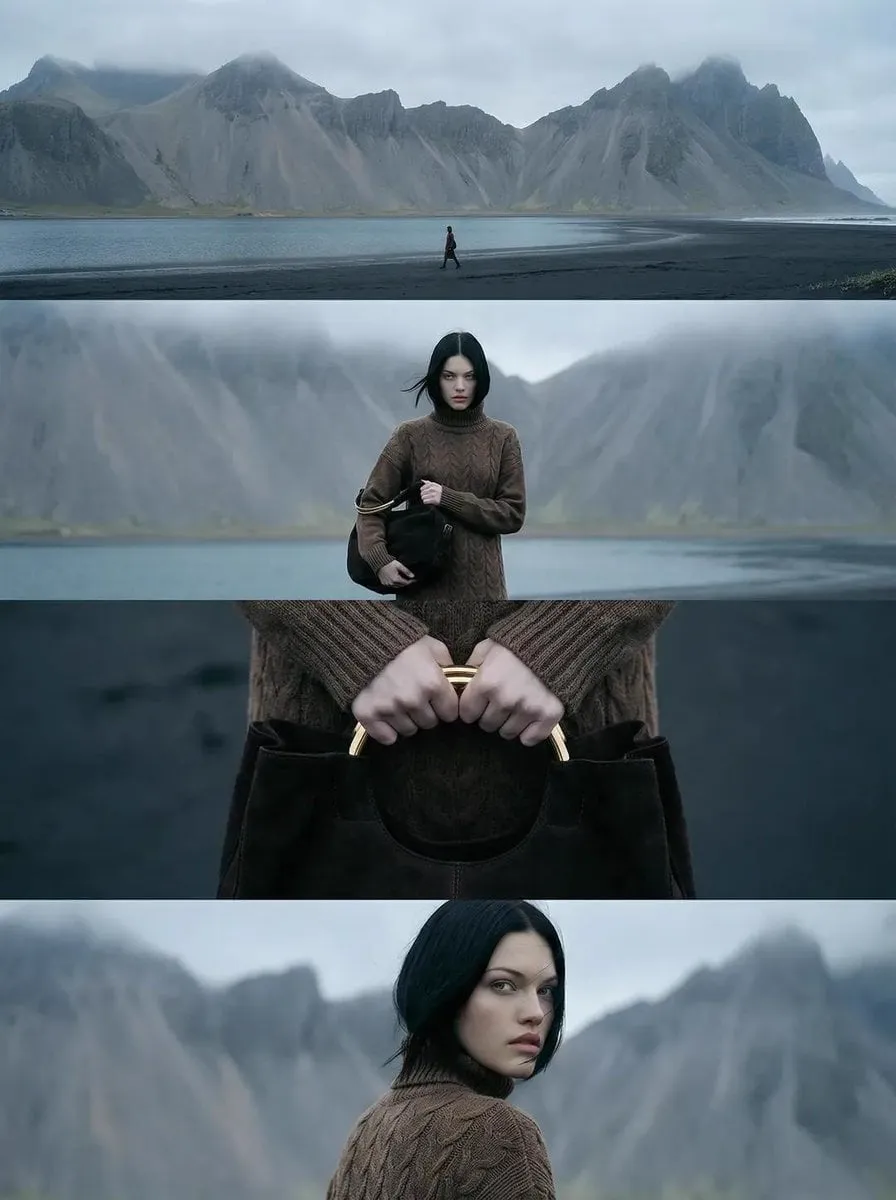
Luma 4.2 is strongest where filmmakers traditionally care most: physics and camera movement. Its outputs capture real-world motion with an almost documentary feel. Water, cloth, dust, and people moving through space behave the way they should, and the camera moves with a naturalism that few competitors match. For lifestyle content, product films, and anything that should not look obviously generated, Luma 4.2 is a top choice.
Its weaknesses are the flip side of that focus. Luma is excellent at single-shot realism, but long narratives and strict character continuity are not its native territory. If your project needs the same character across dozens of shots with identical clothing and face, you will need additional tools or workflows around it.
Luma 4.2 vs Runway Gen-4
Runway Gen-4 is the closest direct rival, and the comparison is genuinely close. Where Luma leans into physical realism and natural camera language, Runway leans into control and consistency. Gen-4 keeps characters recognizable across multiple generations, which makes it the better foundation for multi-scene stories, ads with recurring talent, and any project that needs a unified look.
The practical rule: choose Luma 4.2 when you need one shot to look like real footage and you have full control over that shot. Choose Runway when you need a series of shots that fit together, or when scene composition matters more than documentary realism. Many professionals use both in one project: Luma for hero shots, Runway for continuity-driven sequences.
Luma 4.2 vs OpenAI Sora
Sora remains the benchmark for raw ambition. It generates longer, more complex scenes with sophisticated physics and can sustain coherence over durations that other models struggle with. In pure spectacle and scope, Sora often wins. Its downsides are practical: generation is slower, access can be limited, and the per-clip cost is high.
Luma 4.2 is more pragmatic. It is faster, easier to iterate, and produces excellent results for the typical 5-to-15-second clips that dominate commercial work. If you need an epic establishing shot or a long continuous sequence, Sora is worth the cost. If you need to move quickly through many variations, Luma gives you more throughput per dollar.
Luma 4.2 vs Kling AI and Hunyuan
Kling AI has become the favorite for character performance and expressive motion, especially in Asian markets. It handles faces, gestures, and subtle performance details very well, and it tends to be more affordable than the Western flagships. For character-driven storytelling, music videos, and content aimed at audiences that expect strong performance, Kling often beats Luma on both price and expressiveness.
Hunyuan, from the same broader ecosystem, is a capable all-rounder that frequently appears in cost-sensitive production pipelines. It will not match Luma 4.2 on physical realism in every scene, but for stylized content, animation looks, and high-volume generation it delivers solid value. The choice here is really about style: if you want naturalistic footage, Luma; if you want performance and character energy, Kling; if you want volume at low cost, Hunyuan.
Budget Options: Hailuo, Pika, and Vidu
The value tier has its own logic. Hailuo produces surprisingly polished results for its price and is a common first choice for social media content and rapid prototyping. Pika is the most playful of the group, with strong stylized motion and an editor-friendly interface that lets you tweak results without leaving the platform. Vidu competes on speed and iteration, making it ideal when you need to test many creative directions quickly.
These models are not better than Luma 4.2; they are different tools for different jobs. When quality is the sole criterion, Luma wins. When the budget is fixed and you need ten variations instead of one perfect clip, the value tier gives you more shots on goal. For agencies and solo creators, a smart strategy is to use value models for exploration and reserve premium models for the final, client-facing output.
Platform Integration and Workflow Efficiency
Model quality is only half the equation. A great model inside a clumsy workflow loses to a good model inside a smooth one. Consider how each option integrates with your pipeline: can you upload reference images for character locking? Is there API access for batch generation? Does the platform support multi-image fusion for consistent characters? How long is the export queue at peak hours?
Luma, Runway, and the larger platforms all offer decent integration today, but the details matter. If you produce in volume, API access and queuing behavior can change your effective cost by more than the sticker price. Test the workflow with your real assets before committing to a subscription or prepaid plan.
Cost Management: Pay-per-Generation vs Subscriptions
Pricing models differ more than people expect. Some platforms charge per generation, which is flexible but can balloon when you iterate heavily. Others sell subscription tiers with monthly quotas. A few offer both. The right model depends on your usage pattern.
If you generate sporadically, pay-per-generation keeps costs low. If you generate daily, a subscription with a high quota is usually cheaper. Watch for hidden costs: upscaling, longer durations, higher resolutions, and priority rendering are frequently priced separately. Calculate the cost of a finished clip, not the cost of a single generation, because iteration and retries are part of the real price.
A Practical Benchmarking Workflow
The most reliable way to choose a model is to run your own benchmark. Take one representative project and define a fixed test shot: a subject, a camera move, and a scene description that matters for your work. Generate the same shot with two or three candidates, using the same prompt structure, and compare the results side by side on the criteria that matter to you.
Score each output honestly: realism, stability, prompt fidelity, and speed. Run several generations per model, because variance is part of the game, and a single lucky frame proves nothing. Then calculate the real cost per usable clip for each candidate, including retries and rejected generations. The winner is the model with the best ratio of usable quality to total cost for your specific content, not the model with the flashiest demo.
Choosing the Right Tool for Your Project
Here is a practical decision path. If your project needs one cinematic, realistic shot, start with Luma 4.2. If it needs multiple shots of the same character or a consistent brand look, start with Runway Gen-4. If it needs long, complex, ambitious sequences, consider Sora. If it is character performance for a music or story-driven piece, try Kling. If it is high-volume social content on a tight budget, start with Hailuo, Pika, or Vidu and upgrade only the clips that will actually carry the campaign.
Whichever you choose, run your own benchmark before committing. Take one representative project, generate the same shot with two or three candidates, and compare on your own screen with your own criteria. The model that looks best in someone else's demo is rarely the model that looks best on your product.
FAQ
Is Luma 4.2 the best AI video model?
There is no universal best. Luma 4.2 is excellent at realistic single-shot footage and natural camera motion. For character consistency, long-form coherence, or budget volume, other models may serve you better.
Can I use Luma 4.2 for character consistency across scenes?
Not natively as well as some competitors. For multi-scene character continuity, Runway Gen-4 or workflow tools built around multi-image reference fusion are usually stronger choices.
Are cheaper models good enough for social media?
Often yes. For short, stylized, fast-paced social content, the value tier frequently delivers acceptable quality at a fraction of the cost. Reserve premium models for hero content.
What is the most important spec to check?
Motion coherence, not resolution. A 4K clip with warping subjects is worthless, while a 1080p clip with stable physics and identity can be excellent. Test for structural stability before you care about pixel count.
How do I keep costs under control?
Standardize your prompts, reuse reference assets, generate short test clips before committing to long renders, and batch work into off-peak times. Track your actual success rate per model so you know which tool truly delivers usable clips per dollar.
Should I use one model for everything?
Probably not. Most professional teams mix models: premium models for hero shots, value models for exploration and volume. Matching the model to the shot type gives you the best quality per dollar across a whole project.
Conclusion
Luma 4.2 earns its reputation for realism and camera work, but it is one strong option in a healthy, diverse market. The best choice depends on your content type, your consistency requirements, and your budget. Build a shortlist around your actual project, benchmark the candidates yourself, and keep the workflow simple enough that you can switch models when a better one arrives. In a field that changes this quickly,
Hybrid Workflows: Mixing Models in One Project
The most advanced teams rarely commit to a single model. They build hybrid workflows where each shot goes to the tool best suited for it. A typical project might use Luma 4.2 for the hero establishing shot, Runway for the character sequences that need continuity, and a value model for background plates and transition clips that will be cut quickly.
The benefit is quality per dollar. You stop paying premium prices for shots where the audience will never notice the difference, and you stop accepting mediocre output for the shots that carry the campaign. The cost is workflow complexity: you must keep prompts, references, and style guides consistent across tools, and you need a review step to catch mismatches in look and feel.
A practical starting point is the two-model rule. Pick one premium model for hero content and one value model for everything else. Learn both well, standardize your prompt structure between them, and only add a third model when a specific shot type demands it. This keeps the workflow manageable while capturing most of the benefit of specialization.
flexibility is the most durable advantage.
