
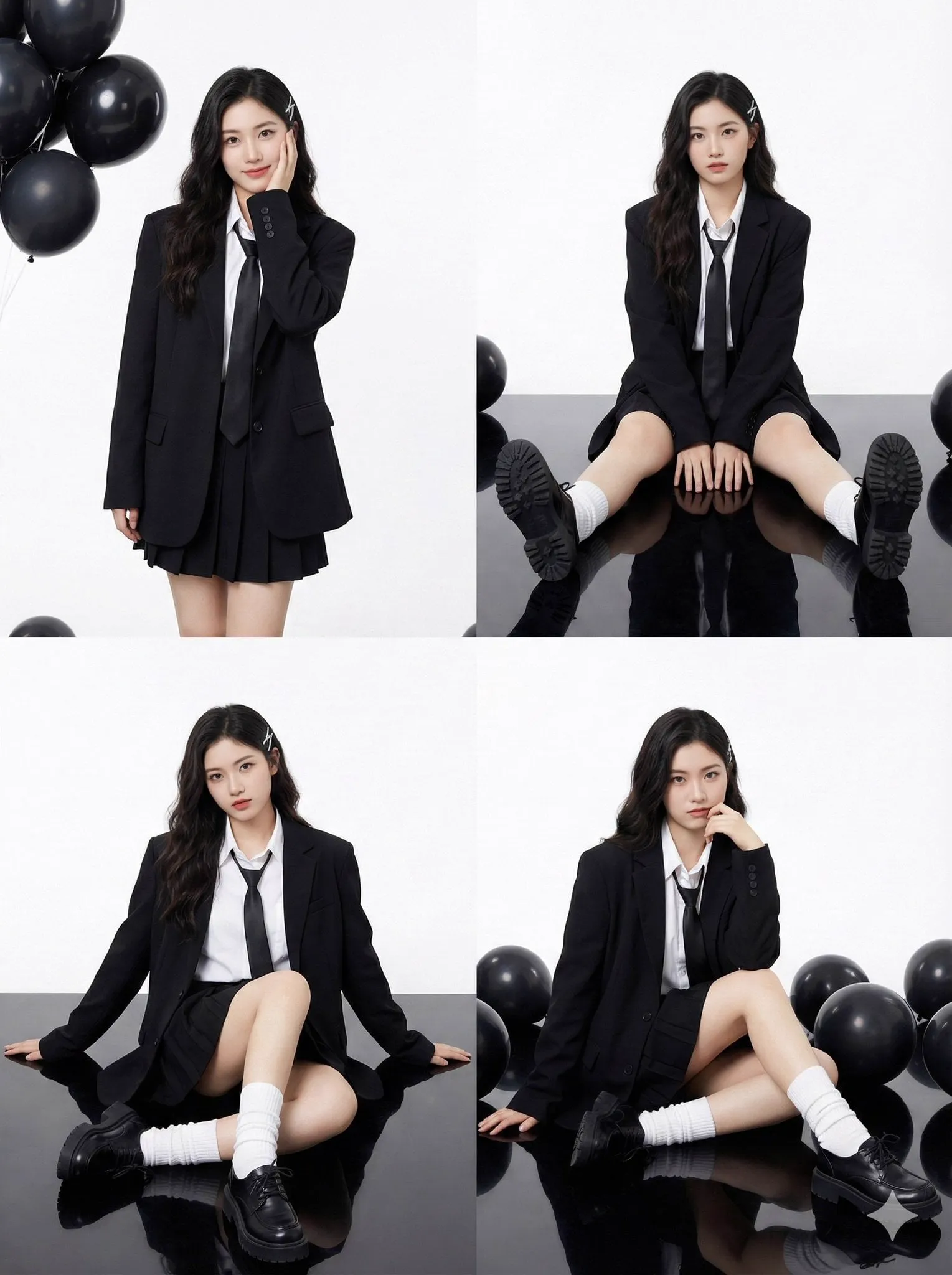

A few years ago, going from an idea to a finished video meant months of team work: concept art, storyboards, casting, shooting, editing, and color grading. Generative video models have compressed that pipeline into something a single creator can operate. But the models are only as good as the prompts they receive. This guide focuses on practical prompt engineering for two of the most popular model families — Luma Labs Dream Machine and the Flux series — and shows how to combine them in one workflow.
Why Prompt Quality Matters More Than Ever
As video models get more capable, the gap between a mediocre and a striking result is determined less by the model and more by how precisely you describe what you want. A vague prompt gives the model room to improvise; a precise prompt turns the model into a tool that executes your direction.
Prompt quality also matters because generation is not free. Every poorly written prompt costs you time and compute, and if you are producing at volume, that waste compounds quickly. Learning to write strong prompts is the highest-leverage skill in the generative video stack.
Anatomy of a Strong Video Prompt
A reliable video prompt can be thought of as a small production brief. It answers four questions: what is in the frame, what happens, where it happens, and how it should look.
Subject, action, environment
Start with the subject — who or what is central to the shot. Be concrete: instead of "a person," write "a middle-aged carpenter in a denim apron." Then describe the action as a continuous motion: "he sands the edge of a walnut table, sawdust drifting in the light." Finally, establish the environment with enough detail for the model to place the subject believably: "a small workshop with large windows at golden hour."
The order matters. Put the subject first, the action second, and the environment third. Models weigh earlier tokens more heavily, so the most important information should lead.
Camera and composition language
Cinematic vocabulary translates directly into better outputs. Specify the shot size and angle: "extreme close-up," "low angle," "over-the-shoulder," "aerial pull-back." Add lens and movement cues when you want them: "shot on 35mm, slow dolly forward," "handheld, slight shake," "static tripod shot."
Composition guidance such as "centered subject, negative space on the left" or "rule of thirds, subject on the right third" also works well. The more production language you use, the more the model behaves like a camera operator instead of a random scene generator.
Style modifiers and technical tags
Finish the prompt with style and quality modifiers: lighting ("soft diffused light," "hard rim light," "neon glow"), color ("muted palette," "teal and orange grade," "high contrast"), and texture ("fine film grain," "sharp macro detail"). Technical tags like "photorealistic," "cinematic," "8k," and "motion blur" help, but use them honestly — stacking quality tags does not fix a weak description.
Writing Prompts for Luma Dream Machine
Dream Machine is known for fluid motion and strong physical coherence. It rewards prompts that describe how things move, not just how they look.
Focusing on physics and motion coherence
Describe motion explicitly and simply. Instead of "a busy street," write "cars and pedestrians moving at a steady pace, a cyclist weaving between them, reflections stretching across wet asphalt." The model handles motion best when you describe one or two primary movements rather than a chaotic scene with competing actions.
Avoid impossible actions. If the prompt describes something physically implausible, the model either fails or produces uncanny results. Keep gravity, scale, and momentum in mind — a running person should not float, and a cup tipping over should follow an arc.
Using reference images for Dream Machine
Image-to-video is where Dream Machine shines. A strong reference image gives you control over composition, character appearance, and lighting that text alone cannot. When you use a reference, write a prompt that describes the motion and the camera, not the content of the image: "the woman turns toward the camera and smiles, slow push-in, warm window light."
A common mistake is describing a completely different scene than the reference. The model tries to reconcile them and produces a hybrid. Keep the prompt aligned with the image's content unless you are deliberately testing creative drift.
Budgeting generations for Luma Ray 2
The Luma family includes lighter variants that are useful for draft work. If you are iterating on an idea, run several cheap drafts first, lock the direction, and then invest one premium generation on the final hero shot. This draft-then-polish habit is the single best way to control spend without sacrificing quality.
Getting the Most Out of the Flux Series
The Flux series comes from the image-generation world and brings that discipline to visuals: exceptional photorealism, precise style control, and strong adherence to lighting and texture descriptions.
Prompting for lighting and atmosphere
Flux models are sensitive to light descriptions. Specify the light source and its character: "sunlight streaming through a window, dust motes visible," "single overhead bulb, harsh shadows," "candlelight, warm flicker." Adding atmosphere — fog, steam, rain, haze — creates depth and separates your output from flat, sterile renders.
Achieving photorealism through texture detail
Photorealism in Flux comes from describing surfaces: "weathered leather with visible grain," "condensation beads on a glass bottle," "rough concrete with peeling paint." Texture words do more work than generic quality tags. If you want a product shot, describe the material of the product, its packaging, and the surface it sits on.
Maintaining style consistency in complex scenes
For multi-shot projects, keep a style block in every prompt: same palette, same lens, same lighting direction. Better yet, build a style reference image and reuse it across shots. Consistency is not a single prompt skill; it is a discipline of reusing the same descriptive vocabulary across every generation in a project.
Combining Dream Machine and Flux in One Workflow
The two model families complement each other. Flux produces stunning stills with fine control; Dream Machine produces natural motion. A powerful workflow uses them together:
- Design the look in Flux first. Generate a hero still or a character sheet that defines the visual world.
- Use that still as the reference image for Dream Machine. Describe the motion and camera in the prompt.
- Review the moving result. If a specific frame is perfect but the motion is off, go back to Flux, refine the still, and retry.
- For sequences, generate keyframes in Flux — first and last frame — then let Dream Machine animate between them.
This still-to-motion pipeline gives you the best of both: the visual control of an image model and the motion realism of a video model.
Systematic Prompt Iteration
Prompting is not a one-shot activity; it is a loop. The fastest way to improve is to iterate deliberately instead of randomly.
Start with a baseline prompt, generate, and change exactly one variable per round: the camera, the light, one style word, or the action description. When a change improves the result, keep it; when it does not, revert it. Log every round so you can see which variable moved the needle. This is the same discipline engineers use for debugging, and it works remarkably well for creative generation.
A useful pattern is to build the prompt in layers:
- Core scene: subject, action, environment.
- Camera layer: shot size, angle, lens, movement.
- Light layer: source, direction, quality, atmosphere.
- Style layer: palette, texture, grain, finish.
- Constraint layer: negative prompts and hard rules.
Once each layer is stable, you can swap layers independently. Change the light layer to test day versus night; change the style layer to test palettes. This modular approach turns prompt writing from a mystery into an engineering practice.
When to stop iterating
Perfectionism is the enemy of volume. Set a quality bar before you start: what makes this shot acceptable? When the draft clears that bar, move on. Keep a list of "known good" prompts so that future projects start from a high baseline instead of from zero.
A real-world example: from still to motion
Imagine a skincare brand that needs a thirty-second launch video. In Flux, you generate the hero still: an amber glass bottle on a stone ledge, soft morning light, water droplets on the glass. You love the look, so you lock it as the style reference. In Dream Machine, you write the motion prompt: "the bottle stays still, light shifts as clouds pass, a hand enters frame and picks it up slowly, gentle steam rising from the side." The resulting video keeps the exact product design from the still while gaining natural, physical movement. Then you generate two alternates with different lighting, run the campaign A/B test, and let the data choose. This is the workflow that turns two models into one production system.
Troubleshooting Common Prompt Failures
- The output ignores your prompt. Shorten it and lead with the most important subject-action pair. Long, cluttered prompts dilute attention.
- Motion is jerky. Simplify the described action and remove conflicting movement cues.
- The style drifts between shots. Lock a style block and reuse it verbatim in every prompt.
- Faces distort. Use reference images and keep face descriptions simple; avoid stacking contradictory attributes.
- Results are generic. Add one concrete object, one specific light description, and one camera term.
- The video looks flat. Add atmosphere (fog, haze, dust) and a defined light source with direction.
Prompt Templates You Can Copy
Product hero shot:
"Packaging-free amber glass bottle of honey on a wooden table, extreme close-up, light from the left through a window, honey dripping slowly down the side, photorealistic, shallow depth of field, warm tones, shot on 50mm."
Cinematic character moment:
"An elderly woman in a wool coat standing at a bus stop in light rain, medium shot, she looks up and smiles softly, slow push-in, overcast sky, muted colors, subtle film grain."
Nature transition:
"Time-lapse of a field at dawn, mist lifting, the camera slowly rises, soft golden light breaking over the horizon, cinematic, high detail."
Abstract loop:
"Macro shot of colored ink dispersing in clear water, slow motion, backlit, deep blacks with vivid cyan and magenta, 4k, elegant and calm."
Character consistency loop:
"An animated fox character in a red scarf, cel-shaded style, standing in a snowy village, the fox turns and waves at the camera, gentle snowfall, warm window light behind, clean line work, 2D animation look."
Product detail macro:
"Close-up of a mechanical watch movement, gears turning slowly, extreme macro, shallow depth of field, cold blue light with warm highlights, precise and luxurious feel, photorealistic, 8k detail."
Commercial and Ethical Considerations
As generative video becomes a normal part of production, a few responsibilities come with it.
Check commercial rights. Before using AI-generated footage for client work or paid campaigns, read the platform's terms of use. Rights differ between personal, commercial, and resale use, and they can change. When in doubt, contact the provider and keep written confirmation.
Disclose where required. Some platforms, marketplaces, and advertising systems require disclosure of AI-generated content. Being transparent protects your account and your relationship with clients. It also builds trust with audiences who care about authenticity.
Avoid impersonation. Do not generate videos of real, identifiable people without permission, and do not create content that could mislead people into thinking a real person said or did something. This is both a legal risk and an ethical one.
Respect intellectual property. Do not copy a specific artist's style by name to imitate their work for commercial gain, and do not use copyrighted characters in commercial projects without a license. A general style is fair game; a specific creator's identity and protected work are not.
Keep humans in the loop. AI video is a production tool, not a replacement for judgment. The final responsibility for accuracy, taste, and legality always sits with the person who publishes.
Final Checklist
Before you commit to a batch of generations, run this checklist:
- The subject, action, environment, and style are all present in the prompt.
- The most important information leads the prompt.
- Motion is described simply and physically.
- Light source and atmosphere are specified.
- One reference image is used where character or composition consistency matters.
- The same style block is reused across related shots.
- Draft runs are done on a fast model before spending on a premium generation.
Prompting is a skill you build by logging what works. Keep a small library of winning prompts per project type — product, character, nature, abstract — and reuse them. In a year, that library will be worth more than any single model update.
