
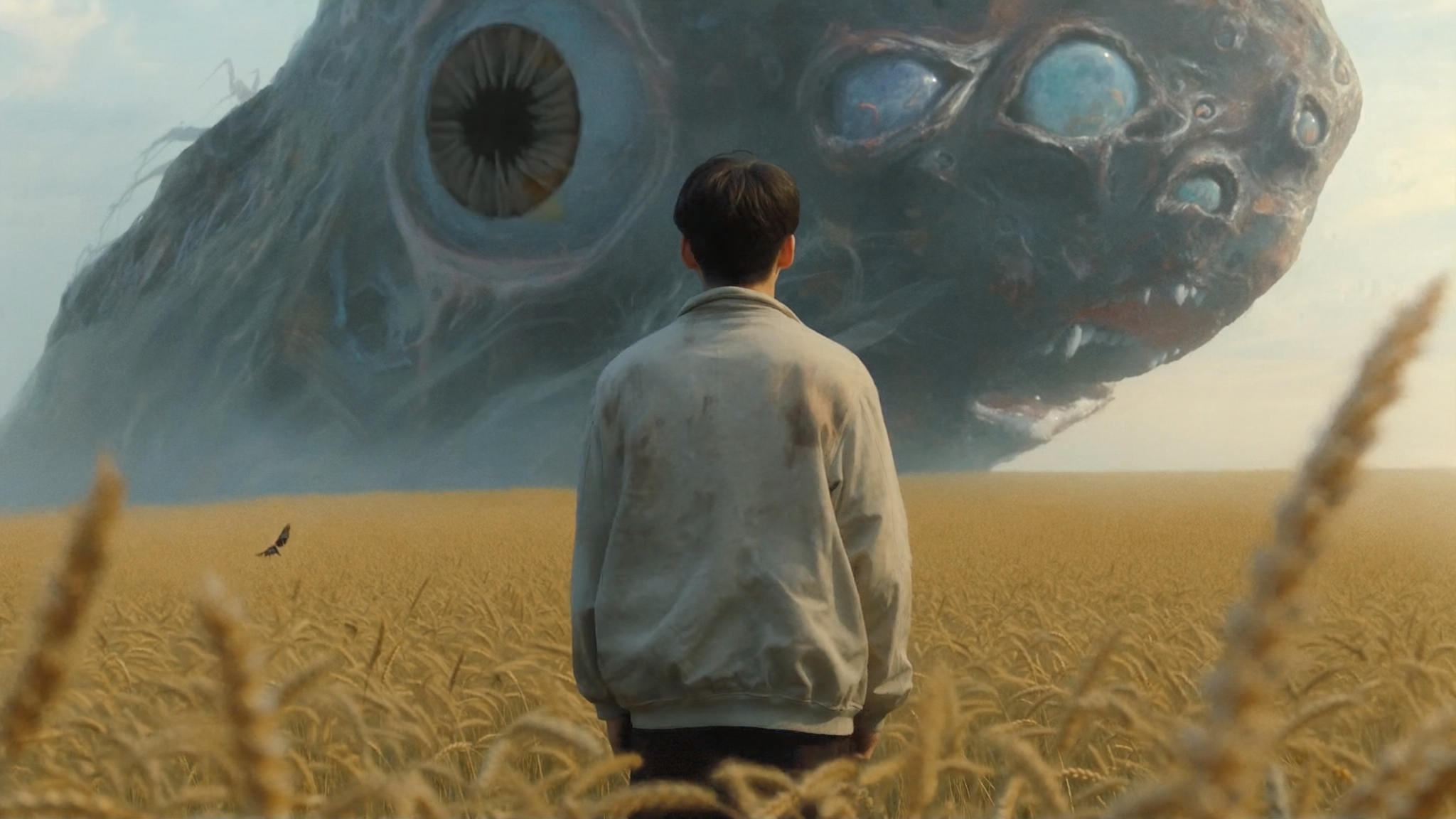
Science fiction is the genre that demands the most from AI video tools, which is exactly why it is the best training ground for learning them. A sci-fi short needs impossible environments, futuristic technology, alien or robotic characters, and a visual language that stays believable from the first frame to the last. That combination stresses every weak point of AI generation: consistency, physical plausibility, and mood. If you can make a sci-fi short that holds together, you can make almost anything.
This guide is a director's playbook for producing a sci-fi short film with AI video tools. It covers worldbuilding, script structure, storyboarding, model selection by scene type, character consistency, cinematography prompts, sound design, and the final edit. The goal is not to describe a single tool in depth; it is to give you a repeatable process that works regardless of which engines you have access to.
Start with a World, Not Just a Plot
Most failed sci-fi shorts start with a plot and no world. The writer imagines a twist or a chase scene and then tries to build the universe around it. The result is a script full of generic corridors and unexplained technology, and when the AI tries to visualize it, everything feels like a default setting.
Flip the order. Build the world first: what era is it, what is the technology level, what are the rules of this universe, and what problem does this society face? Write a short world bible of one or two paragraphs covering the setting, the visual style, the technology, and the tone. This document is not filler; it is the source of truth for every prompt you will write later.
The world bible becomes your style anchor. When you write a prompt for a scene, you should be able to point at the relevant line in the bible and say what makes this scene feel like it belongs to your universe. If a prompt could appear in anyone else's sci-fi video, it is not specific enough.
Keep the world small enough to control. A feature-length universe with dozens of locations is a production nightmare in AI. A short film needs at most three or four distinct environments. Every additional environment multiplies the consistency work, so design a world that is deep but narrow: a single station, a single ship, a single city district, explored thoroughly rather than many places explored shallowly.
Write a Script That Survives AI Generation
A good AI film script is short, visual, and forgiving. Aim for a runtime of two to five minutes, which means roughly one page of script per minute. Long dialogue scenes are the enemy: they are hard to generate with lip-sync quality and hard to keep consistent. Instead, favor visual storytelling, action, and minimal dialogue delivered as voice-over or captions.
Write for the strengths of the medium. AI video excels at atmosphere, scale, and beautiful individual shots. It struggles with complex blocking, precise physical interactions, and continuity of small props across cuts. Structure your script to show what the medium does well: a slow reveal of a massive structure, a character walking through a visually rich environment, a single emotional beat delivered through a close-up.
Break the script into beats before you write full scenes. A beat is one dramatic unit: the discovery, the threat, the decision, the consequence. List the beats in order, then write only the scenes that carry those beats. Every scene that does not move a beat forward is a candidate for deletion, because in AI production every extra scene costs time, money, and consistency risk.
Finally, leave room for happy accidents. AI generation is probabilistic, and sometimes the best shot is one you did not plan. Keep the script flexible enough that a spectacular unplanned image can be adopted into the edit rather than rejected because it deviates from the plan.
Storyboard Before You Generate
A storyboard is the cheapest insurance policy in AI filmmaking. It forces you to decide the shot list before you spend resources generating footage, and it turns vague intentions into specific prompts. You do not need drawing skills; stick-figure panels with written notes are enough.
Start with a shot list derived from the script beats. For each beat, decide the key shots: establishing, medium, close-up, insert, transition. Mark the intended camera movement for each, because camera movement is one of the strongest tools for making AI footage feel cinematic. A static wide shot and a slow push-in of the same scene tell completely different stories.
Note the emotional function of each shot. Is this shot building tension, revealing information, or releasing emotion? The answer should shape the prompt: tension shots benefit from tighter framing and darker mood, reveal shots benefit from wider frames and slower movement, release shots benefit from brighter light and more motion.
Keep the storyboard loose. Its purpose is to make decisions visible and testable, not to be a work of art. If a panel is unclear, write the prompt you would use for it in the margin. The board is complete when every scene in the script has a clear visual plan that you could hand to another person.
Choose Models by Scene Type, Not by Habit
The biggest mistake in AI filmmaking is using the same model for every shot. Different models have different strengths, and the fastest way to raise your quality ceiling is to treat model choice as a per-scene decision informed by what the scene requires.
For photorealism and complex environments, look for models known for spatial coherence and realistic lighting. These are the workhorses for establishing shots and location scenes. They handle wide frames with many elements better than most, which is exactly what a sci-fi cityscape needs.
For character-driven scenes, prioritize models with strong character and face consistency. A close-up of a protagonist is the shot where viewers notice inconsistency most. If a model drifts on the face, no amount of beautiful lighting saves the scene.
For stylized sequences, such as dream sequences, holographic interfaces, or surreal transitions, use models with distinctive stylistic signatures. These are the shots where visual experimentation pays off, because the audience already expects the imagery to depart from reality.
Whatever mix you choose, document which model produced which shot. When you review the rough cut and find a shot that does not work, you need to know exactly which model and prompt produced it so you can regenerate with a targeted fix instead of guessing.
Lock Character Consistency Across Scenes
Character consistency is the single most reliable way to distinguish a professional AI short from an amateur one. A sci-fi protagonist whose face changes between scenes destroys the suspension of disbelief faster than any plot hole. The fix is a disciplined character reference workflow.
Define each character visually before generating anything. Write a character sheet: age, build, skin tone, hair, eyes, distinctive clothing, signature accessories, and any physical quirks. Include reference images if your tools support them, and use the same reference set in every prompt that includes the character.
Repeat the key descriptors in every prompt. Tools respond to reinforcement, and dropping the character description from a prompt invites drift. Build a reusable character block: a fixed sentence that describes the character identically in every scene. Copy it into each prompt, even for shots where the character is small in frame.
Pay special attention to costume and props. In sci-fi, a character's uniform, visor, weapon, or tool is part of their identity, and a different-looking prop between shots is glaring. Describe the costume and its key details in the character block, and keep the block stable until a deliberate change happens in the story.
Direct the Camera with Cinematography Prompts
Cinematography prompts are where AI video goes from generated footage to directed film. The difference between a flat clip and a cinematic one is often just the camera language in the prompt. Learn the vocabulary and use it deliberately.
Describe the lens and framing: wide shot, medium, close-up, extreme close-up, low angle, high angle, Dutch angle, over-the-shoulder. Each framing choice carries meaning. A low angle makes a character powerful; a high angle makes them vulnerable; a Dutch angle signals instability. Use these tools to reinforce the beat, not randomly.
Describe the movement: static, handheld, dolly in, dolly out, crane up, tracking shot, orbit. Movement should serve the emotion of the scene. A slow push-in builds intimacy or tension; a dolly out reveals scale or isolation; handheld creates immediacy and chaos. When the movement matches the mood, the audience feels it without noticing why.
Describe the depth and focus: shallow depth of field, background blur, rack focus from foreground to background, lens flare. Depth control is one of the strongest signals of cinematic quality, and it is especially useful in sci-fi for separating characters from busy environments.
Keep prompts concise and ordered. A typical cinematography prompt states the shot type, the camera move, the framing subject, and the mood. Long rambling prompts dilute the instructions; short structured ones give each element room to work.
Design Sound and Music for the Final Cut
Sound is where many AI films fall apart, because visual quality draws attention to the audio gap. A sci-fi short without a proper sound design feels like a demo reel no matter how good the images are. Plan the audio before the edit, not after.
Design the sound in layers: ambience, effects, music, and voice. Ambience establishes the world: the hum of a ship, the wind of a alien surface, the distant noise of a city. Effects punctuate action: weapons, doors, machines, footsteps. Music carries the emotional arc, and voice delivers any narration or dialogue.
Match the sound to the world bible. A hard sci-fi universe needs mechanical, industrial sounds; a sleek futurist universe needs clean, synthetic tones. Consistency between the audio style and the visual style is what makes the world feel whole.
Use silence and dynamics deliberately. The quiet moment before an attack, the drop in music during a reveal, the echo in an empty corridor: these are the audio details that make a short film feel directed rather than assembled. Mix the voice clearly above the bed, keep the music dynamic, and check the final mix on small speakers, not just headphones.
Assemble the Edit Like a Traditional Editor
Editing an AI film is not fundamentally different from editing any film. The material may be generated, but the principles are the same: rhythm, clarity, and emotion. The rough cut is where the film is actually made.
Start with the story beats, not the footage. Lay out the shots in beat order and cut for narrative clarity first. If the story is not clear in the rough cut, no amount of polish will save it. Then tighten for rhythm: remove frames that linger, cut on action, and match the pace to the emotional arc.
Use transitions sparingly. Hard cuts are the default and usually the best choice. A dissolve suggests time passing; a match cut connects two ideas; a whip pan or zoom transition works in energetic sequences. Each transition is a statement, and a film full of random transitions reads as amateur.
Cut to the sound. Place cuts on audio cues, let the music guide the pacing, and time the effects to land on the cut. When picture and sound move together, the edit feels professional even with modest footage.
Frequently Asked Questions
How long should my first sci-fi short be? Aim for two to three minutes. It is long enough to tell a complete story and short enough that you can actually finish it. A finished two-minute film beats an abandoned ten-minute plan every time.
Do I need a high-end computer? No. Most AI video generation happens in the cloud, so the limiting factor is not your hardware but your budget and your prompt skills. A normal laptop is enough for the writing, storyboarding, and editing stages.
How many shots do I need? A three-minute short can be built from forty to sixty shots, depending on pacing. Quality matters more than quantity: a few beautiful, well-planned shots carry more weight than a hundred generic ones.
Can I fix a bad shot by editing? Sometimes, but not usually. Regenerating with a better prompt is more effective than trying to repair flawed footage in post. Spend the effort on the prompt and the model choice, and edit only for rhythm and structure.
What is the best way to learn? Make one complete two-minute short, however rough, and force yourself to finish it. The second short will be dramatically better because you will have learned what consistency, sound, and editing actually require in practice.
