
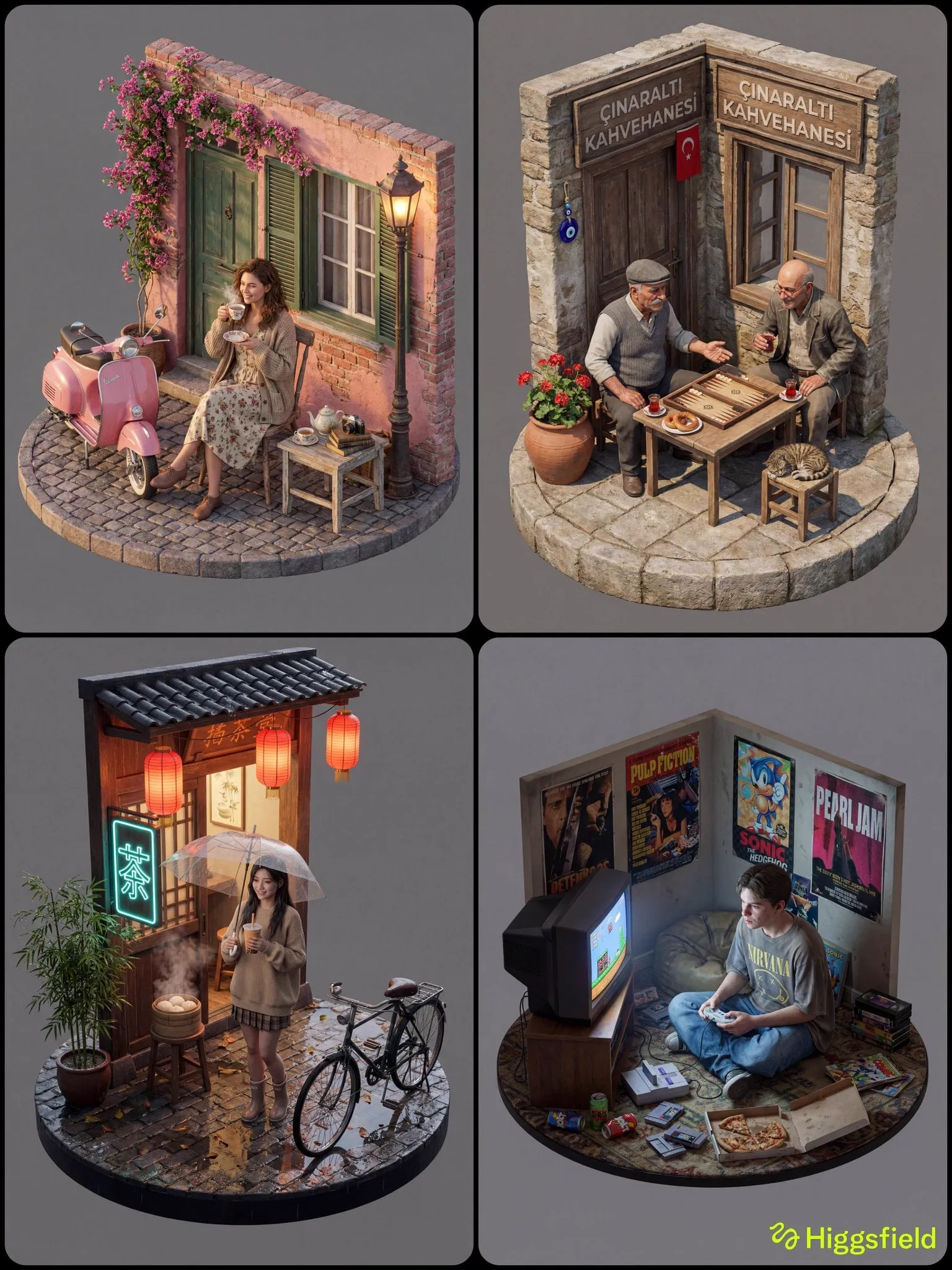
For most of the history of generative video, the workflow looked the same: type a prompt, get a clip, type another prompt, get another clip, and then try to stitch the results into something that resembles a story. It worked, barely, for short standalone shots, but it collapsed the moment you needed narrative continuity, consistent characters, or deliberate pacing. The video might have looked impressive frame by frame and still failed as a piece of storytelling.
That is changing. The most useful development in AI video is not a single bigger model. It is the arrival of tools that behave like directors: they interpret an overall goal, plan shots, control pacing, and keep the world consistent. This guide walks through how to use AI video director tools to master cinematic storytelling, from shot composition and narrative structure to character consistency and a repeatable production workflow.
From Prompt Engineering to Directed Narratives
The old approach was prompt engineering: obsess over the exact words that produce the best single clip. The new approach is direction: decide what the story needs, then let the tooling translate that decision into shots. Prompt engineering optimizes one image; direction optimizes a sequence of images that work together.
Think about how a real film gets made. The director does not write one sentence for the whole movie. The director works from a script, breaks it into scenes, decides the shots that tell each scene, and then guides the crew through those shots one at a time. An AI director tool does the same thing at a smaller scale. You give it the concept and the emotional beats. It proposes the structure, the shot list, and the visual language, and it keeps every generated clip aligned with that plan.
This matters because the market threshold for "good enough" video has risen dramatically. Audiences have seen enough generative video to recognize generic output instantly. What reads as professional is not raw pixel quality; it is intent. A video where every shot was chosen for a reason feels directed. A video where shots were assembled randomly feels cheap, no matter how beautiful each frame is.
What an AI Director Tool Actually Does
At the practical level, an AI director tool performs five jobs that used to require a human director, a cinematographer, and an editor.
First, it interprets narrative goals. Instead of describing every camera angle by hand, you describe the purpose of a scene: establish a location, reveal a secret, escalate tension. The tool decides the shots that serve that purpose.
Second, it plans the shot sequence. It produces a shot list with framing, camera movement, and duration, so you know exactly what to generate before you generate anything.
Third, it manages visual consistency. Characters, costumes, and environments stay recognizable across scenes through reference-based techniques, which is the difference between a collection of clips and a story.
Fourth, it controls pacing. It maps the emotional arc of the script to shot lengths and cutting rhythm, so tension builds, breathes, and releases at the right moments.
Fifth, it assembles the pieces. Some tools go beyond generation and help you lay the clips in order, add transitions, and produce a finished cut.
The exact capabilities vary by product, but the direction of travel is clear: from a text-to-video toy to a filmmaking assistant.
Building a Cinematic Shot List
The shot list is the backbone of directed video, and it is the first thing you should build for any project. It is a table with one row per shot: shot number, size, camera movement, lighting mood, action, and purpose. It sounds administrative, but it is actually the creative core of the work, because every row is a decision about what the audience sees and feels.
Shot size is the grammar. An establishing wide shot gives context. A medium shot introduces a character in their environment. A close-up reveals emotion. An extreme close-up isolates a detail and creates intensity. The same action can be told in many ways, and the way you choose changes the meaning.
Camera movement is the punctuation. Static shots are calm and formal. A slow push-in increases intimacy or tension. A pull-back reveals scale and context. A whip pan connects two subjects with energy. A handheld shot brings immediacy and anxiety. Every movement should be motivated by the story, not applied as decoration.
Lighting mood is the color of the emotion. Warm, even light feels safe and nostalgic. Cold light feels clinical and lonely. Hard shadows create mystery and danger. High-key lighting feels commercial and optimistic. When you plan a scene, decide the lighting mood the same way you decide the shot size, and keep it consistent across all shots in the scene.
A good exercise is to write the shot list for a short scene on paper before touching any tool. Describe the story beat, then write down the five or six shots that would tell it. When you move to an AI director tool, compare its suggestions with yours. You will learn faster, and you will catch the moments where the tool's proposal is better than your first instinct.
Narrative Structure and Pacing
Cinematic storytelling runs on structure. The reliable shape is the three-beat arc: establish a situation, raise a conflict or question, resolve it. It works for a ninety-minute film and for a thirty-second short. The scale changes, the skeleton does not.
The opening beat earns attention. It presents the situation in a way that creates a question in the viewer's mind: what happens next, what is this, how will they get out of this. The opening should be specific, not generic. A character sitting alone in a room is a situation; a character sitting alone in a room with a clock that is counting down is a story.
The middle beat develops the conflict. This is where value gets delivered or stakes get raised, and it should move in steps. Each small reveal answers one question and opens another. If the middle drags, the fix is usually not to cut content but to raise the stakes earlier and make each beat carry more weight.
The closing beat resolves the tension and leaves the viewer with something to carry away. It should feel earned. A strong ending completes the story, states the takeaway in a memorable line, or sets up the next chapter.
Pacing is how the beats land. A common failure is uniform pacing: every shot lasts about the same time, every transition feels the same, and the video has no rhythm. Real pacing varies. Moments of high information density get longer shots. Moments of emotional impact get a beat to breathe. Moments of action cut on motion. Build a rhythm map for your video, marking which beats are fast, which are slow, and which are the emotional peaks. Then generate and cut to match that map.
Choosing Models for the Story
No single model serves every narrative need, and pretending otherwise limits your work. A skilled director chooses the tool for the scene. This is the same judgment that a director of photography applies to lenses.
For scenes that need to feel real, photorealism is the priority: lifestyle content, product stories, testimonials, anything where the audience must believe the world. Photorealistic models handle skin, light, and motion well enough to pass for captured footage in many cases.
For scenes that need stylization, animated and stylized models give you art direction that photography cannot. They are ideal for explainers, educational content, brand worlds, and anything with a strong visual identity.
For long, story-driven sequences, what matters most is narrative understanding: keeping a scene consistent over many shots, tracking characters, and maintaining cause and effect. Some models are substantially better at this than others, and for serial content it is worth testing this capability explicitly rather than assuming it.
For emotional close work, small details carry the performance: micro-expressions, eye movement, subtle gesture. Models with strong facial fidelity make a real difference in scenes that live or die on the actor's face.
The practical rule is to make the model choice after you have written the shot list, not before. First decide what each scene needs. Then pick the model that delivers it. You will often use two or three different models in one project, which is normal and healthy.
Visual Cohesion Through Reference and Fusion
The fastest way to destroy a story is inconsistency. A character changes face between scenes, a costume changes color, a location stops looking like itself. Audiences may not name the problem, but they feel it, and they stop believing the world.
The solution is reference-based generation. Define characters and environments once, using reference images, and reuse those references for every shot in which they appear. The tool extracts the defining attributes, and each new generation stays locked to them. This is sometimes called image fusion or character lock, and it is the single highest-leverage technique for serial AI video.
Apply it to environments with the same discipline. A story set in one location needs that location to be recognizable in every shot, from different angles and in different lighting. Define the location reference once, and every shot of that location uses it.
For characters, build a small reference set: a front view, a side view, and a full-body view. The richer the reference set, the more angles the model can handle while staying consistent. Add style references for costumes and color palettes so the wardrobe does not drift between scenes.
An End-to-End Workflow
Here is a workflow that turns the ideas above into a repeatable process.
Concept. Write one paragraph: what the video is about, who it is for, what feeling it should leave. If you cannot write the paragraph, do not start generating.
Outline. Expand the concept into three to eight beats. Each beat is one sentence that states what happens and what the audience should feel.
Shot list. For each beat, decide shot size, camera movement, lighting mood, and duration. Use an AI director tool to draft this, then edit it to match your intentions.
Reference pack. Define characters and locations with reference images before generating anything.
Generation. Generate each shot against the reference pack, in shot-list order. Check every clip against its row in the shot list. Regenerate anything that misses the intent.
Assembly. Lay the clips in order, adjust pacing to your rhythm map, add audio and music, and refine transitions. Watch the full piece twice: once for structure, once for detail.
This workflow will feel slow the first time and fast every time after. The point is not to eliminate effort; it is to spend effort where it matters instead of burning hours on random generation.
A Short Walkthrough
Imagine a thirty-second brand story: a woman receives a letter that changes her evening plans, and she ends up at a rooftop at sunset. The beat structure is simple: establish her routine, introduce the letter, show the decision, land on the rooftop.
The shot list could start with an establishing wide of the apartment, warm evening light, to set the world. A medium shot introduces her at the table. A close-up shows her hand opening the letter. A slow push-in on her face registers the surprise. A whip pan to the door suggests the decision. The final sequence is a series of rooftop shots, wide to show the city, closer to show her expression, and a final wide with the sun low on the horizon.
The references: one set for the character, one for the apartment, one for the rooftop. The model choices: photorealistic for the character and apartment, and the same for the rooftop so the world stays consistent. The pacing: slower at the start, a small acceleration at the decision moment, and a long final shot to let the ending breathe.
Generating directly from that plan takes a fraction of the time that random prompt iteration would, and the result is a video that reads as one intentional piece.
Common Pitfalls
The first pitfall is skipping the outline. Generating clips before you know the beats produces beautiful footage and no story. Plan first.
The second pitfall is ignoring references. If you only describe characters in words, they will drift. Build reference packs and reuse them.
The third pitfall is one model for everything. Different scenes need different strengths. Choose models scene by scene.
The fourth pitfall is uniform pacing. If every shot is the same length, the video has no rhythm. Build a rhythm map and cut to it.
The fifth pitfall is polishing too early. Do not spend an hour on one clip before the whole video works structurally. Rough the whole piece, then refine.
Frequently Asked Questions
Do I need to understand filmmaking to use these tools?
The basics help enormously: shot sizes, camera movement, the three-beat arc, pacing. You do not need a degree, but learning the vocabulary will improve your results quickly because it lets you direct the tool instead of fighting it.
Are AI director tools a replacement for editors?
They replace the repetitive parts of editing and generation, not the creative decisions. The value of the human is the intent: what the story means, why this shot, why now. That is exactly what the tools cannot decide for you.
How long does a short video take with this workflow?
Once the workflow is established, a thirty-second to one-minute video can go from concept to export in a few focused hours. Most of the time is planning, not rendering.
What if my video is just one scene?
Even one scene benefits from a mini shot list. Decide the shots, the lighting mood, and the pacing, and generate against them. Direction scales down as well as up.
Conclusion
Mastering cinematic storytelling with AI is not about finding a magic model. It is about bringing the discipline of direction to generative tools: interpret the narrative goal, plan the shots, choose the model for each scene, lock the references, and cut with intention. The tools have made direction available to solo creators. The rest is craft, and craft is learnable.
Start small. Take one short concept, write the outline, build the shot list, generate against references, and assemble it. Do that a few times and the workflow becomes instinct. Then the question is not whether your video will look cinematic, but what story you will tell next.
