

Short-form video has become the default way people discover new creators, new products, and new ideas. The platforms that made it famous now reward speed, consistency, and a sharp eye for what is about to blow up. The creators who grow fastest are rarely the most technically skilled. They are the ones who read the platform early, adapt formats quickly, and ship at a pace that keeps the recommendation engine interested. This guide is a practical playbook for doing exactly that: spotting trends before they peak, turning them into a repeatable format, and using AI-assisted production to keep quality high while you publish often.
Why Short-Form Video Still Dominates
The attention economy did not move on from short-form video; it deepened. TikTok, Instagram Reels, and YouTube Shorts now shape how entire industries talk to customers. A single well-timed clip can outperform a month of polished long-form content. Several structural reasons keep this format in control.
First, short videos fit the way people actually scroll. Viewers decide in a fraction of a second whether to keep watching, and a tight 15-to-60-second piece gives them a complete experience with almost no commitment. Second, the platforms themselves are built around the format. Recommendation systems collect engagement signals from every view, and short videos generate those signals in huge volume, which makes the algorithm better at matching content to the right audience. Third, production cost is lower than ever. What used to require a camera crew can now be produced by one person with a script, a few reference images, and an AI video tool.
That last point matters more than most creators realize. When the barrier to production drops, the constraint shifts from "how do I make this" to "what should I make next." Trend mastery is exactly that skill: knowing what to make next, before the crowd does.
How Trending Content Actually Spreads
A trend is not a random spike. It is a pattern of engagement that compounds. Understanding the mechanics helps you predict which ideas will spread and which will stall.
The usual chain looks like this. A piece of content appears with a novel visual or narrative hook. Early viewers watch it fully and interact quickly, which signals the algorithm to test it on a wider audience. If the next wave also watches and engages, the platform keeps expanding the reach. Before long, other creators imitate the format, each version adding a new twist, and the trend becomes a recognizable genre.
Three signals drive this process: completion rate, early engagement velocity, and repetition. Completion rate tells the platform the video kept its promise. Early engagement velocity means likes, comments, shares, and saves arriving within the first hour. Repetition means the same visual idea appearing across many creators, which normalizes it in the feed and makes audiences expect it.
For a creator, the practical takeaway is simple. Do not chase the trend at its peak, chase the underlying pattern while it is still small. Look for a format that has produced one or two breakout videos but has not yet been imitated a hundred times. That is the window where a new entrant can still dominate.
Platform nuances matter more than most creators assume. TikTok's recommendation engine leans heavily on immediate engagement velocity, so a hook that stops the scroll matters most in the first hour. Instagram Reels rewards saves and shares, which pushes creators toward content with lasting utility: recipes, templates, lists. YouTube Shorts sits inside a search-based ecosystem, so topic clarity and keywords matter even in a 30-second clip. A format that wins on one platform often needs a small adjustment before it works on the next, and part of trend mastery is knowing which adjustment that is.
Building a Trend Radar: Where to Look Before Everyone Else
You cannot ride a trend you never saw coming. A trend radar is a lightweight system for spotting patterns early, and it does not require expensive tools.
Start with your own niche. Bookmark the search pages for your main keywords on each platform and check them daily. Look at what the top videos from the last 48 hours have in common: camera angles, caption styles, sound choices, and visual motifs. Then widen the net. Follow accounts that aggregate new formats, watch adjacent niches that tend to influence yours, and keep an eye on international feeds, where trends often start before they cross over.
Keep a simple log. A spreadsheet with columns for date, format, hook, platform, and why you think it is spreading is enough. The goal is not perfect data; it is building the habit of noticing. After two weeks you will start seeing patterns in your own log, and those patterns are your early trend signals.
One practical trick is to set aside fifteen minutes a day, not more. Trend watching can become a procrastination trap. The discipline is to log what you saw, extract one usable idea, and close the app.
Turning a Trend Into a Repeatable Format
A single viral video is luck. A repeatable format is a system. The difference between them is the decision you make after you spot a pattern.
When you identify a promising trend, define the format in three parts. The hook: what makes a viewer stop scrolling, usually a visual or a line in the first two seconds. The body: the structure that carries the idea, whether that is a transformation, a comparison, a tutorial, or a story beat. The payoff: the moment that makes people comment or share, such as a reveal, a punchline, or a useful result.
Write these three parts down before you produce anything. This is your format template, and it is what makes the trend repeatable. Once the template exists, you can generate variations quickly by changing the subject, the setting, or the twist without redesigning the whole video.
The template also gives you a test loop. Publish a few variations, keep the ones that outperform, and retire the ones that do not. Over time you build a small library of formats that are proven for your audience, and each new trend becomes a variation on something you already know how to make.
An AI-Assisted Production Workflow for Daily Output
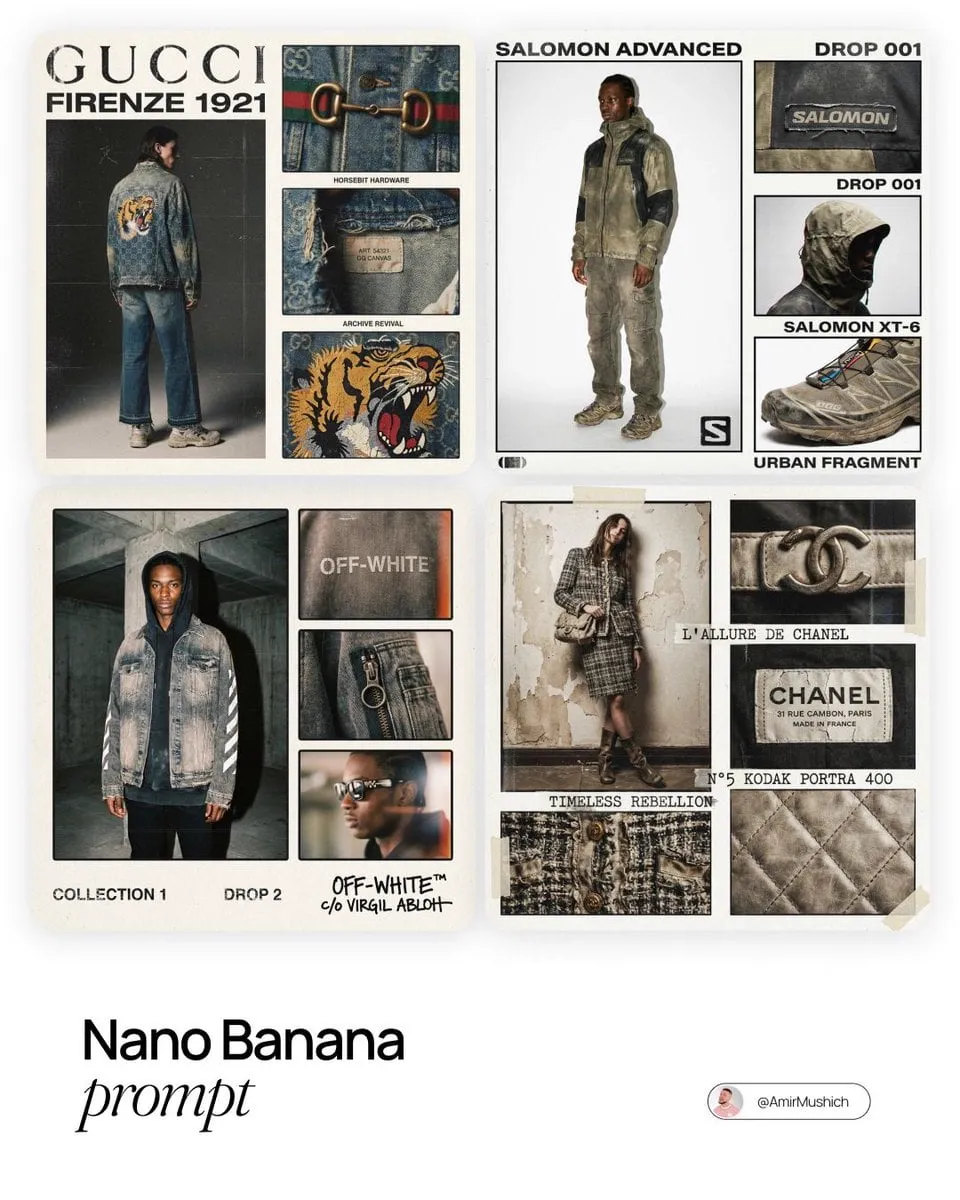
Trends move fast, and manual production cannot keep up. This is where AI video and image tools earn their place. The goal is not to remove your judgment; it is to compress the mechanical parts of production so you can spend your time on ideas.
A workable daily workflow has five stages. First, take the format template and write a short script or beat sheet, no more than a paragraph. Second, generate reference images for the key shots so the visual direction is fixed before any video is made. Third, use a text-to-video or image-to-video tool to create the base clips, one per beat. Fourth, assemble the clips in an editor, add captions, and tighten the pacing. Fifth, export in the platform-native format and publish.
Most creators overcomplicate this. The fastest workflow produces a rough cut in under an hour. Quality comes from the reference images and the script, not from endless regeneration. If a clip is almost right, fix it in the edit instead of regenerating it ten times. Your time is the scarcest resource in a trend-driven strategy, and the workflow exists to protect it.
Batch where you can. Generate images for several videos in one session, write scripts for the week on Sunday, and reserve daily time only for assembly and publishing. The compounding effect of this is huge: consistency is what trains both the algorithm and your audience.
Keeping Quality Consistent When You Publish Fast
There is a real risk in publishing at high speed: your content starts to look sloppy, and the audience can feel it. Consistency of quality matters as much as consistency of frequency. The fix is to standardize the things viewers notice, even subconsciously.
Lock your visual language. Use the same color palette, the same title style, and the same character design across videos in a series. If your format involves a recurring character, build a reference sheet with several angles and expressions, and use it every time you generate a new video. This is the difference between a channel that looks like a brand and a feed that looks like random clips.
Standardize your audio too. Pick a small set of background tracks and voice styles and rotate them, so the feed feels cohesive without being repetitive. Loudness normalization matters more than people think; if your video is quieter than the feed around it, viewers scroll past.
Finally, run a short pre-publish checklist. Is the hook visible in the first two seconds? Are captions readable on a phone? Does the ending encourage a comment or a save? A two-minute check on every video prevents the small mistakes that quietly kill performance.
Publishing Rhythm, Hooks, and the First Three Seconds
The first three seconds are the most valuable real estate in short-form video. Everything you have heard about hooks is true, and the data supports it: completion rate is one of the strongest ranking signals, and a weak opening suppresses everything that follows.
Test hook styles systematically. Some niches respond to a bold claim stated immediately. Others respond to a visual anomaly that makes you look twice. Others respond to a question that names a specific pain. The common thread is specificity. "I made a video with AI" is weak. "This AI tool turned one sentence into a cinematic scene in under a minute" is specific enough to promise value.
Publishing rhythm matters for two reasons. First, frequency gives you more shots at the algorithm lottery, which is still partly random. Second, a regular cadence trains your audience to expect you. Pick a rhythm you can sustain for months, not a burst you will abandon in two weeks. Three good videos a week consistently beats ten mediocre ones for a month followed by silence.
Keep a spreadsheet of hooks by performance. After a few weeks you will see which hook families work for your audience, and you can start every new video from a shortlist of proven openings.
Measuring What Matters and Doubling Down
Most creators check the wrong numbers. Total views feel good but tell you little about what to do next. The metrics that drive decisions are completion rate, save rate, and share rate. They tell you whether the video kept its promise and whether people found it valuable enough to keep or forward.
Review your performance weekly, not daily. Daily checking invites noise and anxiety. Weekly review gives you enough data to see patterns. Ask three questions: which format won, which hook won, and which topic won? Then make the next week's content plan from those answers.
Doubling down is the discipline that separates growing channels from flat ones. When a format works, do more of it with variations, even if it feels repetitive to you. Your audience is much larger than your own feed, and what feels repetitive to the creator is often a signature to the viewer. The creators who grow are the ones who notice a winning pattern early and squeeze it for everything it is worth.
FAQ: Short-Form Video Trends
How early do I need to catch a trend? Early enough that you can publish before the format is saturated, usually within a few days of the first breakout videos. Your trend radar is what makes this possible.
Do I need expensive AI tools to compete? No. Start with free trials and entry tiers. The advantage comes from workflow and judgment, not from the most expensive subscription.
How many videos should I publish per week? Pick a number you can sustain for at least three months with consistent quality. Three per week is a solid default for most creators.
What if a trend dies while I am producing? Ship anyway. The format template you built still teaches you something, and the variation you made can often be repurposed for the next trend.
Is it better to be first or best? First wins the algorithm, best wins the audience. The winning move is being early enough to learn and iterate while the trend is still growing.
Can AI-generated content look like my own style? Yes, if you lock reference images, palette, and character design, and keep writing your own scripts and hooks. The tools are the production team; you are still the director.
Can I run multiple formats at once? Yes, but keep one format dominant and treat the others as experiments. Split attention kills consistency, and consistency is what compounds.
