
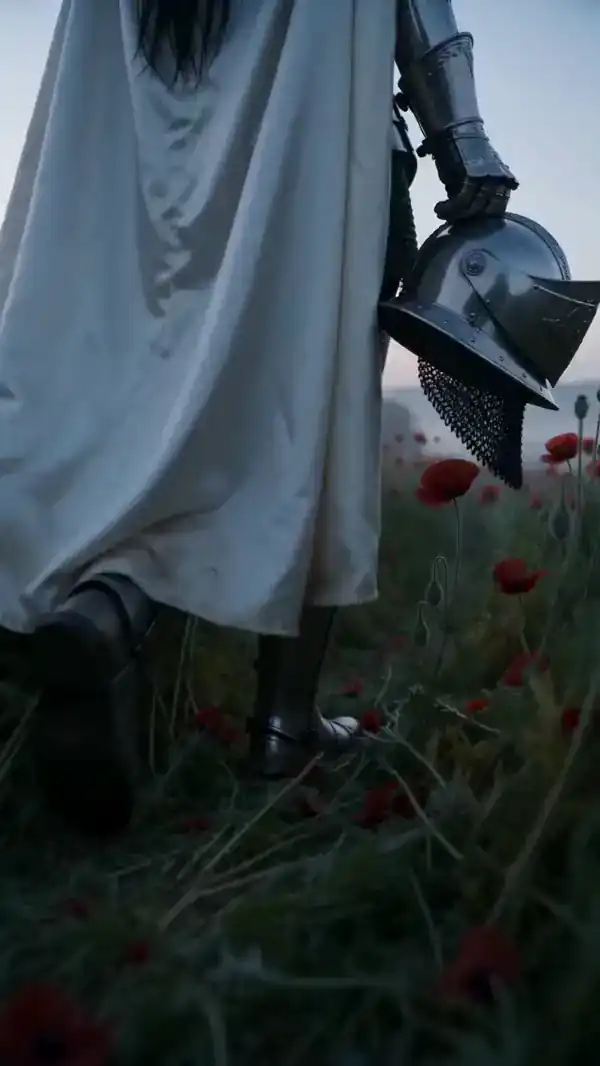
Anyone can generate an AI video. Generating one worth watching is a different skill. The difference is rarely the model — it is storytelling: knowing what the clip is about, why the viewer should care, and how each shot pushes the story forward. When AI video tools first arrived, the obvious problem was technical: wobbly faces, broken physics, inconsistent lighting. Those problems are mostly solved. The problem that remains is narrative. Clips look stunning in isolation and say nothing in sequence. This guide treats AI video like a craft: how to structure a story before you generate, how to design a visual language that stays consistent, and how to direct scene by scene so the final video feels intentional instead of accidental.
Why Most AI Videos Fail at the Story Level
Watch ten random AI-generated videos and you will notice the same pattern. Beautiful images. No reason. A lighthouse at sunset, a robot walking through a market, a woman looking out a window — each one technically impressive, each one emotionally flat. The reason is not the tool. It is that the creator generated an image before defining a story. The model faithfully rendered a description, but the description had no dramatic question, no character want, no turning point.
Storytelling is what turns a sequence of moving images into something a viewer remembers. It does not have to be complex. A product video can be a three-beat story: problem, reveal, resolution. A brand film can be: ordinary world, disruption, new normal. A character reel can be: want, obstacle, choice. If you can name the story in one sentence, you can direct an AI video. If you cannot, no model upgrade will save you.
Before You Generate: Build the Spine
The fastest way to improve your AI videos is to do thirty minutes of writing before you open a generator. Start with a logline: one sentence that states who the story is about, what they want, and what stands in their way. "A lonely lighthouse keeper discovers a signal from a ship that vanished fifty years ago" is a logline. "A lighthouse at sunset" is a prompt. The first gives you a film. The second gives you a wallpaper.
Next, map the emotional arc. Even a fifteen-second clip needs a shape: start with a stable state, introduce a change, land on a new stable state. Write those three beats down and assign one shot to each. You now have a storyboard skeleton that is cheap to test. Most creators skip this because it feels like homework; it is the single highest-ROI step in this entire guide.
Finally, decide the point of view. Whose story is it? A camera that drifts over a city says "observer." A camera that follows one character through the crowd says "companion." Consistency of point of view is what makes a sequence feel directed rather than assembled. Choose it early and enforce it in every prompt.
Designing a Visual Language Before the First Frame
Consistency in AI video is not just a technical feature; it is an artistic decision. Before generating anything, define the look you are going to repeat across every shot. Write down four choices and do not change them mid-project:
- Palette. Two or three dominant colors. "Teal shadows, amber highlights, desaturated skin" is a palette. A palette makes separate shots feel like one world.
- Lighting logic. Where is the light coming from, and what time of day is it? If shot one is golden hour, shot three cannot be high noon without a story reason.
- Lens language. Are you always on a 35mm with shallow depth of field, or a wide 24mm with deep focus? Consistent optics are what viewers subconsciously read as "same film."
- Texture. Film grain, digital clean, soft anime linework? Texture unifies even wildly different scenes.
This is your tone-and-manner guide: a short document, even three bullet points in a notes app, that every prompt references. When a scene feels off, nine times out of ten it violated one of these four choices, not the model's capabilities.
Structuring the Scene: Directing Beat by Beat
Once the spine and visual language exist, break the story into scenes and direct each scene the way a filmmaker would. For each scene, define four things before prompting:
- What changes in this scene? A scene that changes nothing is a cuttable scene. The viewer must learn something or feel something shift.
- Who is present, and what do they want right now? Characters with active wants generate more interesting motion than characters standing in a beautiful room.
- Where is the camera, and why? Every camera position is a statement. A low angle makes a subject powerful. A close-up forces intimacy. A slow push-in raises tension. Choose the statement, then write the camera instruction.
- What is the emotional target? Write the feeling you want the viewer to have at the end of the shot: curiosity, relief, dread, warmth. Check the finished clip against that target, not against technical sharpness.
This turns generation from a lottery into a review process. You are no longer asking "is this clip good?" You are asking "does this shot deliver its beat?" Those are different questions, and the second one produces a coherent film.
Keeping Characters Consistent: The Practical Toolkit
Character consistency is the most discussed problem in AI video, and the solution is mostly process, not magic. The techniques that reliably work:
Build a character sheet. Generate one image of your character in a neutral pose, full body and close-up, and use it as a reference for every scene. Describe the character in the prompt as well, but the reference image does the heavy lifting.
Lock the first frame. Start each shot from the approved reference image so the opening composition is under your control. Consistency problems usually begin in the first frame; solve that and half your battles are over.
Keep the costume and props frozen. A character in a red jacket in scene one must wear the red jacket in scene five. Change the prompt only for the parts you want to change. Every extra variable you introduce is a new chance for the model to drift.
Reuse successful shots. If a tool generated a great version of your character in motion, use that clip as a motion reference or extend it, rather than regenerating from scratch and hoping.
Accept and plan for drift. Even with references, faces shift subtly between generations. Plan scenes so close-ups happen early or are anchored to a reference, and keep cross-cutting between the same character brief so the differences are less noticeable.
Pacing, Rhythm, and the Cut
Long-form storytelling in AI video is mostly editing. Generation gives you shots; the cut gives you meaning. Think about pacing before you render: a tense scene uses shorter shots, a contemplative scene holds longer takes. Most AI tools generate clips of a few seconds anyway, so think in units of five to ten seconds and plan the edit as you storyboard.
Two editing habits dramatically improve AI video rhythm. First, cut on action: end one shot as the subject begins a movement and start the next mid-movement, so the join feels natural instead of stitched. Second, vary shot scale: wide, medium, close-up. A sequence that alternates scale reads as directed; a sequence of all wide shots reads as a slideshow. Write the shot scale into each prompt and you will have the material for a real edit.
Sound is half of pacing. A silent AI clip feels like a demo reel; the same clip with a music bed, a few foley cues, and a voiceover feels like content. Because most platforms default to muted autoplay, captions are not optional — they are the primary pacing tool for social audiences. Time your captions to the edit, not to the words, and let the music breathe under the cuts.
Building a Scene Bible for Multi-Part Series
If you are making a series — episodic content, a brand campaign, a course — a scene bible is your consistency system. A simple version contains:
- The logline and the arc of the whole series.
- The visual language choices: palette, lighting, lens, texture.
- A character sheet per main character, with reference images.
- A list of recurring props and locations, with their own reference images.
- A checklist applied before every generation: palette matches? lighting matches? character from the sheet? point of view consistent?
The scene bible is not bureaucracy; it is leverage. Every time you skip it, you pay for the inconsistency in retries and reshoots. Every time you use it, the next hundred prompts write themselves faster.
Troubleshooting: When the Story Is Right but the Video Is Wrong
You will still get bad renders, and it helps to know whether the problem is the model or the direction. If the motion is broken, the shot is too complex — simplify the action, not the story. If the style drifts, re-anchor with a reference image. If the emotion is flat, the problem is usually the prompt's emotional target missing; add the mood and lighting words that encode the feeling. If a scene refuses to work in one tool, generate it in another tool and combine the outputs. Directing multiple tools is not cheating; it is exactly how the best AI films are made.
A Short Film in Three Beats: A Working Example
Theory lands better with a concrete case, so here is a complete miniature: a thirty-second AI film about a courier who discovers an abandoned kitten on her last delivery of the night.
Beat one — the ordinary world. Establish the courier's routine. Prompt: "A woman in a reflective jacket rides a delivery scooter through a quiet city street at night, neon reflections on wet asphalt, medium tracking shot from the side, calm and steady." The shot is unremarkable on purpose: the viewer must feel the routine before it breaks. Reference the character sheet for the rider's face and jacket.
Beat two — the disruption. The discovery. Prompt: "The same woman stops the scooter beside a cardboard box near a lamppost, leans down, and gently opens the box, her expression shifting from tired to surprised, slow push-in, warm lamplight." The camera pushes in because the moment matters; the emotional target is curiosity. Cut the shot at the moment her expression changes, not before.
Beat three — the resolution. A new state. Prompt: "Close-up of the rider zipping the kitten inside her jacket, then she rides away smiling, the city lights blurring behind her, handheld but warm, hopeful mood." The handheld feel adds warmth; the blur signals a lighter emotional state. End on her face, not on the road.
Three beats, three shots, one arc. Each prompt was written with the playbook: subject, action, camera, emotional target. The character stays consistent because every shot starts from the same reference. The film is simple, but it is a story, not a sequence of pretty images — and that is the entire difference.
FAQ
How long does a storyboard need to be for a short AI video?
For a fifteen-to-thirty-second clip, three to five beats are plenty: a start, a change, and a resolution. Write them as one sentence each. Longer films scale the same pattern per scene.
Do I need to write the whole script before generating?
Yes, and it should be short. A script forces you to make the choices the model cannot make for you: what the character wants, what changes, and where the camera stands. Two paragraphs of script will improve your output more than any prompt trick.
What if my project has no characters?
Visual storytelling still needs a subject with a want. A product can be the character: the want is "to be seen," the obstacle is "the busy shelf," the resolution is the hero shot. Apply the same three-beat structure to any subject.
How do I keep the mood consistent across scenes shot days apart?
Write the mood into the scene bible as an explicit note ("tense, close framing, low light") and check every render against it. Mood words in prompts help, but the discipline is checking each shot against the stated target.
Is AI storytelling going to replace human directors?
No. It replaces the grunt work of visualization, which frees directors to do more of the actual job: making choices about story, emotion, and meaning. The people who will thrive are the ones who use the tools to say something, not just to make something.
How do I know when a sequence is actually working?
Show it to someone who has never seen your references. If they can describe the story back to you — the character, the want, the change — the sequence works. If they only say the shots look nice, go back to the spine. Narrative comprehension is the test, not visual quality.
Final Thoughts
The models will keep getting better at rendering what you ask for, which makes the question of what you ask for the entire game. Story first, visual language second, direction third, rendering fourth. Reverse that order and you get impressive clips that nobody remembers. Follow it, and even a simple five-shot sequence can feel like a film someone actually made — because someone did. You.
