
![Create an infographic image of [FOOD], combining a realistic photograph or...](https://storage.brightvectorlabs.com/prompts/bright/food-and-drink/2015488786445082660-0.webp)
Introduction
Visual storytelling is the art of guiding an audience through images, and its foundation has always been cinematography. Now, in 2025, the discipline has reached a critical turning point because generative AI has made the practice accessible to everyone. The same year has seen publicly available models push expectations of cinematic quality dramatically higher. What used to require a camera crew, expensive gear, and years of training can now be approached by a single creator writing precise prompts.
Yet the shift has not made theory obsolete. On the contrary, it has made understanding the underlying principles more valuable, because generative models fulfill instructions. The creator who knows why a shot works, how light shapes emotion, and how rhythm holds attention can direct those models with intention. This guide lays out the essentials of cinematography theory and shows how to apply them in practice with AI tools, from composition and color to model selection and character continuity.
The New Standard: AI as an Industry Norm
Generative video has stopped being a novelty and become the standard way to produce content. But higher availability of tools means higher audience expectations. Viewers now compare what they watch against the best quality they have ever seen, not against the average. A video that does not feel cinematic, no matter how clever its premise, will struggle to hold a crowd.
That environment rewards creators who understand visual language. The good news is that the models are powerful enough to reward careful direction. Cinematography theory, composition, lighting, and rhythm, can now be encoded directly into prompts and applied consistently across a whole production. The bottleneck is no longer the machine; it is the vision and vocabulary of the person driving it.
Composition: The Structure of the Frame
Composition is the grammar of the visual sentence. The rule of thirds, one of the pillars of cinematography, can now be applied directly as a composition parameter in AI video generators. This is a practical gift because it moves composition from a habit you learn on a set to an explicit instruction you give to a model.
Beyond the rule of thirds, use other structural ideas. Lead with the subject's gaze or movement by leaving space in the direction they are heading. Balance the frame with negative space so the eye can breathe. Use scale deliberately; extreme close-ups signal emotion, while vast wide shots establish place and isolation. Every framing decision is a question of what deserves the audience's attention, so make each one count.
Depth of Field as a Tool for Attention
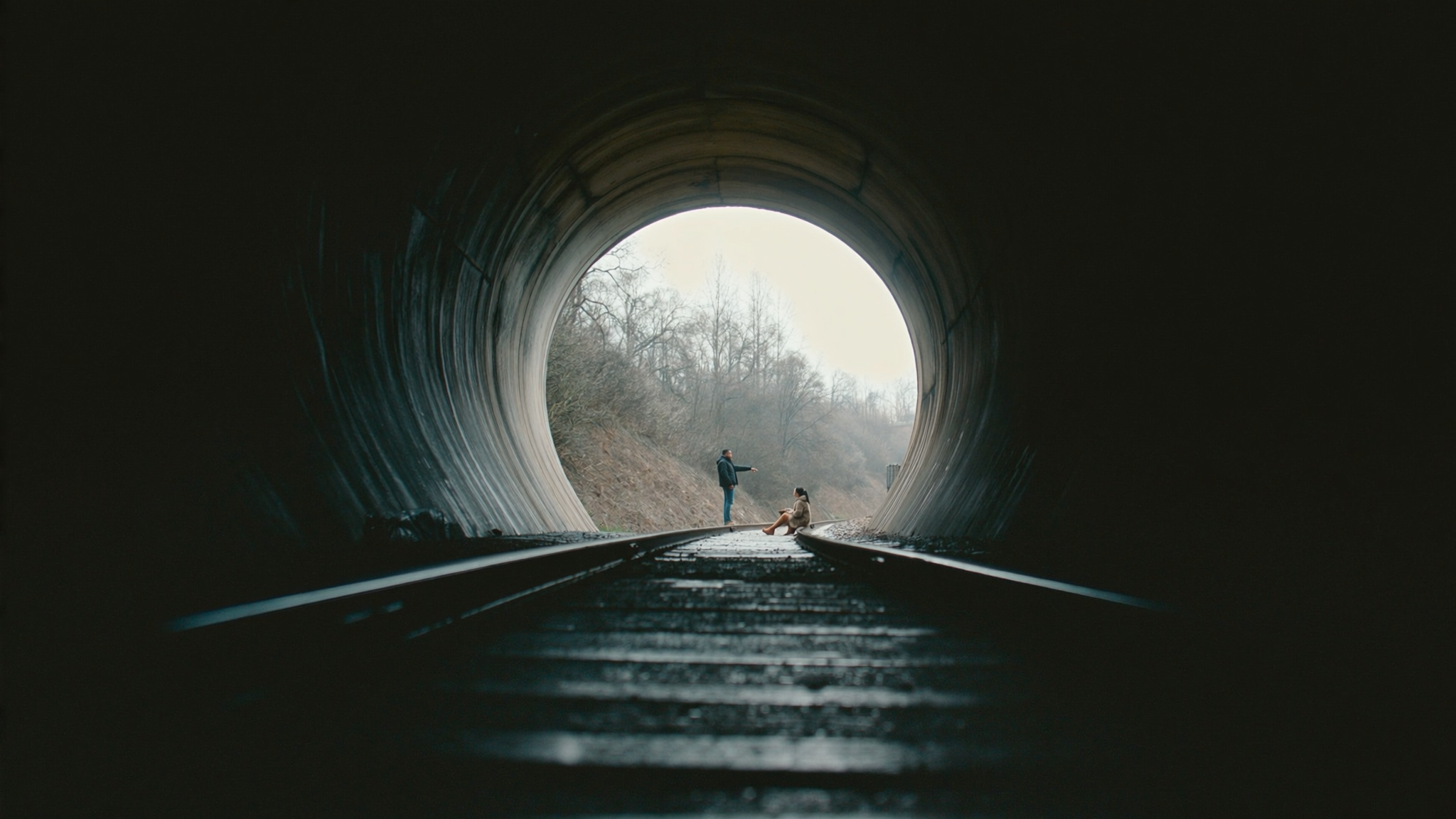
Control of focus is one of the most expressive cinematographic choices. A shallow depth of field floats a subject against a soft background and concentrates emotion on the face; deep focus keeps the whole scene sharp and rewards exploration. When you write a prompt, say clearly what must stay sharp and what may fall into blur. Add a lens cue to steer perspective, a 35mm feel for human naturalness, a telephoto to compress distance and isolate a subject, a wide lens to exaggerate space. These choices shape how the scene feels as much as what it shows.
Lighting and Color: Emotional Tone Made Visible
Light is emotion made visible, and it is the quickest way to upgrade a generated frame. Understand a small set of uses and deploy them on purpose. A soft key light is flattering and warm; a rim light pulls a subject out of the background and adds depth; hard directional light carves drama with shadow. Practical sources inside the scene, a lamp, a sign, a headlight, give the light a reason to exist and make the image feel grounded.
Match lighting to the emotional goal of each scene. Intimate moments want soft, low, warm light. Tension wants angled shadows and contrast. Night scenes want cool blues and pools of practical glow. Describe the time of day and weather, because golden hour, overcast, rain-slick streets, carry enormous visual meaning in a few words.
Using Color Theory
Color is a direct emotional signal. Cool, blue-green palettes suggest night, distance, and unease; warm ambers and golds suggest comfort, memory, and safety. Decide the emotional register of your piece and hold to it, but allow deliberate contrast where the story requires it. When you shift the palette, such as into a desaturated flashback, make it an intentional scene-level choice rather than a drift between shots. A coherent palette is what stitches independently generated clips into one world.
Camera Motion and the Rhythm of the Cut
Cinematography extends beyond a single frame into how the camera moves and how shots are joined. A held, static frame carries weight and presence. A slow push-in draws the viewer closer and raises stakes. A handheld shake introduces energy and documentary realism. An orbit or dolly reveal expands the world. In AI generation you can describe these moves directly in the prompt or steer them through a reference clip in image-to-video tools.
Editing continues that language. Fast, short cuts accelerate tension; longer holds give the emotion space to land. Vary the length of your shots so the sequence has a shape instead of a flat pulse. Let each cut earn its place, changing scale, reacting, revealing, or shifting rhythm, and cut to the music where it helps. When the movement of the camera, the action on screen, and the rhythm of the edit all point the same way, the effect is unmistakably cinematic.
Choosing Models That Serve Your Story
Model selection is a cinematographic decision in its own right. Premium live-action models deliver photorealism and fine control, ideal for hero shots, product footage, and emotional close-ups. Intermediate and budget options balance quality, speed, and cost, and are ideal for daily production and iteration. Specialized models target particular looks, animation styles, and subjects, and can outperform generalists within their niche.
Do not render everything on the strongest model. Explore and iterate on fast, low-cost engines so you can test many concepts cheaply, then reserve the premium render for the few frames that will actually reach the finished video. This keeps overall cost and time down while concentrating your budget where it matters. The right model depends on the task, not on which name is most famous.
Kling and Regional Models for Global Work
The field is genuinely global, and some of the strongest options come from teams outside the largest Western labs. Chinese and other regional models have become highly competitive, particularly for complex motion, stylized action, and genre content. Test a range including regional players alongside the premium names. The competition among models has pushed quality up and price down, which benefits every creator.
Keeping Characters and Worlds Consistent
Continuity is the backbone of a believable story, and it is the hardest technical problem in AI video. The solution is reference-driven rather than hope-driven. Establish a definitive image of your protagonist and reuse it as the anchor for every shot. Fuse multiple references where your tool supports it to lock a consistent look, face, costume, palette, and even the surrounding world.
Define your character and world once and enforce that profile in every prompt. Reject any frame that drifts rather than forcing it into the edit. Keep a library of approved references so you can quickly re-render a broken shot. Consistency is what lets the audience forget they are watching generations and simply follow the story.
Applying Theory with an AI Director
Several platforms now include an AI director that helps you organize a script into scenes and shot plans before generation. Treat it as a collaborator that strengthens your craft rather than a machine that makes decisions for you. Let it help you lay out the beat sheet, track continuity, and keep the shot language consistent across the project, but hold responsibility for meaning and taste.
Work in a structured loop. Lock your story beats and emotional arc before generating. Draft a shot list that names framing, lens, light, color, and motion for each beat. Create and review reference stills at the cheapest stage, and refine before animating. Assemble the edit with rhythm, add sound and captions, and do a final review where you check the piece with sound on and then with sound off. Each review pass reveals problems that the other hides.
Common Mistakes and How to Avoid Them
Watch for patterns that trip up nearly everyone. Overspecifying a single prompt until the model resolves nothing well. Letting style drift because references were never locked. Polishing an empty scene because the story had no shape. Treating sound as an afterthought. And broadcasting every render on premium models, wasting budget on frames that never survive the cut.
The Iteration Habit
Strong results come from cycles. Generate, watch honestly, identify the specific fault, adjust the prompt or reference, and regenerate. Keep a short log of which prompts produced which looks so you can return to wins quickly. Build a personal library of prompt patterns and references over time. This habit turns talent into a repeatable system and is the surest path to consistent, high-quality output.
Conclusion
Cinematography theory has not been displaced by generative AI; it has been made more accessible and more valuable. Composition, lighting, color, camera motion, and editing rhythm remain the vocabulary of visual storytelling, and in 2025 you can direct all of them through prompts and references with tools that respond to your vision.
Mastering this craft is a loop, not an event. Structure your story, plan your shots, lock your references, iterate cheaply, and finish with careful sound and editing. Keep your taste in charge and let the AI handle the execution. When the machine serves a clear creative intent, the images stop being impressive by accident and start telling stories on purpose, and that is the whole art of visual storytelling.
Sound as a Pillar of the Cinematic Feeling
A silent film, however beautiful, rarely feels finished, and AI video is no exception. Sound carries an enormous share of emotional meaning, and in 2025 the same generative tools can produce ambient effects, music, and even voice. Treat audio as part of your visual design rather than an afterthought. Start from the emotional beat of each scene and choose music that reinforces it: rhythmic, low tension for suspense, sparse and warm for a quiet reunion, bright energy for a product reveal.
Add environmental texture so the world feels inhabited, footsteps, room tone, weather, distant traffic. If your piece has narration or dialogue, generate or record clean voice and place it carefully in time with the edit. Then sync the cut to the rhythm. A whoosh on a camera move, a subtle swell underneath a dolly push, and a cut exactly on a musical beat instantly lift a sequence from competent to professional.
The Sound-and-Vision Review
When the edit is assembled, run two deliberate passes. First watch with the sound off and check that the visuals and captions carry the story on their own. Then listen with your eyes closed and check that the audio tells its half of the tale. Each pass exposes problems the other hides. Fixing a video so it passes both reviews is the most reliable way to reach a finished, polished result that holds attention across every device.
Adapting Cinematography for Different Platforms
The same cinematic principles adapt to different formats, and knowing how to resize intention matters. A wide landscape piece can linger on establishing shots and graceful camera moves. A vertical short demands that the subject stay near the center of the frame because viewers hold their phones vertically and view in motion. Plan your compositions with the aspect ratio in mind from the start, considering both the crop and how the eye scans a hand-held screen.
Vertical content also rewards faster structure. The first half-second must hook, information must arrive early, and the payoff should land before attention drifts. That does not mean abandoning craft; it means applying composition, light, and rhythm within a tighter canvas. The discipline of short-form often produces sharper instincts that also improve your longer work.
Building a Look Beyond One Video
Cinematography pays off most when it becomes a signature. Develop a recognizable look, a distinctive palette, a recurring lighting mood, a favorite lens feel, and apply it across your catalog. An audience that starts to recognize your visual voice is far more likely to follow your work over time. Consistency across videos is not repetition; it is brand identity expressed through images, and it is one of the strongest assets a creator can build.
Planning the Edit Before You Render
The most efficient way to edit is to plan the edit before you generate. Decide the order of shots, their approximate duration, and where the cut points will feel strongest, then generate exactly what the plan requires instead of rendering a pile of footage and hoping. This saves time, reduces waste, and produces a cleaner result because each shot was created to fit a specific place.
Work backwards from the emotional beat of the finished video. If the payoff lands best with one held close-up, generate that shot with the light and framing that makes it sing. If a sequence needs the energy of rapid cuts, generate shots with strong internal action so the cut feels motivated. Planning the breakdown in advance turns generation from exploration into filling a recipe, and that is far more reliable.
The Tool as a Partner in Pacing
Use your AI assistant to help you think about timing. Ask it to propose different orderings of your shots or different cut lengths for the same emotion, then test the options against your intention. The assistant will not replace your ear for rhythm, but it will make deliberate experimentation cheap. You try more, choose better, and build a sense of pacing that becomes second nature over time.
Conclusion
Cinematography theory and practice have found a powerful new partner in generative AI, and mastering the combination is the defining skill of visual storytelling in 2025. Composition, light, color, motion, and editing rhythm remain the language of the craft, now expressed directly through prompts, references, and intentional cuts. Sound completes the picture, and a portable, signature look turns individual videos into a body of work.
Mastery grows one project at a time. Plan your story and shots, translate them into cinematic prompts, lock your references, review cheaply, edit with rhythm, and finish with sound. Keep your taste in charge and let the AI provide speed and consistency. When a clear creative intent drives the machine, the images stop being impressive on their own and begin telling stories on purpose. That is the whole art of visual storytelling, and in 2025 it is fully within your reach.
