
Mastering Visual Storytelling: Creating Short Videos with the Best AI Tools
Short-form video is the most demanding format in digital content today. A viewer decides in the first two seconds whether to keep watching, and the difference between a scroll-past and a share often comes down to one thing: storytelling. You can have perfect lighting, a great face, and a catchy hook, but if the visual narrative does not flow, the video dies. The good news is that 2025 has brought a wave of AI tools that make cinematic-quality short video production accessible to creators, marketers, and filmmakers who have never touched a professional editing suite.
This guide explains how to master visual storytelling in short-form video with modern AI tools. We will look at how to plan a narrative, how to choose the right generation model for each scene, how to keep characters and locations consistent across cuts, and how to finish the piece with sound and editing that support the story instead of fighting it.
Why Visual Storytelling Matters More Than Ever
The average person is exposed to thousands of video impressions every day. On platforms built around short clips, retention is brutal. What separates a forgettable clip from a memorable one is rarely production value alone; it is the ability to make the viewer feel something and want to see what happens next.
Visual storytelling is the craft of arranging images, motion, and sound so they communicate a sequence of ideas and emotions. In a thirty-second video, every frame is expensive. There is no time for a slow setup, so each shot must do multiple jobs at once: introduce a character, establish a place, create a mood, and advance the plot. This is why creators who treat short video as a serious narrative medium outperform those who simply stitch clips together.
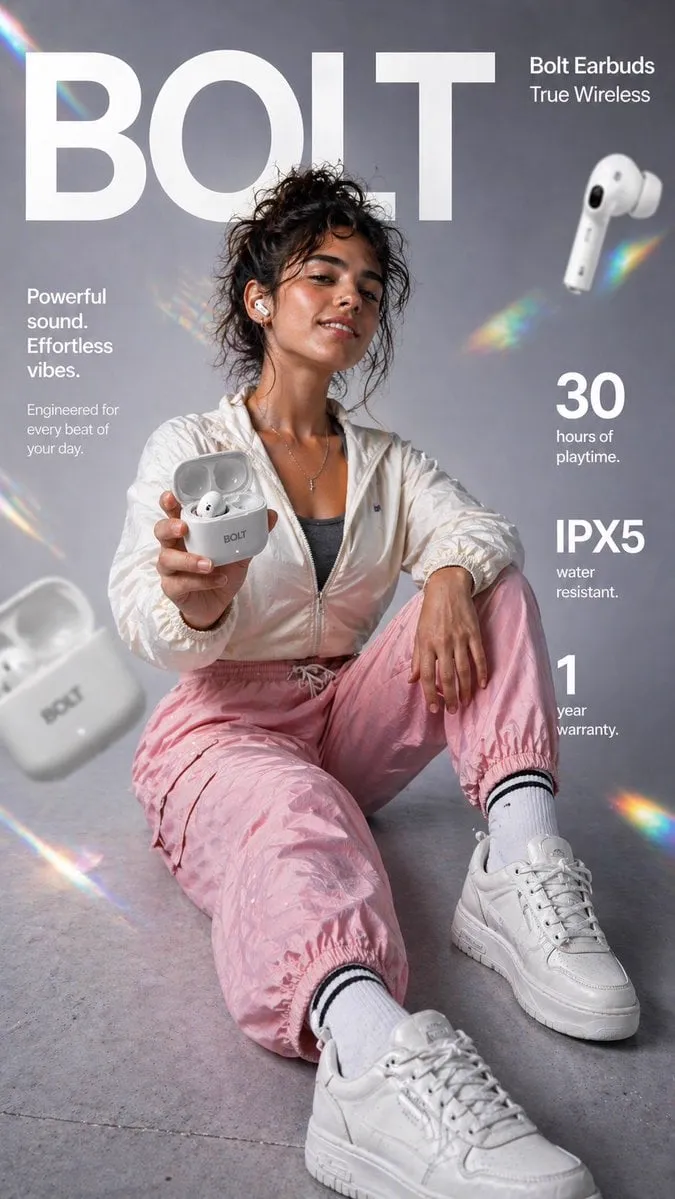
AI has changed the economics of this craft. Previously, a brand that wanted a cinematic product video needed a crew, a location, and a budget measured in thousands of dollars. Today the same team can generate establishing shots, product close-ups, and stylized transitions with text prompts and reference images. The bottleneck has moved from budget to judgment: knowing what story you want to tell and how to direct the machine to tell it.
The Current Landscape of AI Video Generation
The tools available in 2025 fall into several families, and each one has a different strength.
Text-to-video models turn a written description into a moving image sequence. They are the fastest way to prototype an idea, and the best of them produce shots that look genuinely cinematic. Image-to-video models take a still image and animate it, which gives creators far more control over composition, lighting, and character design before any motion is generated. Both approaches are useful, and serious workflows use them together.
On the quality end of the spectrum, models built around large diffusion architectures produce detailed frames with convincing physics and natural camera movement. The Sora family from OpenAI showed the world what long, coherent, physics-aware video could look like and pushed every competitor to raise its game. The Kling family from Kuaishou became a favorite for creators who need strong prompt adherence and expressive character motion, especially in stylized and fantasy content. Runway's generation models focus on cinematic control and have been widely adopted by working editors. Flux models are known for exceptional image quality and precision, which makes them a natural starting point for image-to-video workflows.
On the speed and value end, models like PixVerse offer a large set of creative controls, including a wide range of cinematic lens options, at a price that allows creators to iterate many times. MiniMax's Hailuo line has earned attention for natural motion and strong adherence to the source image. Luma's Ray series and Pika's 2.x releases compete on motion control and visual polish. Vidu and Hunyuan Video round out the field with their own takes on reference handling and multimodal input.
The practical lesson is that there is no single best model. A photorealistic car commercial, an anime-style character clip, and a dreamy landscape sequence need different tools. Learning the strengths of each family, and knowing which one to reach for per scene, is the core skill of modern AI video direction.
Planning the Story Before Generating Anything
The most common mistake in AI video work is starting with prompts. If you open a tool and type a description without knowing your story, you will get a pretty clip that says nothing. Instead, plan first.
Start with a one-sentence premise. What is the video about, and what should the viewer feel at the end? Write that sentence down. It is your north star. Then break the video into three beats: a hook that creates curiosity, a middle that delivers the core idea or transformation, and an ending that leaves the viewer with something to remember or do.
For short-form video, the hook is everything. The first two or three seconds need a visual or a line that promises value or mystery. A common pattern is to open on the most visually striking shot you can generate, then reveal what it is. Another is to open on a problem: a blank screen, a frustrated face, a broken workflow, and then promise the fix.
Once the beats are clear, write a shot list. For each shot, decide three things: the subject, the camera angle, and the emotional job it performs. A wide shot establishes the world. A close-up creates intimacy. A low angle makes a subject feel powerful. A slow push-in builds tension. You do not need film-school vocabulary to do this; you need to make deliberate choices instead of random ones.
Choosing the Right Model for Each Scene
When the shot list is ready, map each shot to the model family that fits it best.
For establishing shots and environments, photorealistic landscape and architecture generation is strongest with models that have deep training on natural scenes. These shots benefit from high resolution and atmospheric detail, so prioritize quality over speed.
For character moments, the priority is facial consistency and natural motion. Models with strong character reference support, such as those using multi-image or keyframe control, let you feed one or more reference frames so the character looks the same from shot to shot. This is the single biggest factor in whether a multi-scene story feels coherent.
For action sequences, look for models that handle physics well. Water, hair, cloth, and fast camera movement expose weak models quickly. If a model produces warping or melting artifacts during motion, it is not ready for your action shot regardless of how pretty its still frames are.
For stylized content, anime and illustration models often outperform general models because they were trained on the right distribution. The Kling family and several specialized animation-oriented models are reliable choices for this work.
A practical tip: generate the most important shot of the video first. Test the model on the hardest scene before you commit to a workflow. If it fails there, it will fail on easier scenes too, and you will have saved yourself hours of rework.
Keeping Characters and Locations Consistent
Consistency is the difference between a story and a slideshow. When a character's face changes between cuts, the viewer loses trust and the illusion collapses. This used to be the hardest problem in AI video; in 2025 it is solvable with the right workflow.
The most reliable technique is multi-image fusion. You give the system several reference images of the same character, from different angles and in different outfits, and the model uses them to anchor the character across scenes. Some tools let you lock keyframes, meaning you generate the first and last frame of a shot yourself and let the model fill in the motion between them. This gives you precise control over composition and guarantees the endpoints look right.
For environments, collect reference frames of the location from multiple angles before you start. Establish the lighting direction once and keep it consistent across shots; nothing breaks a scene faster than the sun jumping from left to right between cuts. If the story spans day and night or different weather, plan those transitions explicitly rather than letting them happen randomly.
When you build a series or a recurring character, keep a reference folder: headshots, full body, outfits, props, and location stills. Reuse the same references across sessions. This small habit turns one-off clips into a reusable visual universe.
Directing with AI Assistance
The newest layer of the workflow is the AI director agent. These assistants sit on top of the generation models and help translate your creative intention into concrete technical parameters.
Instead of you manually writing a long prompt for every shot, the director agent takes your story outline and produces a scene breakdown: camera angle, shot size, subject position, lighting notes, motion direction, and the exact prompt language the model family prefers. It can also sequence shots to match pacing, suggesting where a fast cut will energize the piece and where a longer hold will let emotion land.
This is useful for two reasons. First, it reduces the learning curve: you describe what you want in plain language, and the agent handles the model-specific syntax. Second, it enforces discipline: because the agent works from the same brief across all scenes, the shots stay aligned in style, tone, and continuity.
You should treat the agent as a first-pass director, not an oracle. Review its shot plan, adjust anything that does not match your vision, and keep the final judgment for yourself. The goal is to remove the mechanical work, not to surrender creative control.
Sound: The Half of the Video Everyone Forgets
A video with great visuals and bad sound feels cheap. A video with good sound and decent visuals feels professional. Sound design is the highest-leverage upgrade available to short-form creators, and AI has finally made it fast.
Modern AI voice synthesis produces natural, emotionally expressive narration in many languages. You can generate a voiceover that matches the tone of the piece, from a calm explainer voice to an energetic hype read, without booking a studio. For character-driven content, cloned or trained voices let a recurring character speak consistently across episodes.
Background music generators can produce tracks matched to the mood and length of the clip, with stems that make it easy to duck the music under the narration. Sound effects generation fills in the details that make a world feel alive: footsteps, ambient wind, a door closing, the hum of a machine.
A simple rule for pacing: cut the picture to the rhythm of the music. If the track has a driving beat, cut on the beat. If it is a slow ambient piece, let shots breathe. Matching visual rhythm to audio rhythm is one of the fastest ways to make an AI-generated video feel intentional.
Editing and Finishing
Generation gets you the raw material; editing makes it a story. The good news is that editing is where the AI pipeline delivers its biggest time savings.
Use the shot list as your editing timeline. Assemble the shots in the planned order, then tighten: remove any shot that does not advance the story, no matter how pretty it is. A common amateur mistake is keeping a beautiful shot that kills the pacing. If the viewer's attention drops, the shot has to go.
Transitions should be motivated. A match cut, where one shot's shape or motion continues into the next, feels clever and smooth. A hard cut can be the most powerful transition of all when the moment calls for it. Avoid generic flashy transitions; they signal amateur work and distract from the content.
Add text overlays for clarity, but keep them short and readable on a phone. Subtitles are essential for silent viewing, which is how most short-form video is consumed. If the platform rewards native captions, use them; if not, burn them into the video.
Finally, watch the whole piece with the sound off, then with the sound on, and ask two questions: Does the story make sense? Does it make me feel something? If either answer is no, go back to the shot list and fix the story before you touch the polish.
A Practical Workflow for Your First AI Short
To put this together, here is a repeatable workflow.
First, write the premise and the three beats. Second, write the shot list with subject, angle, and emotional job for each shot. Third, pick the model family for each shot based on what it contains: environments, characters, action, or stylized content. Fourth, gather reference images for characters and locations and apply multi-image fusion or keyframe control on the shots that need consistency. Fifth, generate the hardest shot first as a test, then generate the rest. Sixth, generate the voiceover and music, and design the sound to match the pacing. Seventh, edit to the shot list, tighten ruthlessly, add captions, and export.
This workflow turns a vague idea into a finished video in an afternoon instead of a week. The first few projects will be slow as you learn the models, but the process compounds: your reference folder grows, your shot list templates improve, and your judgment about which model fits which scene sharpens with every project.
Frequently Asked Questions
How many shots do I need for a thirty-second video?
Between six and twelve, depending on pacing. Fast, energetic content wants more cuts; emotional content wants fewer, longer shots. Quality of storytelling matters more than shot count.
Can AI tools really keep a character consistent?
Yes, with the right workflow. Multi-image fusion, keyframe control, and a disciplined reference folder will keep a character recognizable across scenes. The models are not perfect, so plan retakes for the shots where consistency matters most.
Do I need to write good prompts for the models to work?
Prompt quality matters, but the bigger factor is planning. A clear shot list and strong references will outperform clever prompt wording. Learn the prompt syntax of your favorite model family, then let the plan drive the prompts.
Which model should a beginner start with?
Start with the fastest model that produces acceptable quality for your content, so you can iterate on story and composition quickly. Once your planning skills are solid, upgrade to higher-quality models for the hero shots.
Is AI video going to replace editors?
It replaces the mechanical parts of the job, not the creative judgment. Someone still has to decide what the story is, which shots to keep, and how the piece should feel. That role is more valuable than ever.
How do I make my AI videos feel original?
Originality comes from your story and your choices, not from the generation defaults. Use distinctive references, consistent characters, a personal editing rhythm, and sound design that matches your tone. Two creators using the same tool will produce completely different work if one of them makes deliberate choices.
Final Thoughts
Mastering visual storytelling with AI tools is not about chasing the newest model release. It is about building a repeatable process: plan the story, choose the right tool for each scene, protect consistency, design the sound, and edit with intent. The tools will keep changing, but the craft of telling a clear, emotional story in thirty seconds is permanent. Start with one video, run the full workflow, and learn from the result. The second one will be better, and by the tenth you will have a system that produces work people actually watch.
The creators who win in short-form video are not the ones with the biggest budgets; they are the ones with the clearest stories and the most disciplined process. AI has removed the production barrier. What remains is the part that always mattered: knowing what you want to say and saying it with intention.
