
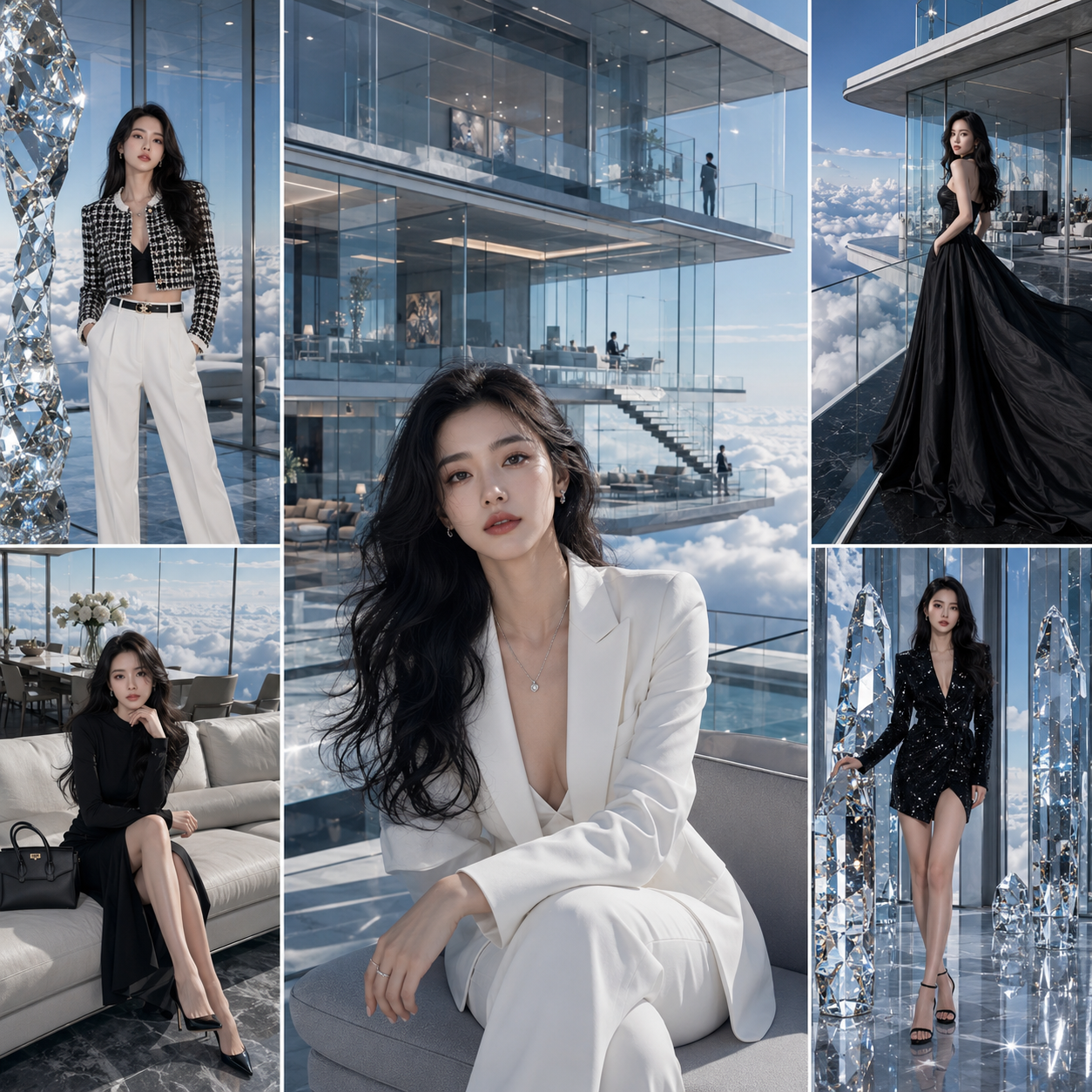

How generative AI changed the rules of video production
For most of the last decade, producing high-quality video meant assembling a crew: a director, a camera operator, a lighting designer, an editor, and often a colorist. Generative AI has rewritten those rules. A single creator can now carry a project from script to finished film, using models that generate footage, edit scenes, and even suggest camera moves. The result is a wave of democratized production: creators, filmmakers, and digital artists can achieve results that used to require a studio budget, as long as they understand how to steer the technology.
The important shift is not just the existence of these tools. It is their maturity. Early AI video was recognizable at a glance: warped faces, unnatural motion, objects that flickered between frames. Modern models handle lighting, physics, and narrative continuity well enough for professional use. That maturity is what makes a serious discussion about workflow possible, because now the limiting factor is not the technology but how well you organize your production.
Building a model library strategy
A powerful AI video setup rarely depends on a single model. Different models are trained for different strengths, and the best work comes from knowing when to switch. Think of your available models as a library that you browse according to the needs of each scene, rather than as a single tool that does everything.
Premium generation models sit at the top of the library. They deliver the highest visual fidelity, fine textures, and precise control over lighting, and they are the right choice for hero shots, cinematic sequences, and brand films where every frame will be examined closely. When a project needs to impress, this is where you start.
The next tier contains high-performance models that balance quality with speed and cost. These are often the best default for everyday content: social media clips, internal videos, and anything produced at volume. Models in this tier frequently excel at specific things too, such as strong prompt adherence or particular aesthetic styles, so they can be the first choice for entire categories of work rather than just a budget fallback.
A third tier of specialist and efficiency-focused models rounds out the library. Some are tuned for physical realism, making them ideal for product visualization. Others are optimized for animation aesthetics, or for extremely fast turnaround. A good strategy maps each recurring type of content to a preferred model, then reserves the premium tier for the moments that genuinely need it. This approach keeps quality high where it matters and keeps average production costs low.
AI director agents and the new creative workflow
One of the most interesting developments in AI video is the rise of director-style agents. Instead of handing the model a single prompt and hoping for the best, you describe the overall scene, the mood, and the narrative goal, and the agent helps break it into shots, suggests compositions, and guides the sequence from setup to final frame.
In practice this changes the creative process from one-shot prompting to guided direction. You begin with a rough idea, refine it into a scene description, and let the agent propose a storyboard: wide establishing shot, close-up on the character, detail shot of the object. You approve or adjust each beat, and then the generation step fills in the actual footage. The agent can also suggest camera movements, such as a slow push-in or an orbital pan, and simulate how those moves will feel before you commit to a full render.
The value here is not automation for its own sake. It is that the director agent formalizes a process that professionals already use, so newcomers can learn it quickly and experienced creators can move faster. The agent handles the structure and the coverage; you handle the taste.
Consistency techniques that make footage feel like one film
The biggest technical barrier in AI video has always been consistency. A character looks different from shot to shot. The lighting changes between scenes. The product morphs into a slightly different object every time it appears. Audiences notice these problems immediately, and they are the difference between professional-looking content and obvious AI output.
Multi-image fusion solves this by using reference images as anchors. You provide the model with images that define the character, the product, and the visual style, and those references constrain every generated frame. Combined with consistent keyframe control, where you define the first frame of each shot yourself, this gives you both visual continuity and directorial control. The footage between your keyframes is generated, but the anchors are yours.
A reliable workflow builds the reference set first. Create or collect a character sheet, a product gallery, and a style moodboard before generating a single clip. Then keep those files stable across the entire project. When every shot draws from the same anchors, the final sequence reads as one continuous story.
Managing heavy generation work without losing speed
Video generation is computationally expensive, and the way a platform manages that work determines how smoothly your day goes. Behind the scenes, generation jobs are placed in a queue and scheduled across available GPU resources. A good scheduling system keeps the service responsive during peak demand, distributes work evenly across hardware, and gives users realistic feedback about when their jobs will finish.
For creators, the practical consequences are simple. Batch your generation work when you can, so the queue works in your favor. Learn the off-peak hours of the platforms you use if you produce large volumes. And treat the queue as part of your workflow: launch several variants at once, then review them together instead of one by one.
Resource management also interacts with the rest of your toolchain. Image processing, audio rendering, and video assembly all consume compute too. Platforms that coordinate these stages efficiently feel dramatically faster than those that treat every task as an isolated job.
Beyond video: image and audio as part of the same production
Video is rarely made alone. Most finished content also needs processed images, background music, voiceover, and sound design. Integrated platforms increasingly treat these as parts of the same production pipeline, and that changes the workflow for the better.
Image processing tools let you prepare the assets that feed your video generation: backgrounds, character designs, product shots, and keyframes. Working in the same environment as your video tools removes the awkward export-and-import dance between separate applications and keeps color and style consistent.
Audio tools complete the package. A sound studio for generating voiceover, a music library for background tracks, and simple tools for syncing audio to video turn a collection of clips into a finished piece. The integration matters because timing is everything in video. When audio and video live in the same pipeline, you can iterate on the cut without constantly re-syncing files.
The creator economy: turning models into products
The generative video boom has also created a new kind of creator economy. Instead of only publishing finished videos, creators can train custom models, share them with a community, and build a following around a recognizable style.
Training a custom model usually starts with a focused dataset: dozens of images of a character, a product line, or a particular aesthetic. The trained model then generates new content in that style on demand. Sharing such models publicly lets other creators use your style, which builds recognition and community. For some creators, this becomes a real business: their distinctive style becomes a reusable asset that others pay for.
The same logic applies inside a single team. A company can train a model on its product range and use it for every new campaign, guaranteeing that the product looks right in every piece of content. The model becomes part of the brand assets, like a logo or a color palette, and every future video starts from a consistent visual foundation.
Practical steps to start maximizing your output
If you want to put this into practice, start small but structured.
First, pick one recurring type of content, such as weekly product promos or social clips for a specific character. Map the pipeline: brief, references, generation, assembly, audio, delivery. Second, build the reference library for that content type. This is the step most people skip, and it is the one that separates consistent content from random outputs. Third, identify the right model for the job. Test two or three candidates on the same scene and compare quality, speed, and cost. Fourth, standardize the assembly step with templates: titles, caption styles, and audio levels that make every episode feel part of the same series.
Then iterate. Track how long each stage takes, look for bottlenecks, and improve one thing at a time. Within a few weeks, you will have a pipeline that produces better content in less time, and the improvements will compound across every future project.
Choosing tools for your production stack
The practical question after the strategy is which tools to put together. The good news is that the stack does not need to be large. Most creators do excellent work with four kinds of tools: an image generator for references and keyframes, a video generator with a model library, an assembly editor with templates, and an audio tool for voiceover and music.
Image generation is the foundation, because the reference set determines consistency. Generate or shoot clean images of characters, products, and styles before you touch video. The video generator is the core of the stack; choose one that exposes multiple models rather than locking you into a single engine, because scene needs change. The assembly editor is where the pipeline becomes repeatable: templates for titles, captions, and pacing turn a one-off into a series. Audio closes the gap between a technical video and a finished piece.
Integration matters more than individual power. Tools that share references, colors, and timelines feel dramatically faster than a collection of disconnected applications. When evaluating new tools, ask how they fit the pipeline you already have, not just how impressive their demos are. The best stack is the one that makes your weekly production boring, in the good sense: predictable, fast, and consistent.
Common mistakes when scaling production
Scaling up reveals problems that small projects hide. The most common is skipping quality gates: when volume rises, teams publish the first generated version instead of reviewing it. That works for a while, then consistency collapses and the brand pays for it. Build a short review checklist and apply it to every piece, no matter how small.
The second mistake is over-standardizing. Templates and references are powerful, but if every video uses the same structure, the audience stops noticing the content. Reserve a template for the repeatable parts, and leave room for creative variation in the story and visuals.
The third mistake is ignoring the queue. As volume grows, generation scheduling becomes the bottleneck. Learn the off-peak hours of your platforms, batch work intelligently, and treat the queue as part of the plan rather than an inconvenience.
The fourth mistake is measuring only speed. A fast pipeline that produces inconsistent content is worse than a slower one that builds a recognizable body of work. Keep consistency metrics in the dashboard alongside time and cost, and you will scale in the right direction.
FAQ
Do I need a powerful computer to work this way?
No. Generation runs in the cloud, so a standard laptop with a browser is enough. Local tools are only needed for specialized image work or if you prefer offline processing.
How many models should I use regularly?
Fewer than you think. Most creators do excellent work with two or three models: one premium option for hero shots and one efficient option for volume. Add specialists only when a recurring need justifies it.
Can I keep my characters consistent across different videos?
Yes. Build a character reference set once, keep it stable, and reuse it. Consistency is a discipline, not a feature: it depends on you feeding the same anchors into every project.
Is custom model training only for experts?
Basic training is accessible to anyone who can prepare a clean image set. The hard part is curating good data, not the technical process. Start with a small set of high-quality images and expand from there.
Will AI video replace human filmmakers?
It will replace the parts of the job that were repetitive and expensive, but direction, taste, and storytelling remain human skills. The creators who thrive are those who treat AI as a powerful production partner rather than a replacement.
How much should I invest in tools at the beginning?
Start with free or low-cost tiers and spend your early time on references and workflow, not on subscriptions. The skills you build transfer to any tool. Upgrade only when a measured bottleneck, such as resolution or speed, starts costing you more than the upgrade itself.
What is the fastest way to see improvement?
Force yourself to finish one complete piece, even a short one, before optimizing anything. A finished, imperfect video teaches you the real bottlenecks. Then fix the single most painful step and repeat. This cycle produces visible improvement in days, while endless tool testing produces nothing.
Summary
The generative video revolution is less about any single model and more about how you organize production around it. Build a model library strategy that matches tools to tasks, use reference-based consistency so your content feels like one body of work, and manage generation as a queue rather than a series of desperate one-off renders. Integrate image and audio into the same pipeline, and consider custom models as a long-term asset for your brand or your creative identity. Start with one content type, build the references, standardize the steps, and let the pipeline compound. That is how you turn the technology into a durable production capability.
