

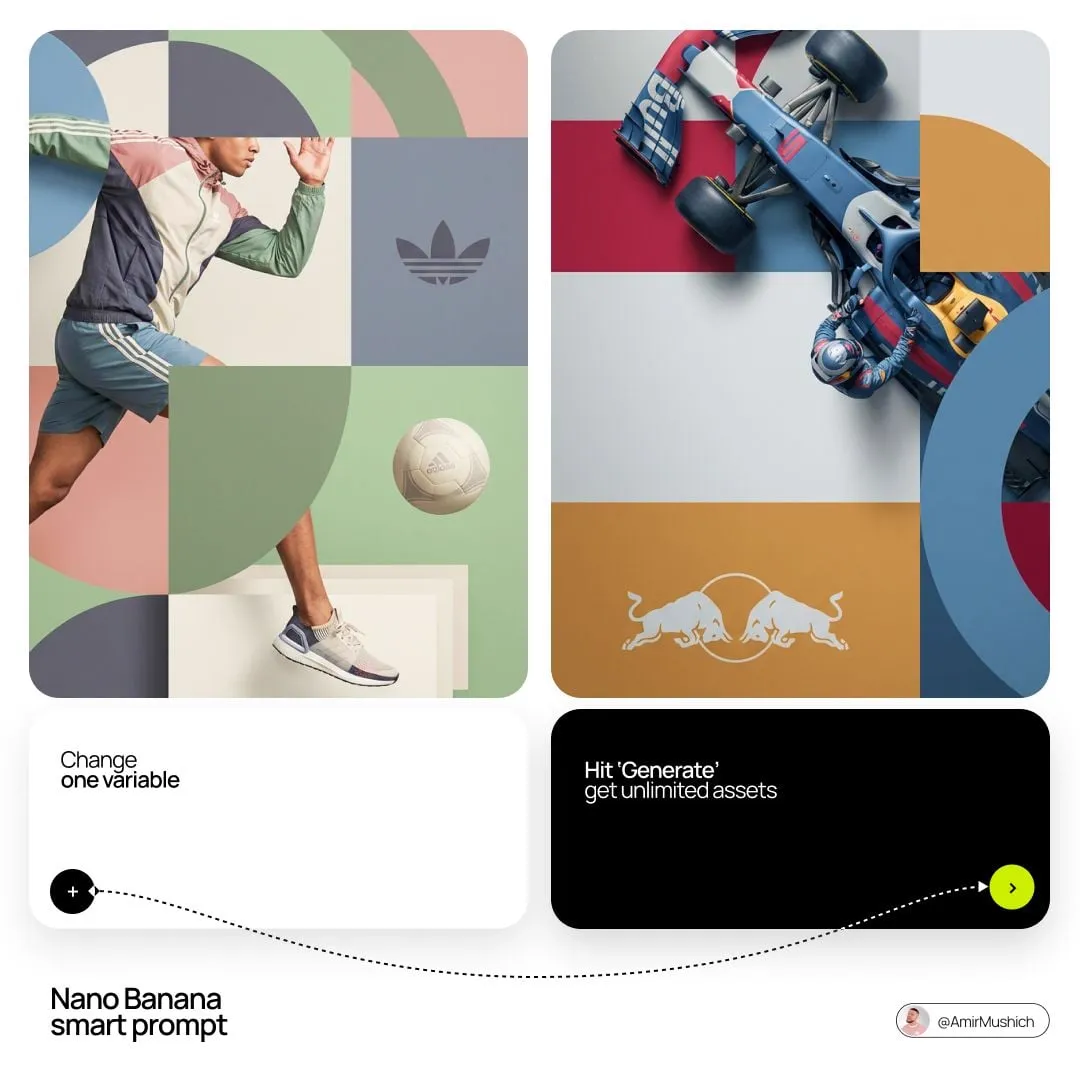
Cinematography has always been about control: control over light, lens, movement and time. Generative AI promised almost limitless visual power, but early tools were also chaotic, producing images that could change unpredictably from one frame to the next. Out of that tension, a surprisingly practical idea has emerged. Rather than treating an AI output as a single, fragile image, you can treat it as a collection of smaller building blocks, each of which can be selected, edited and rearranged on its own. This modular way of thinking is sometimes called working with pixel blocks, and it is quietly changing how distinctive visual effects are designed.
What the building-block idea really means
The straightforward way to use an image generator is to ask for a complete picture and take it as it comes. When the picture is close but not right, many creators simply generate again, hoping for a better throw. The modular approach is different. It starts from the idea that a compelling visual can be decomposed into discrete components, a composition, a character, a background, a specific element, and that each component can be handled separately before being assembled into a final frame.
For video, this thinking is even more valuable. A moving scene is not one painting but a sequence of related paintings, and the moment you can reason about individual pieces of a scene, you gain the ability to fix weak spots without regenerating everything. Someone who wants a memorable visual effect no longer has to accept a whole image that is mostly good. Instead, they can rebuild the part that is not working and keep the parts that are.
Why this matters more in 2025
The significance of seeing scenes as composable elements has grown as AI models have become more advanced. Modern video models maintain a degree of consistency across many frames, which makes it realistic to plan a scene as a set of coordinated blocks rather than hoping the generator holds everything together by itself. That shift unlocks studio-grade results for people who only have access to personal computers and a good eye.
It also changes the economics of experimentation. When every generation is cheap and fast, and when you can reason about pieces rather than whole images, you can prototype visual concepts quickly and iterate toward a style that would once have required a long production cycle. The gap between a quick concept sketch and a polished, production-ready shot has narrowed considerably.
The role of the director in directing the blocks
A key part of making modular visuals work is treating the generation process like directing a scene rather than lazily accepting output. The role of direction is to decide what each visual block should be before the tool draws it, and then to supervise how the blocks fit together. You decide the character's defining traits, the mood of the lighting, the focus of the composition and how the camera moves. The generator fills in the details under that guidance.
Directing a scene built from blocks also means sequencing: deciding which elements matter most and solving them first. Lock the most important feature of the scene, such as the protagonist's face or the central object of the story, then build the environment around it, then add the detail and motion. Handling priorities in order turns an overwhelming creative task into a series of manageable decisions that each moves the project forward.
Consistency across shots
A practical difficulty in generative filmmaking is keeping a character or a style stable as a scene moves. The modular mindset offers a natural answer: establish the character once as a reusable reference, then reuse it in every block and every shot. The result is that the protagonist stays recognizable across a whole sequence, which is exactly what makes a narrative feel trustworthy. The same discipline can be applied to a color palette, a lighting scheme or a signature visual element that ties a series together.
Working with high-resolution building blocks
When the final piece needs to be sharp, you want your building blocks to carry enough detail. Higher resolution output gives you more room to crop, recompose and composite without losing quality. For the core elements of a scene, generating at high resolution and then assembling them is often better than trying to grow a low-resolution whole image later, which tends to blur and degrade the result.
Plan your canvas before you start. Decide the final dimensions and composition early, so each block is created to fit into its intended place rather than being adapted afterward. This forward planning avoids many of the seams and mismatches that appear when separate pieces are forced together.
Controlling camera and movement
Motion is where the block-based idea really pays off. Instead of letting the model decide how the camera moves, you can specify the camera behavior for each element, and then coordinate how those movements combine into a coherent shot. Pans, zooms, tracking and cuts each become parameters you can reason about, adjust and repeat.
The most effective approach builds motion in short, controlled steps. Design a first frame, design a last frame, then guide the transition so the movement between them serves the story. When you think about motion as a sequence of defined blocks rather than a single unpredictable event, you gain the kind of control over pacing and emphasis that was once reserved for traditional directors.
Managing compute through segmented rendering
Generating a complex scene in one go can be expensive and slow, and the result often degrades when too much is asked of a single model. The modular approach spreads the work across smaller, more focused generations, each of which is faster and more reliable. You render the character, the background and the key elements separately, then compose them. This segmented way of working keeps quality high while managing the compute budget.
It also makes fixes much cheaper. If only the background needs to change, you regenerate the background block rather than the entire scene. Over the course of a project, that avoids a great deal of wasted work and keeps each iteration tight. For teams working under deadlines or budget limits, the savings quickly add up.
Building a signature visual style
The real payoff of thinking in blocks is the ability to craft a look that is genuinely yours. Because you can control each component, you can develop a recognizable combination of palette, texture, lighting and motion, and apply it consistently across a series of pieces. That signature becomes a kind of visual brand, one that audiences come to identify and trust.
Start by choosing a small set of deliberate choices: the dominant colors, the quality of light, the level of stylization and the way motion behaves. Apply those choices to every block, then document them so the next piece follows the same language. Consistency across projects is what turns a pleasing effect into a style people remember.
Practical workflow for a modular effect
A reliable process for building a distinct visual effect looks like this. First, write a one-line concept that captures what the shot should feel like. Second, break that concept into components, a subject, an environment and a piece of signature motion. Third, nail the most important component first, using a high-resolution block, and lock it as a reference. Fourth, build the other components to match it, composing them into the final layout. Fifth, animate the motion in a controlled way, keeping the first and last frame intentional. Finally, review the whole piece, fix only the blocks that need it, and archive the settings that worked.
This process turns generative tools into instruments you can direct, rather than a slot machine you keep pulling. The more you practice it, the faster you get, and the more your work develops a consistent voice. Every new project builds on the references, prompts and style notes you have already collected.
Avoiding the common pitfalls
Modular workflows have their own failure modes. The biggest is weak references: if the character or style reference is not strong enough, the blocks drift apart and the compositing shows the seams. Take the time to lock reliable references before assembling. Another pitfall is forcing mismatched pieces together; composition should be planned so the separate blocks naturally belong in the same frame. A third is chasing endless perfection, regenerating forever instead of shipping. Decide when the shot is good enough to serve the story and move on.
Keep a sense of the whole. It is easy to spend all your time perfecting one block and lose track of how the scene reads as a single image. Step back regularly, look at the assembled frame with fresh eyes, and judge it as the audience will, not as a set of parts.
Where modular visual effects shine
The strengths of this approach appear most clearly in a few common situations. Marketing teams use it to explore several distinct visual directions for a campaign without committing to an expensive shoot, comparing looks side by side until the strongest identity emerges. Production houses use it for concept work, animating a storyboard or a client pitch so the direction of a piece is clear before real production begins. Content creators use it to maintain a recognizable visual identity across a long series, where the consistency block by block pays off in trust and recognition.
It also helps when a project needs both speed and a specific look. Independent filmmakers can prototype a visual effect and see whether it works before they spend budget on it. Designers can iterate on the atmosphere of a product or brand scene until the mood is exactly right. In each case, the value comes from control: being able to change one element without rebuilding everything, and being able to return to a saved recipe and produce a matching result later.
Balancing technique with artistic judgment
All this method matters only if it serves a larger creative intention. A modular workflow is not a substitute for having something to say. The most memorable pieces combine disciplined technique with a genuine point of view, an emotional goal or an unusual idea. Keep the craft of blocks in service of the story, not the other way around.
Learn the mechanics until they become second nature, then make decisions from taste rather than anxiety. When you can compose, control and composite blocks quickly, your attention is freed to focus on what the scene means and how it should make the audience feel. That is the balance that separates a technically correct piece from one that people remember.
Frequently asked questions
Do I need advanced technical skills to use this approach? Not necessarily. The thinking helps most when you have some familiarity with image and video tools, but the strategy is conceptual and can be learned with practice regardless of your starting point.
Is this technique only for complex effects? No. The same principle improves simple shots too, by giving you control over composition, consistency and motion even when the result is minimal and clean.
Will working in blocks slow me down? For small, simple shots, generating a whole image can be faster. As scenes grow in complexity, the segmented approach usually wins because fixes are cheap and large generations get harder to control.
How do I keep my style consistent across a series? Document your references, palette, lighting and motion choices, and reuse them as the starting point for every new piece. Consistency is built through discipline and records, not memory.
Cinematography has always been the art of choosing what the audience sees and how they see it. The modular approach to generative visuals extends that craft to AI, turning a chaotic tool into a collaborative instrument you can direct block by block. Learn to decompose scenes, establish strong references, control motion and manage your compute wisely. When you do, the visual effects you create stop being happy accidents and become deliberate, recognizable and genuinely yours.
