
Keeping One Face Across Many Scenes
If you have spent time generating AI video, you have probably met the frustration that defines this field: you get a beautiful character in one scene, then in the very next shot she looks like a distant relative. Her hair changed, the eyes are slightly different, her outfit has mysteriously shifted. For a single clip you can sometimes hide it. The moment you try to tell a longer story or build a series, the problem becomes impossible to ignore.
This is the challenge of character consistency, and it is one of the biggest barriers between AI video as a toy and AI video as a serious production tool. Audiences pick up on inconsistency faster than they can articulate it. A character that subtly changes between scenes breaks the illusion, and the viewer stops believing in the world you are building.
The good news is that consistency is not magic. It is the result of a deliberate workflow, and a set of techniques centered on what is often called multi-image reference. Instead of describing a character in words and hoping the model remembers, you anchor the generation to reference images that define the look. Multiple reference images, drawn from the same character, give the generator a much richer and more stable understanding of who you mean.
In this guide I will walk through why consistency is hard, how multi-image references solve the problem, and the practical steps you can take to keep one character from drifting across scenes, episodes, or an entire project.
Why Characters Drift
Before fixing inconsistency, it helps to understand why it happens. AI video models generate each clip probabilistically. Given an instruction, they sample from a wide range of possible outputs. When the instruction is purely textual, the model has enormous freedom to interpret what "the character" looks like, and that freedom is exactly what produces drift.
Text descriptions are imprecise containers. Saying "a woman with long dark hair" leaves countless details unspecified: the shape of her nose, the width of her jaw, the exact shade and texture of her hair, the way a particular piece of clothing drapes. Each generation fills in those blanks differently, so every scene can produce a slightly different person.
Compounding this, the model has no memory across generations. Each clip is produced fresh, with no awareness of what was generated before. Even if you reuse the same text, the model will not "remember" the character from the previous shot. Without an external anchor, consistency is essentially left to chance.
This is why expecting consistency from text alone is a losing bet. To get a stable character, you need to give the model something concrete to hold onto across all your generations, and that is precisely what reference images provide.
How Multi-Image Reference Works
A single reference image already helps. It shows the model what the character looks like, anchoring facial features, hair, and styling. But a single image captures one angle, one expression, one lighting situation. It leaves a lot up to the generator when you ask for new poses or new scenes.
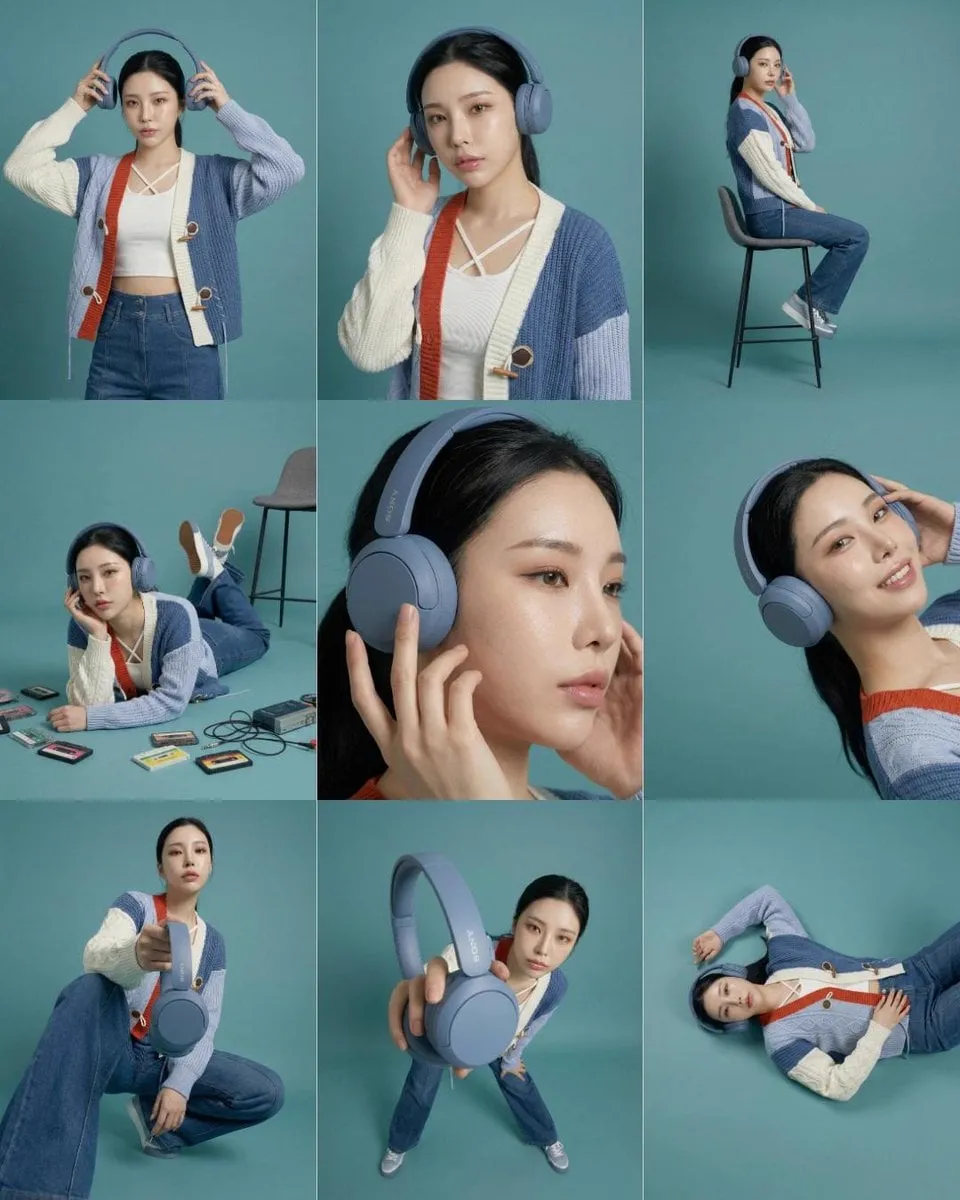
Multi-image reference extends this idea by giving the model several images of the same character at once. A front view, a side profile, a shot in natural light, one in soft indoor light, an image showing full-body clothing, another showing a close-up of the face. Each image narrows down some aspect of the character, and together they build a composite the generator can rely on.
The value is in the redundancy. Where one image might leave the hair ambiguous, a second image clarifies it. Where one image does not show the shoes, another does. By covering more of the character across different conditions, you reduce the ambiguity the model has to fill in, and stability improves dramatically.
Crucially, the reference images must depict the same character. If they show people who are only similar but not identical, the model will blur the differences into an uneasy average. Consistency starts in the references: invest the time upfront so that your reference set is genuinely cohesive.
Choosing Reference Images That Work
Not all reference images are equally useful. Picking a strong, cohesive set is one of the highest-value steps in the whole workflow. A few selections made carefully save you hours of corrective generation later.
Cover the whole character. Include facial close-ups for the important details, and full-body shots to establish wardrobe and proportions. If the character changes outfits across the story, include at least one reference for each major look. The more the model understands about the complete appearance, the more reliably it reproduces it.
Cover multiple angles and conditions. Include front-facing, three-quarter, and profile views. Include both well-lit and softer-lit images, so the model understands how light affects the character. This is especially important when your scenes take place in different environments.
Choose clear, high-resolution, uncluttered images. A reference filled with visual noise or with the character partly obscured teaches the model the wrong lesson. Clean, sharp, well-composed references produce cleaner results.
Above all, verify consistency across the set. Look at your references together and confirm they plausibly show the same person. If any image stands out as inconsistent, replace it. The strength of the multi-image approach depends on the coherence of the set.
Building the Reference Set for a Project
Once you understand the principles, you can build a reference set as part of your project setup. Treat it like casting a character. Define who this person is visually, then capture enough images to reproduce them faithfully in any scene.
Start with the face. Produce several clean close-ups of the same character in neutral poses and good light. These are the anchor images for the most important identifier of all: the face. Spend extra care here, because facial drift is what audiences notice most.
Then move to the full body and wardrobe. Establish the character's outfit and proportions. If they change clothes between scenes, produce separate references for each costume. The model needs to know not just the face but the whole person as they will appear across your story.
Finally, cover the range of conditions you will actually use. If your script has night scenes, get a reference in low light. If it has bright outdoor scenes, get one in strong daylight. Anticipating the conditions in advance saves you from scrambling when you need a coherent result in a specific environment.
Organize these references clearly per character and per look. When you move between projects, having a clean reference library means you can start a new piece without redoing the work. The reference set is an asset you reuse, not a one-time setup.
Working the References Into Your Generations
Having a reference set is not enough on its own; you also need to use it correctly in each generation. The way you apply the references influences how strongly the model leans on them and how stable the output is.
Apply the full reference set rather than just one image. Many tools let you pass multiple reference images, and the full set provides the redundancy that brings stability. If a tool limits how many you can use, prioritize the most informative ones: a clear face shot and a clear full-body shot usually do the most work.
Pair the images with consistent textual descriptions. Even with references, a well-worded prompt strengthens the result. Describe the character the same way every time, matching the details you know from the reference set. Consistency in text reinforces consistency in the image.
Watch the strength settings. Most tools expose a parameter controlling how much influence the references have over the output. Too low, and the model drifts from your character. Too high, and motion or posing can become rigid. Find the sweet spot by testing, and note which setting works for which kind of shot.
Keep the base composition controllable. Use the references to fix the character, and use the prompt and other controls to direct action and camera. This division of labor gives you both stability and control, instead of having to choose one at the expense of the other.
Handling Expressions and Emotion
Characters are not static, and one of the hardest tests of consistency is emotion. A character laughing, frowning, scared, or surprised must look like the same person throughout. Getting expressions right while keeping the face recognizable is a subtle balancing act.
Reference images help indirectly by grounding the underlying features. When the model knows the character's face well, it has a better chance of applying an emotion while preserving identity. Expression changes then read as variations of the same person, not as a new person appearing.
The key is to keep the facial structure stable while varying the expression. If you have built a strong reference set, the model can take liberties with the mouth and brows while holding the eyes, nose, and jaw in place. This produces an expressive yet consistent character.
If you struggle with a particular expression, consider providing an additional reference showing that expression. A close-up of the character smiling, for instance, gives the model a concrete target rather than asking it to invent one from scratch. Anticipate the major emotional beats of your project and cover them with references.
Finally, resist the urge to over-correct. If a few frames show a subtle variation, it may not be worth regenerating. Focus your effort on the emotional beats that carry the story, where consistency genuinely matters to the audience.
Common Mistakes and How to Avoid Them
Even with the right concepts, the execution can go wrong. Knowing the common mistakes saves you time and frustration as you refine your workflow.
The most common mistake is using inconsistent references. If the reference set does not actually show the same character, no amount of technique will produce stable results. Fix the references before you blame the tool.
Another mistake is relying on text alone. No matter how good your prompt, text cannot carry the full visual identity of a character. Reference images are not optional for real consistency; they are the foundation.
A third mistake is overloading the prompt while underusing the references. When you pile on features hoping to shape the output, you risk pulling the model away from the references and into ambiguity. Keep prompts aligned with the reference set rather than fighting it.
A fourth mistake is ignoring strength and settings. Assuming the default parameters work perfectly for every shot leads to inconsistent results. Test, adjust, and document the settings that work for different scene types.
Finally, do not expect perfection in a single pass. Character consistency improves iteratively, as you refine references, tune parameters, and learn what works. Building a stable character is a skill you develop, not a switch you flip.
From Consistency to a Complete Project
Achieving character consistency unlocks the real power of AI video: the ability to tell longer, serialized stories. When you can rely on a character staying recognizable, you stop improvising every scene and start directing with intention.
A consistent character is a creative asset you can build on. It becomes the center of your series, the recognizable figure your audience follows from episode to episode. That recognition is what turns a collection of clips into a story with a following.
Consistency also raises the production value of everything you make. Even a single polished piece benefits from a character who looks deliberately designed rather than randomly generated. The discipline of reference building pays dividends in quality across all your work.
To get there, treat consistency as part of your creative practice, not an afterthought. Build reference sets at the start of every project, use them faithfully in every scene, and refine them as you learn. Over time, you will develop an eye for what makes a character read as "the same person," and your stories will carry that continuity.
Frequently Asked Questions
Do I always need multiple reference images, or is one enough?
For single clips, one good reference can be enough. For longer projects and series, multiple references are strongly recommended, because they reduce ambiguity and stabilize the character across conditions and angles.
What if the reference images and my scene have different lighting?
That is normal and manageable. The reference set establishes the character's identity; the scene's lighting affects how they are seen. Use references consistent with your scene where possible, but rely on the set to hold the identity steady.
Why does my character still change even with references?
Often because the reference set is inconsistent, the strength setting is too low, or the prompt pulls in another direction. Review all three factors, test systematically, and document what works.
Can I build a whole series with a consistent character?
Yes. Consistency is what makes serialized stories possible in AI video. Invest in a strong reference set and a documented workflow, and you can produce episode after episode with a character audiences recognize.
Are there cases where text-based generation is preferred?
For quick conceptual exploration, text alone can be fine. But for consistent, production-grade characters, reference-based workflow is far more reliable. Use text for ideas and references for final production.
What part of the process requires the most care?
The reference set. A carefully built, coherent set of references is worth more than any other technique. Invest the time there and everything downstream gets easier and more reliable.
