
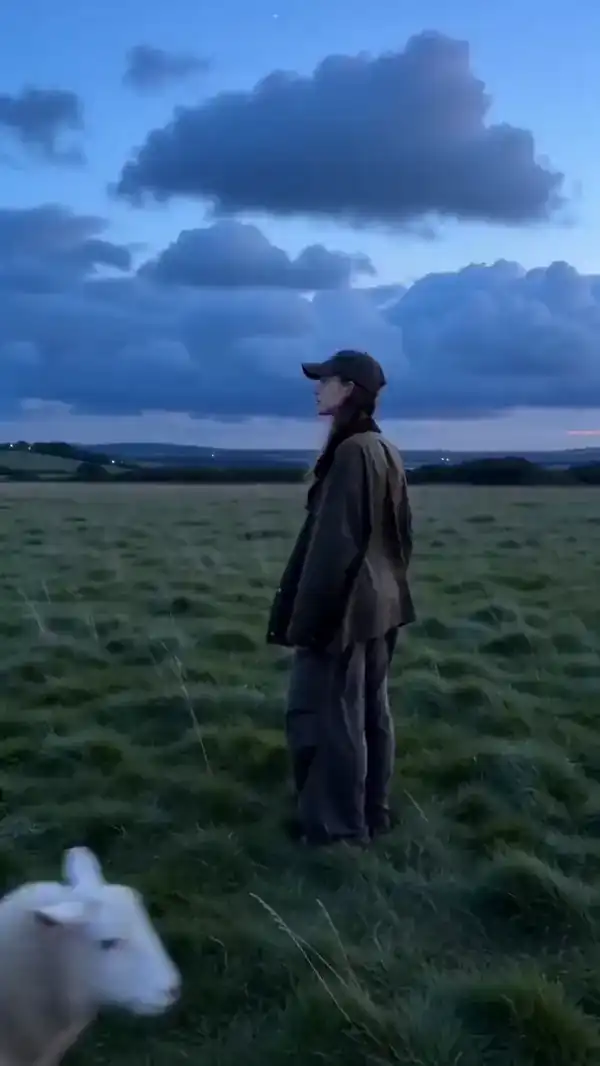


The most frustrating moment in AI video production is the same for everyone: you generate a beautiful shot of your character, you move to the next scene, and the face is different. The hair is wrong, the costume shifted, the proportions changed. The character the audience met in scene one is not the character in scene three, and the whole story falls apart. This problem, character consistency, has been the bottleneck between AI video as a novelty and AI video as a production tool. Multi-image fusion is the technique that finally addresses it: instead of describing the character with words, you show the model what the character looks like, and it holds that identity across the entire sequence. This guide explains how the technique works, how to use it well, and how to build a workflow that keeps your characters consistent from the first shot to the last.
Why Character Consistency Is So Hard
Text-to-video models have a fundamental limitation: words are lossy descriptions of identity. If you write "a young woman with blue eyes and a red jacket," the model has to reconstruct a face, a build, a style, and a thousand other details from that short sentence. Nothing forces the reconstruction to be the same in every frame, let alone in every scene. Small differences that are invisible in a single still become obvious the moment the audience sees the character twice.
The problem is compounded by generation mechanics. Every frame passes through the model, and without a strong anchor, each frame's reconstruction drifts randomly. The drift accumulates over time: scene one is recognizable, scene three is a cousin, scene ten is a stranger. This is why consistency is not just a quality issue; it is a storytelling issue. Stories depend on the audience recognizing the same character, and AI video could not tell reliable stories until this problem was solved.
Multi-image fusion solves the anchoring problem directly. The model receives reference images of the character and extracts an identity representation, a set of features that defines who the character is. Generation then matches the output to those features. The identity no longer has to be re-invented from words in every frame; it is provided, and the model's job is to render it in new contexts.
How the Reference Mechanism Works
The core of multi-image fusion is the reference mechanism, and understanding it changes how you use the tools. When you upload reference images, the system does not simply paste them into the output. It processes them through a feature extraction network that identifies the character's identity: face shape, facial landmarks, skin tone, hair, build, and signature costume elements. These features are encoded into a representation that conditions generation.
The representation acts as a constraint, not a template. The model does not copy the reference images; it uses the identity features to guide its own rendering. This is why a good fusion system can place the same character in a completely new scene, with new lighting, new camera angles, and new actions, while keeping the identity stable. The reference defines who, the prompt defines what, where, and how.
The quality of the extracted representation depends on the references. A single image gives the model one view of the identity, and the model has to guess the rest. Multiple images from different angles and lighting conditions give the model a fuller picture: it learns the face from the front and side, the build from full-body shots, and the signature details from close-ups. This is why the number and variety of references matter, and why a well-chosen reference set beats a larger, sloppier one.
Character Embeddings and Visual Weighting
Inside the system, the identity becomes a character embedding: a high-dimensional vector that represents the character in the model's feature space. The embedding is what persists across scenes, and its quality determines consistency. A good embedding separates identity features from incidental features, holding the face and costume while allowing the pose, expression, and background to change.
The sophistication of a fusion system shows in how it weights visual features. Not all details are equally important for identity. The face usually matters most, then the build and signature costume, then the accessories. Advanced systems assign independent weights to these feature groups, so a change in lighting does not destabilize the face, and a costume change does not collapse the whole identity. When you see a system that keeps the face stable through dramatic wardrobe changes, this weighting is what is working.
For creators, the practical implication is to choose references that emphasize identity-critical features. Front and three-quarter face shots are the most valuable. Full-body shots establish the build and costume logic. Avoid references where the face is small, obscured, or in extreme lighting, because the extracted identity will be weaker. The references are the character sheet for the model, so build them with the same care an animator would give a character model sheet.
How Leading Models Approach Multi-Image Fusion
Different video models implement multi-image fusion in different ways, and the differences matter in practice. Some use non-destructive embedding methods: the reference features are injected into the generation without retraining the base model. This approach preserves the model's general capability, keeps costs low, and is fast, making it the default for everyday work. Its limitation is that the identity constraint can weaken in difficult conditions, such as fast motion or extreme camera angles.
Other systems use fine-tuning or low-rank adaptation: the character identity is baked into the model weights through a short training run on the reference set. This produces the strongest consistency, because the identity is part of the model rather than an input constraint, but it requires more compute and a longer setup. The tradeoff is strength versus flexibility: a fine-tuned identity is hard to break, but it is also harder to adjust on the fly.
The practical strategy is to match the method to the job. For quick variations and iteration, use the lightweight fusion path. For hero assets, key sequences, and content where consistency is the product, invest in the stronger method. Successful studios often keep both paths in their workflow: fusion for exploration, fine-tuning for delivery.
Controlling Motion and Pose Across Shots
Identity consistency is only half the battle; the character also has to move plausibly. A character frozen in the same pose across scenes looks less like a consistent character and more like a cutout. The systems that handle this well combine identity constraints with motion and pose control.
The reference set supports this by including motion frames. Images of the character walking, running, turning, and gesturing teach the model not just who the character is, but how the character moves. Some workflows go further and use pose guides: stick-figure or skeleton overlays that specify the pose for each shot. The identity system keeps the face and costume stable while the pose guide drives the motion, giving you sequence-level control.
For longer sequences, keyframe control is the discipline that holds everything together. Define the critical frames where the audience gets a clear look at the character, generate those with the strongest constraints, and let the intermediate frames interpolate between them. Review the keyframes carefully, because errors there propagate through the whole sequence. This is the difference between generating a sequence and directing one.
Keyframe Control and Sequence Editing
A production workflow for consistent characters looks less like prompt engineering and more like traditional animation. Start with a storyboard that defines the shots and the character's state in each. Generate a keyframe for each major beat, and review them as a set before generating any motion. If the character looks wrong in a keyframe, fix it before moving on; fixing a keyframe is cheap, fixing a rendered sequence is not.
When the keyframes pass review, generate the motion between them, shot by shot. Keep the reference set and the identity settings constant across the entire project. Version your keyframes and your settings, because you will iterate, and you need to know what changed between the version that worked and the version that broke. Treat the sequence as a single artifact with a changelog, not a pile of clips.
The review discipline extends to the final assembly. Watch the full sequence, not just the individual shots. Consistency problems often appear at transitions: the lighting jumps, the proportions subtly shift, the costume detail disappears in a wide shot. A final consistency pass, with a checklist covering face, costume, build, and motion, catches the problems that single-shot review misses.
Choosing Models by Budget and Style
Multi-image fusion exists across the whole price spectrum, and the choice depends on your priorities. The premium tier offers the strongest consistency and the best handling of difficult conditions, at the highest cost per generation. The mid-tier balances quality and cost, and for most character-driven content it is the sensible default. The budget tier handles simple consistency tasks, like a single character in a static scene, well enough for iteration and early exploration.
Open-source options add another dimension. Community models with strong fusion implementations are available for self-hosting, and they give you full control over the pipeline and the data. The tradeoff is infrastructure: you own the hardware, the maintenance, and the debugging. For teams with engineering capacity, open-source fusion is often the best long-term investment, because the capability becomes an owned asset rather than a per-use cost.
Whichever tier you choose, test before you commit. Run your actual reference set and your actual scenes through the candidate systems, and compare the results on your own failure cases. The marketing demos are all beautiful; your production tests will tell you which system survives contact with your real workflow.
Building a Consistent Character Workflow
Bringing it together, here is a workflow that produces consistent characters in practice. First, build the character sheet: three to five clean reference images covering the face, the build, and the signature details, with consistent lighting and framing. Second, write the storyboard: every shot, the character's action, the camera, and the setting. Third, generate and review keyframes for every major beat, fixing identity issues before any motion work. Fourth, generate the shots with constant identity settings, using pose guides where motion control is needed. Fifth, assemble and review the full sequence with a consistency checklist. Sixth, version everything and document what changed between iterations.
This workflow looks like more overhead than just prompting, and it is. That overhead is the point: it converts the consistency problem from luck into process. The teams that produce reliable character-driven content are not the ones with the best prompts; they are the ones with the most disciplined process. The process is the product.
Troubleshooting Common Failures
When consistency fails, the cause is usually visible in the workflow. The face drifts between scenes: the reference set is too weak or inconsistent, or the identity settings were changed mid-project. The costume changes in wide shots: the references do not emphasize the costume, or the wide shots are generated without enough identity weight. The character freezes or moves unnaturally: the pose control is missing or conflicting with the identity constraints. The style collapses into sameness: the references are too similar, teaching the model a single look instead of an identity.
The fix for most failures is better references and stricter process, not more iterations. Improve the reference set, lock the identity settings, and review keyframes earlier in the pipeline. When a specific failure persists, isolate it: generate the same prompt with different references, or the same references with different prompts, to find which variable is responsible. Methodical isolation beats random retries.
Frequently Asked Questions
How many reference images do I need for a consistent character?
Three to five well-chosen images is the practical sweet spot: front and side views of the face, a full-body shot, and a close-up of signature details. More images help only if they are consistent; inconsistent references hurt more than they help.
Does multi-image fusion work for any character style?
Yes, for photorealistic and stylized characters alike, as long as the references clearly define the identity. Stylized characters benefit from references that include the exact linework, palette, and proportions the model should preserve.
Can I keep the same character across multiple separate projects?
Yes, if you keep the same reference set and identity settings. This is how studios build recurring characters: the character sheet is a reusable asset, versioned like any other production asset.
Why does my character drift in fast motion?
Fast motion stresses the identity constraint because the visual signal is degraded by blur and motion. Increase the identity weight, add motion-specific references, and use pose guides so the model does not have to guess the motion.
Is fine-tuning better than reference-based fusion?
It depends on the job. Fine-tuning gives stronger, more durable consistency at higher cost and setup time; fusion is faster, cheaper, and more flexible. Use fusion for iteration and exploration, fine-tuning for hero assets and production delivery.
Conclusion
Character consistency is the gateway between AI video and real storytelling, and multi-image fusion is the key that opens it. The technique is simple to grasp: show the model the character, and it holds the identity across the sequence. The craft is in the details: building a strong character sheet, understanding how the reference mechanism works, weighting the identity features that matter, controlling motion, and reviewing at the sequence level rather than the shot level. Master the workflow, and your characters will survive contact with the audience, scene after scene, project after project.
