
![Create a 1:1 cinematic product poster (1080×1080) of [BRAND & PRODUCT],...](https://storage.brightvectorlabs.com/prompts/bright/product-and-brand/2017188683766538498-0.webp)

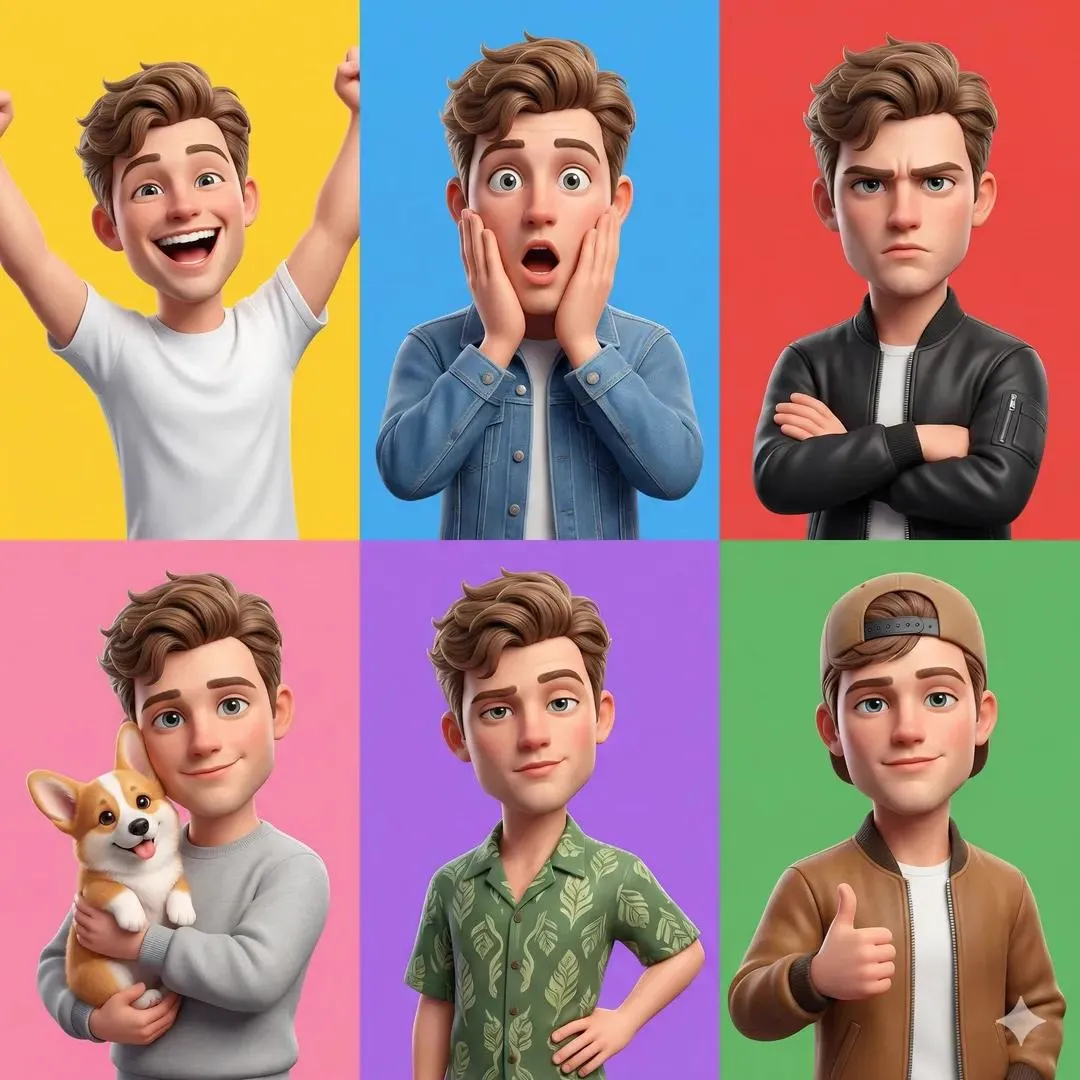
The single most frustrating problem in generative video is that characters refuse to stay the same person. You write one prompt, and the hero has a different face, a different coat, or a different shadow from one clip to the next. This effect, commonly called identity drift, has kept AI-produced work from feeling like real storytelling. This article explains why it happens and how a technique called multi-image fusion attacks the problem directly.
We will not rely on theory alone. You will come away with a clear understanding of the culprit, the mechanism that fixes it, and a practical workflow you can apply to your next project with a much better chance of recognisable, consistent characters.
The Persistence Problem in Generative Video
When a generative model creates a video from text alone, it has no persistent memory of who anyone is. Each frame is generated from scratch, guided only by words. A single phrase like a young woman in a red raincoat leaves enormous room for interpretation, so the model invents a slightly different woman every time it renders. The result is an uncanny instability: facial features shift, clothing changes, even the tone of the footage wavers.
This is not a small quirk. It is the fundamental reason long-form AI storytelling has felt impossible. Novelty is easy for these models; commitment is hard.
Why Consistency Matters More Than You Think
Consistency is what turns a collection of pretty clips into a scene, a scene into a story, and a story into a brand. Audiences read a character who changes appearance every few seconds as evidence of low quality, regardless of how polished each individual frame looks. A model that can lock identity is the difference between gimmick footage and work a client can actually use.
The Vocabulary: Terms You Will Hear
Identity drift refers to the unintended variation in a subject's appearance across generations. A reference image is a picture you supply to anchor how something should look. An adapter, sometimes called a LoRA or a fusion module, is the mechanism that injects that reference information into the generation process. Multi-image fusion is the practice of combining several reference images with a text prompt so the model can learn which features to hold constant.
How Multi-Image Fusion Works
Traditional text-to-video (and text-to-image) passes only words to the model. Multi-image fusion changes the input pipeline: it accepts both a text prompt and a minimum of several reference images at the same time, typically three or more, and treats them as the authoritative definition of the subject.
The Role of Feature Extraction
Each reference image is analysed for the features that matter, face shape, hair, costume, palette, and converted into a compressed representation called a feature vector or embedding. These vectors become anchors. When the model then renders a frame, the text directs motion and action while the vectors pull the visuals back toward the defined identity.
The result is that the model is not inventing the character from scratch each frame. It is reconstructing the character around a stable core, scene after scene.
Why Multiple Images Beat a Single One
One reference image leaves gaps. A single frontal portrait, for example, tells the model nothing useful about a back view, a side profile, or a subject in motion. Multiple images covering different angles, poses, lighting, and costumes give the model a fuller picture, so it can keep identity stable even when the framing changes drastically.
More references also reduce the impact of any single image's flaws, such as noise, unusual lighting, or an awkward crop. As long as the set agrees on the core identity, the outliers matter less.
The Practical Minimum
A useful rule of thumb is at least three quality references: a clear front view, a three-quarter or side profile, and a full-body shot or environmental frame. For characters that move a lot or appear in many scenes, more is better. In every case, the references should be consistent with one another, the hair style should not change between them any more than it would in reality.
A Workflow for Locked-Down Character Consistency
You can apply multi-image fusion to your own projects with a simple, repeatable process. The steps below assume a typical generative pipeline, including text and image based generation, and they generalise across tools.
Step One: Design the Identity Sheet
Before generating anything, create a reference set that functions like a character sheet. Decide on the face, the wardrobe, the hair, and the signature palette. Generate or source these reference frames deliberately, and review them as a set for internal consistency. This is your source of truth for the whole project.
Step Two: Write a Descriptor Prompt
Pair your references with a prompt that describes the scene and action without fighting the identities. Describe mood, motion, environment, and camera language. The prompt adds dynamics while the fusion module holds the identity. Keep the descriptors broad enough that they do not contradict the reference imagery.
Step Three: Generate and Audit
Run your first batch and then audit honestly. Hold the references side by side with each output and note where identity holds and where it slips. Some slippage, in a shadow or a fold of fabric, is acceptable; slippage of the face is not. Log the issues so your next prompt or training step can address them.
Step Four: Iterate the Reference Set
When identity drifts on a specific pose or in a specific scene, the fix is usually a better reference, not a better prompt. Add a sample that resembles the failing scenario. Retrain or regenerate, then re-run your audit. Steady improvement comes from steadily better anchors.
Step Five: Build a Shot Continuity Log
For longer projects, track which references each shot used and how the camera moved. A continuity log lets you keep the character aligned across scenes produced at different times, which matters enormously when you assemble a sequence over several sessions.
Stylistic Consistency Beyond the Character
Fusion does not only lock a face. It can stabilise style, tone, and world design across a whole project.
Palette and Lighting
If your references agree on a colour grade and lighting direction, the model is far more likely to reproduce that mood across shots. This is how you avoid the jarring jump where scene one looks like daytime realism and scene three looks like a neon comic book.
Environment and Props
A signature location, a spaceship interior, a castle hall, a city street, can be anchored the same way. Consistent props that reappear (a family heirloom, a specific car) become part of the identity the fusion holds constant, and viewers latch onto those details as markers of a coherent world.
Motion and Camera Language
Some approaches extend fusion to motion and camera behaviour, suggesting or enforcing consistent framing and moves. If your works style depends on slow push-ins or locked-off tripod shots, treat that as part of the identity you are protecting.
Common Pitfalls and How to Avoid Them
Even with a solid technique, a few mistakes sabotage results.
Inconsistent reference sets. If your references show the character with different hairstyles or costumes, you teach the model confusion. Keep the identity sheet internally consistent.
Overloading text prompts. Filling the prompt with physical appearance details fights the fusion module and invites drift. Describe action and mood in text; let the references own the appearance.
Skipping the audit. Generating a large batch without reviewing it against the references means you will build on a shaky foundation. Audit early and often.
Using too few anchors for dynamic characters. A character who runs, fights, or changes outfits needs more reference coverage than one who sits in a room talking. Plan references for the hardest scenario you will film, not the easiest.
Expecting perfection on the first run. Identity control improves iteratively. The goal is not a flawless first generation but a predictable path from a first draft to a trustworthy one.
Frequently Asked Questions
How many reference images do I actually need?
Start with three to five that agree on the core identity: front, profile, and full body. Increase coverage for characters that appear in many poses, costumes, or lighting conditions. The goal is consistency of the set, not a specific count.
Does multi-image fusion work for entirely fictional characters?
Yes. As long as you create a consistent reference sheet for the imaginary character, the model can anchor to it just as it would for a real person. Build the identity sheet first, then let fusion hold it steady.
What if my character still drifts on one particular shot?
Diagnose the failing scenario and add a reference that matches it. If a low-angle, close-up shot drifts, find or create a low-angle close-up reference. The remedy is almost always a better anchor, not a better word.
Is fusion the same as fine-tuning a model?
They are related but not identical. Fine-tuning trains weights on your dataset for deeper and broader control, while fusion typically applies reference anchors at generation time. Many workflows combine both: a light fine-tune for the general look plus fusion references for per-scene identity. Lighter projects can get away with fusion alone.
Does this work only for people, or also for animals, objects, and worlds?
Fusion anchors work for any subject with a recognisable identity, human, animal, specific object, or recurring location. The same principles of reference-set consistency and scenario coverage apply regardless of the subject.
Fusion Applied to Different Content Types
The technique generalises far beyond a single character. Once you treat fusion as a way to lock identity and style, it becomes relevant across many kinds of projects.
Brand and Product Consistency
A product shoot with a defined palette, packaging, and hero angle benefits hugely. Fusion references of the actual product let the model reproduce it recognisably in every scene, which matters for anything from a launch teaser to a long-running ad series. The product becomes the recurring identity the model must hold still.
Recurring Environments and Worlds
A signature location, a bar that characters keep returning to, a headquarters, a fantasy kingdom, can be anchored with reference frames of that space in different moods and times of day. Consistent world direction makes an episodic or franchise-style series feel unified even when episodes are produced months apart.
Non-Human Characters
Creatures, robots, and abstract mascots obey the same rules. Build a reference sheet covering the creature in motion, in profile, and in its signature poses, then feed it consistently. A believable recurring creature is a huge win because it is so easy to get wrong otherwise.
Blended Styles
If a project intentionally mixes styles, such as photoreal characters against a painted background, use fusion to fix the boundary. Lock the photoreal characters with their own references and the environment with its own, so neither bleeds into the other's look mid-shot.
Measuring Whether Your Fusion Is Working
Consistency is subjective until you quantify it. A simple audit routine turns fuzzy impressions into something you can improve against.
Define the three or four identity features that absolutely must not change, such as the face, the primary costume, and the palette. Then, for each generated shot, score whether each feature held, drifted slightly, or changed entirely. The pattern of failures tells you what to fix next.
When drift concentrates in one pose or lighting condition, the remedy is a better reference covering that case. When drift is scattered, your source references are probably inconsistent with one another and need to be reconciled before anything else. A short scoring sheet makes these diagnoses obvious across a whole project and gives you a defensible way to tell a client that consistency improved between rounds.
Working With Fusion as Part of a Bigger Pipeline
Fusion is rarely the whole workflow. It is one stage, and it behaves best when the surrounding pipeline respects it.
Generate your reference sheets and identity materials first, before any hero content. Rushing past this stage is the most common reason good ideas turn into inconsistent footage.
Keep the reference set in version control alongside prompts. When you iterate, you want to know exactly which references produced which look, so you can reproduce a winning result or roll back a failed one.
Feed the output through your usual finishing steps, upscaling, colour, stabilisation. A consistent identity that is also soft or shaky is still not finished. The two concerns, identity and image quality, are sequential: lock identity first, then polish.
Plan for re-generation. Even with good references, some shots will need a second or third pass. Budget time for iteration instead of assuming the first batch ships.
Final Thoughts
Character consistency was the wall that kept AI video out of serious storytelling. Multi-image fusion does not make it effortless, but it does make it achievable. By giving the model a stable set of anchors and pairing those with descriptive prompts, you can produce work where the characters are recognisably, reliably the same people for as long as your story needs them to be.
Build a strong identity sheet, audit your results honestly, and treat each project as a chance to refine your reference craft. The viewers you are trying to convince will not know the technique, but they will absolutely feel the difference.
