
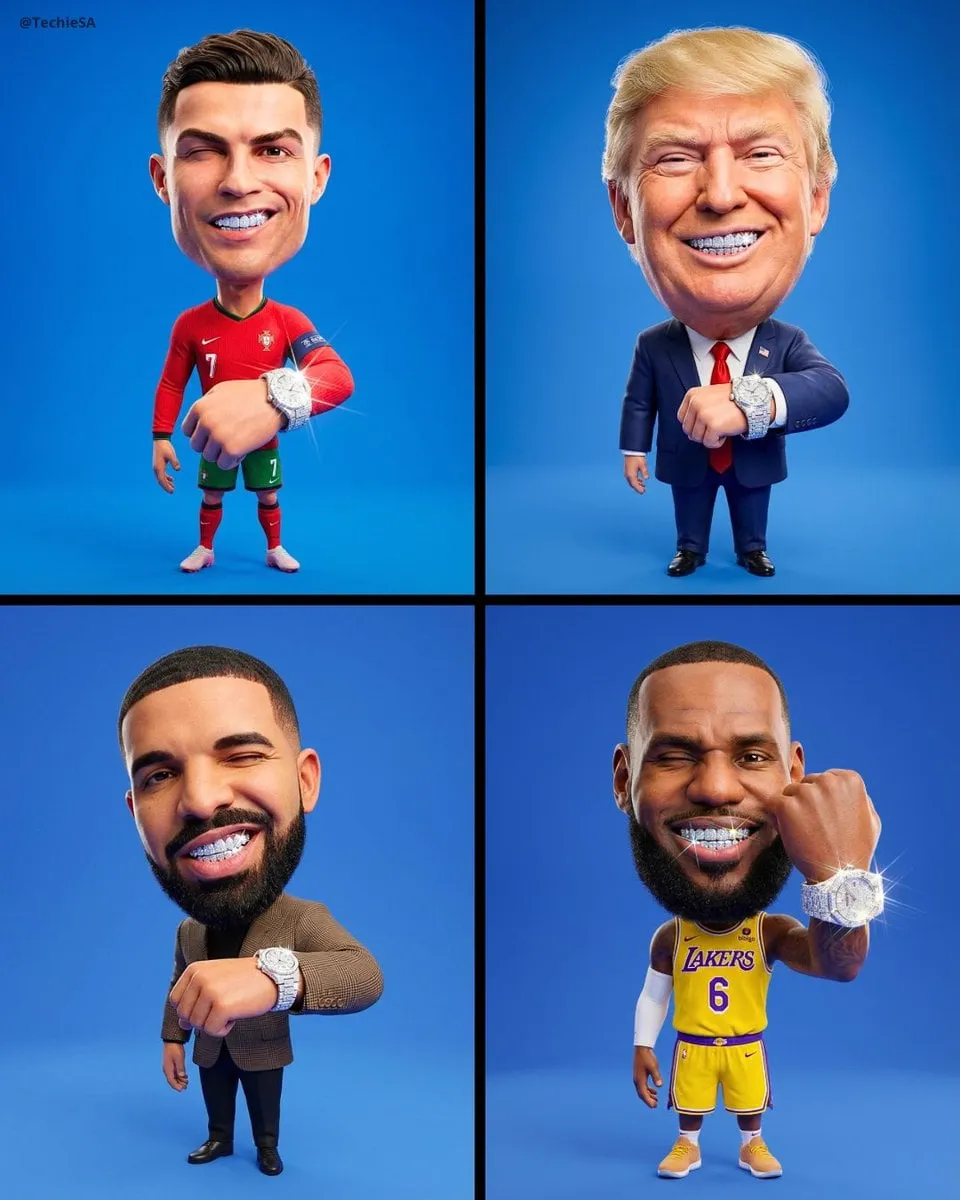

Ask any filmmaker working with AI what annoys them most and the answer is usually the same: characters change appearance between shots. The face that looked right in scene one is subtly wrong in scene two, and by scene five the character is effectively a stranger. This problem dominated the early days of text-to-video generation and it is still the first thing audiences notice. Multi-image fusion is the technique that finally addresses it. Instead of asking a model to invent a character from words alone, you give it several images of the same character and let it build a shared identity from them. This guide explains how the technique works, how to run it well, and what to do when it fails.
The Consistency Problem No One Likes to Talk About
Text-to-video generation has a dirty secret: prompts are a weak description language for identity. The sentence "a tall woman with curly hair and a green jacket" leaves an enormous space of interpretation. The model fills that space from its training data, and it fills it differently every time. That is why characters drift, outfits change, and faces morph between shots.
This is not a small aesthetic issue. Consistency is what makes a story legible. Viewers track characters through scenes; when the tracking breaks, the story breaks. Advertisers, studios, and series producers all depend on characters remaining recognizable, which is why the consistency problem blocks real production work, not just hobby projects.
The deeper insight is that consistency is a data problem, not a prompting problem. A model cannot be consistent about something it was never shown. Multi-image fusion solves this by forcing a constructed identity into the generation process: the model receives concrete images of the character and learns from them what the character is.
How Multi-Image Fusion Works
Multi-image fusion takes two or more reference images and combines them into a shared representation that later generations can draw on. The references define the essentials: facial features, hair, clothing, body shape, and texture. The fusion step compresses those details into a stable identity that the model applies when you generate new scenes.
Think of it as building a character vector. Each reference image contributes information; the fusion process finds the common ground among them. If your references disagree — different outfits, different lighting, different angles — the vector becomes fuzzy and the results drift. If the references agree, the vector is sharp and the character stays recognizable across wildly different scenes.
The practical consequence is that the quality of your references determines the quality of your consistency. No amount of clever prompting can rescue a character from bad reference material.
Building a Strong Reference Set
The reference set is the foundation, so build it deliberately. A useful set has these properties:
Multiple angles. Include front, side, and three-quarter views. A character defined from one angle only will distort when the camera moves.
Consistent identity, varied context. The face, hair, and body must match across references, but the poses and backgrounds can vary. You want the model to learn the person, not the photo shoot.
Clear lighting and detail. High resolution and even lighting give the fusion process more to work with. Small features — eye color, scars, jewelry, hair texture — should be visible in at least one reference.
Full body plus close-up. A full-body shot establishes proportions and wardrobe; a close-up locks the face. Both are needed because scenes will demand both framings.
No watermarks or overlays. Anything that is not part of the character becomes noise the model may copy into every frame.
If you are starting from scratch, generate the character in an image model first. Iterate on the still image until it looks exactly right, then export the angle variants from that same design. This is faster and more reliable than trying to fix the character inside the video model.
The Fusion Workflow, Step by Step
Once the references are ready, run a disciplined workflow rather than improvising scene by scene.
Step one: normalize the set. Crop all references to similar composition and resolution. Confirm the character matches in all of them before going further. This is the cheapest moment to catch mistakes.
Step two: create the identity. Load the references into your tool's fusion or multi-image feature and generate a test frame. Check the test frame against the references for accuracy. If the test frame looks wrong, fix the references or the fusion settings now.
Step three: write scene prompts that reference the identity. Keep the character's name and core descriptors identical in every prompt. Reference the fused identity explicitly rather than re-describing the character's appearance in words.
Step four: generate scene drafts with a fast model. Validate the story and the character's behavior before spending premium generations. Check that the character stays recognizable in motion, not just in stills.
Step five: promote the approved scenes to a higher-quality model. Run the final generations, then do a consistency pass across the entire sequence — not frame by frame, but character across the whole video.
Step six: archive. Save the reference set, the fusion settings, and the approved frames. The next video with this character starts from the archive, not from scratch.
Picking the Right Model for Your Consistency Needs
Different models handle fusion differently, and choosing badly wastes hours. Learn how your model of choice interprets multi-image references.
Some models excel at interpreting references for styling and composition. They take the visual language of your references and apply it broadly. These are excellent for style transfer and look development.
Others are stronger at motion and physics but weaker at identity retention. They will animate beautifully while slowly losing the character's specific features. Use them for action-heavy scenes where the character is small or distant, and re-establish the identity in close-ups.
A practical strategy is to mix models by shot type: use a reference-strong model for establishing shots and close-ups, and a motion-strong model for wide action shots, then match the character back in post if needed.
Keep a test matrix. For any new model, run the same test scene with the same references and compare the results side by side. The model that keeps the character sharpest in that test is your consistency workhorse.
Keeping Consistency Across Scenes, Motion, and Style
Character consistency is only part of the story. Viewers also expect the world to stay consistent: same lighting logic, same color grade, same general style. A character who stays identical while the world shifts is almost as jarring as a character who drifts.
Style references work the same way as character references. Build a small style set — color palette, lighting, texture, lens character — and include it in the fusion process. Then the model applies both identity and world style together.
Motion consistency matters too. A character who moves fluidly in one scene and stiffly in the next breaks the illusion even with perfect facial consistency. If your model supports motion transfer or reference-based movement, use a single motion reference for a sequence to keep movement language uniform.
Where This Pays Off Commercially
Consistency is what unlocks commercial AI video work, and the use cases are expanding fast.
Merchandising and virtual influencers: a character with a fixed identity can be generated in hundreds of scenes, poses, and outfits, then licensed for products, campaigns, or a social presence. Consistency is the entire value proposition.
Film and narrative production: series, shorts, and branded storytelling need the same cast across episodes. A fused identity library makes episodic AI production feasible because every episode starts from the same cast.
Education and explainers: recurring hosts and mascots build familiarity. Learners trust a consistent guide character, and the same reference set powers a whole course library.
Advertising: brands can generate their mascot or product world in fresh contexts every week without reshooting. The reference set is the brand asset; the generations are the campaign.
Fixing Common Fusion Failures
The character changes color or clothing between scenes. Your references disagree on those details, or the prompts re-describe the character with different words. Unify the references and remove appearance descriptions from scene prompts.
The fused identity looks like none of the references. The references were probably too different in angle, lighting, or style. Normalize the set and try again with fewer, more consistent images.
The character is fine in stills but breaks in motion. The video model is weaker at identity retention. Re-establish the character with a close-up reference in the scene prompt, or switch to a model with stronger reference handling.
The style drifts even though the character is stable. Add a style reference to the fusion and keep the style line identical in every prompt.
Generations are inconsistent run to run with the same inputs. Check whether the model uses seeds or deterministic settings. If not, lock in the seed for final renders and treat non-deterministic runs as drafts only.
A Consistency Checklist for Your Next Project
Before you commit to a production run, run through this checklist. It takes five minutes and catches most of the problems that cost hours later.
References: Do the reference images agree on identity? Are there at least three angles, a full body, and a close-up? Is the lighting even and the resolution high? Does any reference contain a watermark or stray object that the model might copy?
Identity: Did you load the references into the fusion step and generate a test frame? Does the test frame match the references, or is it a blend that looks like no one? Did you lock the character's name and descriptors so they are identical in every prompt?
Style: Do you have a style reference for the world, or only the character? Is the style line in every prompt word-for-word the same? Do the colors, lighting, and lens feel match across the scenes you generated yesterday and the scenes you generate today?
Motion: Did you decide the camera language before generating? Are the movements consistent in pacing across scenes? If the model supports motion transfer, did you use one motion reference for the sequence?
Review: Did you watch the full sequence looking only for consistency, not for individual shot quality? Did you check the character in motion, not just in stills? Is there a second pair of eyes on anything that ships to a client?
Archive: Did you save the reference set, the fusion settings, the prompts, and the approved frames? Would a teammate be able to produce episode two without asking you a single question?
Frequently Asked Questions
How many reference images do I need? Two to five well-chosen images usually beat ten sloppy ones. Start with three: a close-up, a full body, and a three-quarter view.
Can I fuse images from different models? Yes, if the character matches. Mixed sources work when the identity is consistent; mixed identities never work.
Does fusion work for non-human characters? Yes. Robots, creatures, and mascots benefit even more because their designs are less forgiving than human faces.
How do I fix drift in an already-generated scene? Regenerate that scene with the fused identity re-applied. Do not try to repair drift frame by frame; it never looks right.
Is consistency ever perfect? Not yet, but with a disciplined reference pipeline and the right model mix, it is good enough for commercial work, which is what matters.
Final Thoughts
Character consistency turned out to be less about the model and more about the method. The teams that win with AI video are not the ones with the most powerful model; they are the ones with the cleanest reference sets and the strictest workflow around them.
Multi-image fusion gives you a way to define identity once and reuse it everywhere. Build the character well, protect the references, and let every new scene inherit the work you already did. That is how AI video stops being a lottery and becomes a production line.
And when the production line is running, the creative upside is real: characters that feel like actual cast members, worlds that stay coherent across episodes, and a library of reusable identity assets that make every future project faster than the last one.
