
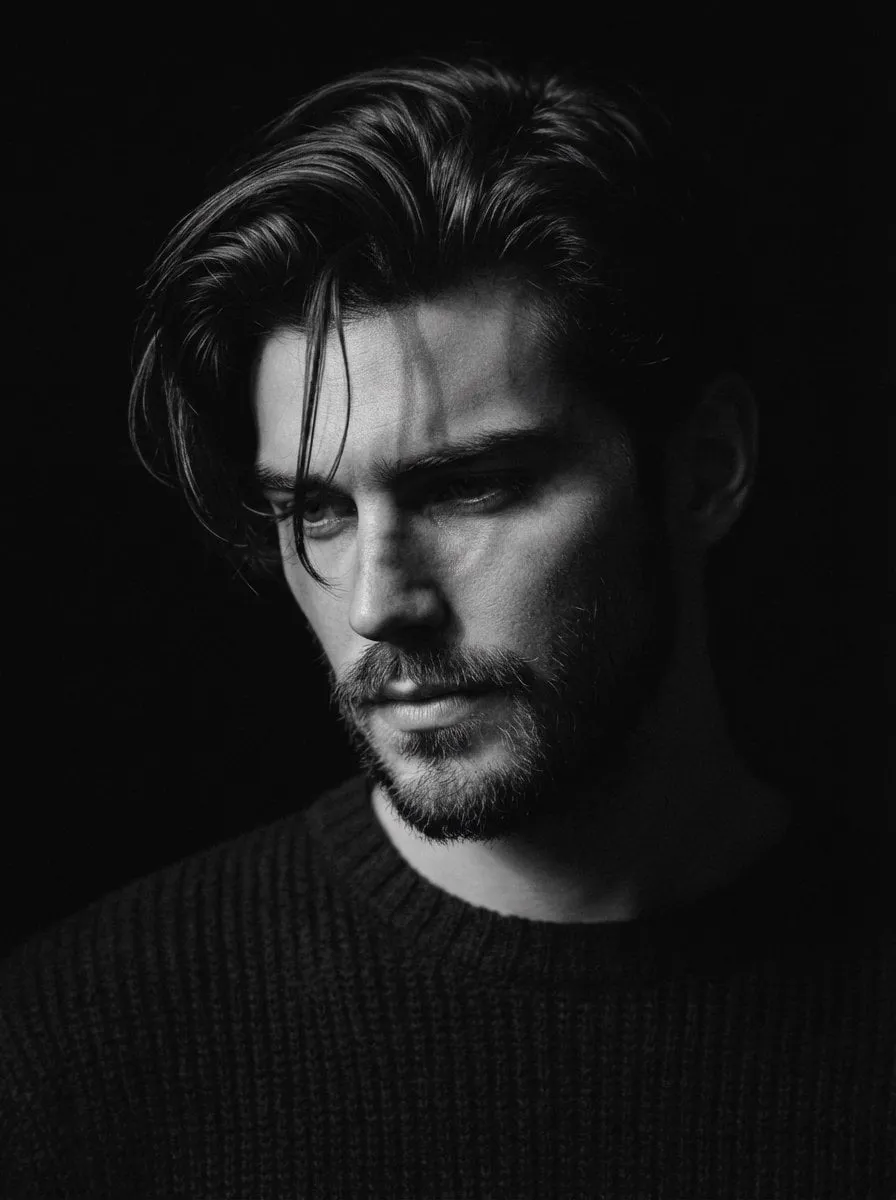
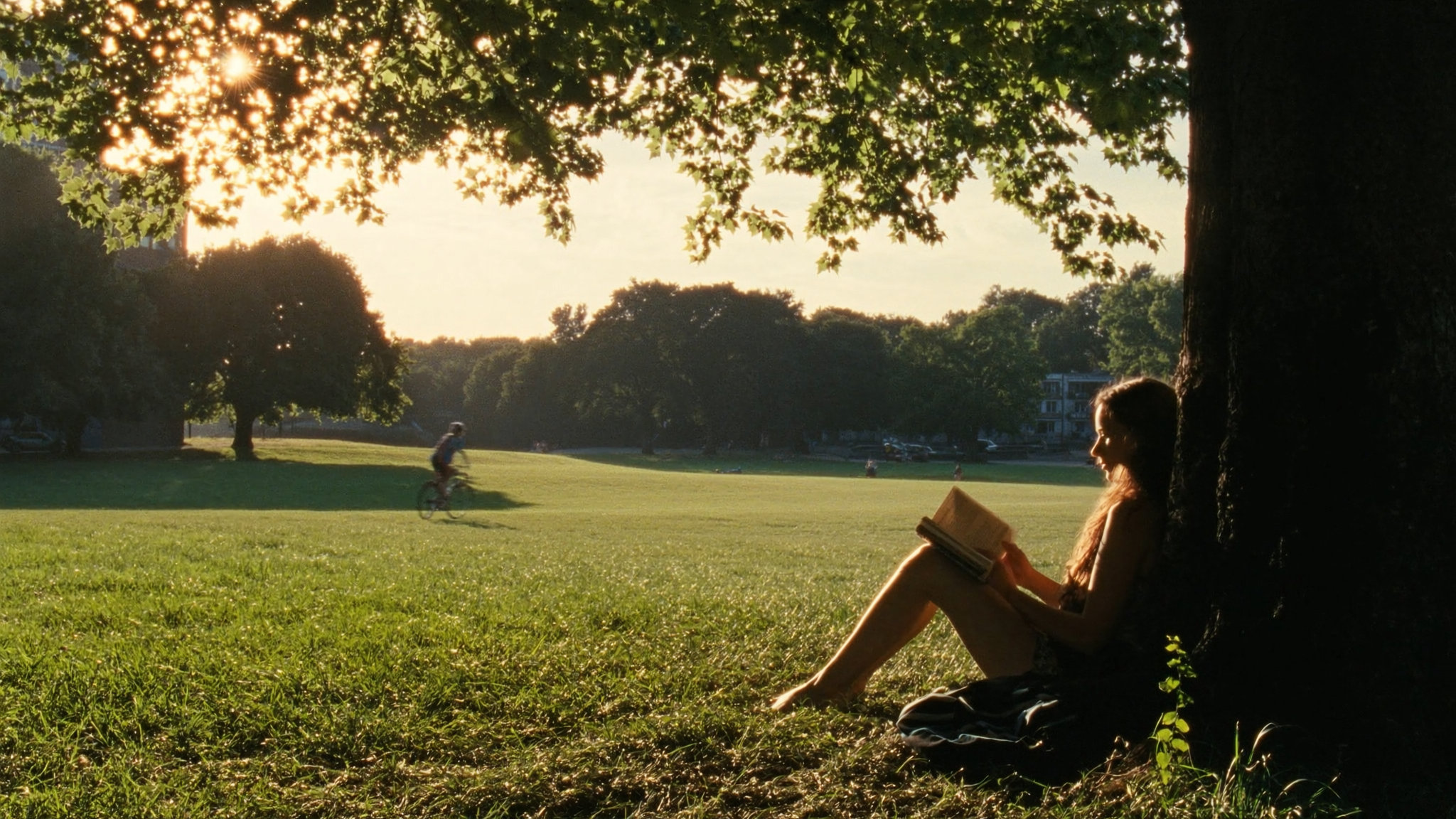
Character consistency is the hardest problem in AI video generation. You can write a beautiful prompt, get a stunning shot, and then watch the character's face change completely in the next scene. The hair is different, the jacket color shifts, the facial structure is subtly wrong. For anyone making narratives, ads, or series content, this is a dealbreaker.
Multi-image fusion has emerged as the most practical answer. Instead of asking the model to invent a character from text alone, you feed it several reference images and let it lock onto a consistent identity. This guide explains how the technique works, which models support it, how to build a repeatable workflow, and what to do when consistency still fails.
Why Character Consistency Matters More Than Raw Quality
A single beautiful frame is easy to produce in 2026. A coherent story is not. The moment your audience notices that the protagonist looks different from one shot to the next, the illusion collapses. The video stops feeling like a film and starts feeling like a slideshow of unrelated images.
This matters across every use case:
- Narrative short films depend on the audience believing the same person is on screen across scenes.
- Brand content needs the same spokesperson or mascot to appear in multiple videos over months.
- Advertising requires a product or presenter to stay identical across different camera angles and lighting setups.
- Game and animation pipelines need characters to match concept art consistently.
- Personalized content, from avatars to children's book illustrations, fails completely when identity drifts.
Raw image quality gets you attention for one second. Character consistency is what earns trust for the whole video. That is why multi-image fusion moved from a niche feature to a baseline expectation in serious AI video work.
What Multi-Image Fusion Actually Means
Multi-image fusion is the process of combining several separate images into a single, coherent identity that a generative model can reuse. In video production, this means providing multiple input images of the same character — different angles, different outfits, different lighting — so the model builds a strong internal representation of who that character is.
The key idea is the identity vector. Instead of describing a character in words ("a young woman with brown hair and a green jacket"), the model learns a compact representation of the character from the reference images. That representation travels with the character across scenes, keeping appearance stable even when the pose, camera, and environment change.
Think of it as showing a casting director three photos of an actor: a headshot, a full-body shot, and a candid shot. The director now knows how that actor looks well enough to cast them in any scene. Text alone would leave too much open to interpretation.
How Multi-Image Fusion Works Under the Hood
Understanding the mechanism helps you use it better. Most fusion pipelines follow the same broad pattern.
Encoding multiple references
Each input image is passed through an encoder that converts it into a high-dimensional representation. These representations capture not just pixel colors but semantic details: facial structure, clothing, proportions, lighting behavior on skin, and texture.
The quality of this step depends heavily on the input images. Consistent, well-lit references with varied angles produce a much stronger identity than five blurry screenshots from the same video.
Building the identity representation
The encoded references are merged into a single identity representation. Models differ in how they do this. Some average or weight the encodings. Others learn a separate identity embedding that is optimized to reproduce all the reference images. The stronger the fusion mechanism, the more reliably the identity survives in motion.
Conditioning generation
When you generate a new scene, the model uses the identity representation as conditioning alongside your text prompt. The prompt controls what happens in the scene; the identity representation controls who is in it.
This is why fusion-based workflows beat pure prompt engineering. A prompt can describe a character, but it cannot remember one. Fusion gives the model a persistent memory of the character across every generation.
Reference frames during generation
Some advanced workflows go further and use reference frames — explicit images of the character in the correct pose or environment — to guide each shot. This is especially useful for maintaining spatial consistency: the character stands in the same spot, faces the same direction, and wears the same outfit as in the reference.
The Model Landscape: What Is Available Now
The good news is that multi-image support is no longer rare. Several major video generation families handle it, though with different strengths.
High-fidelity cinematic models
The most capable models for photorealistic characters are the ones built on large diffusion architectures. Runway Gen-4 was one of the first to make multi-image reference a headline feature, and its consistency across scenes is genuinely impressive. OpenAI's Sora series pushed temporal fidelity further, and newer versions handle character stability much better than the original release.
These models are the right choice when quality is the priority and you have time to iterate. They are also the most demanding on compute and budget, so cost-conscious creators should reserve them for hero shots.
Fast and accessible models
Models like Kling AI, Luma Ray 2, and Pika 2.2 all support image references, including multiple images in some cases. They trade some fidelity for speed and lower cost. For social media content, short ads, and rapid iteration, they are often the better choice.
Luma Ray 2 is particularly strong on motion quality, while Pika 2.2 excels at playful and stylized content. Kling's series is notable for handling Asian and regional aesthetics well, which matters if your audience is outside the West.
Regional and specialized models
Tencent and Alibaba have both shipped video models with strong character control features. These are worth evaluating seriously, especially if you need culturally specific characters, clothing, or settings. The assumption that Western labs are always ahead no longer holds.
The practical takeaway: do not commit to one model. Build your workflow so the reference images and prompts are model-agnostic. Then you can swap the engine per shot based on what each model does best.
A Practical Workflow for Keeping a Character Consistent
Here is a workflow that works across models. It is built around the idea that consistency is decided before generation, not after.
Step 1: Build a character reference sheet
Before generating anything, create a reference sheet with at least four images of the character:
- A front-facing headshot with neutral expression
- A three-quarter view showing facial structure
- A full-body shot showing outfit and proportions
- An action or candid shot showing the character in motion
Generate these with an image model first. The better the reference sheet, the better every subsequent video. Spend real time here; it pays off across every scene you will make.
Step 2: Write scene prompts around the references
Your text prompt should describe the scene, the action, and the camera, not the character's appearance. The references handle appearance. A prompt like "the character walks through a rainy market, camera follows from behind" works far better than re-describing the character in every shot.
Step 3: Generate a still frame first
Before committing to a full video, generate a still image of the character in the target scene using the same references. This catches costume, lighting, and identity problems cheaply. Only when the still looks right should you animate it.
Step 4: Use image-to-video for scene control
Image-to-video is your friend. Generate or render a keyframe of the character in the exact pose and setting you need, then animate from it. This gives you far more control than text-to-video alone, and it anchors the character in space and time.
Step 5: Keep a shot log
Track which references and prompts produced which shots. When you need to match a later scene, you can reproduce the exact conditions instead of guessing. This is the single most underrated practice in AI video production.
Prompting and Reference Strategy That Actually Works
Your reference images do most of the heavy lifting, but prompt quality still matters. A few patterns consistently improve results.
Be specific about the scene, not the identity. Describe lighting, time of day, weather, camera movement, and emotion. "Golden hour light, slight wind, character looks worried" tells the model useful things that references cannot.
Use negative space carefully. If a model supports negative prompts, use them to block the most common failure modes: extra limbs, distorted hands, background characters, duplicate faces. Update the negative prompt list every time you see a repeated artifact.
Match outfit continuity. If the character changes clothes between scenes, provide a separate reference set for each outfit. Trying to push an outfit change through text alone is a reliable way to break consistency.
Keep faces small in wide shots. Consistency errors are most visible in close-ups, but wide shots with tiny faces also drift. If a wide shot matters to your story, generate a close-up first, then use image-to-video to pull back.
Troubleshooting Common Consistency Failures
Even with a good workflow, things go wrong. Here is how to diagnose and fix the most common failures.
The face changes between scenes
Cause: the references did not contain enough facial variation, or the model weighed one image too heavily.
Fix: add more angles to the reference sheet, especially side and three-quarter views. Regenerate the identity embedding if your tool allows it. If the model supports multiple reference slots, use all of them instead of one dominant image.
The outfit drifts mid-video
Cause: the prompt described clothing changes, or the scene prompt conflicted with the references.
Fix: remove clothing descriptions from scene prompts. Keep a strict outfit reference set. If the character must change clothes, generate the new outfit as a separate still and start a new reference chain from it.
The character's proportions shift
Cause: different reference images show very different body framing, confusing the encoder.
Fix: normalize the reference sheet so faces are roughly the same size and the character is centered. Remove extreme low-angle or high-angle shots from the reference set.
Motion looks unnatural even though the character is consistent
Cause: the model prioritized identity over motion quality.
Fix: switch to a model known for motion, generate motion with a lower-fidelity pass first, or use a separate motion pass on an already-consistent still.
The character interacts with objects inconsistently
Cause: no reference frames anchor the interaction.
Fix: generate reference frames showing the character in the interaction pose, then animate from them. This is where image-to-video workflows outperform text-to-video dramatically.
When to Consider Custom Models
Multi-image fusion works well for many projects, but there are limits. If you are producing a long series with the same characters week after week, the per-scene fusion approach becomes expensive and fragile.
In that case, a custom fine-tuned model is worth the investment. Training a small model on a character's reference set bakes the identity into the weights themselves. Every generation is consistent by construction, and you stop paying the fusion tax on every scene.
The trade-off is training time, data preparation, and the need to retrain when the character changes significantly. For professional pipelines, many teams now run a hybrid: a fine-tuned base for the main characters, multi-image fusion for one-off guests and variations.
FAQ
Q1. How many reference images do I need for good consistency?
Four to six well-chosen images beat twenty random ones. Prioritize angle variety, consistent lighting, and clear faces over quantity.
Q2. Can I mix text-to-video and image-to-video in one project?
Yes, and you often should. Use text-to-video for establishing shots and environments, image-to-video for anything involving the character.
Q3. Why does my character change when the lighting changes?
Models sometimes interpret strong lighting changes as identity changes. Keep one reference image in the same lighting style as your target scene, or add a lighting-matched still as a reference frame.
Q4. Do I need different references for different outfits?
Yes. Treat each outfit as a separate identity variant. Trying to change clothes through prompts is the fastest way to break consistency.
Q5. What is the biggest mistake beginners make with multi-image fusion?
Relying on text to describe the character and using references only as an afterthought. The references are the identity. The prompt is only the scene.
Q6. How do I keep a character consistent across different AI tools?
Keep a master reference sheet and a shot log outside any single tool. As long as you feed the same references into each model, the identity has a chance to survive the transfer.
Final Thoughts
Multi-image fusion did not make AI video easy. It made AI video controllable. The difference is huge: instead of hoping the model remembers your character, you hand it a photograph album and ask it to keep the same person on screen.
The practical path forward is clear. Build a reference sheet before you write a single scene prompt. Generate stills before videos. Log every shot that works. And keep your workflow model-agnostic so you can ride the wave of model improvements without rebuilding everything.
Character consistency is not a technical novelty anymore. It is the standard that separates disposable AI clips from stories people actually want to watch.
