
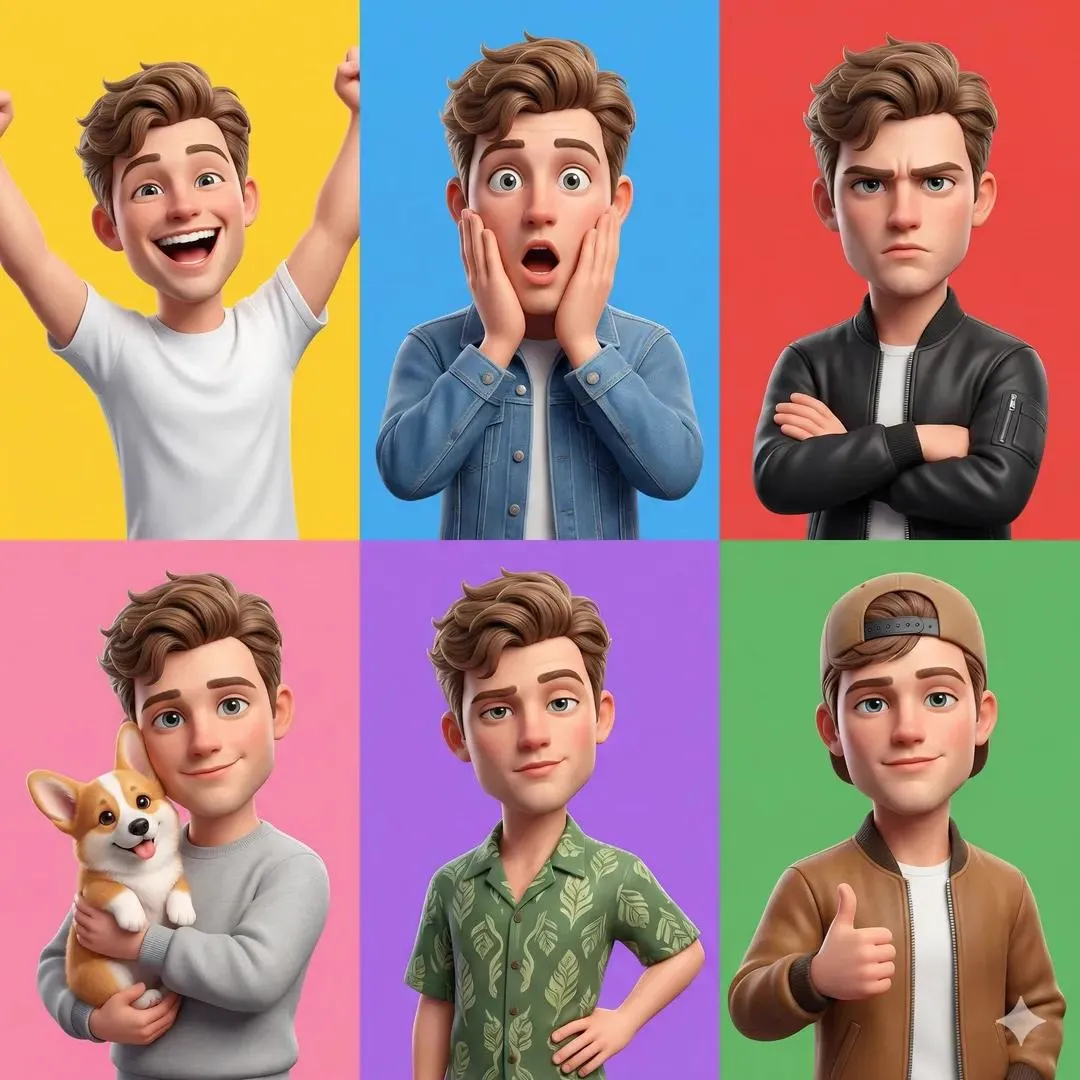
The most common disappointment in AI video production is not bad quality, it is broken continuity. A creator generates a stunning protagonist in the first scene, only to watch the character morph into a stranger by scene three. The prompt was identical, the quality was identical, and yet the face drifted, the costume changed, the identity dissolved. This is the consistency problem, and it has been the single biggest obstacle between AI video and professional storytelling. Multi-image fusion is the technique that finally solves it. Instead of trusting words to define a character, you feed the system several reference images that anchor the identity, and every generation inherits that anchor. This guide explains how the technique works under the hood and how to apply it from your first prompt to a finished multi-scene production.
Why Words Are Not Enough
Text prompts describe a character through language, and language is ambiguous. The phrase "a confident detective in her forties" conjures a different face in every viewer's mind, and, more importantly, a different face in every model generation. Each generation samples from a probability distribution, so even with a perfectly written prompt, the model produces a slightly new interpretation every time. In a single clip, that is fine. Across a narrative, it is fatal.
Reference images remove the ambiguity. A picture of the character shows the model exactly what the face, the hair, the costume, and the posture should be. The problem is that a single picture is also limited: it shows one angle, one expression, one lighting setup. Push the character into a dramatic side angle or a new costume and the model starts guessing again. Multi-image fusion solves the limitation by combining several pictures into a stable identity that survives changes in angle, light, and context.
How Multi-Image Fusion Works
Behind the simple interface of uploading images lies a sophisticated process. Understanding it helps you use the technique deliberately instead of as a black box.
Building the Identity Vector
Each reference image is encoded into a compact mathematical representation. The fusion process then analyzes the set of images together, identifying which features are consistent across all of them: the shape of the jaw, the color of the eyes, the way the hair falls. These stable features form the identity vector, a dense representation that captures the essence of the character while ignoring the accidental differences between images. The vector is the character, in mathematical form.
Conditioning Generation with the Vector
When you generate a scene, the model receives both your text prompt and the identity vector. The vector acts as a constraint: whatever the text asks for, the visual output must stay consistent with the encoded identity. This is why a character can change location, lighting, and action without changing appearance. The text controls the story; the vector controls the identity.
Reaching 360-Degree Consistency
The more diverse your reference set, the more complete the identity. A front view, a profile, and a three-quarter view teach the system the structure of the face from multiple directions. A full-body shot teaches proportions and costume. The result is a character that remains recognizable even when the scene calls for an angle none of the references shows directly. True consistency is not about matching one image; it is about the model understanding the character well enough to render it from any perspective.
Think of references as the character's passport. They are the documentation that every border, every model, every scene will check. Just as a passport needs to be clear, current, and consistent, your reference set needs sharp images, up-to-date details, and no contradictions between them.
Choosing References That Work
Your references determine your ceiling. A weak reference set produces an unstable identity no matter how advanced the fusion algorithm.
The Ideal Reference Set
Aim for three to five images that agree with each other and cover different angles. Include at least one close-up for facial detail, one profile for structure, and one full or three-quarter body shot for costume and proportions. If the character has distinctive features, make sure they appear clearly in at least two images. Check the images together as a set: if the hair color differs between two photos, the fusion has to resolve a contradiction, and the identity will wobble.
Quality Rules
Use sharp, high-resolution images with even lighting. Avoid heavy filters, extreme expressions, and props that obscure the face. Keep the background simple or remove it if the tool allows, so the system focuses on the character. Remember that the reference set is the source of truth for the entire project, so the ten minutes spent perfecting it are the most valuable minutes of the production.
One distinction is worth making before the workflow: consistency and fidelity are not the same goal. Fidelity means matching the reference exactly; consistency means the character remains recognizable and stable across scenes. For storytelling, consistency is the target. A character can shift slightly in style between scenes, as long as the audience always knows who they are watching.
The Production Workflow
Multi-image fusion changes your workflow in a specific way: identity work moves to the front. Everything else follows a clear sequence.
Step 1: Establish the Source Character
Create or collect the reference images and give the character a name and a short written profile. The profile describes what the images show: age, build, costume, visual personality. Save this profile as the single source of truth for the project. Every scene, every model, and every collaborator should reference this profile and no other.
Step 2: Run an Identity Test
Generate a test scene that the references do not show directly, for example the character from behind or in silhouette. Compare the result against the reference set. If the identity holds, you are ready. If it drifts, fix the references now. This test is cheap and it protects the entire production from expensive rework.
Step 3: Generate Scenes in Story Order
Produce scenes in the order the audience will see them. In each prompt, describe what is new: the location, the action, the camera, the light. Let the identity vector handle the character; do not rewrite the visual description of the character in the text, because conflicting descriptions confuse the model. Story-order production keeps continuity manageable because every new scene can build on what the previous scenes established.
Step 4: Verify and Refine
Review each scene against the identity. Watch for small drifts: the shape of the nose, the color of the costume, the way the hair parts. If a detail drifts, check whether the reference set shows it clearly. Usually the fix is a better reference or a small prompt adjustment, not a new identity. Never change the identity mid-project, because every completed scene would become invalid.
Consistency Across Different Models
Real productions rarely use a single model. Cost, speed, and style requirements push creators to switch engines between scenes. Every model interprets color and light differently, which makes cross-model consistency the hardest part of the job.
The identity vector is your bridge. Apply the same vector in every model and standardize everything else: style keywords, color palette, lighting descriptions. Before committing to a new model, run the identity test on that model. If the drift is unacceptable, route the scene to a model that has already proven faithful to the identity. Consistency is a pipeline decision, not a single-generation decision.
The identity vector is also the key to collaboration. When a team works on the same production, the vector is a shared source of truth: every artist, every model, and every scene refers to the same encoded identity, so the final assembly does not depend on individual interpretation. This turns character consistency from a personal discipline into a team protocol.
Beyond Consistency: The Creative Payoff
Multi-image fusion does more than fix a technical problem. It unlocks creative possibilities that were previously impossible.
Serialized Storytelling
With a stable identity, characters can appear across episodes, campaigns, and franchises. Audiences recognize the protagonist, and the accumulated emotional investment carries from one release to the next. For creators building a series, consistency is the difference between a collection of videos and a world.
Reduced Rework and Production Time
The economics are simple: consistent characters mean fewer rejected generations, fewer reshoots, and less manual fixing in post-production. The identity test at the start of the project costs minutes and saves hours. Teams that lock identity early consistently deliver faster and with higher quality.
Creative Freedom Without Physical Limits
The same technique that keeps a character consistent can also place that character anywhere: impossible locations, historical settings, fantasy worlds, even style shifts from photoreal to animated. The anchor of identity gives you freedom of scene because the audience always knows who they are watching.
Fusion Meets Automated Direction
The identity vector becomes even more powerful when it is managed by an automated direction layer. Instead of manually re-attaching references in every prompt, you define the character once in a central profile, and the direction layer carries the identity into every scene it plans. The director layer also handles the narrative side: it breaks your story into beats, proposes shots and camera moves, and keeps style keywords consistent across models. Fusion and direction complement each other perfectly. Fusion answers the question of who appears on screen; direction answers the question of what happens and how the audience should feel. Together they remove the two most tedious parts of AI production, identity management and prompt writing, leaving the creator with the two most valuable parts, story and taste.
Common Pitfalls
Inconsistent reference sets. Images that contradict each other produce a muddled identity. Treat the set as one source of truth and review it before starting.
Changing identity mid-project. The urge to improve the reference after seeing the first scene is strong. Resist it. Changes invalidate completed work; refine before production, not during.
Re-describing the character in prompts. Repeating visual details in text conflicts with the vector. Text should describe the scene, not re-define the character.
Skipping the identity test. It feels like a delay, but it is the cheapest insurance in the workflow. A ten-minute test can save days.
Ignoring cross-model drift. Switching models without testing creates inconsistency that shows up halfway through the edit. Test every model you plan to use.
Do I need fusion if I only make single-scene videos?
For a single clip, a single reference image is usually enough. Fusion pays off as soon as a character appears in multiple scenes, across models, or in serialized content.
What is the difference between fusion and simple image prompting?
Simple prompting sends one image as a hint; the model may or may not honor it. Fusion encodes multiple references into a stable identity vector that constrains every generation, which makes the character far more reliable across angles and lighting.
Frequently Asked Questions
How many reference images do I need?
Three to five well-chosen images are usually enough. Quality and angle diversity matter more than quantity.
Can I use photos of real people?
Check the policies of your tools and the laws in your jurisdiction. For original characters, create or generate your own references to stay safe.
Does multi-image fusion work for objects and creatures?
Yes. The technique applies to any visual subject: vehicles, animals, monsters, locations. Multiple references create a stable identity for anything.
What if the character still drifts between scenes?
Return to the identity test, review the reference set for contradictions, and check whether prompts are introducing conflicting visual descriptions. One of those three is almost always the culprit.
Is this technique worth it for short single-scene videos?
For a single clip, a single reference image is usually enough. Fusion earns its keep as soon as the character appears in multiple scenes or across models.
Conclusion
From prompt to masterpiece, the path runs through identity. Multi-image fusion replaces the lottery of text-only generation with a deliberate, controllable process: encode the character once, anchor every scene to that identity, and spend your creative energy on the story rather than on rescuing a drifting face.
Start small. Build a solid reference set for one character, run the identity test, and produce a three-scene sequence. Review the result with an honest eye, refine the references, and repeat. As the technique becomes second nature, the horizon expands: serialized stories, cross-model pipelines, and characters that audiences recognize across an entire body of work. That is the real promise of multi-image fusion, not just consistent pixels, but consistent worlds.
