
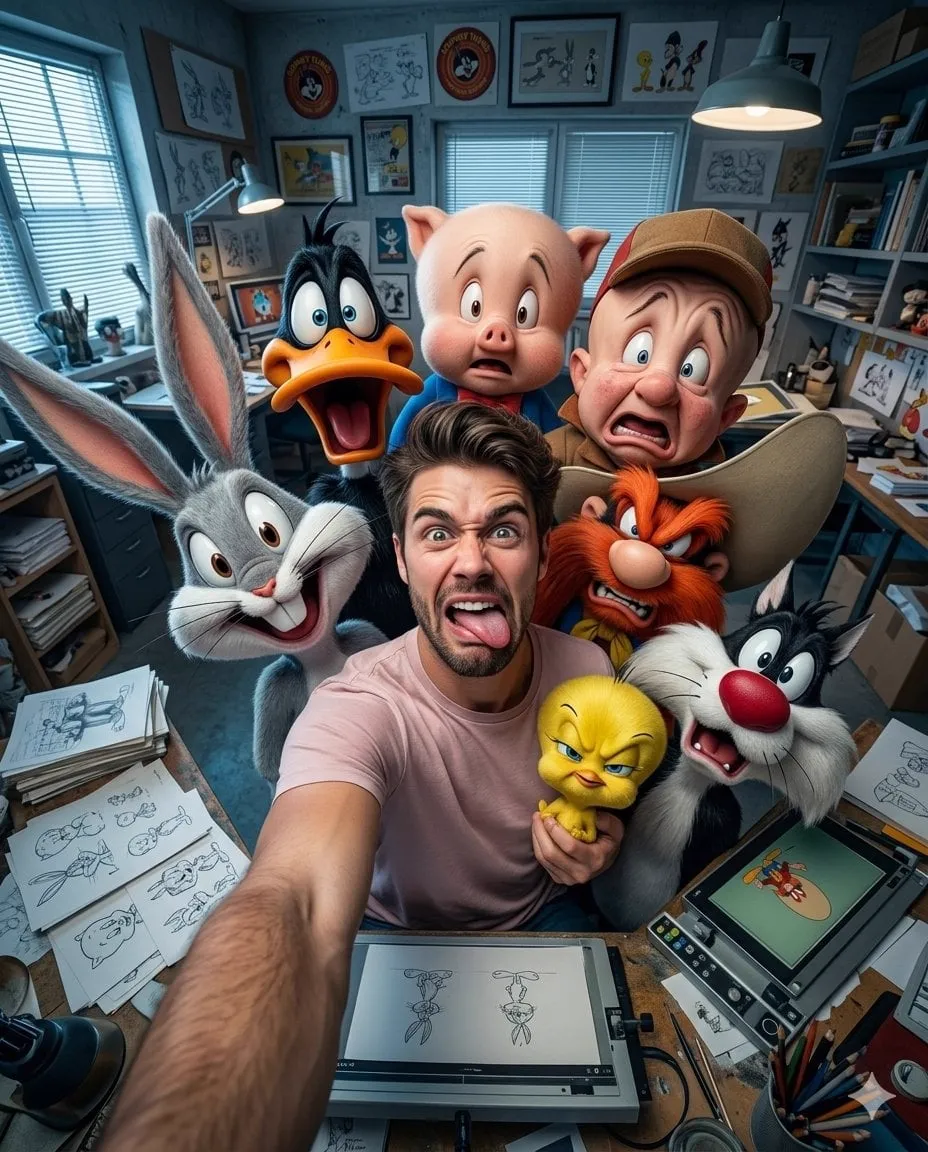
Every AI video creator eventually hits the same wall: the first shot looks great, the second shot looks similar, and the third shot looks like a different movie. Character faces drift, costumes change color, lighting shifts for no reason. The technical term is visual drift, and it is the single biggest obstacle between generating clips and producing a coherent video.
Multi-image fusion is one of the most effective answers to that problem. Instead of describing a character with words and hoping the model keeps it stable, you feed the model a small set of reference images and let it build a stable identity. This guide explains how the technique works, how to prepare reference sets, how to combine it with style control and keyframes, and how real projects use it to produce series, ads, and educational content that look consistent from start to finish.
The Continuity Problem in AI Video
Audiences are not forgiving about continuity. When a character's face changes between shots, viewers feel that something is wrong even if they cannot say exactly what. The same applies to style: a scene that shifts from painterly to photorealistic between cuts reads as broken, not creative.
The root cause is that text is a lossy description of a face. Words like "young woman with brown hair" leave enormous room for interpretation, and every generation samples a new interpretation. The model is not being sloppy; it is doing exactly what the prompt asked, but the prompt does not carry enough information to pin down an identity.
Reference images carry that missing information. A portrait, a profile, a full-body shot: together they define the character more precisely than any paragraph could. Multi-image fusion takes that idea further by combining several references into a single identity vector that can be applied across shots, scenes, and even different generator models.
How Multi-Image Fusion Works Under the Hood
When you upload a set of reference images, the system does not simply paste them together. It analyzes each image and maps the shared identity into a compressed representation, often described as latent space mapping. The result is a stable identity profile: facial structure, hair, skin tone, clothing, and other persistent features, separated from the pose and lighting of any single photo.
This separation matters. A reference photo has both identity and incidental detail: the shadow on the face, the angle of the head, the background. The fusion process learns to keep the identity and discard the incidental detail, so the generated video can place the character in new poses, new lighting, and new environments without dragging along the original photo's baggage.
The strength of the identity profile determines how well the character survives different model architectures. Models vary in how they interpret prompts and how they render motion, but a well-built identity vector carries the core features across those differences. That is why fusion is not just a convenience; it is the foundation of cross-model consistency.
Building a Reference Set: What to Upload and Why
Quality of output starts with quality of input. A good reference set is small, consistent, and complete. In practice, three to seven images is enough for most characters.
Start with a front-facing portrait with neutral expression and even lighting. This is the anchor: the image the model uses to lock facial structure. Add a side profile to capture the nose, jawline, and hair silhouette that a frontal view hides. Add a full-body shot so the costume and proportions are part of the identity. If the character appears in different outfits across the project, add one reference per outfit, or regenerate a new full-body reference when the outfit changes.
Keep the set consistent. Mixing heavily stylized images with photorealistic ones will confuse the fusion process. Use images that share the same art style and roughly the same lighting conditions. If you are working from a 3D model, render the reference set from the same character model in one pass, then use that set for the entire project.
Keeping Characters Consistent Across Scenes and Themes
Once the identity profile exists, the discipline shifts to usage. The most common cause of drift is not a bad reference set; it is abandoning the set halfway through the project.
Use the same reference set for every shot of the character, every scene, every episode. If you swap in a new set because a shot failed, the character will mutate and you will spend the rest of the project chasing the new face. When a shot fails, regenerate it with the same set and a better prompt, rather than changing the identity inputs.
Longer projects need documentation. Record which reference set belongs to which character, which style descriptors are in force, and which keyframes anchor each scene. A simple style sheet per project turns months of production into a repeatable process. When the team changes or the project resumes after a gap, the style sheet is what keeps the character intact.
Style Control and Multi-Form Image References
Characters are only half the continuity problem. Style drifts too: color palettes, rendering quality, and atmosphere can shift between shots even when the character stays stable.
Style references work the same way as character references. Provide one or more images that define the look you want: a color palette, a lighting mood, a texture language. The generator uses those images to keep the visual language consistent while the character reference keeps the identity consistent. Using both together is the difference between a video that looks generated and one that looks art-directed.
Multi-form references extend this idea to objects and environments. If a scene centers on a specific prop, a vehicle, or a location, include references for those elements too. The same latent-space logic applies: the system locks the object's persistent features and can then place it in new angles and actions.
Composing Scenes with an AI Director Agent
Fusion gives you stable raw material; an AI director agent helps you compose with it. Director-style tools take the narrative structure and scene requirements, then recommend or automate cinematography decisions: camera angle, shot size, movement, and scene composition.
The practical benefit is that scene composition stops being guesswork. Once your character identity is stable, the director layer can focus on staging: where the character stands in the frame, what the background shows, how the camera reveals the action. It separates the two hardest problems of AI filmmaking: keeping the character consistent, and making each shot feel intentional.
Use the director layer as a reviewer too. Let it propose a composition for each beat, compare it against your story intent, and only generate the shots that actually serve the scene. This keeps the production moving instead of generating endlessly and hoping something fits.
Managing Model Diversity and Resources
Fusion-based production often spans multiple generator models, because different models handle different shots better. The challenge is that identity must survive the switch. A well-built identity vector is the bridge: it is model-agnostic by design, so the same character can be generated by a prompt-precise model for one shot and a physically realistic model for the next.
Resource management matters as much as model choice. Complex fusion jobs cost more in compute and time, so budget your attempts. Reserve the heavy jobs for hero shots: the first appearance of a character, a dramatic close-up, a transition that must be flawless. Use lighter configurations for filler shots where small imperfections are invisible.
Set a review rhythm. Generate in batches, review the whole batch against the style sheet, and fix problems at the batch level instead of shot by shot. This catches consistency problems early, when they are cheap to fix, rather than after you have generated thirty shots in a drifting style.
Case Studies: Ads, Education, and Product Demos
Case Study: A Fashion Brand Ad Series
A fashion brand needed a series of short ads featuring the same model across five different campaigns: urban night, beach day, studio minimalism, desert sunset, and an abstract neon set. Each campaign had a different color palette and mood, but the model's face, hair, and body had to remain identical.
The team built one reference set from a single professional shoot: frontal portrait, two profiles, and three full-body shots in different outfits. They generated a separate style reference for each campaign. Every ad used the same character set and its own style set, with keyframes locking the start and end frames of each shot.
The result was a campaign series where the model was unmistakably the same person across wildly different settings. The style references kept each campaign visually distinct, while the character references kept the identity stable. Production time was measured in days instead of the weeks a traditional shoot with location changes would have required.
Educational Content and Product Demos
Educational videos and product demos have a different continuity need: the presenter, the product, and the environment must stay consistent across many short clips. Multi-image fusion handles this elegantly.
For a course series, build a reference set for the presenter and a separate set for the product. Every lesson video pulls from the same sets, so the presenter looks the same in lesson one and lesson forty. The environment can be locked with a style reference, giving the whole series a cohesive look without reshooting.
Product demos benefit from the same approach at the micro level. A single product rendered from multiple angles in multiple contexts needs a product reference set to keep the design details exact: logo placement, color, material finish. This is especially valuable for e-commerce content, where a product that changes appearance between shots loses buyer trust.
Troubleshooting Common Fusion Failures
When fusion output drifts, the cause is almost always one of four things, and each has a specific fix.
The face changes between shots. This usually means the reference set is inconsistent: the images were shot in different lighting or the face angles are too scattered. Rebuild the set from a single shoot with even lighting, and make sure the frontal portrait is the anchor for every generation.
The style changes even though the character is stable. You are likely missing a style reference or your style descriptors changed between prompts. Lock a style reference image for the project and reuse the exact same style phrasing in every prompt.
The character looks right but the motion is wrong. This is a model capability issue, not a fusion issue. The current generator may not handle the pose or movement you asked for. Switch that shot to a different model, keeping the same identity vector, rather than weakening the reference set.
The character is stable in stills but mutates in long clips. Long generations accumulate small errors. Break the clip into shorter segments, lock keyframes at the start and end of each segment, and generate segment by segment instead of asking for one long take.
One more failure deserves attention: over-constraining. If you feed too many references or references that disagree with each other, the model can freeze into an average that looks like no one. When in doubt, fewer, consistent references beat a large pile of conflicting ones.
Practical Checklist for Your Next Project
Before you start generating, run through this checklist. First, build a reference set for every character: front portrait, side profile, full body, one image per outfit. Second, build a style reference for the project or per scene if the look changes. Third, document everything in a style sheet: reference paths, descriptors, keyframe anchors. Fourth, lock the reference sets and do not swap them mid-project. Fifth, batch your generation and review in waves. Sixth, budget extra attempts for hero shots. Seventh, use an AI director layer to plan composition before generating. Eighth, check every batch against the style sheet before moving to the next scene.
Consistency is not a lucky accident. It is the product of a deliberate pipeline: stable references, disciplined usage, and batch-level review. Multi-image fusion gives you the tool; the workflow is what turns it into reliable, repeatable video production. Once the pipeline is in place, the same character can carry a series, a campaign, or an entire course, and the audience will never notice the seam.
