
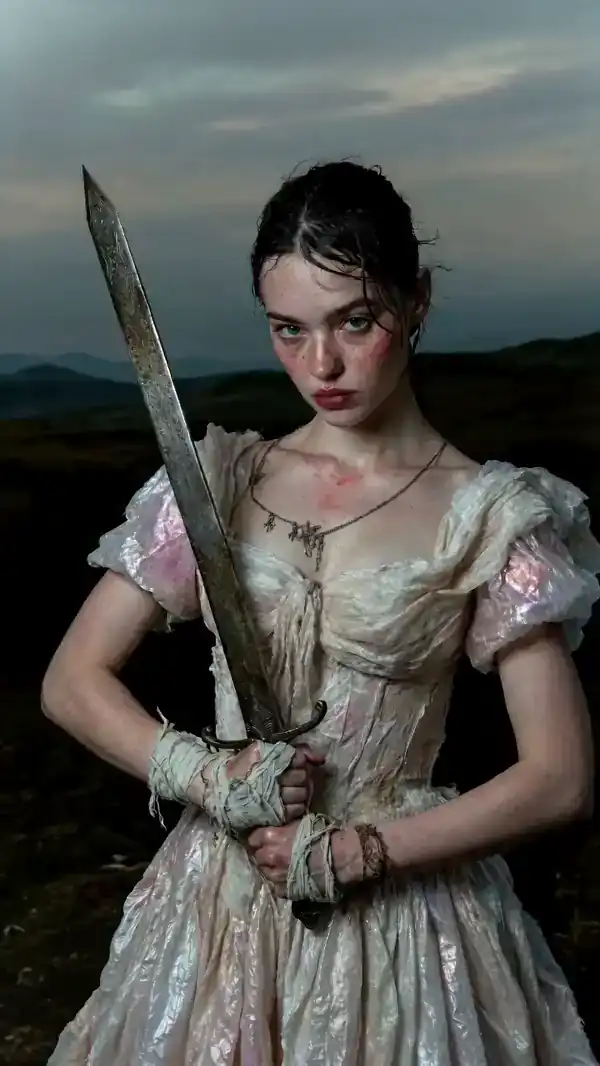
Ask any filmmaker who works with AI video tools what frustrates them most, and you will hear the same answer: consistency. The hero looks perfect in the establishing shot and unrecognizable in the close-up. The product changes color between scenes. The art style drifts from one frame to the next. It is the single biggest obstacle between AI video and professional use.
Multi-image fusion is one of the most promising answers to that problem. Instead of relying on a single reference or a text description, the technique feeds multiple reference images into the generation process and fuses their common features into a coherent result. This guide explains what multi-image fusion is, how it works under the hood, how to use it for character and style consistency, and where it still falls short.
The consistency problem nobody solved
Video is not a series of isolated images; it is a continuous experience. A character, a product, or a brand style must survive across scenes, angles, and lighting conditions. In traditional production, continuity is maintained by careful planning: the same actor, the same costume, the same color grading, the same art direction.
AI generation breaks that chain. Every generation is a new roll of the dice. The model reconstructs the subject from its training data plus your prompt, and unless something anchors it, the result drifts. Change the angle, change the lighting, change the camera distance, and the face changes with it. This is why AI-generated content so often looks impressive as individual shots and unconvincing as a sequence.
The industry has tried several fixes. Fixed seeds reduce drift but limit variation. Detailed prompts help but cannot carry a face. Single-image references work for one angle but degrade when the angle changes significantly. Multi-image fusion attacks the problem differently: it gives the model more evidence about what the subject actually is, so it has less room to improvise.
What multi-image fusion is
Multi-image fusion is a technique that combines information from several input images to guide generation toward a shared identity. You provide multiple views of the same character, the same product, or the same style, and the system extracts what they have in common: the facial structure, the proportions, the palette, the texture. That extracted identity then constrains the generated output.
The name comes from the core operation: fusing the visual information of the inputs into a single consistent representation. It is a step beyond simple reference images. A single reference gives the model one example to imitate; fusion gives it a set of examples that define the invariant features. When the inputs agree, the model knows what must stay the same. When they disagree, it learns what is allowed to vary.
In practice, this means you can generate a character from the front, the side, and a three-quarter angle, and then ask for a shot from a new angle with confidence that the face stays the same. You can feed a product photographed in different lighting and get a new scene where the product still looks like itself.
How fusion works under the hood
The technical core of multi-image fusion sits at the intersection of image processing and deep learning. The inputs are first encoded into embedding vectors: compact numerical representations that capture the visual content of each image. Fusion then combines these vectors, but the process is more sophisticated than simply averaging them.
The system has to decide which features are identity-bearing and which are incidental. Skin tone and face shape are identity; lighting and background are not. Modern fusion methods learn this distinction, weighing each input's contribution to the final representation. Some approaches operate in the latent space of the diffusion model itself, injecting the fused representation at every denoising step so the whole generation is anchored from the start.
The result is a generative constraint rather than a template. The model does not copy the input images; it uses them to know who or what it is drawing, and then draws freely within that identity. That is what makes the technique powerful: it preserves identity while allowing the new scene, motion, and camera work to be genuinely new.
Character consistency across scenes
The most common use of multi-image fusion is character consistency in narrative work. A film or a series needs the same character across dozens of shots, and fusion makes that practical.
Start by building a reference set. Gather or generate several views of the character: front, profile, three-quarter, and ideally different expressions and lighting. The set does not need to be large, but it needs to be consistent: the same hairstyle, the same facial features, the same proportions. If the references contradict each other, the fusion will inherit the contradiction.
Once the reference set is ready, generate all the shots for a scene in a single session, using the same fused identity. Check the outputs as a set, not one by one. A shot that looks fine alone can be the one that breaks the sequence. Regenerate mismatches with the same reference set until the whole scene holds together.
For long projects, re-verify identity at regular intervals. Models and settings can drift over long sessions, so keep a reference card on hand and spot-check new shots against it.
Style and brand consistency
Characters are not the only thing that needs to stay consistent. Brands, products, and art directions have identities too, and fusion applies to all of them.
For a product, feed multiple photos of the actual item: different angles, different lighting, on and off packaging. Fused, those photos define what the product looks like in the model's eyes. You can then place the product in new scenes — a lifestyle shot, an advertising background, a demonstration video — without the model inventing a different version of it.
For a brand style, the inputs are examples of the look: past campaigns, approved illustrations, reference images from the art direction. Fusion extracts the common visual language, and generation stays within it. This is especially useful for series content, where every episode or every ad must feel like the same brand.
The practical benefit is control. Instead of describing a style in words and hoping, you show the style in images and the system holds to it.
One more application worth knowing: environment consistency. Worlds need to stay recognizable as much as characters do. A city street, a spaceship interior, or a fantasy forest described in words will drift between scenes just like a face will. The same fusion workflow applies: collect reference views of the location, fuse them into an identity, and use it for every shot set in that place. For series content, this is what makes viewers feel that each episode happens in the same world rather than in a new approximation of it.
Practical workflows for film and ads
Let us look at two real workflows. In a short film production, the team needs the protagonist in twenty shots. They build a five-image reference set, define the style anchors, and generate each shot with the fused identity. Camera and lighting vary across shots, but the face holds. The director reviews the contact sheets as a sequence, flags the two shots where identity slipped, and regenerates them with the same references. The consistency pass takes hours instead of weeks of manual retouching.
In an advertising campaign, the brand needs the same product in a dozen variations: different backgrounds, different slogans, different formats for different platforms. The team feeds product photos from the shoot into fusion and generates all the variations in one session. Because the product identity is anchored, the set looks like one campaign rather than twelve experiments. The art director then selects the strongest frames and hands them to the finishing team.
Both workflows share the same structure: build the reference set, lock the identity, generate in batches, review as a sequence, and regenerate the outliers.
Fusion versus alternatives
How does multi-image fusion compare to the other consistency techniques? Prompt-only generation is the baseline: fast, but the least reliable, because the model reconstructs identity from words alone. Single-image references are a big improvement, but they anchor only what is visible in that one image; a dramatic angle change leaves the model guessing.
Fixed seeds and inpainting help in narrow cases. Seeds are useful for re-rolling the same shot, not for new scenes. Inpainting can fix a face in one frame, but it does not propagate identity across a sequence.
Multi-image fusion is currently the strongest option when you need identity to survive across many varied scenes. Its advantage is that it defines identity from evidence, not from a single example. Its cost is preparation: you must build a coherent reference set, and the fused identity is only as good as the inputs.
Limitations to know
Fusion is powerful but not magic. The most important limitation is input quality. If your reference images are inconsistent in features, lighting, or proportion, the fusion will average the inconsistency, and the output will wobble. Build the reference set with care, and regenerate it when a character's design changes.
The second limitation is range. Fusion anchors identity well within the territory the references cover. Ask for something far outside that territory — an extreme camera angle, a radically different age, a completely different wardrobe — and the identity can weaken. When you need the character in a very different state, add a reference that represents that state.
The third limitation is cost and iteration. Fusion systems are more expensive per generation than plain text-to-video, and you will still need selection and cleanup passes. Budget for the consistency pass the same way you budget for a color grade.
The fourth is evaluation. Because identity is subjective, automated checks catch only gross failures. You still need a human eye comparing the sequence as a whole.
There is also a creative limitation worth naming: fusion constrains, and constraints can become a habit. Once a character or a style is locked, it is easy to keep generating inside that box, and the work starts to repeat itself. The discipline is to treat the fused identity as the anchor, not the ceiling. Keep generating wild variations in separate experiments, and only bring the identity back when the shot must belong to the project. Consistency should protect your work, not sterilize it.
Getting started: a simple first project
The fastest way to understand fusion is to run a small, contained experiment. Pick a single character or a single product, and build a five-image reference set: front, three-quarter, profile, and two variations in lighting or expression. Keep the set consistent; this is the step where sloppy inputs cause the most trouble later.
Next, generate the same subject in three different scenes: a close-up, a wide shot, and a moving shot. Compare the results as a sequence. Ask three questions: Does the face or product hold its identity? Does the lighting stay believable across scenes? Would an audience notice the subject changing? Write down what slipped and adjust the reference set or the prompts accordingly.
Then scale up: extend the experiment to ten shots that include a change of location and a change of mood. This is where fusion proves its value, because it is exactly the situation where prompt-only generation falls apart. Once the ten-shot sequence holds together, you have a workflow you can trust for real projects. The experiment costs a few hours and a modest generation budget, and it teaches you more than any tutorial.
Frequently asked questions
How many reference images do I need? Five to ten well-chosen images is a good starting point for a character. More is not always better; consistency among the inputs matters more than quantity.
Can I use photos of a real person? Only with their permission and for legitimate purposes. Respect rights and platform policies, and be transparent about AI use where required.
Does fusion work for non-human subjects? Yes. Products, animals, vehicles, and environments can all be anchored the same way, as long as the reference set captures their defining features.
Why does my character still drift in some shots? Usually because the request moves beyond what the references define. Add references closer to the new state, or simplify the variation in the prompt.
Is multi-image fusion worth the extra cost? For single, one-off shots, probably not. For sequences, campaigns, or any project where identity must survive across scenes, it is usually the difference between amateur-looking and professional-looking output.
