
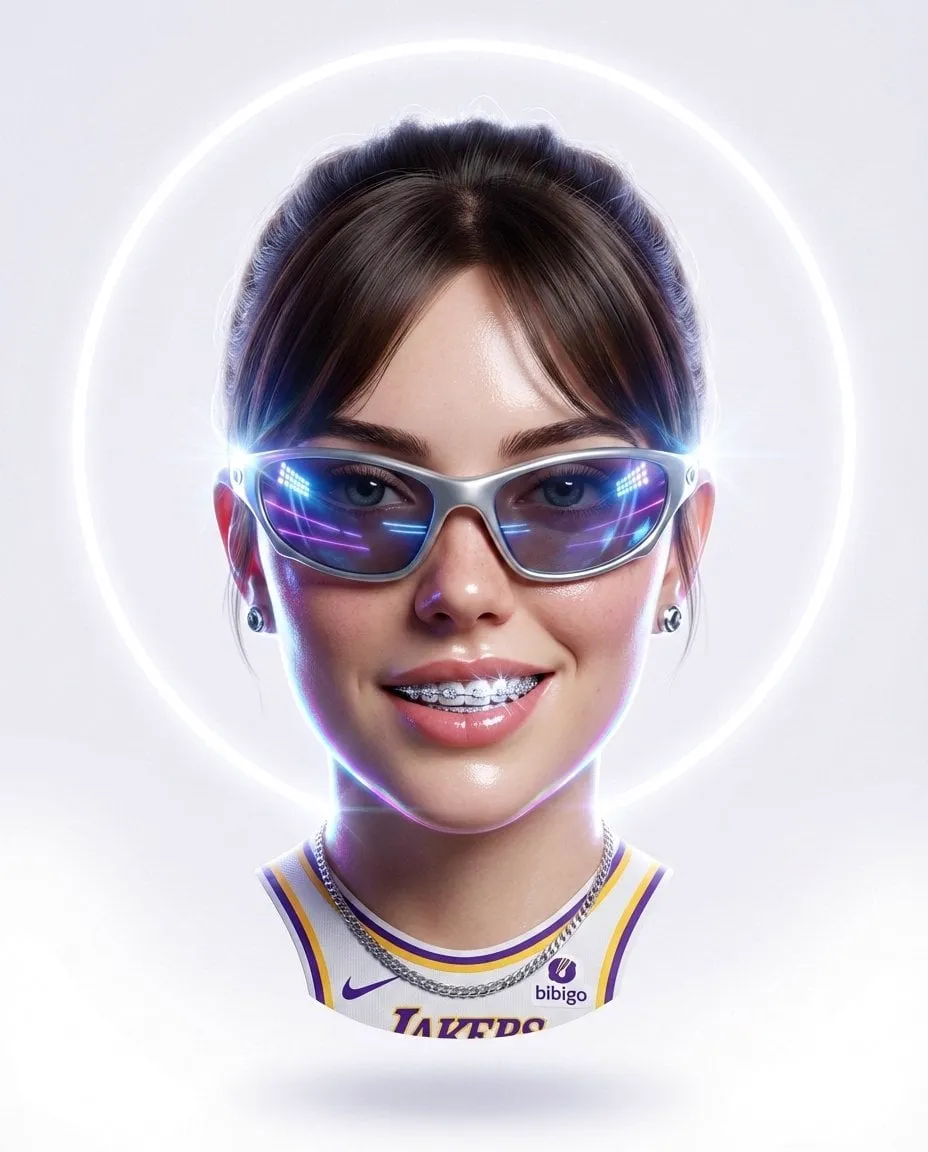
What Photorealism Means for AI Video
Photorealistic rendering used to be a specialty of high-end visual effects houses. Achieving light that behaves like real light, shadows that fall the way physics demands, and surfaces that read as actual materials took render farms and expert artists. Generative video changed the economics of that craft. Models now produce footage that looks like it was shot with a real camera, and the gap between generated and captured video is closing fast.
The reason this matters is not spectacle. Photorealism is a trust mechanism. When a product video looks like a real studio shoot, the audience believes the product exists and works. When a character looks like a real person, the story carries emotional weight. For brands, the ability to produce realistic-looking video without a shoot is a strategic advantage: faster iteration, lower cost, and the freedom to test visuals that would be expensive or impossible to capture.
The Dream Machine Moment: Natural Motion and Light
Luma's Dream Machine marked a turning point in the field, and its influence is still visible across the model landscape. What made it distinctive was not raw resolution; it was behavior. The model produced motion that respected the way real cameras and real physics work. Objects moved with plausible momentum, light interacted with surfaces in believable ways, and camera movements felt like an operator behind a lens rather than an algorithm interpolating frames.
This behavioral realism is the core of modern photorealism. A still frame can look photographic while the video around it feels wrong, because motion and light are where the eye detects fraud. The models that win the photorealism race are the ones that simulate lighting, shading, and reflection consistently over time, so that a moving light source produces a moving shadow, and a reflective surface behaves like a mirror at every frame.
For creators, the lesson is to judge output by motion first. A clip that holds a beautiful frame but moves unnaturally will never be usable. A clip with modest resolution and natural motion can pass as real footage in the right context.
Physics, Lighting, and Camera Work: What Makes a Render Feel Real
Three elements decide whether a generated clip feels real or synthetic:
- Physics: objects should accelerate, decelerate, and interact according to weight and momentum. Cloth should ripple, hair should move, water should splash. Modern models handle everyday physics well and still struggle with complex interactions, so plan scenes around what the physics will support.
- Lighting: the direction, quality, and color of light should be consistent within a scene and across scenes in a sequence. Hard light casts defined shadows; soft light diffuses them. Reflective surfaces should mirror their environment. Lighting consistency is the fastest way to make a sequence feel shot rather than generated.
- Camera work: real footage comes from real camera behavior. A handheld shot should have organic micro-movement; a drone shot should glide; a dolly shot should be smooth. Models that let you specify camera behavior, including lens characteristics and depth of field, give you the tools to sell the illusion.
The practical approach is to write these three elements into every prompt. Specify the light, the camera, and the physics of the action. When a clip fails the realism test, the failure is usually in one of these three systems, and that is where to fix it.
Building a Realistic Render Workflow
A workflow for producing photorealistic AI video that actually looks shot:
- Set the look with images first. Generate reference frames that establish the lighting, palette, and lens character before generating any video.
- Write camera-aware prompts. Include the shot type, the lens feel, and the movement in every generation.
- Use the model that matches the scene. High-fidelity models for hero shots, faster models for tests and transitions.
- Review motion, not frames. Watch every clip with the sound off and ask whether the motion is believable.
- Enforce lighting continuity. If the sun is on the left in scene one, it must be on the left in scene ten.
- Finish with a consistency pass: faces, materials, reflections, and shadows across the whole timeline.
This workflow treats photorealism as a system to be managed rather than a quality to be wished for. Every step reinforces the illusion, and no single step is responsible for the whole result.
Beyond the One-Off Clip: Consistency at Scale
A single photorealistic clip is impressive. A series of photorealistic clips that belong to the same world is a product. The jump from one to many is where the real value sits, and it is also where the difficulty lives.
The standard toolkit for consistency includes reference images for characters and props, environment signatures for locations, and style anchors for the overall look. Multi-image fusion techniques let you merge several reference views into a stable identity that the model respects across generations. When you generate a character against a reference set and an environment against a signature, the clips line up when cut together.
This is the difference between marketing footage and a brand film. Consistency is what lets a series of clips tell a story across episodes, what lets a product appear in multiple contexts without breaking the illusion, and what makes an audience recognize a world on sight.
The Infrastructure Behind Reliable AI Video
Reliable photorealistic production is not only a model problem; it is also an infrastructure problem. Generating high-quality video at scale means managing long-running jobs, allocating expensive compute sensibly, and storing assets so they can be reused. Platforms that handle this well share a few traits:
- A task queue that prioritizes work: hero shots get premium compute, tests get cheap compute, and nothing blocks the pipeline.
- Predictable storage: references, generations, and finished assets organized so they can be found and reused.
- Cost control: clear visibility into what each generation costs, so creative choices are made with the budget in mind.
- Graceful failure: when a job fails or produces unusable output, the system lets you retry the specific shot without restarting the project.
None of this is glamorous, but it is what separates tools you can build a production around from tools you can only experiment with.
Picking the Right Tool for the Job
The photorealistic model landscape offers real choices:
- For architectural and product realism, the Flux family's image strength makes it ideal for establishing frames and reference sets.
- For cinematic narrative with strong camera control, Runway Gen-4 is a dependable choice.
- For natural physics and complex motion, the Sora series sets a high bar.
- For fluid camera movement and lighting simulation, Luma's lineage remains strong.
- For fast, high-quality output, Kling and Hailuo are competitive options that iterate quickly.
The winning strategy is rarely one model. Use image models to lock the look, a premium video model for hero shots, and a fast model for exploration. The mix costs less and produces better results than forcing a single engine to do everything.
Common Failure Points and Fixes
- Plastic-looking skin: reduce the stylization in the prompt, specify natural skin texture, and use a model known for photographic fidelity.
- Wobbly or rubbery motion: simplify the action, specify the motion quality, and choose a model with strong temporal consistency.
- Inconsistent lighting across clips: enforce a lighting rule in every prompt and generate against the same environment signature.
- Overly clean, sterile frames: add real-world imperfection, dust, lens flare, slight grain, and organic framing.
- Reflections that do not match: check whether the model you are using handles mirror-like surfaces; some models are dramatically better at this than others.
Case Study: A Photorealistic Product Film in One Day
To make the workflow concrete, consider a twenty-second product film for a premium water bottle. The goal is footage that could sit beside real studio photography on a brand's site, so the realism bar is high.
The morning starts with the brief: hero shots of the bottle in three environments, a texture close-up, a pouring shot, and a lifestyle hand-held moment. The first generation pass is done in images. Six keyframes establish the bottle's exact appearance, the surface reflections, and the lighting plan. This is where the product identity is locked; any inconsistency here would multiply through every video clip.
The hero generation uses a premium video model for the pouring shot and the close-ups, where physics and material behavior will be scrutinized. A faster model handles the environment transitions and the fill shots. Every prompt includes the same lighting rule: a soft key from camera left, a cool rim from the right, subtle reflections on the brushed metal surface. This lighting rule is the environment signature, and it is what makes the clips match when cut together.
Two problems appear in the rough pass. The pouring water looks slightly rubbery, which breaks the realism, so that shot is regenerated with a simpler motion description and a model known for fluid physics. The close-up reflection is too clean, so a new prompt adds a studio backdrop with soft light panels to give the reflection something to show. Both fixes target specific systems: physics and reflection, not the whole image.
The afternoon is the edit and the sound pass: a low ambient room tone, a subtle whoosh on the pour, and a soft impact on the final product reveal. The consistency check runs over the finished sequence, comparing the bottle's proportions and the lighting direction frame by frame. The result is twenty seconds of footage that holds up in a real brand context, produced in one day by one person.
The lesson from the case is that photorealistic production is a debugging discipline. Every failure points to a specific system, physics, lighting, reflection, or camera behavior, and the fix is targeted. The workflow exists to make those failures cheap and fast to find.
The Realism Checklist
When a clip fails the realism test, work the checklist instead of guessing. Run the footage against these questions in order, because the answers build on each other:
- Is the motion physically plausible? Check weight, acceleration, and interaction. A falling object that floats or a cloth that ignores gravity fails here.
- Is the lighting consistent within the frame and across the sequence? Check the direction of shadows, the color temperature, and whether reflective surfaces mirror the right environment.
- Does the camera behave like a real lens? Check depth of field, focus pulls, and whether the movement has organic micro-motion.
- Are materials recognizable? Check whether skin, metal, glass, fabric, and water read as themselves rather than as generic textures.
- Does the frame hold up at small size? A photorealistic frame that only works at full resolution is still a failed product frame, because most audiences see it small.
- Is the imperfection present? Real footage has grain, slight flares, and organic asymmetry; sterile perfection is itself a tell.
The checklist turns realism from a feeling into a diagnosable system. Each item points at a specific generation parameter you can adjust, a different model to try, or a prompt change to make. When every item passes, the footage stops being judged as generated and starts being judged on its own merits, which is exactly where you want the audience's attention to be.
FAQ
Is photorealistic AI video suitable for advertising products?
Yes, and it is increasingly common. The key is consistency: the product must look identical across every shot, which reference-based generation handles well.
How do I avoid the "AI look"?
Focus on motion, lighting, and imperfection. Most synthetic-looking video fails on physics and over-cleanliness rather than resolution.
Can I generate footage of real people?
Models can generate realistic people, but using the likeness of specific real individuals requires their consent. Keep the output original and avoid mimicking real people without permission.
Do I need a professional video editor?
For single clips, no. For polished multi-shot productions, basic editing skills matter more than professional certification, especially with well-planned shot lists.
Will photorealistic AI replace stock footage?
It will increasingly compete with it. For bespoke needs that stock cannot cover, generated footage is often faster and cheaper, and it comes with the advantage of being unique to your brand.
