
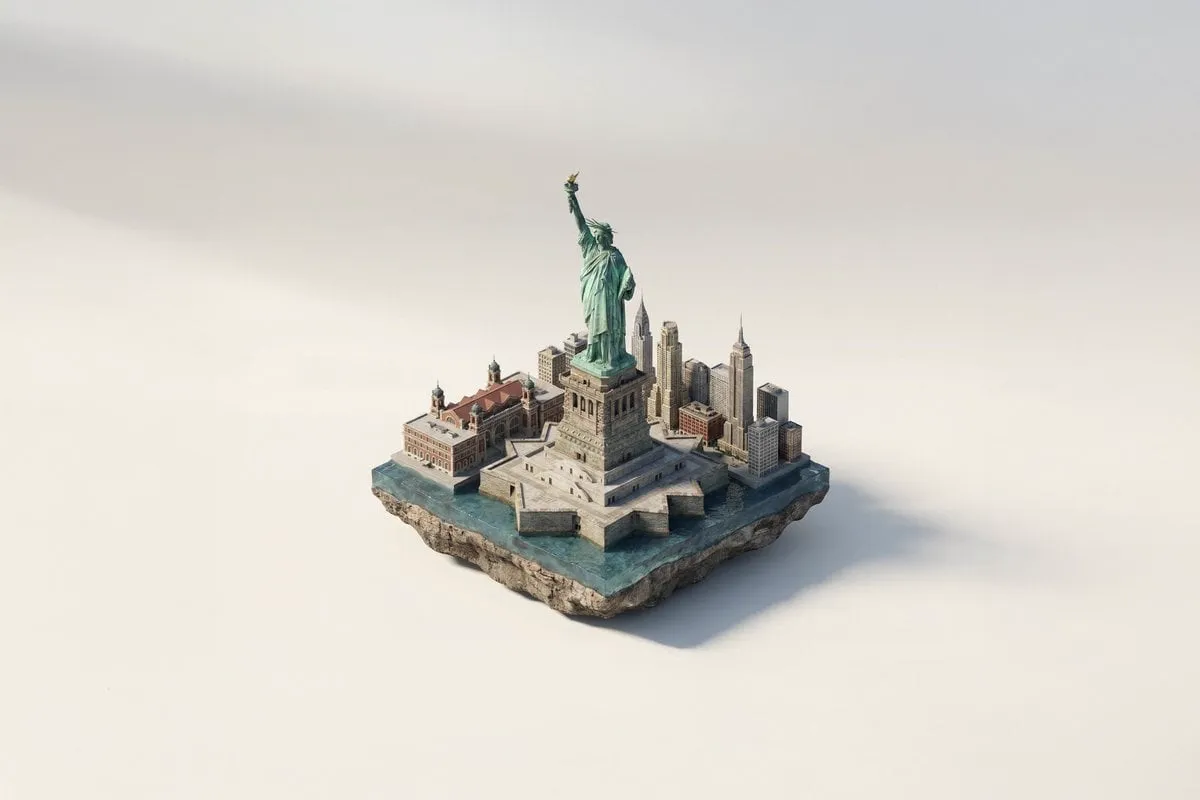


Every once in a while, a visual style appears that feels both new and immediately familiar. Pixel Lego is exactly that. It takes photos and video, breaks them into crisp block-like segments, and reassembles them into images that look like worlds built from giant toy bricks. It is not a filter you swipe on. It is a structured way of rebuilding an image — decomposition, stylization, and reassembly — and it solves problems that plain filters never touch. This guide explains how the style works, why the block structure matters, and how to build it into your own creative workflow.
What Pixel Lego Processing Actually Is
At its core, Pixel Lego processing is algorithmic reassembly of visual data. The image is first split into logical blocks — the sky, the building, the person, the road — and then each block is restyled as if it were a piece of a brick-built world. The result keeps the original composition and meaning while replacing the organic detail with clean, geometric forms.
That distinction matters. A standard pixelation effect just averages groups of pixels into larger squares. It is destructive: you lose information and gain nothing structural. Pixel Lego is the opposite. It identifies components, preserves their relationships, and restyles each one deliberately. The bricks become a design language, not an artifact of low resolution.
This is why the style works so well on recognizable subjects. A skyline, a sports arena, a portrait — anything with clear regions — survives the transformation with its identity intact. The viewer instantly reads what the image is, then delights in how it was rebuilt.
Why Block Decomposition Solves the Consistency Problem
The hardest problem in generative art is consistency. Generate ten images of the same scene and you will get ten interpretations. The problem gets worse with video, where every frame has to agree with the last. Pixel Lego sidesteps this by moving the creative decision from the model to the structure.
Once an image has been decomposed into a defined set of blocks, the style has a fixed skeleton. The sky block is always the sky block. The character block is always the character block. Instead of asking a model to reinvent the scene from text, you are asking it to fill in the surfaces of a layout you already defined. That constraint is not a limitation — it is the source of stability.
Think about what this means for a series. If you process a dozen photos with the same block rules, they come out looking like a family. The composition logic is shared, so the style is shared. For brands, game studios, and artists building a collection, that consistency is worth more than any single image.
The Segmentation Step: Breaking Footage into Blocks
Every Pixel Lego workflow starts with segmentation. The source frame — photo or video frame — passes through a module that identifies the logical and visual components: background, foreground, subject, lighting zones, and sometimes even material boundaries. Think of it as labeling every region of the image with its role.
Modern segmentation tools make this surprisingly automatic. Semantic segmentation models label regions by class (person, sky, building, vehicle), while instance segmentation goes further and separates individual objects. For more control, you can define the block layout yourself: draw the regions, name them, and decide how each one will be treated.
The quality of this step decides everything that follows. A clean segmentation produces clean bricks. A messy one produces noise that no amount of styling can hide. If you are doing this by hand, spend the extra minutes on edge cases — hair, glass reflections, fences — because those are the regions that usually come out wrong.
Rebuilding the Image: From Blocks to Final Style
With the structure defined, the restyle phase begins. Each block is transformed according to its role and the chosen aesthetic. Some workflows apply a consistent brick texture everywhere; others vary the block size by distance, giving the scene depth — large bricks in the foreground, smaller ones toward the horizon. Others let the subject stay relatively detailed while the environment becomes fully geometric.
The generation engine then fills in the details within each block's constraints. This is where generative AI earns its place: it can synthesize convincing brick textures, edge highlights, and depth cues that a naive filter would flatten. The prompt, in this workflow, describes the style rules rather than the content. The content is already locked by the segmentation.
This separation is the core insight of the whole technique. Prompting describes. Structure decides. When you combine a strong structural pass with a stylistic prompt, you get output that is both controllable and surprising in the right ways.
Bringing Pixel Lego to Video
Video is where the approach really pays off. A still image can be beautiful; a video has to be stable. Frame-to-frame flicker is the classic failure mode of style transfer in motion, and Pixel Lego's structural approach keeps it under control.
Because the block layout is defined on the source content, the same layout applies to every frame. The sky stays a sky block, the subject stays a subject block, and the style rules stay identical. The result is a transformation that holds together over time instead of boiling into a mess of flashing textures.
There are still choices to make. Do you want the bricks themselves to stay static while the content moves inside them? Or should the blocks adapt as the camera moves? Both are viable, and the right answer depends on the project. Static bricks give a stop-motion, toy-world feel. Adaptive blocks feel more like a living universe. Test both on a short clip before committing to a full render.
Where the Style Shines: Ads, Branding, and Broadcast
The style's first wave of adoption came from places that need instant visual recognition. Advertising teams use it for product launches where a toy-like world communicates playfulness and accessibility. Branding projects use it to create a consistent visual language across an entire campaign — packaging, social posts, launch videos — without reshooting anything.
Broadcast has been another natural fit. Sports content, for instance, can be transformed into brick-built highlight packages that feel festive and shareable. The original footage stays the source of truth; the style becomes an alternate presentation of the same moment. That makes the approach excellent for content that needs to be repackaged repeatedly: one shoot, many looks.
It also works for personal projects. Portrait series, music videos, game teasers, and social content all benefit from a look that is distinctive without being garish. If your audience scrolls past ordinary edits, a well-executed Pixel Lego piece stops the thumb.
Tools That Get You There
You do not need a single purpose-built app. The workflow is modular, and each stage has good options. For segmentation, semantic segmentation models and standard image-editing selection tools both work — pick based on whether you want automation or control. For the restyle, image generation models with strong style transfer (the Flux family is a common choice for high-fidelity starts) plus any capable inpainting or image-to-image tool will do the block filling. For video, look for models and editors that support reference frames and consistent style application across sequences; Runway, Kling, and PixVerse are frequently used for motion work.
The exact lineup will change as tools evolve. What stays is the pipeline: segment, define rules, restyle, stabilize. Master the pipeline and you can swap tools freely.
A note on workflow hygiene: keep a project file that records your settings — segmentation source, block rules, palette hexes, lighting parameters, and the generation model used. When a client asks for "the same style but with warmer tones," you want to change one variable, not reverse-engineer the whole look from a rendered image. This documentation habit pays for itself the first time you need a consistent second batch.
Common Mistakes and How to Avoid Them
The biggest mistake is skipping segmentation quality. A quick auto-segment might look fine in a still and fall apart in motion. Check the problem areas — edges, thin objects, reflections — before rendering anything long.
The second mistake is over-styling. If every block gets maximum brick texture, the image becomes a noisy wall and the subject disappears. Give the subject a calmer treatment and let the environment carry the style.
The third is ignoring motion. A style that looks gorgeous on a still can flicker horribly at thirty frames per second. Always test on a short, fast-moving clip before committing to full renders.
The fourth is forgetting the source. Pixel Lego is a restyle, not a replacement. Keep your source footage safe and organized, because every new campaign or color direction starts from the original, not from a previous render.
The Design Grammar: Block Size, Color, and Depth
The style has a grammar, and learning it is what separates a cohesive look from a gimmick. Block size is the first decision. Uniform blocks read as playful and abstract; graduated blocks — larger in the foreground, smaller toward the horizon — create depth and a sense of scale. A common trick is to use bigger bricks for the environment and smaller ones for the subject, so the subject stays readable while the world feels constructed.
Color is the second decision. Brick-built worlds work best with a restrained palette: a few strong hues plus neutrals. Over-saturated everything reads as noise. Think about the mood you want — warm tones for playful, cool tones for clean and futuristic — and then apply the palette consistently across every block. The strongest Pixel Lego pieces look like a real toy set was lit and photographed, not like a filter was dragged across a photo.
Depth and lighting are the third layer. Add edge highlights to blocks to suggest a light source, and vary the brick texture subtly with distance. Flat, uniform bricks flatten the whole image; a little variation gives the eye something to explore. The goal is not maximum blockiness — it is maximum legibility in a blocky world.
From Still to Series: Building a Collection
Single images are fun; series are where the technique becomes a brand asset. The same segmentation rules and style parameters applied across a dozen pieces create a collection that looks intentional — like one designer built the whole world.
Start with a mood board. Before processing anything, decide the block size range, the palette, the lighting treatment, and the level of detail for subjects. Write those decisions down. Then process every piece with the same settings. When a piece tempts you to improvise, resist: the series is the product, and consistency is the value.
Series also make better test subjects. A single image can hide a weak rule; ten images expose it. Process a small pilot set first, review them together, adjust the rules once, then run the full set. This is the same discipline used in any production pipeline — pilot, review, standardize, scale.
Frequently Asked Questions
Is Pixel Lego the same as pixelating an image? No. Pixelation averages pixels into squares; Pixel Lego decomposes an image into meaningful blocks and restyles each one deliberately. The structure is semantic, not accidental.
Can I use it on any photo? Most photos work, but images with clear regions and strong subjects transform best. Busy, noisy photos need extra segmentation care.
Does it work in real time? For stills, yes. For video, expect processing time proportional to resolution and length; real-time preview is possible with lighter settings.
Do I need advanced AI tools? A capable image editor plus a style-transfer or generation model is enough to start. The technique matters more than the brand of the tool.
How do I keep the style consistent across a series? Define the block rules and style parameters once, then apply the same settings to every piece. Do not re-decide per image.
Pixel Lego rewards patience at the front of the pipeline. Spend the time on segmentation and rules, and the style will carry your project from still to series to full motion — consistently, and with a look that people actually remember.
