
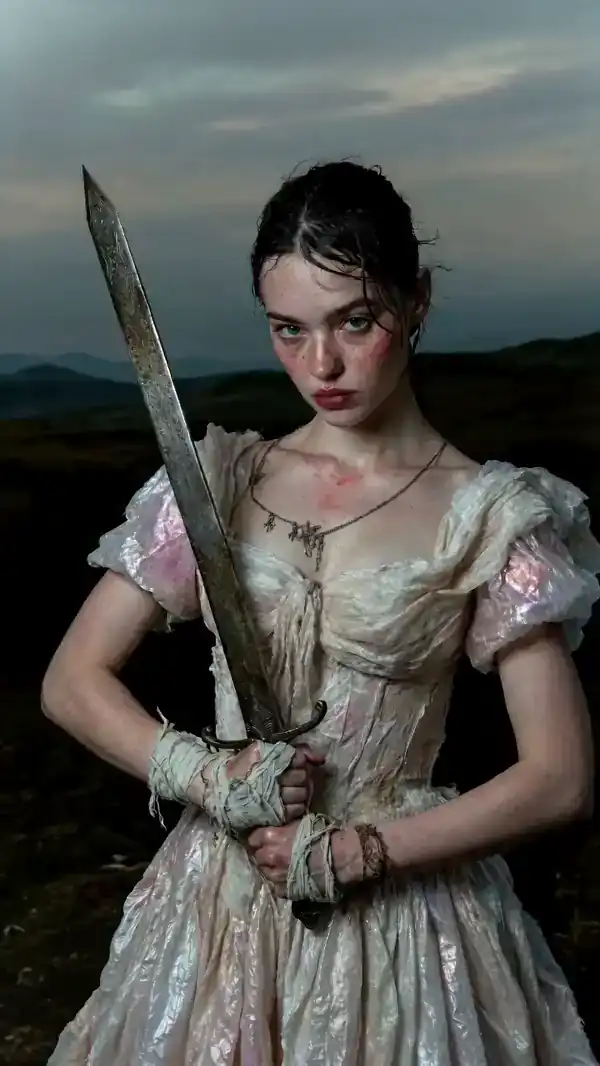


Two Models, One Turning Point
The AI video race moves so fast that a "new version" arrives every few weeks, each one claiming to be the biggest leap yet. Most of those claims are noise. But the wave of releases that arrived in mid-2025 — including the latest PixVerse and Luma models — genuinely changed what creators can do. They moved the field from "can the model make something that looks like a video?" to "can the model make the exact video I have in my head, with the camera moves, the physics, and the characters I want?"
This article compares the two models most people are asking about: the latest PixVerse generation, with its emphasis on cinematic control, and Luma's Dream Machine line, which built its reputation on physical realism. We will look at what each does well, where the other leading models fit in the picture, how these engines fit into a real production workflow, and how to decide which one deserves a place in your toolset.
What the Latest PixVerse Brings to the Table
PixVerse has always been a competitive player in the text-to-video space, but the recent versions sharpened its identity around one idea: director-level control. Where earlier generations produced good footage that you took as it came, the new models let you specify the cinematography itself.
The headline feature is advanced camera control. You can describe lens choices in your prompt — a 35mm prime for natural perspective, an anamorphic 75mm for that wide, cinematic frame — and the model respects it. You can specify focus behavior, depth of field, and camera movement in ways that were previously the domain of real camera operators. For creators, this is a large unlock: the difference between "AI generated this clip" and "I directed this clip" is exactly this kind of control.
The practical effect is visible in the results. Scenes can be built around intentional depth effects, with backgrounds falling out of focus the way a real lens would render them. Camera moves feel motivated rather than random. For commercial work — product shots, branded content, anything where the framing must match an art direction — this precision matters enormously.
It also matters for storytelling. When you can control what the camera looks at and how it moves, you can direct attention, build tension, and create meaning the way a cinematographer does. The model stops being a random generator and becomes an instrument.
Luma and the Physics Revolution
If PixVerse's identity is control, Luma's Dream Machine identity is realism — specifically, physical realism. The recent Luma models are notable for how convincingly they simulate the way the real world behaves: how light falls on surfaces, how objects interact, how materials respond to force.
This is harder than it sounds. Early video models could render a plausible-looking image, but physics defeated them. Water didn't move like water, cloth didn't fold like cloth, and objects in motion ignored gravity. Luma's progress has been in teaching the model the underlying rules: light bounces, shadows track, objects collide and react. The result is footage where you stop noticing the AI and just see the scene.
For certain types of content, this is the whole ballgame. Product videos where the material quality matters. Nature and environment footage. Action sequences where physical believability makes or breaks the illusion. If your content depends on the audience believing what they see, physical realism is not a nice-to-have; it is the requirement.
Luma also invested in coherent motion and camera management, so the physical realism is not just in individual frames but across the movement of a shot. Characters move with weight, cameras travel through space plausibly, and the whole clip hangs together as a continuous physical event.
The Broader Field: Where Flux, Kling, and Sora Fit
Neither PixVerse nor Luma exists in a vacuum, and a serious creator's toolkit usually includes several engines. The leading alternatives each claim a distinct position.
Flux models are the reference point for image quality and prompt precision. If your project needs a hero frame of exceptional detail — a product on a reflective surface, a portrait with perfect skin texture — Flux is often the strongest starting point. Its non-destructive fine-tuning approach also makes it popular for teams that want to adapt a model to their own style without degrading its base quality.
Kling models built their reputation on strong prompt adherence and good motion quality at a cost that suits high-volume production. For character-driven content and projects where budget matters, Kling is frequently the pragmatic pick.
OpenAI's Sora series set the standard for realism and narrative coherence when it launched, and it continues to push the ceiling on what AI footage looks like. It is the model people reach for when the goal is "make it look real" with as few compromises as possible.
The point of the comparison is not to declare a winner. It is to see each model as a tool with a specific center of gravity: PixVerse for directorial control, Luma for physical believability, Flux for image precision, Kling for balanced value, Sora for overall realism. A production team that understands these centers of gravity can route each job to the right engine.
Choosing Between PixVerse and Luma
When a specific project is in front of you, the model choice becomes practical. Here is a decision framework that works well:
Choose PixVerse when the project is about shot language. If you have a storyboard, a camera plan, or a specific art direction — if the question is "how should this be shot?" — PixVerse's cinematic controls give you the leverage to answer it.
Choose Luma when the project is about the physical world. If the content involves products, materials, environments, or action that must look physically real — if the question is "will the audience believe this?" — Luma's simulation strength serves you best.
Use both when the project is complex enough to justify the effort. A polished commercial piece often benefits from a pipeline: establish the visual direction with precise frames, generate key shots with the model that fits each shot's need, and assemble the result in post. Model-agnostic workflows beat single-model loyalty for the simple reason that different shots have different needs.
There is also a practical budget consideration. Flagship models are the most expensive per generation, and costs add up quickly when you iterate. The professional pattern is to prototype with faster, cheaper models — test the concept, the composition, and the motion — and only spend premium generations on the shots that will actually ship. This keeps quality high without turning iteration into a financial hazard.
The Role of the Platform and Ecosystem
A model is only as useful as the environment around it. In 2025, the most productive creators do not switch between a dozen separate websites; they work inside platforms that aggregate models, manage generation jobs, and keep assets organized.
The platform layer matters for several reasons. It provides a consistent interface for prompt writing, reference upload, and job management. It handles the GPU scheduling and queueing, so long generations run reliably. And increasingly, it provides the consistency tools — multi-image fusion, style libraries, and character references — that make a workflow coherent across models.
For teams, the ecosystem questions are practical: Can I manage my reference library in one place? Can I route jobs across models without re-learning a new interface? Can I track what was generated with which settings so I can reproduce results? A good platform answers yes to all three.
Building a Real Workflow with Multiple Models
Here is a workflow that uses PixVerse, Luma, and supporting models together, without drowning in complexity.
- Lock the concept and the look. Write the idea, the audience, and the visual direction. Decide the hero moments — the shots that carry the piece.
- Prototype cheap. Use a fast model to sketch the key scenes. Check composition, pacing, and whether the concept works at all. Throw away the prototypes without regret.
- Bring in the specialist. For each hero shot, choose the engine by what the shot needs: PixVerse for the camera language, Luma for physical believability, a premium model for the detailed hero frame.
- Enforce consistency. Use reference images for characters and style across all engines. Keep prompts structured so the visual language stays constant even as the engines change.
- Review in context. Look at the shots in sequence, not in isolation. A shot that looks great alone can break the piece when placed next to its neighbors.
- Finish in post. Add sound, music, and a consistent grade. This is where the piece becomes yours, regardless of which engines generated the footage.
A Practical Testing Routine
Deciding between models from spec sheets alone is a fool's errand. The marketing language around every release says the same things — "more realistic," "better control," "industry-leading." The only reliable way to know whether a model serves your work is to test it on your actual scenes, with a routine you can repeat.
Build a small test suite of three prompts that represent your real workload. If you produce product content, include a product close-up with reflective surfaces and controlled lighting. If you produce narrative content, include a character walking through an environment with a moving camera. If you produce stylized content, include a scene that depends on a specific look, like a neon cityscape or an animated character. The point is that your test suite should be boring and representative — not impressive.
For each candidate model, run the suite and score the results on a fixed rubric: prompt fidelity (did it render what you asked?), physical believability (do materials, light, and motion behave plausibly?), character consistency (does a subject look the same across shots?), and iteration behavior (how many retries does an acceptable result take, and how long does each run take?). Keep a spreadsheet. After a few rounds, the data will tell you more than any review.
Re-run the suite whenever a major version lands. Models improve in jumps, and a model you dismissed in the spring can be your best tool by summer. The cost of the routine is small; the cost of sticking with the wrong engine is visible in every project you produce.
Common Mistakes
- Owning one model and forcing every job through it. You are paying for its weaknesses on every wrong fit.
- Ignoring camera language. Without it, footage looks generated rather than directed.
- Skipping the prototype phase. Premium generations are too expensive to use for ideas that might not work.
- Neglecting consistency across engines. Switching models without shared references produces a patchwork.
- Judging shots in isolation. Sequence is where a video lives or dies.
FAQ
Is PixVerse better than Luma?
Neither is strictly better; they have different strengths. PixVerse offers more cinematic control; Luma offers more physical realism. Choose by the needs of the shot.
Can I use both models in one video?
Yes, and it is often the best approach. Use each engine for the shots that fit its strengths, then assemble and grade in post.
What is the fastest way to test these models?
Run the same prompt through both and compare. Better: run your actual project scenes, not a generic test prompt. Your footage is the only benchmark that matters.
Do I need a powerful computer to use them?
No. The heavy computation runs in the cloud; you need a browser and a stable connection. Local generation is possible but rarely practical for production.
How do I keep characters consistent when switching models?
Use the same reference images everywhere and keep your style descriptors identical. Consistency is a workflow property, not a property of any single engine.
What should a beginner start with?
Start with one model, master the basics of prompting and reference use, then add a second engine when a specific project exposes a gap. Depth before breadth.
The Bottom Line
The mid-2025 releases of PixVerse and Luma mark a real division of labor in AI video: control versus realism. PixVerse gives you the camera; Luma gives you the world. Used well, they are not competitors — they are two instruments in the same orchestra. The creators who treat them that way, route shots by need, prototype cheap, and enforce consistency across engines, will produce work that does not look like "AI video." It will just look like video. And that is the entire point.
