
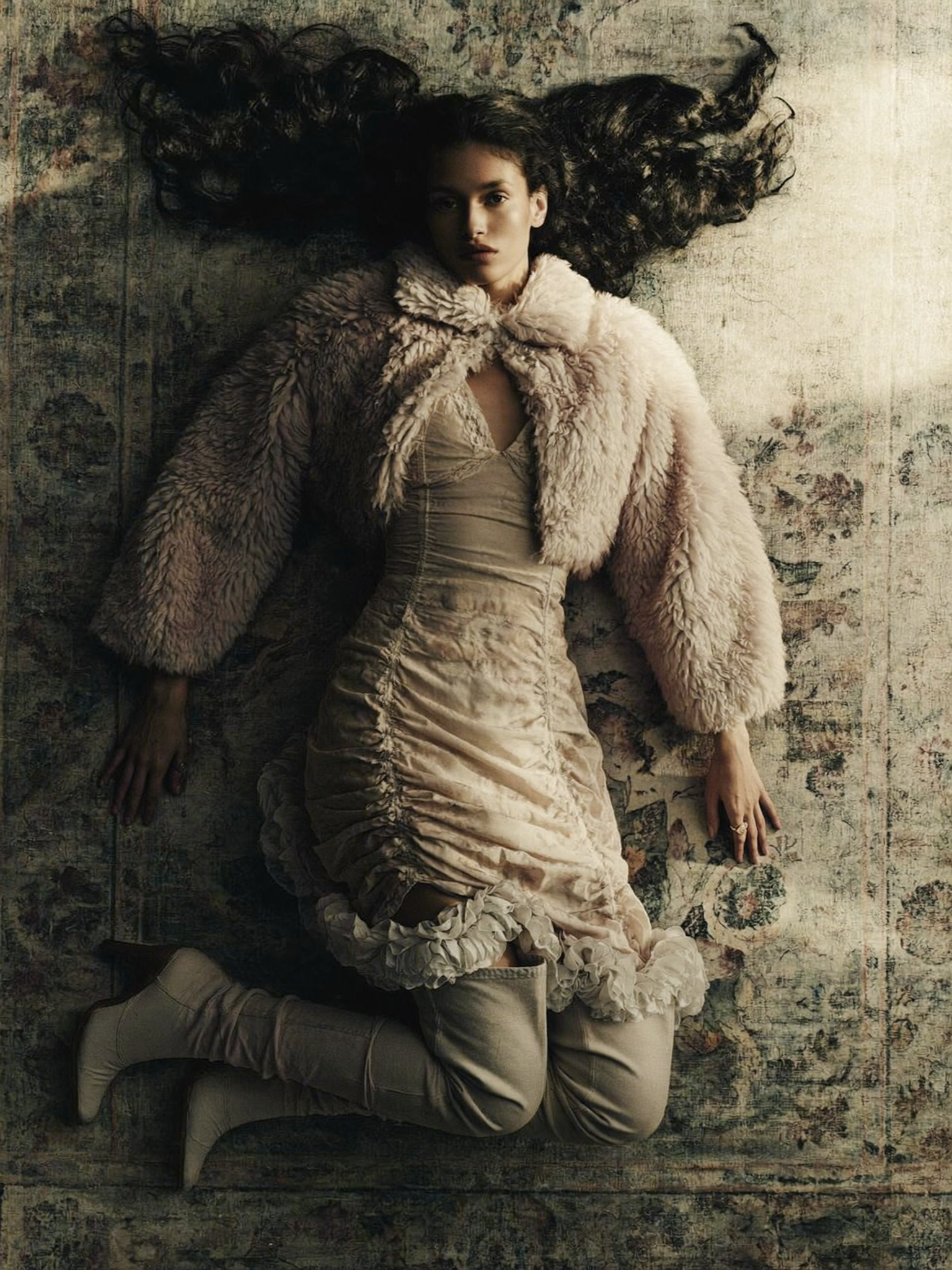
Choosing between PixVerse and Pika Labs is one of the most common decisions for creators who want to turn a still image into a living scene. Both tools have matured into serious image-to-video engines, yet they take surprisingly different paths to the same goal. This guide breaks down how they actually compare in 2025: raw generation quality, speed, control, character consistency, workflow fit, and cost behavior. By the end, you should know which one belongs in your production stack, and when you might want to use both.
The Image-to-Video Landscape in 2025
The image-to-video category exploded because it solves a real production problem. Text-to-video is powerful, but it starts from nothing; image-to-video starts from a frame you already control. That means you can design a character, compose a shot, lock a style, and then animate it. For creators who need brand-consistent content, product shots, or narrative sequences, starting from an image is dramatically more predictable than starting from a prompt.
By mid-2025, the market had consolidated around a handful of serious players. PixVerse and Pika Labs are the two names that keep coming up in comparison because they sit at opposite ends of a spectrum. PixVerse has pushed hard toward cinematic quality and deep artistic control. Pika Labs has positioned itself as the fast, approachable option that gets you from idea to clip in minutes. Understanding those two philosophies explains almost every difference you will notice in practice.
Core Technology: How Each Model Approaches Generation
PixVerse V4.5 and Its Temporal Consistency Module
PixVerse V4.5 is built around a heavily upgraded Temporal Consistency Module, or TCM. The module's job is to keep frames coherent across time, which is exactly where cheap image-to-video models fall apart. Without temporal consistency you get flickering, morphing textures, and characters whose faces change between frames. The V4.5 architecture attacks this problem at the diffusion level, applying temporal attention across the whole clip rather than patching artifacts after the fact.
The practical result is smoother motion. Objects that should stay still do stay still. Hair and fabric move naturally instead of shimmering. Skin texture remains stable from the first frame to the last. For close-ups of people, which are the most demanding test of any image-to-video model, V4.5 produces noticeably fewer of the "melting face" artifacts that plague older systems.
PixVerse also emphasizes cinematic framing. The model understands depth, lighting, and camera movement in a way that makes generated clips feel like footage rather than animations. If your input image has strong composition, V4.5 tends to preserve and amplify it with believable camera motion.
Pika 2.2 and the Speed-First Philosophy
Pika Labs' V2.2 release doubled down on what the platform was always best at: speed and accessibility. The interface is minimal, the generation queue is fast, and the mental model is "upload, prompt, get a clip." For a creator who needs ten variations of a hook in an afternoon, that speed is the whole product.
Technically, Pika 2.2 is no slouch. It handles motion well, particularly for stylized and animated content, and it offers solid controls for camera movement and motion intensity. But its design priorities are visible in the output: clips tend to be cleaner and more "designed" than deeply cinematic, with a slightly flatter temporal feel than PixVerse V4.5 on photorealistic subjects.
That is not a criticism. Different use cases reward different trade-offs. If you are making fast-paced social content where the clip is on screen for three seconds, Pika's speed and simplicity beat PixVerse's extra temporal fidelity every time. If you are making a brand film or a product showcase where viewers will study the footage, the opposite is true.
Head-to-Head: Resolution, Duration, and Temporal Quality
Specs matter, but only in context. Here is how the two platforms compare on the dimensions that affect real deliverables.
Resolution is roughly comparable between the two, with both supporting HD outputs for standard generations. The difference shows up in how well each model uses that resolution. PixVerse tends to hold detail better in complex textures, while Pika 2.2 looks excellent on clean, stylized scenes where there is less texture to corrupt.
Duration is a bigger differentiator. Longer clips are harder because temporal consistency degrades as length grows. PixVerse has focused on keeping quality high across longer generations, making it the better choice for narrative sequences and multi-shot edits where you cannot cut every two seconds. Pika is best at punchy, short-form clips, which matches its social-first positioning.
Temporal quality is where PixVerse V4.5 earns its reputation. Motion between frames feels organic. Camera pans are smooth, subject movement is physically believable, and the clip reads as continuous footage. Pika 2.2's motion is good but has a slightly more "generated" feel on complex physics, like cloth, water, or crowds.
A useful mental model: PixVerse is closer to a virtual cinematographer, while Pika is closer to a rapid prototyping tool. Both are valid. They just serve different moments in your workflow.
Control and Workflow: Where Each Tool Shines
User Experience and Creative Workflow
Pika Labs wins on raw onboarding. The interface is famously clean, with a low learning curve that gets first-time users to a finished clip quickly. If your goal is to test an idea or produce a large volume of variations, Pika's workflow is hard to beat.
PixVerse offers more granular control once you learn it. The platform supports detailed prompt engineering, stronger negative prompting behavior, and finer control over motion and camera parameters. Experienced users can dial in specific results that would require heavy iteration elsewhere.
Style Management and Character Consistency
Both platforms now offer character consistency features, but they approach them differently. PixVerse's multi-image reference support is one of its strongest features. You can feed multiple reference images of the same character or scene and the model uses all of them to maintain consistency across a sequence. That makes it practical for multi-shot storytelling: establish the character, then generate several clips of that same character in different actions.
Pika's consistency tools are improving and work well for single-character scenes, but the platform is not yet as strong on multi-image reference workflows. If your project involves a recurring character across many shots, PixVerse has the edge today.
Cost Behavior and Iteration Economics
Neither platform is free, and both price by generation rather than by subscription seat. The practical question is what you pay per usable clip, which depends on your iteration style. PixVerse's higher fidelity means fewer retries on demanding shots, which can offset its higher per-generation cost. Pika's cheaper, faster generations let you explore more ideas for the same budget, but you may need more attempts to land a complex shot.
The smart approach is to match the tool to the shot. Use Pika for high-volume exploration and hooks. Use PixVerse for hero shots, character sequences, and anything that will be on screen long enough for viewers to notice imperfections.
Image-to-Video Specifics: The Hard Tests
Animating a Static Image
The most direct test of an image-to-video model is simple: give it a portrait or a product photo and ask for natural motion. PixVerse V4.5 handles this test with noticeably better physical plausibility. Faces gain subtle micro-expressions instead of sliding into uncanny territory. Product shots get believable lighting shifts and gentle motion.
Pika 2.2 produces good results on this test too, especially for stylized images, but it occasionally takes shortcuts that become visible in close inspection. If your deliverable will be viewed large or studied closely, that difference matters.
Detail and Texture Handling
Texture stability is PixVerse's quiet superpower. Fabrics, wood grain, skin, and fur all stay coherent across frames. Pika handles simple textures beautifully but can struggle with repetitive or fine-grained textures, where small inconsistencies become visible as shimmering.
Multi-Image References and Scene Consistency
This is the workflow-level differentiator. If you are building a sequence where a character must appear in multiple shots wearing the same outfit, with the same face, in the same environment, PixVerse's multi-image reference support is the more reliable foundation. You can lock the character across the entire sequence rather than hoping a single prompt holds it together.
The Broader Competitive Context
PixVerse and Pika do not exist in a vacuum. Premium models like Flux, Runway's Gen-4 series, and OpenAI's Sora set the quality ceiling that everyone is chasing. Flux is known for photorealistic stills that animate beautifully, Runway Gen-4 is a leader in motion coherence and professional control, and Sora pushes the boundaries of long-form realism.
Where does that leave PixVerse and Pika? They occupy the accessible middle: high enough quality for professional work, but with faster iteration and simpler workflows than the most demanding premium systems. For most creators, the question is not "which model is the best in the world" but "which model gets my project done with the least friction." PixVerse answers with control and consistency, Pika with speed and simplicity.
Decision Guide: Which One Should You Choose?
Choose PixVerse if:
- Your shots feature people or characters that viewers will study closely.
- You need multi-shot sequences with consistent characters and environments.
- Your content is cinematic, long-form, or brand-critical.
- You are willing to invest in learning deeper controls.
Choose Pika Labs if:
- You need a high volume of clips fast.
- Your content is short-form social video with quick cuts.
- You want the shortest possible path from idea to draft.
- Your scenes are stylized, animated, or clean rather than photorealistic.
Choose both if your workflow spans the spectrum: prototype fast with Pika, then produce hero shots with PixVerse.
Practical Workflow Recommendations
Start by building a small test set rather than committing to one platform. Take the same five images and run them through both tools with comparable prompts. Evaluate on four criteria: motion believability, texture stability, prompt adherence, and iteration speed. That test will tell you more than any comparison article, including this one, because it is measured against your actual content.
For character-driven projects, invest time in PixVerse's multi-image reference workflow early. It changes how you plan shots, because you can lock the character first and generate scenes afterward.
For volume work, set up a Pika pipeline where you generate ten hooks, keep the two that work, and only then move the winners to a higher-fidelity tool for the final version.
Whatever you choose, keep your prompts tight and your reference images clean. Image-to-video quality is capped by the quality of your input frame. A sharp, well-composed source image will beat any model upgrade.
Frequently Asked Questions
Is PixVerse better than Pika Labs?
It depends on the use case. PixVerse V4.5 is stronger on temporal consistency, texture stability, and multi-image reference workflows, which makes it better for cinematic and character-driven content. Pika 2.2 is faster, simpler, and better suited to high-volume short-form work.
Can Pika Labs handle image-to-video?
Yes. Pika 2.2 supports image-to-video generation and produces solid results, especially for stylized and animated content. Its interface is designed to be quick and accessible.
Which tool is better for character consistency across multiple shots?
PixVerse's multi-image reference support is currently the stronger foundation for keeping a character consistent across a sequence of shots.
Do I need both tools?
Many creators benefit from both. Use the fast, cheap tool for exploration and volume, and the higher-fidelity tool for hero shots and character sequences.
What matters most for image-to-video quality?
The input image matters most. A clean, well-composed, high-resolution source frame gives any model the best chance of producing natural motion. After that, model choice, prompt quality, and iteration volume determine the outcome.
Final Thoughts
PixVerse and Pika Labs are not really competitors in the same lane; they are two different answers to the same question. PixVerse answers with cinematic control and temporal fidelity, making it the choice for content that needs to survive close inspection. Pika answers with speed and simplicity, making it the choice for creators who need volume without ceremony.
The winning move is to stop treating this as an either-or decision and start treating it as a workflow decision. Match the tool to the shot, test against your own content, and let your deliverables decide. In a market moving as fast as this one, the creators who win are the ones who build flexible pipelines instead of picking a single favorite.
