
The first question about AI-generated advertising is no longer whether it looks good enough. It looks good enough, and it improves every few months. The real question is whether your campaign is built well enough to use it. An AI video ad fails for the same reasons a traditional ad fails: unclear message, inconsistent brand, wrong audience. The tool did not change the fundamentals; it changed the speed and cost of production.
This guide is for marketers and creative teams who want to produce professional ad clips with AI without treating every project as a science experiment. It covers campaign planning, prompt craft, brand consistency, a concrete production workflow, and the quality and legal checks that should gate every asset before it runs.
Why Ads Are the Best Test Bed for AI Video
Advertising is the natural first use case for AI video, and not because it is easy. It is because ads have constraints, and constraints are where AI video performs best. A fifteen-second spot with one clear message, one visual style, and one call to action is a bounded problem. Bounded problems produce reliable results.
Ads also have a short feedback loop. You can generate, test, and iterate in days instead of months, and platforms will tell you within a week whether the creative works. That loop is the difference between gambling and learning. The teams that win with AI video are not the ones with the most impressive clips; they are the ones with the fastest cycle of test, learn, and improve.
Mapping a Campaign Before Generating a Frame
Everything that follows starts with a document, not a prompt. Before you generate anything, write down the campaign logic:
The message. What is the one thing the audience should remember? If it takes more than one sentence, the ad is not ready.
The audience. Who is watching, and what do they already believe? The same product needs different footage for a skeptical CFO and a curious teenager.
The brand guardrails. Which colors, typefaces, tones, and visual motifs are fixed? Which are flexible? AI is excellent at staying inside explicit guardrails and terrible at guessing implicit ones.
The format. Where will the ad run, and what does that mean for length, aspect ratio, and pacing? A vertical fifteen-second cut is a different project from a horizontal thirty-second brand film.
Write this down, share it with the team, and generate against it. The document is your creative brief, and every prompt in the project should be traceable back to it.
Crafting Prompts That Match Brand Guidelines
Prompts for ad production are engineering documents, not poetry. Each one should specify the shot type, the subject, the action, the environment, the lighting, the camera, and the style, with brand vocabulary repeated exactly.
A weak prompt says: "a modern office with people working." A useful prompt says: "medium shot, a young professional in a navy blazer reviewing a tablet in a bright minimalist office, soft daylight from large windows, subtle teal accents on the furniture, calm confident mood, shallow depth of field." The second prompt tells the model what to include, what to exclude, and what the brand looks like.
Build a shared prompt library from your brand language. Store the phrases that reliably produce your look: your lighting description, your color palette, your camera conventions, your approved environments. Then assemble new prompts from library pieces instead of writing from scratch, which keeps a series of ads visually related even when the subject changes.
From Static Key Visuals to Motion
The most reliable path to a professional ad is not text-to-video; it is image-to-video. Start by designing the hero frames as still images, the way an art director approves a key visual before production. Once the still is approved, animate it.
This two-step approach gives you control where control matters most. Composition, color, and brand fit are decided in the still, where iteration is cheap and precise. Motion is added second, and the model has a strong anchor to preserve. Text-to-video remains useful for exploration and for background or ambient shots, but the hero moments of an ad deserve the discipline of an approved key visual first.
When the product is the star, generate product hero stills from multiple angles, pick the strongest, and animate that one. Product consistency across a campaign works the same way character consistency does: build a reference set, lock a canonical image, and reuse it.
Keeping the Brand Consistent Across Every Spot
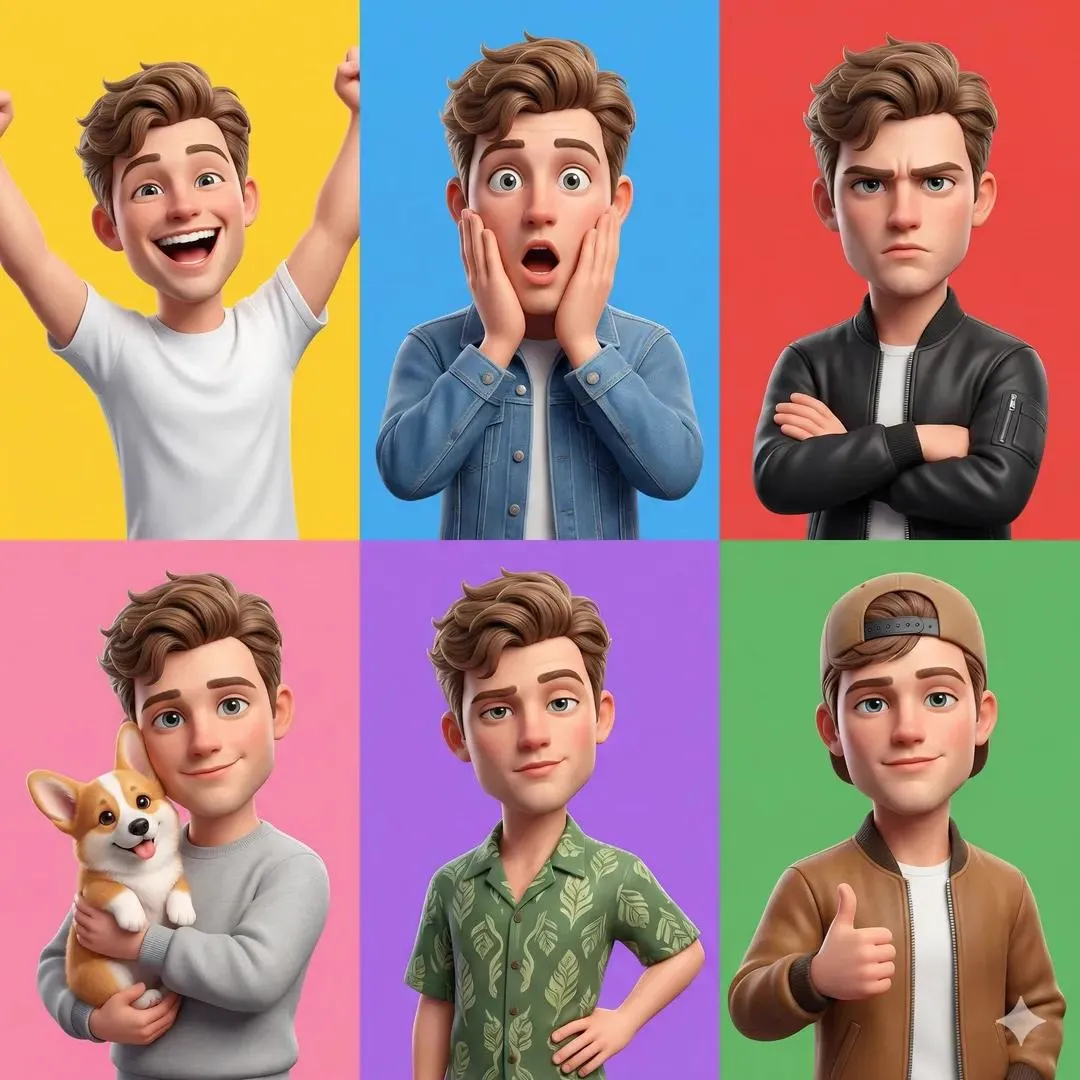
A campaign is a set of assets that feel like one brand. Consistency across spots is achieved with the same tools used for characters: reference images, locked keyframes, and shared style sheets.
Build a brand reference pack containing your approved key visuals, your product images, and any recurring people or mascots. Pass that pack into every generation. When the campaign needs multiple cuts, generate them from the same anchors so the color, lighting, and cast stay recognizable.
Style drift is the enemy. If spot one is graded cool and spot two is graded warm, the campaign feels broken even when both spots are individually beautiful. Lock a grade and lighting language at the start and resist the temptation to let each spot find its own mood. The audience should never have to wonder whether two ads came from the same brand.
A Production Workflow for a Fifteen-Second Ad
Here is a repeatable sequence that works for most short-form ad projects.
Step one: write the script. Ten to fifteen seconds is roughly forty to sixty words. Write the voiceover and identify the visual moment that must land.
Step two: storyboard as stills. Generate one still per shot, review them as a sequence, and fix the story here. This is the cheapest place to catch problems.
Step three: animate approved stills. Convert each approved still into motion with image-to-video, keeping the prompts consistent with the brief.
Step four: assemble and cut. Edit the clips to the script. Cut for rhythm, not for length, then trim to platform requirements.
Step five: add audio. Voiceover, music, and sound design do more for perceived quality than any visual tweak. Do not skip this step.
Step six: quality review. Check the message, the brand guardrails, the technical quality, and the legal list before the asset goes anywhere.
Step seven: ship and measure. Release, watch the platform metrics, and feed the results back into the brief for the next spot.
Measuring Quality Before You Spend on Distribution
Distribution budgets are precious, and they should not subsidize unproven creative. Establish a pre-flight checklist that every asset must pass.
The message check: can someone who watches without sound still understand the offer? The brand check: does the asset match the reference pack and style sheet? The technical check: are there visual artifacts, distorted hands, or text rendering errors that will read as cheap? The sound check: is the audio clear at phone volume? The legal check: does the asset meet platform rules and your own standards for AI disclosure and rights?
Run a small paid test before scaling. A modest budget on the best-performing variant tells you more than a large budget on the one you liked. Advertising is a numbers game, and AI video has made the creative iteration part cheap; the winners are the teams that iterate on data.
Legal and Ethical Guardrails for AI Ads
AI advertising is young enough that the rules are still settling, which is exactly why you should be conservative. Understand the terms of the tools you use, including what you are allowed to do with the output commercially. Keep records of prompts and assets in case a question about provenance comes up. If your ad features realistic people, be careful with consent and with the risk of resembling real individuals. Disclose AI use when platforms or regulators require it, and check the advertising policies of every network you plan to run on.
Do not use AI to make claims the product cannot support. The technology can render anything, and the discipline of advertising is to render only what is true. A beautiful ad that misleads will cost more in trust than it earns in clicks.
Case Study: A Six-Asset Product Launch
A concrete example makes the workflow tangible. Imagine a beverage brand launching a new flavor and needing six assets in two weeks: a fifteen-second vertical hero spot, a thirty-second horizontal brand film, three social cutdowns, and one animated product still for display ads.
The team starts with a one-page brief: the message is the flavor's refreshing edge, the audience is young urban professionals, the brand guardrails are the existing palette and logo system, and the hero moment is the product being poured into a glass with visible condensation. They generate key visuals first: six stills of the pour, the product on ice, and the hero lifestyle scene. The art director approves two stills, and those become the anchors for everything else.
The hero spot is animated from the approved pour still, with the prompt library supplying the lighting and camera language. The horizontal film is cut from the same two anchors plus environment shots generated to match. The cutdowns are edit-only: the same footage trimmed to different lengths and aspect ratios. The display still is a simple animation of the approved product image. Because every asset traces back to two approved stills and one brief, the campaign feels like one campaign.
The team ships in nine days instead of two weeks, with three days of buffer for retries. The platform test shows the vertical spot winning on hook retention, so the next campaign brief starts from that learning. The key takeaway is not the speed; it is that the discipline of the brief and the key visuals did the heavy lifting, and the AI only executed decisions that were already made.
Notice what the team did not do: they did not generate twelve random clips and hope for the best, and they did not let each asset find its own mood. Every decision that could be made before generation was made before generation, which is why the AI work was fast and predictable. The teams that struggle with AI ads are usually the ones that treat generation as the creative step instead of the execution step.
The same pattern scales to bigger launches. A product line with five flavors becomes five key visuals, one per flavor, each animated consistently and cut into the same set of formats. The reference pack grows, but the process does not change, and the campaign's recognizability grows with it. When the next launch arrives, the brief template, the prompt library, and the quality checklist are already in place, and the team's only job is to fill in the new product details.
FAQ
How long until AI video ads look as good as traditional productions?
For controlled shots, they already match in many cases. The remaining gap is in live-action performance, complex scenes, and audio, which is why the winning workflow combines AI visuals with human-directed sound and edit.
Do I need a video editor to use AI ad tools?
Basic assembly is simple, but an editor's instincts for pacing and sound are still a major advantage. If you do not have one, learn enough cutting and audio to control rhythm, because that is where amateur work betrays itself.
What is the biggest mistake teams make with AI ads?
Skipping the brief and storyboard. Teams that generate first and plan later burn budget on beautiful clips that do not add up to a campaign.
Can AI handle product-specific details like logos and text?
Text rendering is improving but still error-prone. Keep text out of the generated image where possible, add it in post, and always proofread rendered text before it ships.
How should we disclose AI in our ads?
Follow the rules of the platforms and markets you target, and lean toward more transparency rather than less. Audiences respond better to honest production notes than to being surprised later.
What if the brand has no existing key visual to start from?
Create one. Spend a session generating candidate stills against the brand's palette and tone, pick the strongest, and treat it as the official key visual for the campaign. The asset does not need to be old to be canonical; it needs to be approved.
