
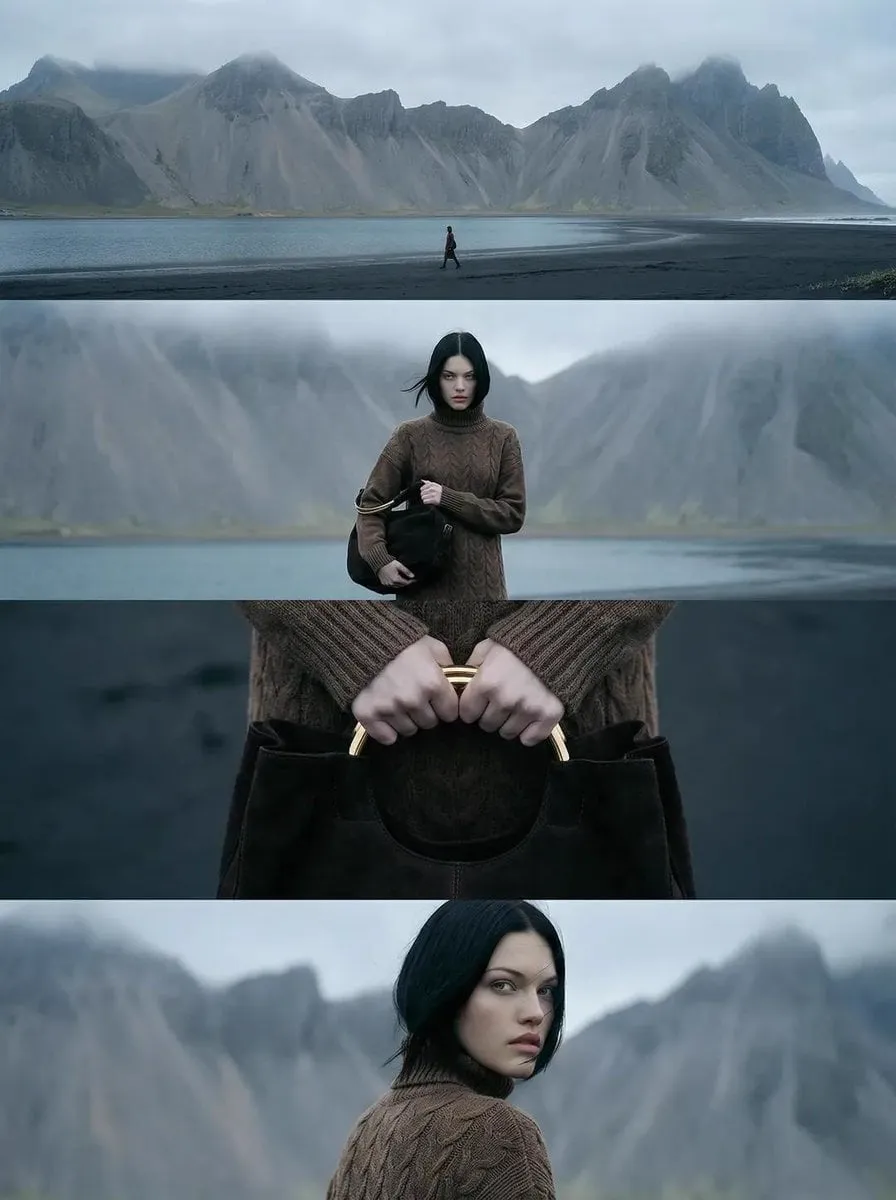
The gap between "I can generate a video with AI" and "I can reliably produce professional-grade video content" is wider than most people expect. Generating a single impressive clip is easy. Building a repeatable process that delivers consistent quality, on deadline, across a whole project, is a different discipline entirely. That discipline is what separates hobbyists from professionals, and it starts with understanding the model landscape rather than just picking the flashiest tool on the market.
This guide walks through the practical decisions behind professional AI video creation: what the model ecosystem actually looks like, how to match models to use cases, how to keep visual consistency across scenes, and how to build a production pipeline that does not collapse the moment you scale up.
What "Professional" Means in AI Video Production
Professional video work has requirements that casual generation does not. The first is consistency: a brand video needs the same character to look the same in every shot, the same lighting language across scenes, and the same visual style from opening to closing frame. The second is control: professionals need to hit specific compositions, specific camera moves, and specific emotional beats, not just "something that looks cool." The third is reliability: when a client is waiting, a workflow that works 60 percent of the time is not a workflow.
This is why the current generation of AI video tools has moved beyond the single "text to video" button. The professional approach treats the model as one component in a larger system that includes image generation, image-to-video conversion, character references, keyframe control, and post-production. Understanding how these pieces fit together is the real skill.
The Model Landscape: Premium, Open-Source, and Specialized
The video generation ecosystem splits into a few broad categories, and each has a different job.
Premium models are the heavy hitters: the flagships that set the quality bar for realism, motion coherence, and prompt adherence. These are the models that produce the photorealistic shots that make viewers ask whether a video was real. They tend to be the most expensive per generation and the most in demand, and they are the right choice when a project's core shots need to look flawless.
Open-source and high-efficiency models form the second tier. They trade some quality for speed, lower cost, or greater control. For high-volume work, product demos, social media content, or internal presentations, these models often make more sense than the premium flagships because the marginal quality difference does not justify the cost difference.
Specialized models fill specific niches: animation styles, particular art directions, regional aesthetics, or unusual motion types. A model trained heavily on anime will outperform a generalist model on an anime project even if the generalist scores higher on generic benchmarks. The same logic applies to cinematic, documentary, or stylized looks.
The professional insight is that you do not choose one model. You choose a portfolio of models and route each job to the one best suited for it.
Matching Models to Use Cases
Model selection should start with the deliverable, not with the tool. Ask what the video needs to achieve, and work backward to the model requirements.
For a cinematic brand film, realism and emotional range matter most. The premium tier is usually justified, and you will want models with strong camera control and lighting fidelity. For a social media clip that needs to ship in an hour, speed and cost efficiency win, and a mid-tier model with good motion handling is the right call. For an animated explainer, a specialized model with a consistent art style beats a photorealistic generalist every time.
There is also a question of source material. Text-to-video starts from a prompt and gives you the most freedom but the least control over composition. Image-to-video starts from a still frame and gives you far more control: you lock the composition, the character, and the lighting in the image, and the model supplies the motion. Most professional workflows lean heavily on image-to-video because the still frame acts as an art direction lock that keeps the output on brief.
Consistency: The Biggest Bottleneck
Ask any professional AI video creator what their hardest problem is, and most will say the same thing: keeping the same character and the same world across multiple shots. A character whose face subtly changes between cuts breaks the illusion instantly and makes the whole piece feel amateur.
The modern solution is reference-based generation. Instead of describing a character in words for every shot, you provide reference images and the model anchors the new shot to them. This is where multi-image techniques matter: you can fuse several references, a face, a costume, a setting, to define exactly what must stay consistent.
The practical workflow is to build a visual bible before you generate anything: a set of reference images for each character, each key location, and the overall color and lighting style. Then every shot in the pipeline is generated against those references. This is the same discipline a film production uses with concept art and continuity photographs, applied to AI generation.
Building a Repeatable Production Workflow
A professional pipeline looks less like a single generation step and more like an assembly line. The stages are: concept and script, visual bible, shot list, generation, review, and post-production.
The shot list is the most underrated step. Before generating anything, break the video into individual shots and specify for each one: the subject, the action, the camera move, the duration, and the mood. This forces you to decide what you actually need instead of generating a dozen clips and hoping they fit together. It also makes the generation step faster, because each prompt is specific.
Generation then becomes a batch process. You generate candidates for each shot, review them against the brief, and keep only the ones that pass. The review step is where the professional mindset shows: you are not looking for "good," you are looking for "consistent with the visual bible and correct for the shot's function." Clips that are individually impressive but break continuity get rejected, no matter how pretty they are.
Managing Cost and Compute Resources
Generation cost is real, and professionals manage it the way they manage any production budget. The key is to spend premium resources only where they matter. Open your video with a strong premium shot, use efficient models for transitional or background material, and reserve the most expensive generation for the moments the audience will scrutinize most.
The cost question is also a workflow question. Every retry spends money and time, so the cheapest generation is the one you do not have to repeat. That is why the review discipline matters: a shot that passes the brief the first time costs a fraction of a shot that needs five attempts. Professionals invest in better prompts, better references, and better briefs because those investments reduce retries, which is where the real waste lives.
A second cost lever is resolution and duration. Longer clips and higher resolutions cost more, and most projects do not need maximum settings for every shot. Match the output spec to the deliverable: a hero frame for the website can justify premium settings, while a background plate destined for a small social crop does not. Building a cost ladder, premium, standard, draft, and routing each shot to the appropriate rung, is a simple habit that changes the economics of a whole project.
Queue management also matters. When a project has dozens of shots, running generations one at a time is slow and wasteful. Professional platforms use task queues that batch work and distribute it across available compute, so you can submit a whole shot list and have it process while you review earlier results. Learning to think in batches, rather than one clip at a time, is one of the biggest productivity leaps in this medium.
From Static Images to Motion: Image-to-Video Techniques
Image-to-video deserves special attention because it is the control lever that most new creators underestimate. The still image is your art direction; the video generation is the animation pass.
Start by generating or sourcing a strong keyframe. The better the still, the better the motion, because the model is animating what it sees, not inventing from a prompt. If the still has good composition, clear subject separation, and defined lighting, the motion will inherit those qualities.
Then consider keyframe control, where you provide two or more stills and ask the model to animate between them. This lets you lock a beginning and an end state and have the model figure out the motion in between. It is the closest thing AI video has to traditional animation's in-betweening, and it is invaluable for shots where the outcome needs to be predictable.
Directing AI Video Like a Filmmaker
The best AI video creators think like directors, not like prompt engineers. A director decides the shot, the movement, the mood, and the rhythm; the crew executes. In AI video, you are the director and the models are your crew, and the tools you use for composition, camera, and continuity are your instructions.
This mindset changes how you write prompts. Instead of "a woman walks down a street," you write "medium tracking shot, low golden-hour light, confident stride, shallow depth of field, urban European street." You are specifying the film language, not just the content. The same discipline applies to the edit: shots cut together not because they are individually good but because they advance the story and match in tone, color, and rhythm.
Common Failure Modes and Fixes
Most failed AI video projects fail in predictable ways. The first is prompt inflation: trying to cram too many requirements into one generation, which produces a compromise that satisfies none of them. Fix it by splitting one complex shot into simpler shots and compositing later.
The second is continuity drift: the same character looks different between shots. Fix it with reference images and a visual bible, and check every shot against the references before you accept it.
The third is motion artifacts: warping, melting, or physics violations that ruin otherwise good shots. Fix it by choosing shorter clips, simpler motion, or a model better suited to the motion type. Sometimes the honest answer is that a shot is beyond the current model's ability, and a professional re-plans the shot instead of fighting the tool.
The fourth is workflow collapse: generating lots of clips with no plan and trying to force them into a video. Fix it with the shot list and review discipline described above.
Frequently Asked Questions
How many models should a professional workflow use? There is no single answer, but a typical setup uses one premium model for hero shots, one efficient model for volume work, and one or two specialized models for specific styles. Start small and add only when a real project demands it.
Is image-to-video better than text-to-video? Not better, different. Text-to-video gives you creative freedom; image-to-video gives you control. Professionals lean on image-to-video for anything that needs consistency, and use text-to-video for exploration and ideation.
How do I keep characters consistent across a whole video? Build reference images first, then generate every shot against those references. Check each shot against the references before accepting it. Consistency is a discipline, not a model feature.
What is the most important skill for professional AI video? Direction. Knowing what you want the video to say and feel, then using the tools to realize it. The tools change constantly, but the ability to direct is durable.
How fast is a professional AI video workflow? A well-structured pipeline can produce a short polished video in hours rather than days, but only after the visual bible, shot list, and review process are in place. The planning time is what makes the execution fast.
The Bottom Line
Professional AI video creation is a systems problem, not a tool problem. The models are abundant and improving, but the competitive advantage comes from how you organize them: matching models to use cases, locking consistency with reference images, planning shots before generating, and reviewing against a brief instead of against gut feeling. Build the system once, and every project after it gets faster, cheaper, and more reliable. That is what turns a fun toy into a real production capability.
