

One idea, one clear prompt, and a finished short film on the other end. That is the promise of today's AI video tools, and for the first time it is genuinely within reach for a solo creator. This guide walks from the very first simple prompt through to a polished, compelling short film, showing exactly what to do at each stage and where beginners most often go wrong.
The Creative Big Bang: Why professional filmmaking has opened up
For decades, making professional-looking video demanded money, equipment, and a team. Producers, cameras, lights, editors, and a long post-production pipeline sat between your idea and the screen. Generative AI has dismantled most of that barrier. Now the distance between a line of text and a rendered sequence has collapsed, which means the craft has moved from the camera crew to the prompt, the edit, and the creative decisions you make along the way.
That shift is not about eliminating skill. It is about relocating it. What used to be an expensive and technically demanding process is now an accessible skill anyone with a strong idea can build. The result is that more filmmakers, marketers, educators, and hobbyists than ever are producing work that would have been unthinkable just a short time ago.
Understand the tools before you write a word
Before you craft a single prompt, it is worth understanding what an AI video platform actually does for you. At the center is a library of models, each with its own strengths. Some are superb at realistic faces, others at animation styles, others at fast, lightweight output. The reason to care is simple: the model you choose shapes the result more than almost anything you type.
Modern platforms also handle consistency. Multi-image reference lets you feed several images of the same character or scene so that it stays recognizable across clips. Without that, a character whose face changes between cuts reads instantly as amateur. Long-form work specifically depends on this kind of character and style control.
Your first prompt: start small, succeed fast
The fastest way to learn is to generate something short and get a good result immediately, so start with a single scene rather than a full concept.
Describe the obvious things first
A strong prompt names the subject, the action, and the setting. Instead of "a woman walks down a street," write "a woman in a red coat walks down a narrow rain-soaked street at dusk, neon signs glowing." The extra detail gives the model something concrete to render rather than vague guesswork. Lighting, mood, and camera movement all belong in the prompt when they matter to the scene.
Add style and mood early
Style words behave a little like keywords: "cinematic," "soft key light," "warm color grade," or "handheld documentary feel" shift the output noticeably. Think of the prompt as a short director's note, not a novel. You are not describing every pixel, you are guiding the artistic direction.
Keep the first attempt short
Resist the urge to write a sweeping script right away. Generate a three-to-five second clip, look at it honestly, and identify what works. You will often find the gap between what you imagined and what was rendered is narrower than expected, which is the fastest way to calibrate your own descriptions.
From still image to moving picture
One of the most reliable ways to control a scene is to start from an image instead of a blank page. Image-to-video workflows let you generate a still, lock the composition and character, and then animate it into motion. This is the technique behind much of the most consistent AI video today.
Feed the model a reference of your character or environment, then prompt the motion you want: "the camera slowly pushes in while she turns toward the window." Because the starting frame is fixed, the character stays recognizable and the camera move stays under control. It is a dramatically more reliable route than expecting pure text to hold a character's identity across many frames.
The editing mindset: assemble, don't just generate
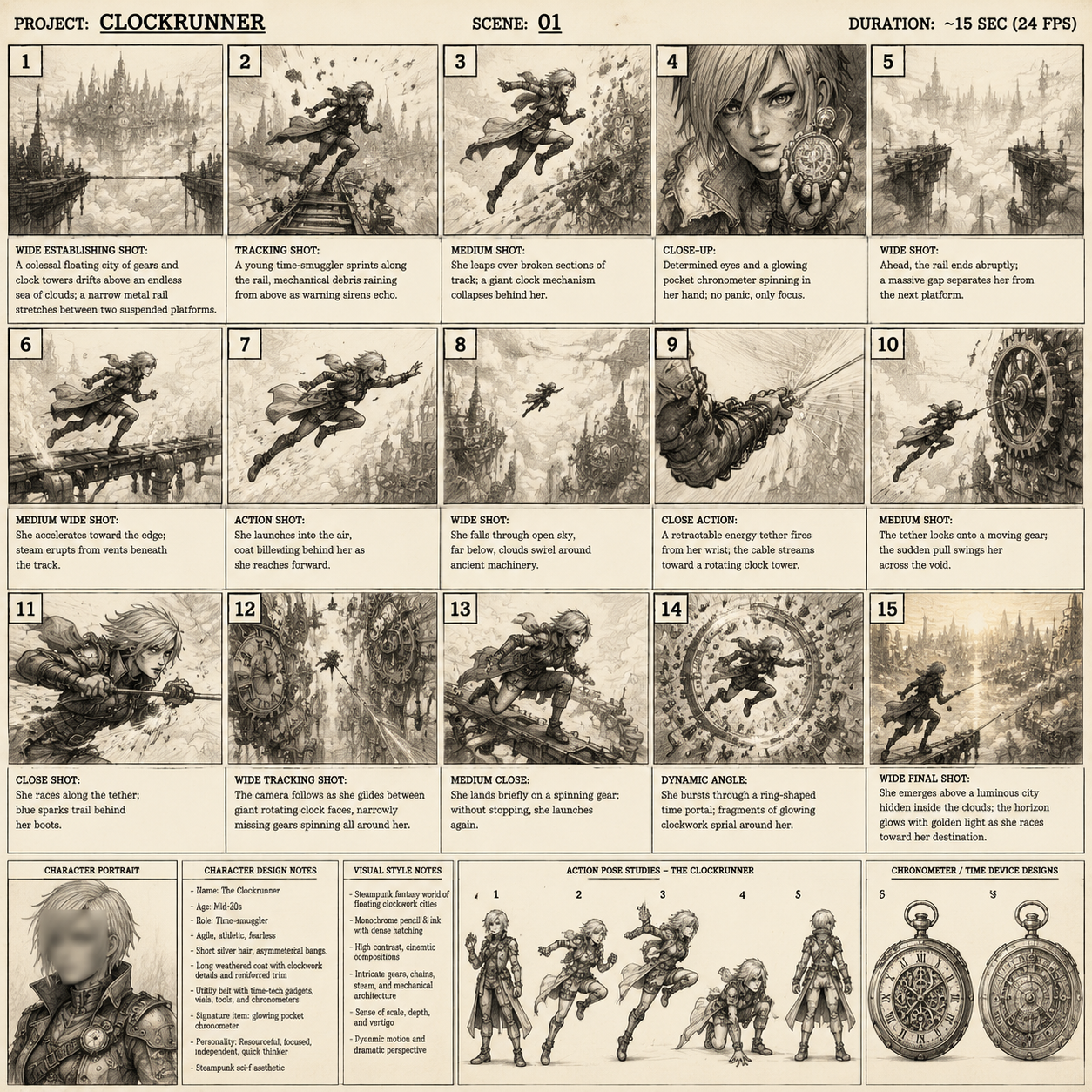
Professional AI video is built, not produced in one shot. Think of each generation as a single shot or a single setup. The film comes together when you cut those shots into sequence.
Write a simple shot list before you generate. There is your establishing shot, your medium shot, your close-up, maybe a detail insert. Generate each one separately with a consistent visual brief, then jump into an editor to assemble them. Keeping the style prompts aligned across shots is what makes the sequence feel like one film rather than a collage of unrelated clips.
Maintain consistency while you chain prompts
The word "prompt chaining" sounds technical, but it simply means reusing the same core reference across a series of generations so nothing drifts. Lock down the character reference images, repeat the same style descriptors, and reuse key phrases from shot to shot. Every element you keep stable is one element that cannot wander.
Iterate on what you have
Do not regenerate from scratch when something is close but not right. Take the almost-perfect render and feed it back as a reference, tweaking only the prompt. Each pass sharpens the result, and the consistent base keeps the character and mood intact while you refine motion, framing, or pacing.
Sound: the half of the film everyone forgets
Video without attention to audio reads as flat, no matter how good the image is. Professional short films put real effort into sound design, and AI creators should too. A music bed, subtle ambience, and any necessary voiceover carry a surprising amount of the emotional weight. Some modern platforms integrate audio generation directly into the workflow, so you can score and effects a sequence without leaving your pipeline. Even a short piece benefits when its audio matches its visuals.
Even a few minutes spent on the soundstage lifts the final product far above what raw generated footage alone achieves. Treat audio as a first-class part of the film, not an afterthought.
Common mistakes that keep work looking amateur
Several patterns reliably mark beginner work, and they are all fixable.
- Competing styles. Mixing cinematic realism with a flat cartoon look across the same sequence breaks believability. Pick one visual language and stay in it.
- Characters that drift. If your protagonist changes face between shots, the audience reads the whole piece as unpolished. Use reference images aggressively.
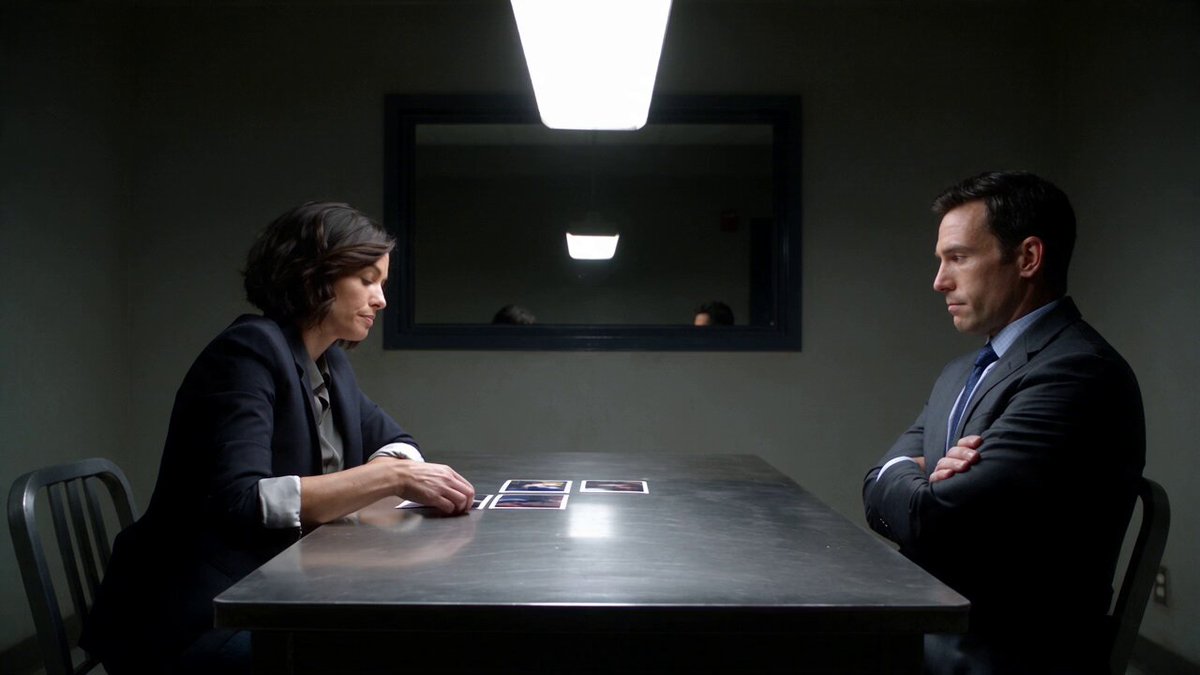
- No shot variety. A film where every shot is the same distance and angle feels static. Plan wide, medium, and close coverage.
- Missing audio. A silent sequence is rarely satisfying. Every serious piece needs a soundstage.
- Overly long generations. A sprawling prompt produces mushy results. Keep each generation a single, focused action or beat.
Building a repeatable short film workflow
As you graduate from one-off clips to regular short films, a repeatable pipeline pays off. Start with concept and story in a couple of sentences. Write a shot list and decide which shots need image references. Generate stills or keyframes for anything that must remain consistent. Then animate each shot, assemble in an editor, and finish with sound and music. Review the assembled cut and re-render only the shots that failed, rather than redoing everything.
This loop keeps quality high and waste low. It also turns filmmaking into something you can do consistently, which is exactly what building an audience or a client base demands.
Debugging a shot that went wrong
Even experienced creators generate shots that miss the mark, and knowing how to diagnose a failure is part of the craft. When a clip looks wrong, do not just re-run it and hope. Look for a specific cause first.
- Faces look wrong or deformed. This usually means the character reference was not fed in or the model is stressed by a crowded scene. Simplify the composition or add a tighter reference of the subject.
- Motion is jarring or physics look off. The model may be trying to do too much at once. Break the action into a simpler, single movement.
- The output is too bright or too dark. Revisit your lighting descriptors or start from a better-exposed still.
- The clip drifts from the style you wanted. Re-confirm that you reused the same style words as your other shots, and check that no competing style phrase slipped in.
Diagnosing the cause saves renders and, more importantly, teaches you how your chosen model behaves. Every failure you understand makes you genuinely faster at the next shot.
Choosing your tools and keeping a workflow log
There is no single correct tool for every creator, so build your own guidance as you go. Keep a short log of the models you try, the prompt patterns that worked, and the ones that did not. When a new project arrives, you can reach for a proven combination instead of re-learning everything from scratch.
A simple workflow log has two columns in practice: what you set out to make, and what the tool returned. Over a few projects, patterns appear that no amount of reading would reveal. That stored experience is what turns a competent AI video user into a professional filmmaker who can hit a target on the first or second pass.
A reusable motion template to save time
If there is one habit that accelerates everything, it is keeping a small set of tested prompt templates that you adapt rather than rewrite. Build one for a basic establishing shot, one for a medium dialogue shot, one for a close-up detail, and one for a camera move. Each holds your proven style words, a note about what to change, and the reference behavior you rely on.
When a new project begins, you copy the relevant templates, swap in the new characters and setting, and adjust only the action. This does not make your films formulaic; it simply removes the slow part of prompt writing so you can spend your energy on story and composition. Most experienced creators keep such a library, and it is the fastest single improvement you can make to your daily turnaround time.
Frequently asked questions
How long should my first AI video be
Start with a five-to-ten second clip to learn your tool. Once the basics feel natural, begin assembling multiple cuts into a thirty-second piece, then lengthen from there.
Do I need a powerful computer for AI video
Most modern platforms render on their own servers, so your hardware mainly matters for editing the results. A reasonably modern laptop can handle assembly and audio work comfortably.
How do I keep the same character across cuts
Generate a reference image of the character first, and feed it consistently to every clip. Multi-image reference features make character consistency dramatically more reliable than text alone.
Is text-to-video or image-to-video better for consistency
Image-to-video gives you far more control over who and where a scene depicts. Text-to-video is convenient for quick exploration, but serious multi-shot work almost always benefits from starting with references.
How much planning does a professional short film need
More than beginners expect and far less than traditional production. A paragraph of story, a short shot list, and stable character references are enough to build something genuinely polished.
Taking the next step
Every professional AI filmmaker started exactly where you are now, with a simple prompt and genuine curiosity. The route forward is not some secret formula; it is a habit of starting small, building consistent references, and assembling results into sequence rather than seeking one perfect generation. Pick one small story, write it down in a few sentences, break it into shots, and render the first one tonight. Learning by doing will teach you more than any guide, and there is no better time than now to begin. The tools have never been more capable, and the distance from your idea to a finished film has never been shorter.
