


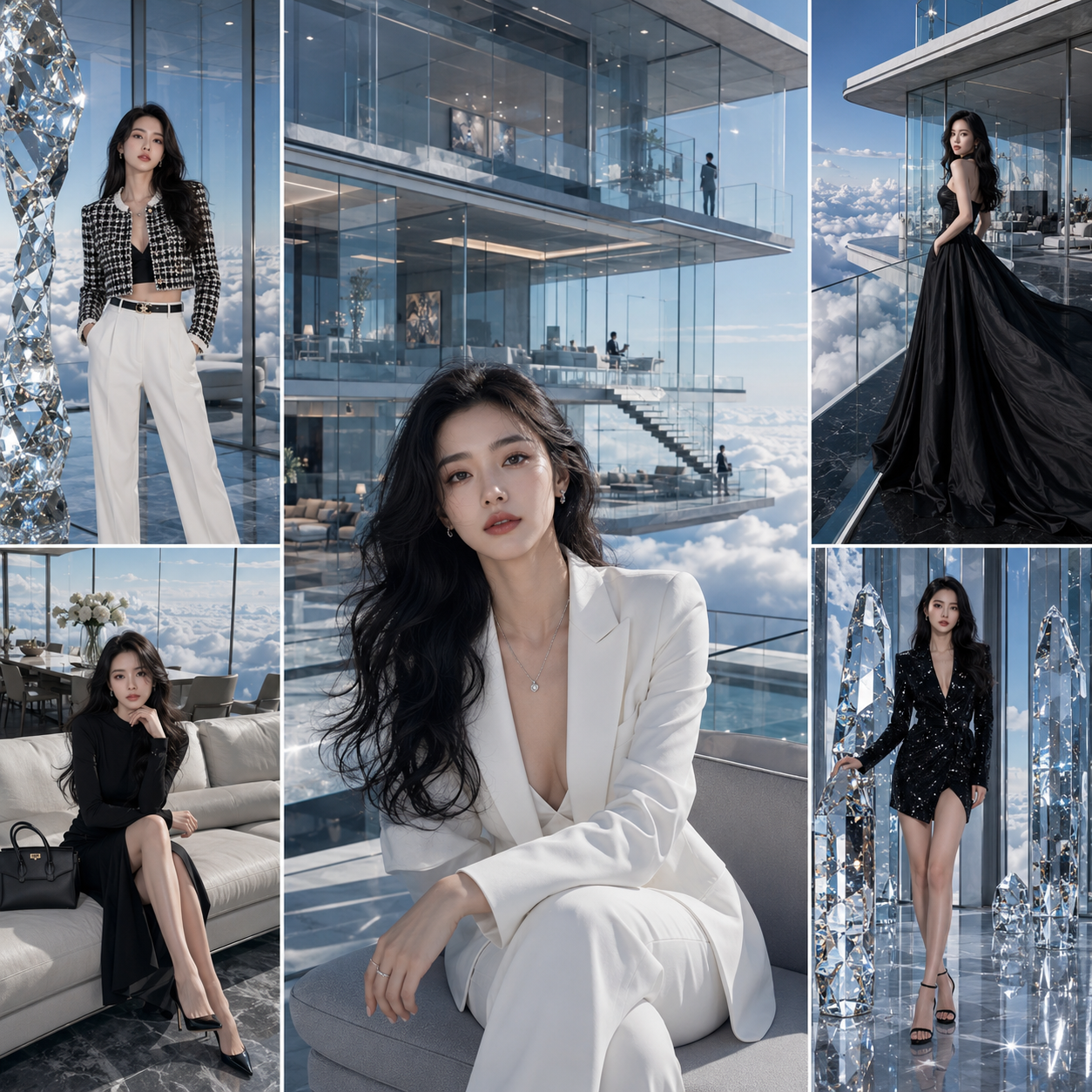
The line between reality and generated content is blurring faster than almost anyone expected. A generation ago, realistic computer graphics belonged to visual effects studios with racks of dedicated machines. Today, a well-written prompt on a capable model can produce imagery and motion that a casual viewer would swear is live-footage. This shift is not the work of a single breakthrough. It is the convergence of two waves: ever more powerful hardware, and generative models that have learned to imitate reality with unsettling precision.
Understanding this convergence matters for anyone producing content, because it changes where creative value actually lives. This article looks at the full stack behind realistic AI content—from the GPUs that make it possible, to the leading models that use them, to the AI director workflows that orchestrate the result. Along the way we will compare approaches, flag what each is genuinely good at, and give you a practical frame for choosing your own tools.
Why hardware quietly drives the AI content boom
Software gets the headlines, but hardware lays the foundation. Generative models are computationally hungry in a way that traditional rendering rarely was, and their progress is tied directly to the capability of the chips underneath.
The GPU as the engine of generation
Graphics processing units, and the specialized silicon that has followed them, are the muscles behind every text-to-video model. They perform the enormous parallel mathematics that turns a token sequence into hundreds of frames. When a company announces a faster, larger model, it is usually also announcing access to more computational power. This is why the hardware roadmap and the model roadmap move together.
From gaming cards to data-center empires
What began as a consumer chip for games has grown into the backbone of an entire industry. System-on-chip accelerators and dedicated data-center parts power the training runs that shape the latest models, while clusters of GPUs serve the millions of real-time requests those models receive. NVIDIA, in particular, has moved from making graphics cards to effectively supplying the compute on which much of the modern AI field depends.
The practical implication for creators
For a creator this means a few concrete things. Latency, resolution and length all depend on where a generation runs, not just on what model is used. Cloud platforms hide this complexity, but budgets feel it: heavy generations cost more, and premium tiers exist precisely because of what the hardware costs. When you choose a product, you are partly choosing the hardware it can afford to throw at your request.
Real-time rendering and the new realism of motion
Realism is not only about static detail. The most jarring artificiality in old computer graphics was dead motion. Advances in real-time rendering and neural techniques address exactly this, producing images that behave like real light and real camera film.
What "photorealism" changed in AI
Focal realism now extends to how light scatters, how motion blurs, how depth changes focus. Models trained on enormous video corpora internalize these physical regularities rather than approximating them by hand. The result is that the uncanny valley is no longer dominated by rendering artifacts but by subtler failures: unnatural movement, inconsistent physics, or a character that drifts.
This reframes the creative task. The marginal problem is no longer "make it look sharp" but "keep it coherent over time." The best tools handle the pixels; a skilled operator manages the continuity, the story and the judgment that pixels alone cannot provide.
The rise of AI "directors" in content production
As generative capabilities matured, a new kind of tool emerged: not a single model, but an orchestrating layer that plans and sequences the work like a director rather than a pixel generator.
From fragments to a holistic workflow
Older pipelines produced clips in isolation, leaving the creator to stitch fragments together and hope cohesion emerged. The director approach inverts this: it starts with the narrative and structure, then coordinates the generation of scenes against a shared plan. Instead of a box of random parts, you get a sequence designed as a sequence.
Where the directing layer adds real value
The orchestrating layer is strongest at three things. First, scene structure: choosing an order, a logical buildup and the emotional transitions that hold a piece together. Second, composition and camera: proposing framing, movement and rhythm that clarify the story. Third, continuity: enforcing the same characters and settings across many scenes, using techniques like image references to keep the design stable.
It is not magic. A directing layer cannot rescue a weak idea or a broken character sheet, but it can save you from reinventing the narrative in every prompt and keep your scenes on the same page.
Matching sound to image: beyond raw clips
Realism is an audiovisual illusion, not just a visual one. A brilliant scene with a flat, generic soundtrack undercuts everything the image worked to achieve.
The underrated role of audio
Modern pipelines increasingly couple sound creation and music with image generation, so the voice, the ambience and the score line up with the visuals. This matters because audiences read a clip as "real" or "fake" largely through what they hear. Crisp, scene-matched audio pulls a generated visual into the realm of the credible.
Building a finished piece, not a clip
The point is to escape the "raw clip" mindset. Layering dialogue, effects and a consistent musical bed turns a sequence into a piece with a beginning, a middle and an end. For anything you intend to publish or put in front of clients, this finishing pass is not optional—it is where professional results are made.
Comparing the leading generative models today
Model libraries cram a confusing number of options under one roof. Comparing them along a few clear axes makes the choice practical.
The realism-first family
Models in the lineage of OpenAI's Sora and Kling AI set the bar for photoreal stills and cinematic motion. They are the go-to for scenes that must look like captured footage: brand films, product showcases, atmospheric shots. Their trade-off is greater resource cost and sometimes weaker strict style preservation.
The control-first family
Models like Runway Gen and its peers emphasize control over the shot, the motion and the speed. They suit serialized content, where the same universe must persist scene after scene, and creative work where the operator wants to steer composition precisely rather than accept whatever realism the model guesses.
The budget and specialization tier
Beyond these, a wide tier of accessible and specialized models covers everyday, experimental and niche needs: faster turns, lower cost, particular aesthetics. For testing, learning and high-volume production, these deliver the best balance of speed to value. A pragmatic creator keeps one foot in each family rather than betting the studio on a single name.
Choosing the right stack for your project
With the pieces lined up, choosing becomes a question of priorities rather than a search for the "best" tool.
Case studies: three common projects
Imagine three very different deliverables. A brand film for a product launch needs realism, motion quality and a confident look: this points to the realism-first family and a generous spend on hero shots. An animated explainer for a software tool needs a distinct, friendly style held consistent across many scenes: this leans on a control-first, style-preserving family and a strict visual bible. An internal moodboard or concept test needs speed and low cost, not polish: this belongs firmly on the economical tier. Walking through your project like this, with the outcome in charge of the choice, is more reliable than memorising model names.
Match the model to the outcome
Ask what the deliverable must feel like. A believable landscape wants a realism-first model. A branded animated story wants a control-first, style-preserving model. An internal test wants the economical tier. Let the outcome dictate the family.
Match the pipeline to the scale
One-off clips can be handled with a lean workflow. Serialized or long-form work demands discipline: character sheets, style bibles, consistent prompts and a documented log. The more content you produce, the more the process matters and the less individual prompts matter.
Match the spend to the value
Spend premium resources where they visibly matter—hero scenes, final polish, customer-facing material—and economize everywhere else. This budget discipline is what separates a sustainable operation from a toy.
Staying grounded: pitfalls of chasing realism
Pursuing realism can become a trap. The most common failure is chasing technological wow at the expense of intent.
Coolness is not meaning
A staggeringly realistic five seconds that says nothing still says nothing. Clarity of message and emotion are worth more than superficial fidelity.
Realism without consistency reads as wrong
A single hyper-real frame surrounded by drifting style feels broken. Coherence beats peak fidelity when the viewer watches the whole.
The tool is not the message
Choosing a model should serve the story and the practical constraints. Locking onto a "best" model out of hype costs more than it saves.
Frequently asked questions
Do I need top-end hardware to produce realistic AI content?
No, not for most creators. The heavy compute happens in the cloud on the platform you use; you primarily need a decent machine to edit and review. Hardware matters most to teams building and training their own models.
Why do results sometimes still look "off"?
Residual artifacts are usually coherence failures rather than sharpness failures: drift in character, inconsistent lighting, unnatural physics. Improving them is a matter of references, style sheets and validation rather than of buying a stronger GPU.
How should a beginner choose between realism and control models?
Start by deciding what the piece must feel like. If it must look like footage, start realism-first. If you are building a distinct style or a series, start control-first. You can always add the other family once you know the gap it fills.
Is sound really that important for realistic content?
Critically. The audiovisual read of "real" rests heavily on audio, and scene-matched sound dramatically increases perceived realism. Never ship a clip that has not been through an audio pass.
Will hard evidence of AI generation ever disappear?
Probably not fully, and that is a healthy check. Realism can now fool casual viewing, which raises genuine questions about trust and disclosure. Responsible creators use the power openly and label it honestly.
How important is the directing layer compared to the model itself?
The model decides how convincing a single frame can be; the directing layer decides whether many frames cohere into a story. If your content is a series, an ad or a piece that must hold an audience, the directing layer can matter as much as model choice, because coherence and structure are what make several shots feel like one intended work.
Should I learn cloud or local generation setups first?
For most creators, start with a managed cloud platform so you can focus on craft instead of infrastructure. Learn the fundamentals of prompting, model selection and workflow discipline before worrying about self-hosting. If you later need maximum control, unusual data or predictable private workloads, then venture into local and self-hosted setups.
How do I keep up as models keep changing?
The field moves fast, but the skills carry over. Instead of chasing every new name, track the families you already trust, watch their releases and evaluate new entries against your own tested criteria. Your character sheets, style sheets and workflow patterns outlive any single model, so a changing catalog rarely invalidates the process you have built.
Conclusion
Realistic AI content is not one trick but a layered stack: hardware providing the compute, generative models mastering motion and light, and directing workflows holding narrative and style together. Understanding each layer lets you make deliberate choices—matching models to outcomes, spending where value is visible, and treating audio and consistency as first-class concerns alongside raw fidelity.
The creators who win here are not those who chase the most realistic frame but those who assemble the whole stack into a coherent, repeatable process. Define what your piece must feel like, pick tools accordingly, keep the story in charge, and the boundary between your intent and the generated result will keep shrinking.
