
![[BRAND NAME]: The name of the brand. Goal: Generate a single, minimalist, and...](https://storage.brightvectorlabs.com/prompts/bright/product-and-brand/2032908105994961090-0.webp)

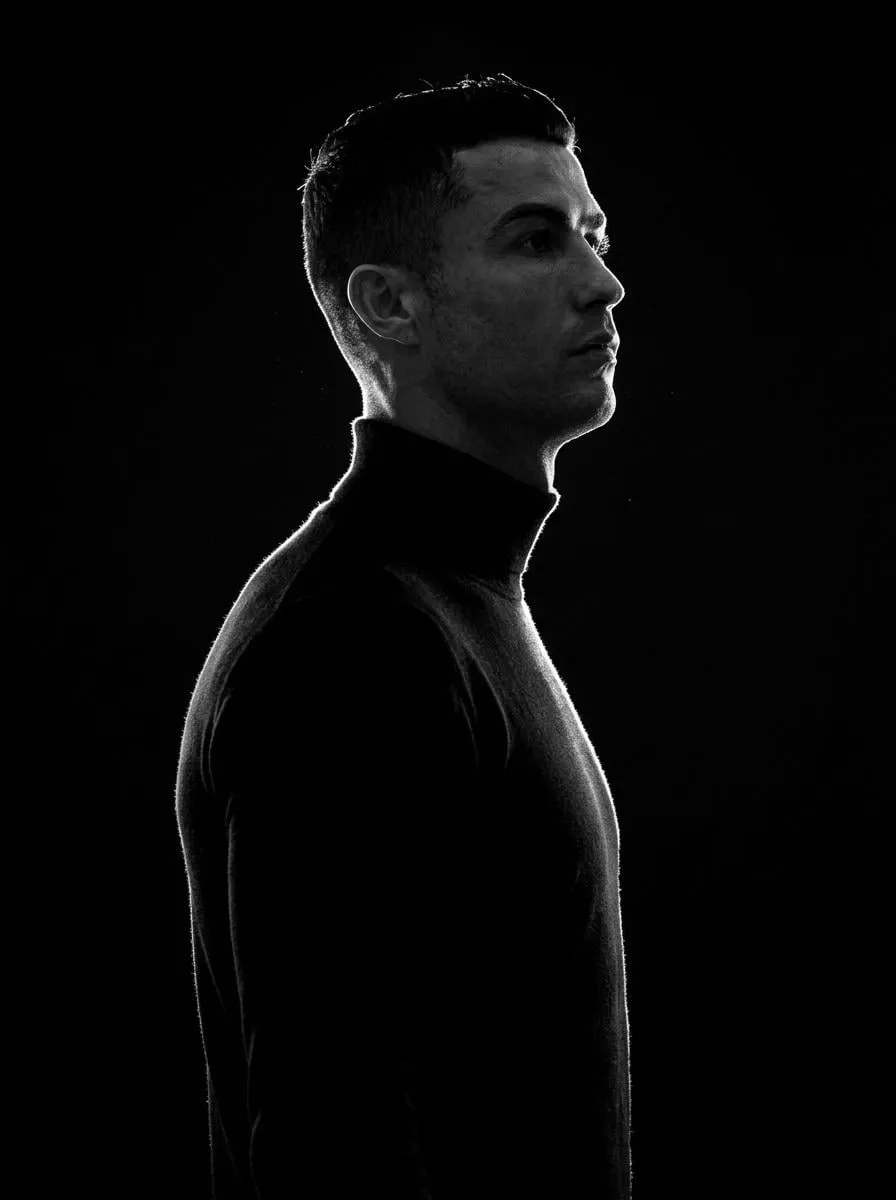
Until recently, "realistic AI video" was almost a contradiction. Models could generate impressive flashes of footage, but facial warping, gravity-defying physics, and watercolour-grade texture made sustained realism elusive. That is changing faster than most people realise. A cluster of new techniques and mature model families has pushed credible, photo-realistic video within reach of individual creators and small studios. This guide surveys what makes modern realism possible, introduces the important model families, and explains the foundational techniques you need to produce footage that genuinely looks real, not just generates a believable fragment.
What Realism Actually Requires From a Model
Producing a realistic video is a far harder problem than producing a realistic image, because the model must stay plausible not just in one frame but across time. A face must hold its identity, motion must obey physics, lighting must stay consistent, and textures must not smear between frames. Realism is the product of many simultaneous constraints staying true at once, and any single failure is enough for a viewer to feel something is wrong.
The viewer is a harsh judge. People are exquisitely sensitive to faces, eyes, hands, and motion, because our brains are wired to detect anomalies in exactly those areas. That is why the classic tell of fake video is a face that subtly morphs or a hand with too many fingers. Modern realism is largely an exercise in meeting those specific high-stakes constraints, not just improving overall sharpness or colour.
Two broad levers drive the improvement. The first is model architecture and training, which determines how well the system has internalised physics, anatomy, and style. The second is the techniques applied at generation time, such as advanced diffusion scheduling, reference conditioning, and multiple-pass refinement. Progress in realism has come from advancing both levers together.
The Model Families Leading the Way
The realistic-video landscape is defined by a handful of influential families, each with a distinct character. Leading generalist families built on diffusion models set the quality bar for context-aware, physically plausible footage, and their demonstrations of coherent scenes and consistent characters define what is possible. When people talk about "Hollywood-grade" AI video, they are usually referring to generational leaps from this family.
High-fidelity portrait and style specialists, often associated with certain regionally led models, excel at expressive and culturally aware footage. These systems frequently lead on generating believable people and lifelike motion, which makes them a favourite for character-driven and lifestyle content. For footage where the human subject is the hero, they can outperform more general systems.
Precision-control families focus on steering: letting a creator pin down exactly what happens, using reference images and multi-reference conditioning to enforce detail. These are the tools of choice when you need a specific product, a particular actor, or a defined scene element to appear with absolute fidelity. Accuracy and controllability, rather than raw spectacle, are their defining strength.
The practical lesson is to view the landscape as layered. A single family is rarely the best answer for every task. The serious workflow picks among them by job: a general family for a broad cinematic shot, a portrait specialist for faces, and a control family for anything that must match a reference exactly.
Advanced Diffusion: How the Physics and Motion Are Handled
The engine behind most realistic generation is a diffusion model, which builds an output by gradually removing noise from a random start under the guidance of a prompt and conditioning. Advanced diffusion goes further, adding mechanisms for temporal coherence so that frames do not just look good in isolation but blend into motion that reads as natural.
Motion control is the linchpin. Modern systems condition on motion data, multiple reference frames, or structural constraints that tell the model how a scene is supposed to evolve. This is what prevents a person from slightly exploding into a different person between frames. Keeping the identity and form stable across time is the difference between a clip and a sequence that survives scrutiny.
Physics modelling has improved dramatically as well. Realism demands that objects fall, sway, and interact as they would in the real world, and systems now internalise far more plausible gravity and contact behaviour. Better diffusion over better training data yields footage where cloth moves, hair settles, and objects collide believably, which is exactly the detail a discerning eye scans for first.
Making Consistent Characters Across Scenes
The single most requested capability in realistic video is reliable character consistency: the same believable person, shot after shot, scene after scene. The old approach of hoping a prompt keeps a face stable is gone. Modern tools anchor identity explicitly through reference imagery and repeated conditioning.
The workflow is to build a canonical depiction of the character first, then reuse it as the anchor for every appearance. Whether the character is a real person in a shoot or a synthetic subject, keeping one authoritative reference stabilises the look across diverse scenes. When you need dramatic scene changes without the character drifting, multi-reference conditioning lets you feed several defining images together, preserving both identity and the flexibility to move the subject.
Consistency is not just aesthetic. In branded and commercial content, an inconsistent character reads as an error and erodes trust in the product or message. Investing in a proper anchoring system up front pays off across an entire campaign, and it is the difference between a clip show and a directed piece.
Automation and the Rise of the AI Director
Beyond raw generation, a major new capability is automation of the whole direction process. What used to require a human to manually compose every shot can now be assisted by an intelligent agent that interprets a brief, breaks it into scenes, selects suitable models, and stitches the results into a coherent sequence. This turns video production from a manual chore into a directed pipeline.
The AI director's value is not artistic genius; it is workflow. It can translate a high-level description into a shooting plan, pick the right model for each scene, and maintain visual consistency by tracking characters and references throughout. For teams without a dedicated director, this collapses the distance between an idea and a first cut.
These agents also integrate with post-production, suggesting framing, transitions, and even pairing motion with sound and captions. The result is that a single creator can operate like a small production team. Humans still set the creative direction and make the final calls, but the agent compresses the execution cycle dramatically.
Put This to Work: A Realistic-Generation Workflow
Here is a workflow that turns these techniques into reliable results. Begin with the brief: the subject, the scene, and the mood you need. Choose the model family by job, favouring a general family for broad cinematic shots, a portrait specialist for close human coverage, and a control family for anything that must match a reference exactly. Build canonical references for any recurring characters or products. Generate in a layered pass: drafts on a fast model to validate composition and motion, finals on the higher-fidelity path for the shots that ship.
Keep consistency enforced through reference anchors and stable seeds, and let the motion, not just the stills, pass your own scrutiny. Because realism fails at faces, hands, and physics, review final output specifically for those high-stakes details and regenerate problem takes rather than shipping them. Finally, let an AI director string the accepted scenes into a sequence and hand the cut to you for the editorial pass where you set the story, pacing, and sound.
The Building Blocks of Credible Motion and Lighting
Realism is a combination of plausibility in several technical dimensions, and knowing the building blocks helps you control the outcome instead of hoping for it. Motion must obey the physical world: objects accelerate and decelerate, cloth and hair react to movement, and two things that touch do not pass through each other. Modern systems capture far more of this behaviour during training, but at generation time your choice of motion and your reference strategy still decide how believable the result feels.
Lighting is the second pillar. Real footage has consistent light sources, coherent shadows, and correct exposure for the scene's mood. When lighting breaks, viewers feel the wrongness even when they cannot name it. Anchor your scene's lighting explicitly in the prompt and in the reference imagery, and keep the mood stable from shot to shot. A clip whose lighting disagrees with the still image is one of the fastest ways to shatter the illusion of realism.
Texture and detail sit on top of motion and light. Real-realism asks for authentic surfaces: skin with believable texture, fabric with visible weave, materials that reflect and scatter light as they should. High-fidelity models reproduce much of this automatically, but the quality of your inputs still matters. Feed sharp, well-exposed reference images and do not over-compress your sources, because a degraded input limits how much texture the final clip can recover.
Finally, evaluate realism against the viewer's strongest instincts. Because our brains are acutely sensitive to faces, eyes, hands, and any motion that breaks physics, those are precisely the areas to scrutinise before you ship a clip. A single warped hand or an uncanny eye is enough to undo hours of otherwise believable work. Train your review process to check these high-stakes details first and regenerate problematic takes rather than accepting them, and your acceptance bar becomes the difference between footage that impresses and footage that disturbs.
The Changing Creative Workflow for Solo Creators
These tools are reshaping who can make polished video. Where a realistic-looking ad or a short narrative used to require a team, a set, and a crew, a single creator with a good brief, reference images, and a capable pipeline can now produce cinema-quality motion from their desk. That shift is democratising production in a meaningful way, but it also raises expectations, because the tools are equally available to everyone.
The new workflow leans on knowledge more than hardware. The differentiators are the quality of the brief, the discipline of keeping references consistent, the craft of the edit, and the honesty of the review process. A creator who understands how to choose the right model for each job and how to enforce character consistency will reliably out-produce someone with the same software who simply regenerates and hopes. Skill has moved from operating cameras to directing models.
Practicality favours building a small, repeatable system. Define your standard brief structure, keep a library of reference and style assets, maintain stable prompt blocks, and run a consistent review checklist before anything ships. When the pipeline is repeatable, you spend your energy on the creative direction that raises quality instead of rediscovering the mechanics each time. The solo creator who treats production as a system can now compete, on realism, with organisations that cost many times more to run.
Pairing Realistic Visuals With Sound
Realism is not only what you see; it is also what you hear. A photo-real clip with flat or mismatched audio immediately betrays itself, because in the real world, sight and sound arrive together and reinforce each other. The most plausible visuals are undermined when the noise, ambience, or music does not match the scene. Treating the soundtrack as part of the realism budget is essential, not optional.
Start by matching the ambience to the environment. Indoor scenes need the gentle room tone of an interior, outdoor scenes carry their own wind and distance, and a crowded setting implies voices and movement behind the subject. Layering believable ambient sound grounds the clip in a specific place. Music should then support the mood without overpowering it, and any foley such as footsteps, cloth, or a door latch adds the small physical cues that make a scene credible.
Practical audio is easy to get wrong, especially at moments of physical contact. If a character sets down an object, you need a subtle thud that arrives with the touch; if something moves past the camera, the sound should doppler appropriately. Matching these sounds to the on-screen action tightly is one of the strongest cheap signals of realism available, and it is frequently the difference between a clip that looks plausible and one that feels real.
Wordless realism also benefits from restraint in sound design. A whisper of grass, a distant car, or the low hum of a room often does more for immersion than a busy score. Keep the mix clean, keep the levels natural, and let the visuals stay the hero. A viewer who cannot put their finger on why a clip feels real is often responding to sound they are not consciously attending to, and getting that right pays handsomely.
Frequently Asked Questions
How real is AI video in 2026?
Remarkably real for capable models on good inputs, but realism still varies by subject and motion. Faces, hands, and physics are the areas to check most carefully because they fail most often.
Do I need a powerful computer for realistic generation?
Most capable systems run in the cloud, so modest local hardware is usually fine. You pay in either usage cost or waiting time, and you trade speed for fidelity by layering cheap and premium paths.
How do I keep the same character across multiple realistic clips?
Anchor every clip to a canonical reference image and reuse identical descriptive phrasing and stable seeds. Multi-reference conditioning lets you preserve identity across dramatic scene changes.
Can automation really direct a whole video?
Modern AI director agents can break a brief into scenes, choose models, keep characters consistent, and assemble a sequence. Humans set direction and do the final edit, but the execution loop is dramatically faster.
Final Thoughts
Realistic AI video is no longer a promise; it is an attainable production capability grounded in advanced diffusion, mature model families, explicit character anchoring, and workflow automation. The tools make it possible, but the craft is still yours: choose the right model for each job, enforce consistency with references, review the high-stakes details of faces, hands, and physics, and drive the whole pipeline toward a finished cut. Realism is the baseline now, and the creators who stand out are the ones who combine it with a clear eye and a disciplined workflow.
