
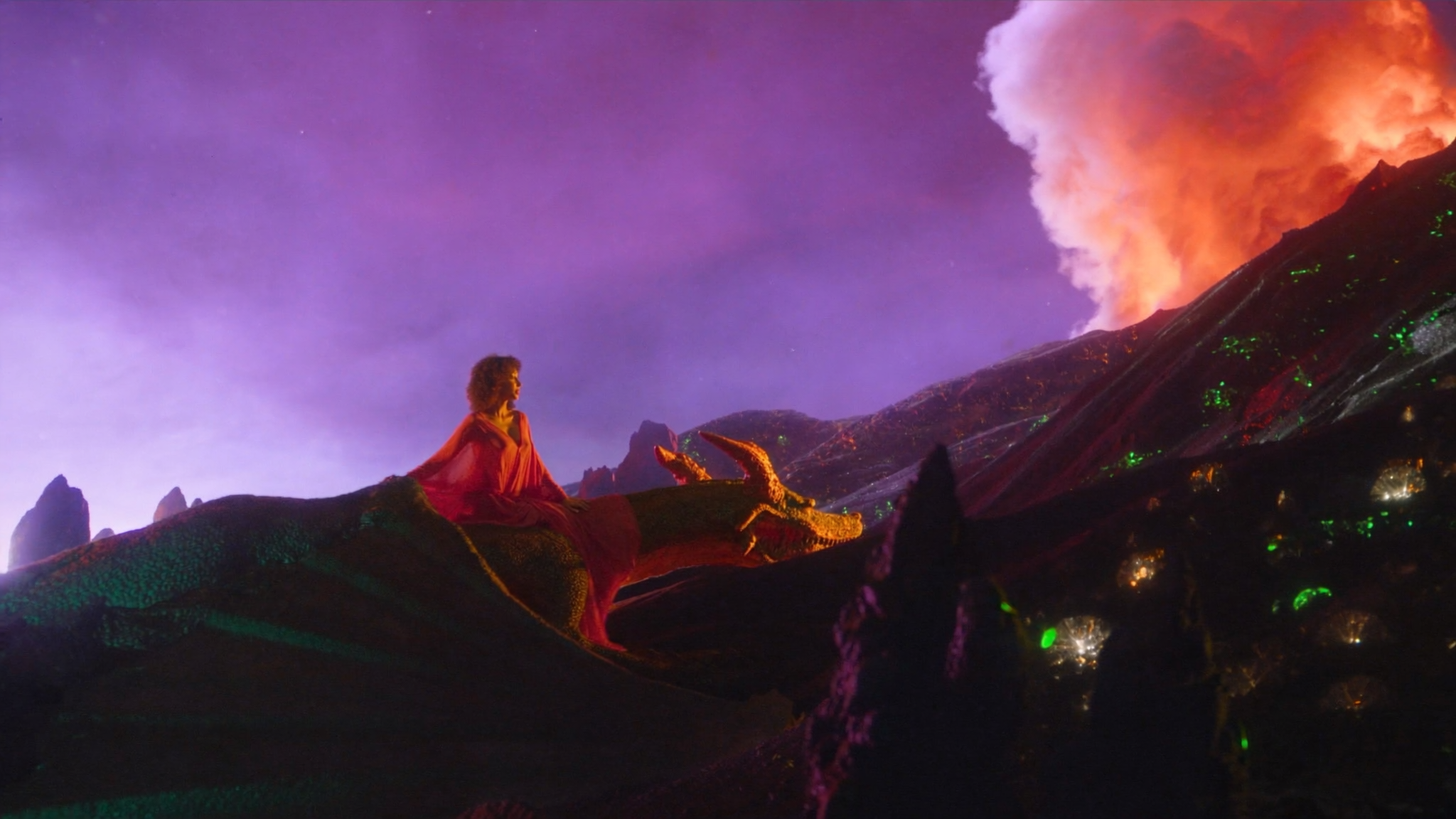
You can no longer claim you lack the resources to make a short film. The camera, the location, the extras, and even much of the direction now live in a prompt. A well-written line of text can produce studio-grade-looking footage in minutes. The craft has shifted from wielding expensive gear to wielding language, and the creators who master that craft are making films in days that used to take months. This playbook shows you how to write the prompts that make it happen.
Why Prompting Is Now a Film Skill
Short films are powerful but punishing to produce. Every scene costs time, money, and coordination across a crew. Generative video removes most of the physical overhead. In its place it introduces a new bottleneck: the quality of your instructions. The text you write is the script, the camera operator, and the cinematographer rolled into one. When you describe a scene well, the model delivers. When you describe it vaguely, the model guesses, and guessing usually means drift, blandness, or visual chaos.
This is why prompt engineering has become a genuine filmmaking discipline. Understanding how to structure a single prompt, how to sequence a set of prompts across scenes, and how to keep a character consistent from shot to shot is now the equivalent of knowing how to block a scene or hold a dolly shot. You are authoring a film through the written word.
The Anatomy of a Strong Video Prompt
A reliable video prompt answers who, what, where, when, and how, for both the content and the presentation. The most useful structure has three layers.
The scene layer
This is the what: the subject, the action, and the setting. State the character clearly, say what they are doing, and place them somewhere specific. Concrete nouns beat vague adjectives. "A tired bus driver eats noodles alone in a neon diner at 2 a.m." gives the model a world to render. "A moody scene with a person" gives it almost nothing.
The style layer
This is the how-it-looks: the visual tone, the lighting, the mood, and any reference to the format. Cinematic, film noir, soft golden hour, shallow depth of field, handheld documentary realism. Each phrase nudges the model toward a recognizable aesthetic, and layering two or three of them locks in a look.
The camera layer
This is the how-it-is-framed: the shot size, the angle, and the movement. Close-up, wide, overhead, slow push-in, tracking shot. Describing the camera turns a static illustration into a deliberate piece of filmmaking and gives your film a consistent visual grammar across scenes.
A prompt that fills all three layers reads like a shot in a storyboard. That is exactly what it is.
Keeping a Character Consistent Across Scenes
The hardest part of a short film is that the same character must appear across many scenes and still look like the same person. Text alone usually fails at this, because the model rebuilds the face from scratch on every generation.
Use reference imagery
Provide reference stills of your character, taken from an earlier generation or collected from concept art, and use them as the identity anchor for every scene. The model stays aligned to a fixed set of features much more reliably than to a repeated description.
Lock the details that must not change
Pick the invariants, hair length, eye color, defining marks, core wardrobe pieces, and repeat them unchanged across prompts. Keep them identical so the identity does not drift between scenes. The things that can change, expression, angle, setting, are left to each scene prompt.
Test with a harsh transition first
Before committing to a full shoot, put your character through a scene dramatically different from the references, a change in lighting or environment. If the identity holds there, it will hold across the rest of the film. Catching drift on a test shot is far cheaper than finding it after editing.
Cinematography You Can Request
You get to be a director of photography through your prompts, and you should be. Build a small vocabulary of camera moves and shot sizes, then apply them deliberately.
Shot sizes
Establish your visual language with close-ups for emotion, mediums for dialogue, and wides for setting. Using the right size for the right moment is what makes a film feel intentional.
Camera moves
A slow push-in creates intimacy. A tracking shot builds momentum. A crane or overhead reveal establishes scale. Let the movement serve the story's meaning rather than merely decorating it. Asking for a specific, meaningful move reads as direction; asking for random motion reads as noise.
Continuity of time and space
When a scene must feel like it takes place moments after the previous one, keep the lighting, the wardrobe, and the camera grammar aligned between the prompts. Treat each prompt as part of a single scene plan instead of an isolated request. The model honors continuity only as well as you specify it.
Choosing the Right Model for the Job
As your prompt skills grow, so does your awareness that different models serve different purposes. Realism-focused models excel at believable faces, skin, and natural light, worth their cost for hero shots. Fast, budget-conscious models are ideal for testing concepts and assembling cheap fill material. Style-specialized models nail a consistent anime or illustrated aesthetic for a whole film. Camera-control models give you precise, repeatable moves.
The rule of thumb is to separate hero work from filler. Spend your premium renders on the shots that define the film, the opening, the emotional peak, the final image, and use cheaper models for transitions and atmosphere. Budget your generation the way a producer budgets a shoot.
Optimizing Cost and Speed in a Batch Workflow
A short film is a series of shots, and that is an advantage, because you can plan it like a batch. Sketch the whole film as a shot list before generating anything. Decide how many scenes you need, what each requires, and which segments are hero versus filler. Then produce in short, individual clips rather than trying to render an entire film at once. Short generations are more stable, easier to review, and cheaper to fix, since you only regenerate the weak segment rather than discarding a full render.
Managing the task flow
Keep a clear queue of what you are generating and why. Note the prompt, the model, the quality tier, and the status of each shot. This simple discipline prevents wasted renders and makes it obvious which shot is blocking the edit.
Writing Prompts for Narrative Depth
Beyond descriptions, great short films carry subtext, tension, and payoff. You can push for depth in your prompts too.
Prime the model's attention
Earlier is stronger. Put the scene's most important element early in the prompt, where the model weighs it most heavily. If the mood is the point, lead with it; if an action is the point, lead with that.
Ask for what you want, not what you are avoiding
Describing the effect you want, "the room feels cold and empty," outperforms a long list of what to avoid. Positive, concrete direction shapes the output far more reliably than attempting to ban problems.
Read and react like a director
Treat every render as a take. If it is close but not right, the smallest changes to a single layer, the light, the camera, the style, can shift the result. Iterate the prompt you have rather than starting from zero. The fastest editor is the one who saves the fragments that work.
Common Pitfalls When Making AI Short Films
The most common trap is length. Trying to render a long sequence in one go invites instability. Break it into short, shot-sized segments. Another is inconsistency: characters drift when identity is left to text instead of references. A third is treating every shot equally, which burns your budget on filler and leaves nothing for the hero moments. A fourth is skipping the edit and expecting the model to deliver a finished film. AI is the raw material; your editor does the pacing, music, and cuts that make it a film. Respect all four and your short will come together cleanly.
Crafting Scenes with a Strong Emotional Core
Great short films rest on a moment the audience feels, not just a sequence they see. Decide your emotional intention before you write a single prompt: is the viewer supposed to feel tension, relief, longing, dread? Let that intention drive the lighting, the camera, the pace, and the subject of each scene. A close-up lit from one side with a slow push-in reads very differently from a wide, flat, static shot. State the emotion you want in the prompt and describe how the performance should land, a trembling hand, an averted gaze, a long pause before action. When the model understands the feeling you are after, the footage comes out charged instead of merely correct, and that emotional charge is what turns a watchable short into a memorable one.
Working With Limitations Instead of Against Them
Every model has honest limits, and the smartest filmmakers design around them rather than fight them. Short segments are where generative video is strongest, so structure your film as a chain of brief, stable shots joined in the edit instead of demanding a single long take. Complex physics, crowds, and long uninterrupted motion are the most likely weak spots, so keep those moments short or cut around them. Where a model struggles with a character's hands, hold the shot on the face or frame it to avoid the weak area. Treating limitations as constraints to design within, not as failures to overcome, is a hallmark of mature work; the audience never sees what you avoided, only what you chose to show.
Developing Your Direction Through Repetition
Prompting well is a skill that improves only with volume and honest review. Commit to a routine of producing, watching, and revising. After every render, ask what worked and what the model misunderstood, then change one layer at a time to observe the effect. Over weeks you build an intuition for how camera, style, and wording each shape the output, and your re-renders shrink in number while their quality grows. Keep a personal backlog of prompts that have worked and the contexts they suit, so you are never starting from a blank page again. This kind of deliberate practice converts prompting from a lucky skill into a reliable craft you can point at any project.
Budgeting Your Renders Like a Producer
Just as a producer budgets a shoot, you should budget your generation. Classify each shot by its importance to the film before you render, hero shots that define the piece versus transition and filler material. Allocate your strongest, most expensive renders to the hero shots, the opening, the emotional peak, the final image, and use cheaper, faster models for transitions, establishing coverage, and atmosphere. Always hold a small reserve for fixing drift or resynthesizing a weak segment. This discipline keeps your resources from vanishing on forgettable frames and ensures the film's defining moments get the quality they deserve, which is exactly how you protect a short production on a limited budget.
Frequently Asked Questions
How long should each generated segment be?
Keep individual renders short, a few seconds each. Long or fast spans invite instability. Join short segments in the edit, which also makes it easy to regenerate only the weak parts.
Can one character stay consistent across a whole film?
Yes, if you anchor it well. Use reference imagery or a trained identity and carry the same anchor through every scene, locking the invariants and varying only what the scene legitimately changes.
How many takes do I need per shot?
Generously, at least two or three for anything important. The strongest composition is frequently not the first, so give yourself options before you commit to an expensive full render.
What is the minimum viable workflow?
A strong layered prompt, reference-based character consistency, short stable segments, and a review-and-edit pass. That small core can carry a complete short film, and everything else in this playbook sharpens it further.
Conclusion
Do that, and a short film that once took a crew and a month becomes achievable by one person with a keyboard and a weekend.
