

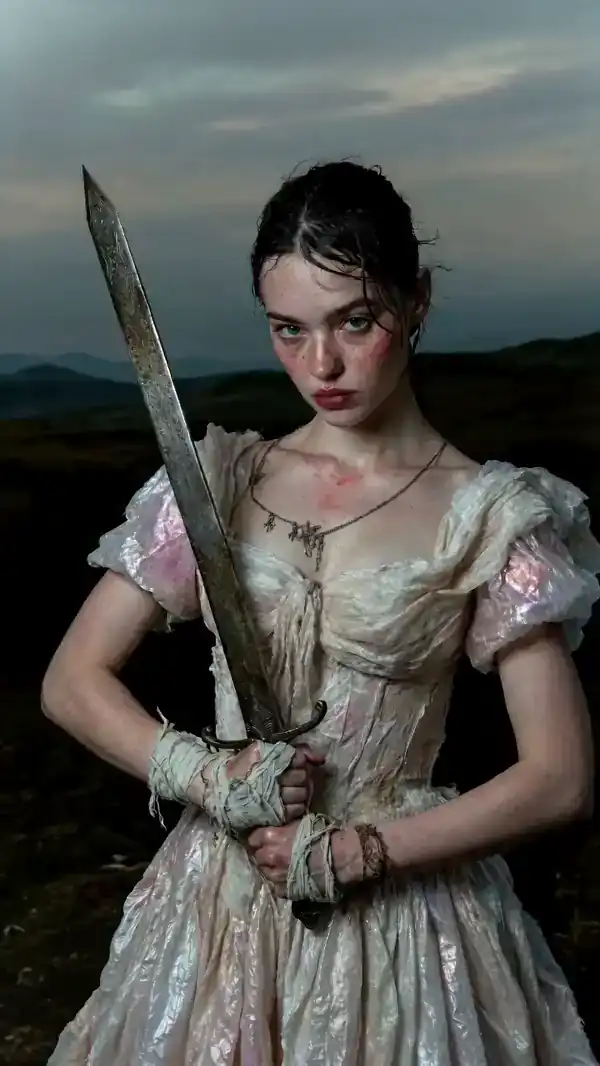
The barriers that once protected professional filmmaking are falling. A short film used to require a camera crew, locations, actors, insurance, and weeks of post-production. Text-to-video AI collapses most of that into a different kind of work: writing, directing, and curating. The films you can make today, alone and on a laptop, would have been impossible to produce independently just a few years ago. The question is no longer whether you can make one, but how to make one that people actually want to watch.
What Makes a Short Film Outstanding
Technical novelty is not enough. Audiences forgive imperfect visuals much faster than they forgive confused storytelling. An outstanding short film, regardless of how it was produced, has three qualities: a story that makes sense, characters that stay recognizable, and a consistent visual world.
Narrative consistency means each shot clearly follows the one before it. Character consistency means the protagonist looks like the same person in every scene. World consistency means the lighting, color and atmosphere feel like one place, not a collage of random clips. Get those three right and the film works. Get them wrong and no amount of visual polish will save it.
The good news is that these qualities are achievable with AI. The bad news is that they require planning, because every generation starts from zero and will drift toward randomness unless you anchor it.
The Core Technologies: Character and Style Preservation
Two techniques do most of the heavy lifting in AI filmmaking.
Multi-image fusion keeps characters stable. Instead of describing your protagonist in words and hoping, you feed the model several reference images: the same character from different angles, expressions and lighting conditions. The model builds a stable identity from those images and applies it to every new shot. This is the difference between a character who resembles your hero and a character who is your hero.
Style preservation keeps the world consistent. The same idea applied to the overall look: collect reference frames that define your color palette, lighting recipe and texture language, and feed them alongside each prompt. A film shot in warm, dusty, golden-hour light should look like that in every scene, and references are how you enforce it.
Building a Shot List from Your Script
A short film is a sequence of shots, and the shot list is your production plan. Write it before you generate anything.
Take your script and break it into beats. For each beat, decide the shot: what we see, how the camera moves, and what the audience should feel. A five-minute film might have forty to sixty shots. A social short might have eight to twelve. The number does not matter; the intentionality does.
Each line of the shot list becomes the skeleton of a prompt. Subject, environment, action, lighting, camera, mood. When a generation misses, you know exactly which element to fix. The shot list also prevents the classic failure mode of AI filmmaking: generating thirty random clips and then trying to force them into a story that was never written.
Selecting Models for Different Shots
Treat your model library like a lens kit. Different shots need different tools.
Hero shots, the moments that define the film, deserve the premium photorealistic models. This is where texture, skin, light and camera behavior get scrutinized. Spend your resources here.
Establishing shots and transitions can use faster, lighter models. A sweeping wide of a landscape does not need the same fidelity as a close-up of a face, and saving the budget there means more renders for the moments that matter.
If your film has a stylized look, look for specialized models that understand that aesthetic. A model trained on illustration will handle animated scenes far better than a photorealistic engine.
The AI Director in Pre-Production
Before you generate a single frame, you can use an AI director agent to turn your script into a coherent plan. These agents help with the parts of directing that are pure process: breaking scenes into shots, suggesting camera angles, ordering the shots for maximum narrative clarity, and keeping track of continuity.
For first-time directors, this is a mentor that makes the invisible parts of the craft visible. For experienced filmmakers, it is an assistant that handles the boring overhead. Either way, the pre-production phase becomes faster and more deliberate, and the shot list that comes out of it makes every later step more reliable.
Managing Visual Consistency Across Cuts
The edit is where consistency lives or dies. Even with perfect references, adjacent shots can clash.
The trick is to treat every cut as a question: does the audience know where they are, who they are with, and what time it is? If two consecutive shots have different color temperatures, the audience feels something is wrong even if they cannot name it.
Fix this by standardizing your references and your prompt language across the whole film. The same character description, the same environment description, the same lighting description in every shot that belongs to the same scene. When you review the assembly, watch it twice: once with sound for story, once muted for visual flow.
Sound Design and Finishing
A film without sound design is a rehearsal. Sound is where AI films start feeling like real films.
Layer three elements: voice for narration or dialogue, music for emotional pacing, and ambience for the physical world. A rain scene needs rain that actually matches the visuals. A quiet conversation needs room tone. These layers do not just decorate the film; they tell the audience how to feel at every moment.
Match the music to the edit, not the other way around. Once the cut is stable, score to the picture: build the track so that swells land on the moments you want to emphasize. If you designed the sound before the edit, recheck the timing after the final cut, because a one-second trim can shift the whole emotional beat.
Distribution-Ready Workflows
Think about distribution while you are editing, not after. Vertical 9:16 for TikTok, Reels and Shorts. Horizontal 16:9 for YouTube and festivals. Your shot list should favor compositions that survive both crops, which usually means keeping the subject centered.
Export in the platform's recommended settings so your carefully graded film does not get crushed by compression. And consider making a cutdown: a thirty-second teaser of your best moment works better for discovery than asking people to commit to the full film.
Budget-Friendly Production Tips
Start small. A three-minute film with ten shots teaches you more than a thirty-minute epic that never finishes.
Reuse references. The character pack you build for one film can seed the next. Your style references are a growing library of your own aesthetic.
Prototype with fast models. Every idea gets cheaper to test when you iterate with lightweight models and only commit the winners to premium renders.
Do the sound yourself. Voice synthesis, music generation and basic ambience tools are accessible now, and a clear synthetic voice is often more consistent than a rushed recording.
A Sample Shot List
Seeing a real shot list makes the process concrete. Here is a short one for a two-minute film about a courier who discovers a message meant for someone else.
Shot one: wide establishing of the city at dawn, the courier as a small figure crossing a bridge. Shot two: medium tracking of the courier weaving through morning traffic, camera at knee height for energy. Shot three: close-up of the package, the torn corner revealing a handwritten note. Shot four: extreme close-up of the courier's eyes reacting, slow push-in. Shot five: reverse over-the-shoulder of the note, the address blurring in the foreground. Shot six: wide of the courier stopping mid-street, the city carrying on around them. Shot seven: medium of the courier folding the note and walking on, camera holding as they shrink into the crowd.
Each line already contains the subject, the action and the camera. Expanding it into a full prompt is mechanical: add the light, the atmosphere, and the negative clause. The shot list is the film on paper, and the generation is just rendering.
Festival vs Social Formatting
Where the film lives changes how you make it.
For festivals and streaming, think horizontal 16:9, longer shots, and room for the story to breathe. The audience has chosen to watch, so you can reward patience with atmosphere. Sound design matters most here; festival judges and serious viewers notice mixing quality.
For social platforms, think vertical 9:16, faster cuts, and a hook in the first two seconds. The audience has not chosen to watch, so you must earn every additional second. Compositing for both means keeping the subject centered and avoiding critical information in the extreme edges of the frame.
A pragmatic approach: cut the film properly for the primary format, then make a cutdown for the secondary one. The teaser version, thirty seconds of the strongest moments, doubles as your discovery tool on social while the full film lives on your channel.
The Iteration Discipline
Quality in AI filmmaking is a product of iterations reviewed honestly, not of a single perfect generation.
Set a rule for yourself: every shot gets at least two variants, and you keep one. Review against the shot list, not against your hopes. Does it show the right subject? Does the camera do what you wrote? Does it match the mood? Three questions, thirty seconds, decision made.
When a shot fails, change one thing at a time. If the composition is wrong, fix the camera language. If the character is wrong, fix the references. If the light is wrong, fix the atmosphere. Changing everything at once teaches you nothing and usually produces another failure.
Track what works. The prompts that produce keepers are your personal craft knowledge, and they compound across projects faster than any generic tutorial.
Working with Music and Licensing
Music can make or break a film, and it is the piece of the puzzle with the most legal traps.
For generated music, check the platform's terms about commercial use and about training on your work. For licensed music, read the license carefully: some tracks are fine for social but not for festivals, and some are fine for both but require attribution. For original compositions, keep the session files and a paper trail of ownership.
The practical rule is to decide the music path before you edit, not after. If you plan to use a licensed track, secure it early and cut to it. If you generate a score, leave yourself enough time to iterate on the emotional shape. Music discovered at the last minute leads to edits that fight the picture.
A final consistency check worth doing before export: watch the film with the sound off and ask only one question, does every cut feel like it belongs in the same world? If a shot breaks the illusion, fix it now. The audience will never hear your explanation of why it was hard.
FAQ
How long should my first AI short film be? Under three minutes. Short enough to finish, long enough to learn the workflow.
Can I use my own characters? Yes. Original characters give you full freedom and the reference pack is easy to build from your own art or photos.
Do AI films need a script? Yes. The script is the foundation of the shot list, and the shot list is the foundation of consistent generation.
What is the hardest part? Consistency across many shots. It is not technically impossible; it is a planning discipline that most beginners skip.
Will audiences accept AI films? They accept good stories. The tool is invisible when the film works.
Do I need to tell people it was made with AI? Platforms increasingly require disclosure for synthetic media. Transparency also builds trust with your audience.
The revolution in short film production is real, but it rewards filmmakers, not just prompters. Plan the story, anchor the characters, keep the world consistent, and finish with real sound design. The technology supplies the images; you supply the intention. Do that, and the short film you make alone in a weekend will hold its own against work produced by teams that cost a hundred times more.
