

![Create a 1:1 cinematic product poster (1080×1080) of [BRAND & PRODUCT],...](https://storage.brightvectorlabs.com/prompts/bright/product-and-brand/2017188683766538498-0.webp)
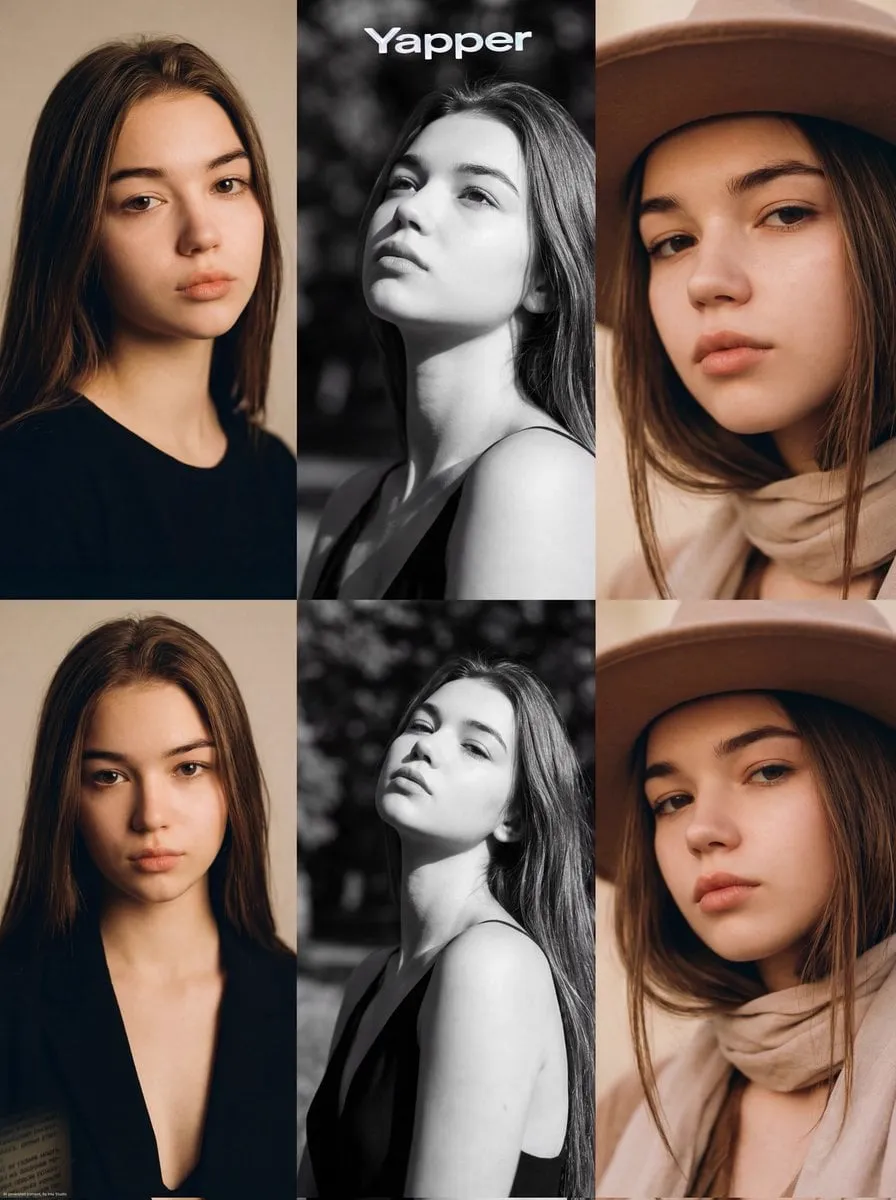

Combining Continuous Character Scenes in Short Video with Multi-Image Fusion
Short-form video dominates the digital landscape, and the creator economy runs on it. But short does not mean simple. The most engaging short videos tell a continuous micro-story, and that demands something generative tools have historically been bad at: a character who stays recognizable from scene to scene. Multi-image fusion is the technique that finally lets creators unite separate clips into one continuous, story-driven sequence. This article explains how it works and how to put it to use.
Why visual continuity is the new benchmark for short video
Short-form platforms reward retention, and retention rewards narrative. As the market matures, viewers judge AI-made short video less by whether it looks generated and more by whether it holds together. Visual cohesion, a character who looks like the same person, a setting that stays the same place, is increasingly the quality signal audiences use.
The trouble is that generative AI, left to its own devices, invents a new face every time. A creator who wants a hero to appear in scene after scene cannot afford that. Multi-image fusion answers the need by giving the model a stable visual identity to draw on, which turns scattered clips into an ongoing story.
How multi-image fusion breaks the frame-by-frame trap
Traditional frame-by-frame generation treats every shot as a fresh start, which is why characters drift. Fusion reverses this assumption. Instead of building each frame from nothing, the process starts from a set of reference images and lets the model fill in the motion and composition around a fixed identity.
By analyzing keyframe data and the relationships between reference images, the system builds a persistent model of who the character is, their face, their proportions, their costume. Every generated scene then draws on that model. The result is that scenes created at different times still belong to the same character and the same world.
Reference sets and asset libraries
The foundation of this technique is the reference set. For professional use, creators assemble a small library of views for each recurring character: face, profile, full body, costume, and a signature prop. These become a reusable asset that can be dropped into any scene, keeping continuity without regenerating from scratch.
Keyframe control for frame-level consistency
Beyond identity, fusion works with keyframes to keep motion grounded. You define the start and end of a movement, and the model generates the frames in between. Because the identity anchor and the keyframes are consistent, the character reads as one person moving through a single continuous space rather than a string of unrelated shots.
Building a professional character library
Treating characters as assets, rather than one-off prompts, is what turns fusion from a trick into a production system.
Curate multiple consistent views
Generate or collect your references under similar lighting and framing so the model receives a coherent signal about how the character actually looks. Include front, profile, and full-body views, plus any costume or prop you need to keep consistent.
Standardize the palette and style
Write a short, reusable style block covering light, color, and camera feel, and pair it with the reference set. Continuity comes from locking the character's identity and the visual mood at the same time.
Store and share the assets
Keep reference sets and style blocks organized and, if you collaborate, share them as files with the team. A shared definition of the character removes the ambiguity that causes inconsistencies between hands.
Combining fusion with an automated director layer
In more advanced workflows, a director layer handles scene composition and pacing on top of the fusion engine. It reads the story outline, proposes framing and shot order, and applies the fused identity automatically. This reduces the manual decisions a solo creator has to make and gives short-form productions a structure that used to require a team.
The payoff is that a creator can script a three- or four-scene micro-story, let the director layer plan the shots, and generate every scene with the same character intact. The assembly feels like one short film rather than three separate clips glued together.
Reducing cost and accelerating commercial production
For commercial work, the appeal of fusion is economic as much as creative. Producing several continuous scenes from a single shared identity replaces multiple rounds of regenerate-and-hope with a single reusable base. Fewer failed takes, less manual fixing in post, and faster turnaround mean projects that used to be expensive become routine.
That speed compounds on short-form channels, where volume and consistency both earn attention. A creator who can reliably produce serialized characters at scale has a clear advantage over one who must nurse every clip through a painful process.
Avoiding the common continuity failures
Even with fusion, projects can go wrong. Watch for these patterns.
Reference sets that contradict each other
If one reference shows the character with different hair or clothing than another, the model gets a confused signal. Standardize the core attributes across all references before you fuse.
Style drift between scenes
When the palette wanders between shots, the story loses cohesion even if the face holds. Enforce the same style block on every scene and keep the color language locked.
Motion that does not match identity
A character who looks right but moves like a floating object breaks the illusion. Use keyframes to ground the physics of the movement so the visual identity and the physical behavior share the same grounding.
A practical workflow for short-form creators
Apply this sequence to your next multi-scene short and continuity will look after itself.
1. Lock the character before you write scenes
Build the reference set and style block first. Treat this as the canonical definition of who your character is.
2. Plan scenes around the fused identity
When you write the story brief, note which character and which setting each scene needs, so every generation knows exactly what to draw on.
3. Generate scene by scene against the same anchor
Run each scene with the same reference set and style block. Resist re-describing the character differently each time.
4. Check the keyframes and transitions
Review where scenes connect and where characters move. If identity and style hold at the seams, the rest follows.
5. Reuse the winning setup
Save the references and style language from a project that worked. Your next short series can begin from this proven starting state.
Frequently asked questions
Do I need many reference images?
Start with a clear set, front, profile, full body, and add targeted references for specific scenes. More is not better if the extra references conflict.
Does fusion work for products and settings too?
Yes. The same anchoring logic keeps a product, a location, or a prop consistent across clips, not just a person.
Is this only for animation?
No. The principle is style-agnostic. Photoreal project just demand tighter reference quality and color calibration.
Matching the technique to your content type
How you apply fusion should follow what you are making. The needs of a serialized character-driven series differ from a single brand spot, and recognizing that keeps your effort proportionate.
Character-driven series
Here the character is the reason people return, so consistency is the entire point. Build one rock-solid reference set and never change it. Every episode, every scene, every shot draws on the same identity, and the audience builds a relationship with a face that never wavers. Speed and repeatability matter more than flexibility.
Advertising and product spots
A short ad usually has a clear hero product and a limited runtime. Fuse the product's reference to keep it identical across cameras, angles, and scenes, and pair it with a tight style block so the whole spot feels like one brand moment. The discipline is about polish and accuracy, because there is one deliverable and it must be flawless.
Social-first experimental content
If you are testing hooks and formats, keep the references light and the turnaround fast. A quick anchor is enough to keep things consistent while you audition different moods and edits. Lock a direction only once the test shows promise, then invest in a stronger anchor for the real rollout.
The relationship between editing and generated continuity
Even the best-generated footage only becomes a story in the edit, and editing has a reciprocal effect on how continuity is perceived.
Cut on the continuity, not against it
Place cuts where the character and the setting support a clean match, so the eye reads a continuous world. When a cut fights the continuity, the audience feels the jolt even if they cannot name the reason. Use the seams where identity and setting align to do most of your cutting.
Let the edit reinforce the fused identity
A consistent grade applied across clips makes the fused identity read as even more cohesive. Color, contrast, and transitions that are tuned to sit together turn a set of coherent clips into a seamless piece. The edit is where fusion's investment pays off visibly.
Preserve the micro-story pacing
Short-form success lives in the first few seconds and in the rhythm that follows. Keep the hook early, keep each scene earning its runtime, and end on a beat that invites a return. Continuity makes that micro-story believable; pacing makes it watchable.
Building your own asset management habit
The practical discipline that makes fusion sustainable is treating your references as managed assets. A little organization goes a long way.
Name assets for reuse
Use consistent, descriptive names for reference sets and style blocks, such as the character name, project, and version. Well-named assets are findable, which means they get reused instead of recreated.
Version your anchors
When a character improves or changes, save the new anchor as a new version rather than overwriting the old one. This lets you roll back if the change does not land and gives your team a history of what worked.
Audit assets periodically
A quick periodic review of your reference libraries, deleting conflicting or unused sets, keeps your store clean. A lean, consistent library is far easier to rely on than a large, messy one.
Measuring success in the creator economy
For creators, the value of consistent, continuous content shows up in the metrics that matter and in the sustainability of the work itself.
Retention and return
Continuous characters tend to hold attention longer and bring viewers back for the next installment, because the world feels followable and the promise of "the same hero, another adventure" is clear. Both are strong signals on short-form platforms.
Production sustainability
When you can generate a scene from a locked anchor in less time and with fewer failed takes, the workflow becomes something you can sustain at volume. Sustainable speed beats unsustainable polish, because it is what lets you keep publishing regularly.
Recognition and brand
A creator known for a consistent world and characters builds recognition that one-off content never offers. That recognition compounds, turning regular viewers into an audience that anticipates the next scene.
Troubleshooting the awkward middle
A few common situations fall between "clearly working" and "clearly broken." Knowing how to react keeps projects moving.
The character is consistent but the scenes feel disconnected
This means identity is stable but the visual mood is drifting. Compare the style blocks across scenes and unify the grade in the edit. Continuity of mood is as important as continuity of identity.
The scenes connect but the character looks slightly off
The identity anchor is doing most of the work but a weak reference is leaking through. Tighten the reference set, especially the views that appear most in the piece, and re-fuse before re-generating.
Fast output but no story payoff
Continuity with no narrative direction still fails. Apply the continuity to an actual arc, a change, a reveal, an outcome, so the consistent world has somewhere to go. Consistency supports story; it does not replace it.
Common questions about fusion in short video
Is fusion worth it for a single-scene video?
For a one-scene video, the need is smaller, but a quick anchor still keeps the subject stable within that one scene and speeds iteration. The technique scales down gracefully.
Do I need to plan the whole story before generating?
You should know the beats and the recurring characters before generating, but not every detail. Plan the continuity-critical facts, the character, the setting, the palette, and leave the rest to the editor.
How does fusion compare to just reusing one image?
One image is a starting point, but a single view rarely defines a character fully. A proper anchor set, several views fused, gives you the depth to keep identity intact from angles and in motion that a single still cannot.
Wrapping up
Short-form video may be built on short attention, but the creators who win a following build lasting, serialized worlds. Multi-image fusion gives you the tool to keep a character continuous across every scene, turning a string of clips into a single story. Build a solid reference library, standardize your style, plan scenes around a fixed identity, and you will have the continuity that audiences reward and the speed that the platform demands.
